

Andros is often sold through beaches and hiking, but its archaeological story is one of the best reasons to slow down. Ancient settlement developed around sites such as Paleopolis and Ypsili, while the Hellenistic tower of Agios Petros and the collections in Chora show how the island participated in wider Aegean networks long before its modern shipping wealth.
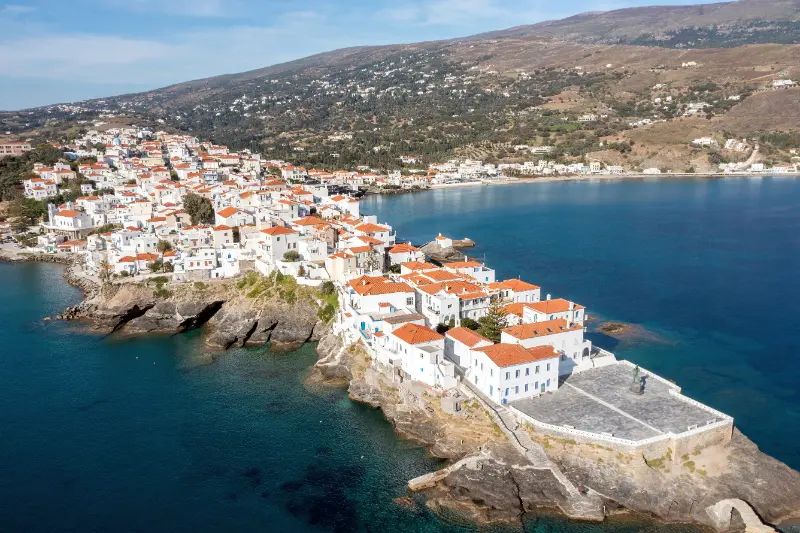
The challenge is logistics: the archaeology is distributed across the island and several sites keep limited opening days. A good plan starts with the museum schedule, then builds the road trip around what is actually open. In 2026 the Cyclades Ephorate publishes different weekly patterns for Chora museum, Paleopolis museum and Ypsili, so old “open daily” assumptions can waste a day.
2026 archaeology planning table
| Place | Published 2026 hours | General ticket |
|---|---|---|
| Archaeological Museum of Andros, Chora | 09:00–16:00; Tuesday closed | €5 |
| Archaeological Museum of Paleopolis | 09:00–16:00 Thu, Fri, Sun | €5 |
| Archaeological Site of Ypsili | 09:00–16:00 Mon, Wed, Sat | €5 |
| Agios Petros Tower | Open landscape monument; verify access locally | No standard museum ticket |
Schedules can change because of staffing, holidays or seasonal adjustments. Check the Cyclades Ephorate of Antiquities before driving across the island.
Start at the Archaeological Museum in Chora
The Chora museum is the best orientation point because it brings together material from different periods and locations. Seeing sculpture, pottery and finds in a controlled setting makes later ruins more legible. Allocate at least an hour if you enjoy archaeology, more if you like reading labels carefully rather than photographing highlights.
The museum also fits naturally into a broader Chora day. Visit soon after opening, then continue to the town’s contemporary-art or maritime collections before lunch. This is a particularly good plan when strong wind makes an exposed beach less attractive.
Paleopolis: the ancient city landscape
Paleopolis on the west side was the principal ancient city of Andros for many centuries. Today the interest is not a single monumental ruin but the relationship between terraces, coastal topography and the archaeological material displayed in the local museum. Approach it as a landscape rather than expecting a compact Acropolis-style site.
The museum’s limited 2026 opening days make planning essential. If it is closed during your stay, the broader west-coast drive is still worthwhile, but do not present the museum as a guaranteed spontaneous stop. Pair Paleopolis with Batsi or a nearby beach rather than crossing to Korthi the same afternoon.
Ypsili archaeological site
Ypsili is an important fortified settlement that helps explain Andros in the Geometric and Archaic periods. Its elevated position adds landscape value, but also means exposure to sun and wind. The 2026 published opening pattern is only three days per week, so this is the site most likely to require itinerary adjustment.
Wear proper shoes and bring water. Archaeological surfaces can be uneven and shade limited. If Ypsili is central to your trip, schedule it first and let beaches fill the flexible days, not the other way around.
Tower of Agios Petros
The cylindrical Hellenistic tower above Agios Petros is one of the island’s most immediately impressive ancient structures. Large blocks form a tall surviving shell, and the tower’s position above agricultural land and the coast gives it a strong sense of place. It can be combined with the beach below or with a marked hiking loop from Gavrio.
There are fewer visitor facilities than at a formal museum site. Carry water and avoid climbing on ancient masonry. Our Gavrio and Agios Petros Guide covers the north-west logistics.
Ancient paths are part of the story
On Andros, archaeology is not limited to excavated walls. The network of stone-paved paths, terraces, bridges and water-management structures illustrates how people moved through the island for centuries. Andros Routes has restored more than 240 km of paths, including a continuous 100 km long-distance route. Walking even one section helps connect monuments with the agricultural and village landscape around them.
Do not assume every old-looking stone wall is ancient; much of the visible landscape was built and rebuilt over later periods. The value is continuity rather than a single date. The Andros Hiking Guide gives safe, current ways to experience the paths.
A one-day archaeology itinerary
If the Paleopolis museum is open, start there in the morning, then drive north to Agios Petros Tower and finish with a west-coast beach or Batsi. On a Ypsili opening day, make Ypsili the fixed morning stop and use Chora for the museum later if hours permit. Trying to cover all sites in one day usually means too much driving and too little time understanding any of them.
For a two-day plan, separate east and west: Chora museum plus Ypsili or central villages on one day, Paleopolis plus Agios Petros on another. This also gives you weather flexibility.
Photography and respectful visiting
Use flash and tripod rules displayed by each museum. At outdoor sites, do not move pottery fragments, stones or architectural pieces for photographs. Even apparently insignificant material can have archaeological context. Drones may be regulated at protected sites, so check current Greek heritage and aviation rules before flying.
The best photographs often come from the wider landscape: terraces, sea views and the relationship between an ancient site and surrounding villages. Those images also tell a more accurate story than close-ups of isolated stones.
Best time to visit
For a trip that mixes villages, walking and beaches, May, June, September and early October are the most balanced periods. The landscape is easier to enjoy on foot, roads and parking are less stressful than in peak August, and the sea is usually part of the day rather than the only reason to travel. July and August bring the strongest holiday atmosphere, more ferry capacity and fully active beach businesses, but they also demand earlier starts, stronger sun protection and more flexible planning around wind.
Spring can be excellent for hikers because Andros is unusually green for the Cyclades, although winter and spring growth can temporarily obscure sections of old paths before maintenance teams clear them. In 2026 Andros Routes published repeated spring and summer maintenance updates, a useful reminder that even well-marked trails are living infrastructure rather than indoor attractions. Always check the latest route notes if walking is central to the trip.

Who this part of Andros suits best
This guide is for history lovers, museum visitors, hikers and travellers who want a deeper reason to explore beyond the beaches. Families with school-age children can enjoy the tower and outdoor sites, but museum schedules and midday heat require a flexible plan.
What to carry
Carry water, sun protection and closed shoes for Ypsili, Paleopolis and the tower. Save museum hours offline and bring a small notebook if you enjoy archaeology. Avoid heavy bags because outdoor sites involve uneven ground and museums may have storage restrictions.
Common mistakes to avoid
The biggest planning error on Andros is underestimating the island because it sits close to Athens. Roads cross steep terrain, villages are separated by valleys and a beach that looks near on a map may require a very different approach road. Build days around one part of the island instead of zigzagging from north to south. The second mistake is assuming the famous Cycladic wind affects every bay equally; conditions can differ sharply by coast, so keep a second beach or walking plan in mind.
A third mistake is treating the ferry timetable as the only transport decision. The ferry arrives at Gavrio, while Chora is on the opposite side of the island. If you are travelling without a car, the timing of the onward bus or taxi matters. If you drive, check parking at your accommodation and do not assume narrow village lanes are appropriate for through traffic.
Continue planning your Andros trip
Use the guides together rather than as separate checklists. Start with the main Andros travel guide and then open the specialist pages that match your route: Andros Travel Guide; Chora Andros Guide; Batsi Andros Guide; Gavrio and Agios Petros Guide; Korthi Andros Guide; Menites, Apikia and Pythara Guide; Best Beaches in Andros. The remaining guides are linked throughout the cluster where they are most relevant, so you can move from a base or beach decision to transport and hiking without rebuilding the itinerary from scratch.

Useful official sources before you go
For current destination information I cross-check the Municipality of Andros visitor portal and the Andros Routes project. Trail conditions, museum schedules, ferry services and local transport can change seasonally, so verify time-sensitive details shortly before travel. The Ephorate of Antiquities of the Cyclades is the most useful source for current state-site hours and tickets.
Frequently asked questions
Which archaeology site should I prioritise?
For context, start with the Archaeological Museum in Chora. For an outdoor monument, the Agios Petros tower is especially memorable.
Is Paleopolis museum open every day?
No. The published 2026 schedule lists limited opening days, so check the official source before going.
Can I visit Ypsili and Chora in one day?
Yes if opening hours align, but make Ypsili the fixed-time stop and keep Chora flexible.
Is there much to see if I am not an archaeology expert?
Yes. The combination of museum objects, landscape and ancient paths makes the history accessible without specialist knowledge.
Are tickets expensive?
The published 2026 general admission for the three state museum/site entries listed here is €5 each, subject to change.
Final planning advice
Andros rewards a slower plan. Choose a base that makes your mornings easy, group nearby villages and beaches into the same day, and leave room for weather. The island is varied enough that a windy beach day can become a museum, village or hiking day without feeling like a compromise. That flexibility is one of the reasons Andros works so well for repeat visits as well as a first Cyclades trip.
Leave a Reply