
Amorgos is long, mountainous and dramatic, with a sense of distance that makes it feel more remote than many better-known Cyclades islands. The famous Hozoviotissa Monastery clings to a cliff above the Aegean, but the island is not a one-sight destination. Chora, Aegiali, Katapola, mountain villages and a network of historic paths can easily fill five or six days.
This is an island for travellers who enjoy landscapes and walking as much as beaches. Official tourism information describes marked routes crossing the island, including the demanding Palia Strata, which links Chora with Aegiali via the monastery. If that sounds appealing, Amorgos may suit you better than a resort-oriented island. Compare it with my Folegandros guide and Naxos guide.
Choosing between Katapola, Chora and Aegiali
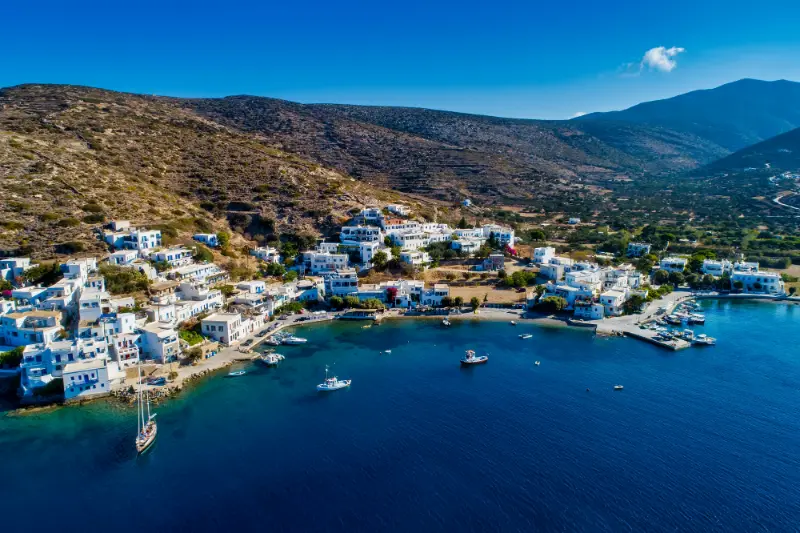
Katapola is one of the main ferry ports and a practical base with restaurants and transport connections. Aegiali, in the north, has the island’s largest sandy beach and a more obvious holiday atmosphere. Chora sits inland at altitude and is, for me, the most beautiful evening base if you value architecture and quiet lanes over immediate beach access.
Because Amorgos is elongated, your choice matters more than on a compact island. Staying only in one far end can create unnecessary driving. For a five- or six-night trip, consider splitting the stay between central/southern Amorgos and Aegiali if you want to hike and explore widely.
Hozoviotissa Monastery
The Monastery of Panagia Hozoviotissa is the island’s defining landmark, built against a sheer cliff face above the sea. Reaching it involves steps and exposure to sun, so visit early and carry water. Dress modestly because this is an active religious site, not only a viewpoint.
The setting is extraordinary, but the visit becomes more meaningful when you approach it as part of Amorgos’s religious and cultural history rather than as a photo stop. Continue to nearby Agia Anna only if conditions are comfortable; the coast here is rocky and the sea can be rough.
Chora after sunset
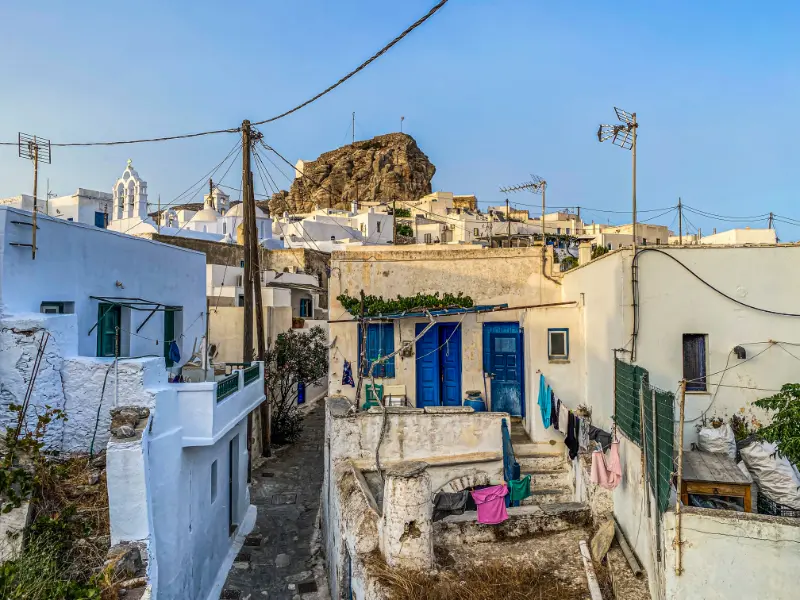
Amorgos Chora is a maze of white houses, chapels, small squares and lanes beneath windmills. It is especially attractive in the late afternoon when the heat drops. Rather than rushing through with a camera, sit for coffee or dinner and let the town change from daylight to evening.
Parking is outside the historic core, and that is part of the appeal. Wear shoes suitable for stone paving. If you are staying elsewhere, check the final bus or taxi plan before settling into a long dinner.
Hiking and the old paths
Amorgos is one of the best Cyclades choices for strong walkers. Official tourism information describes routes such as the 11.5-kilometre Palia Strata, the 10-kilometre Itonia route and shorter village paths around Aegiali. These are real mountain walks, not paved promenades.
Summer heat, strong wind and limited shade can make even moderate distances demanding. Start early, carry plenty of water and tell someone your route if you are walking alone. Spring and October are far more comfortable for hikers than the peak of August.
Best beaches and swimming spots
Aegiali is the easiest sandy beach with services. Agia Anna is famous for rocky coves and clear water beneath the monastery landscape. Mouros has dramatic rocks and access by a descending path. Kalotaritissa, toward the southwest, offers a sheltered bay and seasonal boat access to Gramvousa islet.
The island’s beaches are often smaller and less immediately accessible than those on Naxos or Paros. That is part of Amorgos’s character. If your ideal holiday needs a wide sandy beach directly outside the hotel, choose your base carefully.
The Olympia shipwreck and southern Amorgos
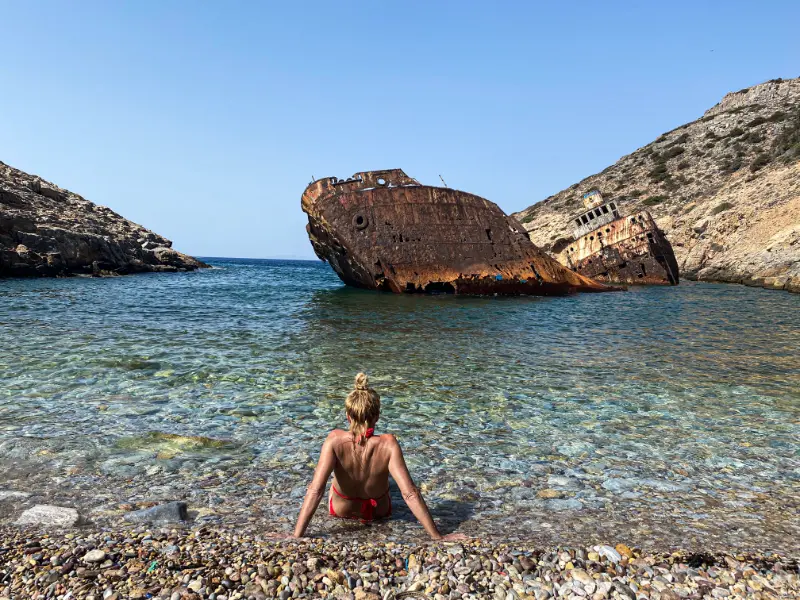
The shipwreck in Liveros Bay has become a popular photography stop, but I would not plan an entire day around it. Combine it with the southern coast and Kalotaritissa so the drive has a broader purpose.
Roads are scenic but slower than map distances suggest. Build in extra time for viewpoints and oncoming traffic. The south feels sparse and exposed, which is precisely why it is memorable.

Getting around Amorgos
Buses connect the main ports, Chora and major villages, but schedules determine how much you can combine in one day. A rental car gives more flexibility for beaches and trailheads. If you are not comfortable on mountain roads, buses and taxis may produce a more relaxed trip.
Pay close attention to which port your ferry uses. Amorgos has ferry activity at both Katapola and Aegiali, and assuming the wrong one can create a stressful transfer on departure day.
A five-day Amorgos itinerary
Day one: arrive and explore your base. Day two: visit Hozoviotissa early, walk in Chora and swim at a nearby coast if conditions allow. Day three: explore Aegiali and the villages of Lagada or Tholaria. Day four: hike a section of the island’s path network. Day five: drive or bus south toward Kalotaritissa and the shipwreck area.
With seven days, add a second hike and a genuinely empty beach day. Amorgos rewards staying longer because the distances and walking make rushed sightseeing inefficient.
When to visit
June and September balance swimming weather with less punishing hiking temperatures. July and August are warmer and busier, and the meltemi can affect both beaches and ferries. May and October are attractive for walkers, although sea temperatures and seasonal services vary.
Always leave some flexibility around ferry days. The Aegean is not a theme park ride running on your personal schedule, and wind can change plans.
Who should choose Amorgos
Amorgos is excellent for hikers, couples, photographers and repeat Greece visitors looking for a stronger landscape experience. It can work for families, but the steep terrain and beach access require more planning with very young children.
If you want continuous nightlife, easy resort beaches and minimal walking, another island may fit better. Amorgos is at its best when you enjoy the effort required to reach things.
Frequently asked questions
How many days do I need in Amorgos?
Five days is a good minimum. Six or seven days is better if hiking is a major part of the trip.
Which port should I use?
Both Katapola and Aegiali can receive ferries. Check the exact port on your booking and arrange accommodation transfers accordingly.
Is Amorgos good without a car?
Yes if you plan around buses and stay near a main settlement, but a car gives much more freedom for remote beaches and trailheads.
Is the Hozoviotissa Monastery difficult to reach?
There are many steps and little shade, so it can be tiring in hot weather. Visit early, wear suitable shoes and dress respectfully.
Planning Amorgos in practice
The biggest planning mistake on Amorgos is underestimating travel time between north and south. The island is narrow but long, and roads follow mountain terrain. Group each day geographically. If you are exploring Aegiali villages, stay in the north instead of adding a southern beach just because it looks close on a map.
Hiking days need a weather check for both heat and wind. A strong meltemi can make exposed ridges exhausting even when temperature looks reasonable. Start with more water than a city walk would require and protect your head and neck from sun.
Because ferry arrivals can be late or use either main port, confirm your accommodation transfer in writing. Save the host’s telephone number offline. This is particularly useful if the ferry schedule changes after you have already left the previous island.
Amorgos rewards a light schedule. One monastery visit, one swim and a long village evening can be a complete day. Trying to match a ten-item sightseeing list from a larger island usually creates unnecessary driving and misses the quality that makes Amorgos special.
If you suffer from motion sickness, prepare for winding roads and ferry approaches before travel. Choosing seats with a horizon view, eating lightly and carrying your usual remedy can make remote-island logistics far easier.
Travel days also deserve their own space in the itinerary. Leave time for breakfast, packing, transfers and delays instead of counting a ferry or drive as invisible time. This simple adjustment makes the entire Greece trip feel calmer and more realistic.
If you suffer from motion sickness, prepare for winding roads and ferry approaches before travel. Choosing seats with a horizon view, eating lightly and carrying your usual remedy can make remote-island logistics far easier.
Travel days also deserve their own space in the itinerary. Leave time for breakfast, packing, transfers and delays instead of counting a ferry or drive as invisible time. This simple adjustment makes the entire Greece trip feel calmer and more realistic.
If you suffer from motion sickness, prepare for winding roads and ferry approaches before travel. Choosing seats with a horizon view, eating lightly and carrying your usual remedy can make remote-island logistics far easier.
If you suffer from motion sickness, prepare for winding roads and ferry approaches before travel. Choosing seats with a horizon view, eating lightly and carrying your usual remedy can make remote-island logistics far easier.
If you suffer from motion sickness, prepare for winding roads and ferry approaches before travel. Choosing seats with a horizon view, eating lightly and carrying your usual remedy can make remote-island logistics far easier.