

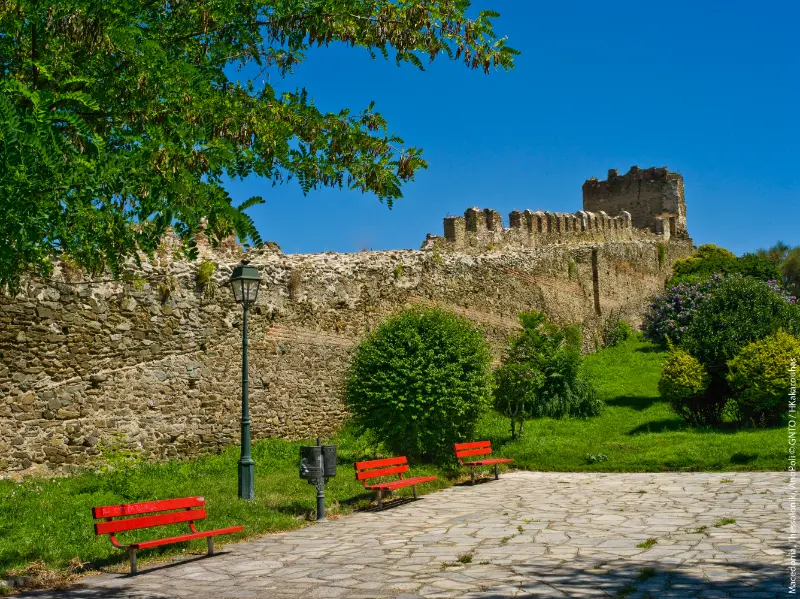
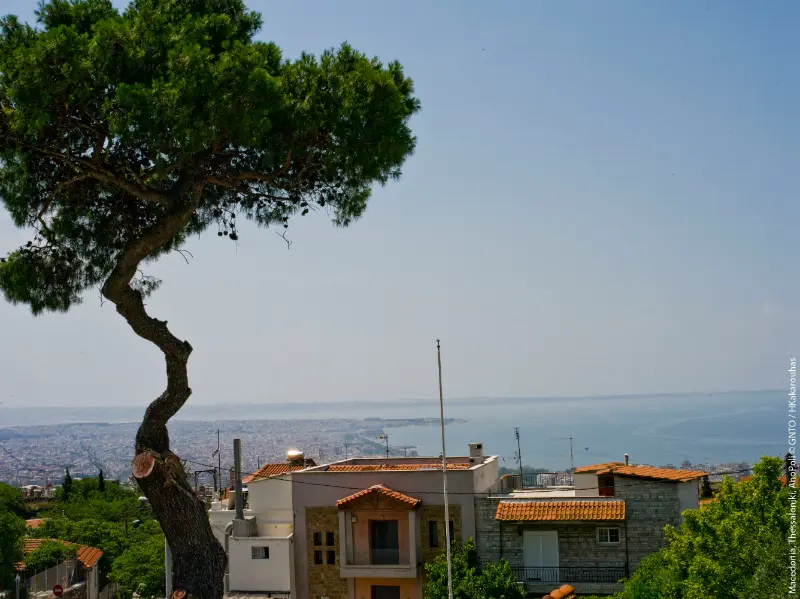
Ano Poli, the Upper Town of Thessaloniki, is where the city changes scale. The broad waterfront avenues give way to steeper lanes, Ottoman-era houses, Byzantine churches, sections of city wall and views that stretch toward the Thermaic Gulf. It survived the great fire of 1917 better than the lower city, which is one reason the street pattern and architecture feel so different. The best way to visit is to go up by bus or taxi and walk down gradually, rather than beginning the day with a punishing climb.
If this is your first trip to the area, use this article together with Thessaloniki Travel Guide, White Tower and Thessaloniki Waterfront Guide and Greece in Winter. Those guides cover the wider destination, while this page focuses on the practical decisions that make a visit to Ano Poli Thessaloniki Guide work smoothly.
Why Ano Poli Thessaloniki Guide is worth your time
Ano Poli shows a quieter and more layered Thessaloniki. The neighbourhood is valuable not just for viewpoints but for understanding the city’s Byzantine and Ottoman history. Small churches sit close to residential houses, wall fragments appear unexpectedly, and tavernas offer a very different atmosphere from the busy central restaurant districts.
The strongest trips are usually built around a clear reason for being here rather than a list of every possible attraction. Decide whether your priority is history, landscape, food, swimming, photography or walking. Once that is clear, the rest of the itinerary becomes easier: you can choose the right time of day, avoid unnecessary transfers and leave enough space for the experience that brought you here in the first place.
Main highlights
- Byzantine city walls and viewpoints
- traditional houses and narrow lanes
- Church of Hosios David
- Vlatadon Monastery area
- Trigoniou Tower viewpoint
- local tavernas away from the waterfront crowds
Byzantine city walls and viewpoints
Byzantine city walls and viewpoints is one of the elements that gives Ano Poli Thessaloniki Guide its identity. Do not approach it only as a photo stop. Spend enough time to notice how it connects with the surrounding streets, landscape or historical context. In busy periods, moving even ten minutes away from the obvious focal point often changes the experience completely and gives you a more balanced view of the place.
traditional houses and narrow lanes
traditional houses and narrow lanes is one of the elements that gives Ano Poli Thessaloniki Guide its identity. Do not approach it only as a photo stop. Spend enough time to notice how it connects with the surrounding streets, landscape or historical context. In busy periods, moving even ten minutes away from the obvious focal point often changes the experience completely and gives you a more balanced view of the place.
Church of Hosios David
Church of Hosios David is one of the elements that gives Ano Poli Thessaloniki Guide its identity. Do not approach it only as a photo stop. Spend enough time to notice how it connects with the surrounding streets, landscape or historical context. In busy periods, moving even ten minutes away from the obvious focal point often changes the experience completely and gives you a more balanced view of the place.
Vlatadon Monastery area
Vlatadon Monastery area is one of the elements that gives Ano Poli Thessaloniki Guide its identity. Do not approach it only as a photo stop. Spend enough time to notice how it connects with the surrounding streets, landscape or historical context. In busy periods, moving even ten minutes away from the obvious focal point often changes the experience completely and gives you a more balanced view of the place.
Best time to visit
Morning is excellent for churches and photography, while late afternoon gives warmer light over the city. In summer, avoid climbing the steepest sections in the hottest hours. Autumn and spring are ideal for a long walk, and winter can be atmospheric if the weather is clear.
Time of day matters almost as much as season. Early mornings are best for archaeological sites, exposed walks and popular viewpoints, while late afternoon is usually more pleasant for neighbourhoods, waterfronts and photography. If a visit depends on opening hours, boats, weather or trail conditions, check the official information the evening before rather than relying on an itinerary saved months earlier.
How to get there and get around
Use a city bus or taxi to reach the upper area if you want to conserve energy, then descend on foot toward the centre. Streets are steep and sometimes uneven, so wear shoes with grip. Churches and monasteries are active religious spaces; modest clothing and quiet behaviour are appropriate, and interior photography rules should be respected.
In Greece, transport decisions should be made around the whole day rather than a single attraction. A rental car gives flexibility but can create parking problems in historic centres. Public transport is often excellent for straightforward city routes but less useful for combining several rural stops. Taxis are valuable for short gaps, especially when they save a steep climb or a long wait, but they become expensive when used as a substitute for a properly planned route.
How much time do you need?
For Ano Poli Thessaloniki Guide, a focused visit can usually fit into half a day, but the right amount of time depends on how deeply you want to explore. Travellers who enjoy museums, hiking, long lunches or photography should protect a full day or at least avoid scheduling another major attraction immediately afterwards. If you are using the place as part of a wider road trip, one well-planned stop is better than three rushed ones.
A realistic itinerary
Begin around the upper walls and Trigoniou viewpoint, then move through residential lanes toward Vlatadon and Hosios David. Stop for coffee or lunch before continuing downhill toward Agios Dimitrios and the central city. This direction keeps the walk visually rewarding while reducing the amount of uphill effort.
Build a buffer of at least one hour into the day. That margin absorbs a longer meal, traffic, a museum queue, a change in weather or the discovery of a viewpoint where you simply want to stay. Greece is rarely at its best when every thirty minutes are scheduled. Protect the essential logistics, then allow the day to breathe.
Where to stay
You do not necessarily need to sleep beside Ano Poli Thessaloniki Guide. Choose accommodation based on the wider trip. In cities, stay near a metro line or in a neighbourhood you enjoy walking through at night. In mountain and rural areas, staying close to the next morning’s trailhead can be more useful than choosing the prettiest village on a map. On a short trip, convenience usually creates more value than saving a small amount on the nightly rate.
Food and breaks
Avoid choosing a restaurant only because it sits beside the most famous landmark. Walk a few streets away, compare menus and look for places where the meal itself can become part of the day. In hot weather, a long lunch during the middle of the afternoon is often smarter than forcing another exposed walk. Carry water even in cities, and never assume a rural viewpoint or archaeological site will have an open café when you need one.
What to bring
- comfortable shoes with grip
- refillable water bottle
- sun protection and a hat
- a light layer for wind or cooler evenings
- offline map or downloaded route
- charged phone or small power bank
- a little cash for minor purchases
Pack for the actual terrain rather than the image you have seen online. Ancient paving can be slippery, mountain trails can be rough, and coastal wind can make a warm day feel much cooler after sunset. Good footwear and water make a bigger difference than carrying extra clothes you will never use.
Common mistakes to avoid
- arriving at the same peak hour as every tour group
- trying to combine too many distant stops
- ignoring heat, wind or trail conditions
- assuming old ticket prices or opening hours are still valid
- forgetting to plan the return journey
- treating religious, residential or protected areas as photo sets
The most common mistake at Ano Poli Thessaloniki Guide is overestimating how much fits comfortably into one day. Distances on a map do not show parking, queues, steep streets, museum fatigue or the simple desire to stop for coffee. Prioritise two or three experiences and leave secondary stops optional.
Is it suitable for families?
Usually yes, but the day should be adapted to heat, walking distance and attention span. Families often do better with an early start, a clear lunch break and one major attraction rather than a full adult sightseeing schedule. At archaeological sites and viewpoints, uneven surfaces and unprotected drops require active supervision. A shorter successful visit is better than forcing children through every room or path.
Accessibility and mobility
Accessibility varies widely. Modern museums and central promenades may have lifts and smoother surfaces, while old towns, mountain paths and archaeological sites can include steps, cobbles and steep gradients. Check the official accessibility information for the specific place you plan to visit. If mobility is limited, taxis can often eliminate the hardest climbs even when the final attraction still requires some walking.
What to combine with it
Ano Poli pairs well with Agios Dimitrios, the Roman Forum and a food-focused evening in central Thessaloniki. Do not combine it with a rushed museum marathon. The neighbourhood is strongest when you have enough time to stop at viewpoints and follow side streets without constantly checking the clock.

For more context, continue with Thessaloniki Travel Guide, then use White Tower and Thessaloniki Waterfront Guide and Greece in Winter to build the surrounding itinerary. This keeps Ano Poli Thessaloniki Guide connected to the rest of the trip instead of turning it into an isolated detour.
FAQ
Do I need to book in advance?
For major museums, organised tours, popular summer activities and time-sensitive transport, advance booking is sensible. For ordinary neighbourhood walks and viewpoints, it is usually unnecessary.
What is the best time of day?
Early morning is best for lower temperatures and fewer people. Late afternoon is excellent for atmosphere and photography, provided opening hours and the return journey still work.
Can I visit without a car?
In cities, usually yes. Rural attractions and multi-stop mountain days are easier with a car, although organised excursions or taxis can sometimes replace driving.
Is it worth visiting in the shoulder season?
Yes. May, June, September and October can be excellent, but seasonal buses, boats and businesses may run less frequently outside peak summer.
Should I trust prices and timetables from older articles?
No. Tickets, opening hours, access rules and transport schedules change. Recheck official or local information shortly before your visit.
Final advice
Treat Ano Poli Thessaloniki Guide as an experience rather than a task to complete. Arrive with a clear plan for the essential logistics, then give yourself enough time to notice the details that make the place distinctive. That balance between preparation and flexibility is what turns a technically correct itinerary into a trip that actually feels like Greece.