
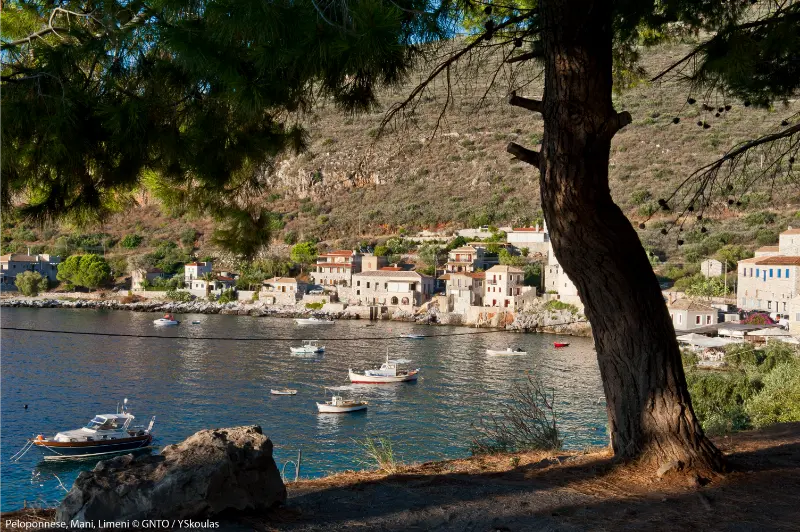
Areopoli and Limeni sit only a short drive apart, but they show two different faces of Mani. Areopoli is built in stone on higher ground, with tower houses, narrow lanes and a strong connection to the Greek War of Independence. Limeni sits directly on the water, where old stone buildings meet a small, intensely blue bay.
Together they make one of the best bases for exploring the peninsula. Use this guide alongside my Mani road trip and Diros Caves guide to slow the region down rather than treating it as a drive-through between Monemvasia and Messinia.
Why this place deserves its own stop
Areopoli is the practical centre: restaurants, accommodation and access roads radiate from it. Its historic core remains compact and atmospheric, especially early and late in the day. Visit Greece notes that the first flag of the 1821 Revolution was raised in Taxiarchon Square on 17 March 1821, a date still central to local identity.
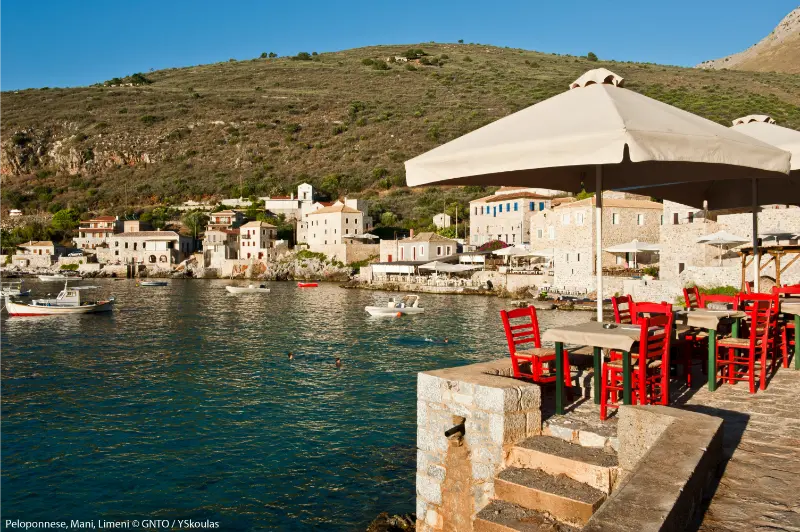
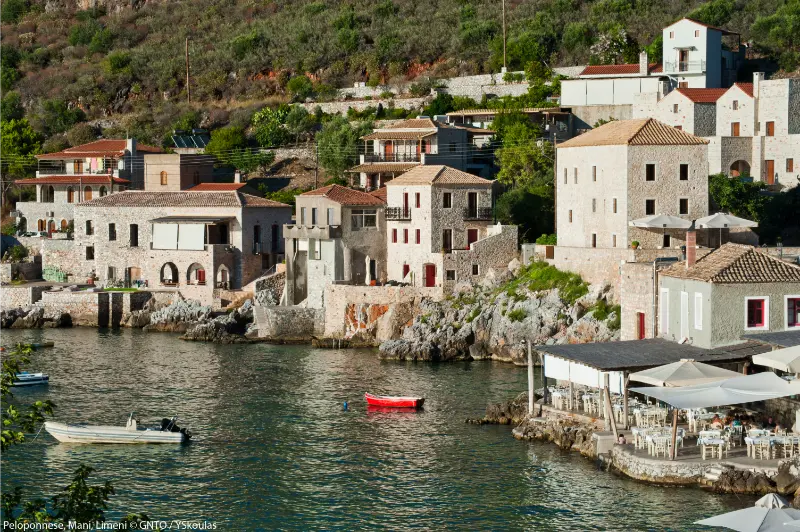
Limeni provides the coastal counterpoint. There is no need for a long list of attractions. The reason to go is the setting itself—clear water, stone facades and evening light—plus the chance to swim or eat beside the sea when conditions are calm.
What to see and do
Taxiarchon Square in Areopoli
This is the historic and social heart of Areopoli. The square and surrounding lanes are most enjoyable when you are not rushing to the next stop. Look at the stone architecture, churches and tower houses, then sit for coffee and let the town function as a real place rather than an outdoor museum.
The stone lanes and tower houses
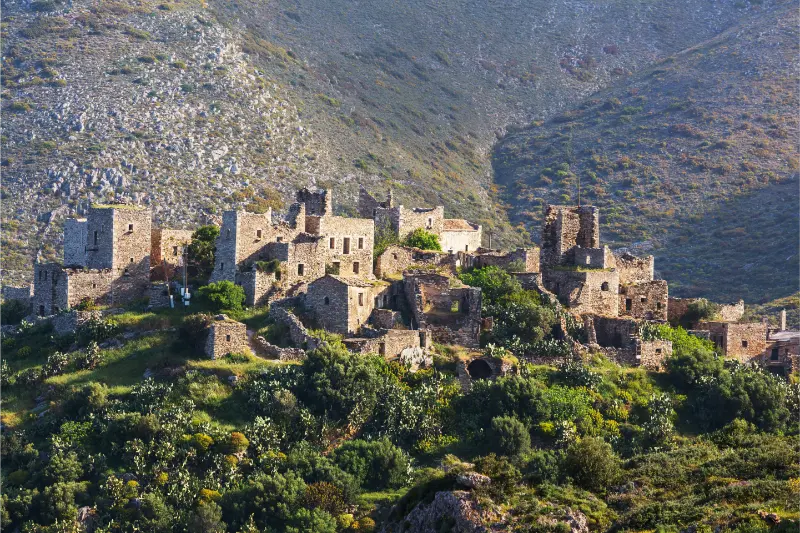
Mani’s defensive tower-house tradition gives Areopoli its distinctive profile. Some structures are private or adapted for hospitality, so the experience is about walking the streets and reading the urban fabric rather than entering every building.
Evening in Areopoli
The old centre becomes especially appealing after the heat drops. Restaurants and bars fill the lanes, and the stone takes on warmer colours. Staying overnight lets you experience this atmosphere after day-trippers have left.
Limeni waterfront
Limeni is tiny compared with Areopoli, but its waterfront is one of Mani’s signature scenes. Walk slowly along the edge, find a safe swimming entry and leave time to sit rather than driving in, taking photographs and leaving.
Swimming in clear water
The sea around Limeni can be beautifully transparent. Access is not a broad sandy-beach experience, so water shoes can be useful. Keep clear of boats and respect private property around waterfront buildings.
Sunset and dinner
Limeni is popular around sunset because the low light works beautifully on the stone and sea. If you want a specific waterfront table in peak season, reserve. Otherwise, enjoy the view and eat in Areopoli where there is more choice.
A realistic way to plan the visit
Spend one night at minimum; two nights are better if you want Diros and southern Mani. On arrival, walk Areopoli late afternoon, eat locally and save Limeni for a separate swim or sunset.
On the second day, visit Diros early, return for lunch, then choose either Limeni or a longer drive south toward Gerolimenas and Vathia. Do not attempt every village simply because distances look short on the map.
Parking in historic cores can be awkward. Leave the car in a sensible area and walk rather than forcing it through narrow lanes in search of a door-to-door arrival.
How to get there and move around
A car is strongly recommended for Mani. Areopoli is connected by intercity buses, but the region becomes far less flexible without your own transport. Visit Greece currently lists bus journeys from Kalamata at roughly 1.5–2 hours, subject to timetable changes.
Roads are paved but can be winding and visually distracting. If you are the driver, stop at viewpoints rather than slowing unpredictably on bends so passengers can take photographs.
How much time do you need?
Allow at least one full day and one night for Areopoli and Limeni together. Two nights create a much better base for Diros, southern Mani and beach stops without constant packing.
Best time to visit
Late spring and early autumn are excellent for walking, swimming and driving. July and August are lively but hot, and parking around popular waterfront areas becomes more competitive.
Winter reveals a quieter, more austere Mani. Some seasonal businesses reduce hours, but Areopoli remains a useful base and the stone landscape can be very atmospheric.
Food, breaks and the pace of the day
Mani cuisine rewards simple choices: local cured pork such as syglino, regional cheeses, olives, pies and straightforward grilled dishes. Ask what is local rather than ordering the same island menu everywhere.
Waterfront meals in Limeni are about location as much as food. In Areopoli you will usually find greater variety and a livelier evening scene.
Families, mobility and practical comfort
Areopoli’s old lanes are uneven in places but relatively compact. Limeni’s swimming access may involve rocks or steps rather than sand. Travellers with mobility limitations should choose accommodation and sea access carefully.
With children, use Areopoli as the stable base and keep driving days short. A swim in Limeni and the caves at Diros create enough variety without a marathon of villages.
What to combine with it
The obvious combination is the Diros Caves, only a short regional drive away.
For a longer route, connect Mani with Monemvasia to the east or Kalamata and Messinia to the west, but avoid doing both in one day.
Common mistakes to avoid
- Visiting both towns only as a quick photo stop
- Trying to park in the narrowest parts of the old centre
- Expecting Limeni to be a conventional sandy beach
- Scheduling Diros, Vathia, Cape Tainaron and Monemvasia on the same day
- Missing Areopoli in the evening by staying too far away
Frequently asked questions
Should I stay in Areopoli or Limeni?
Areopoli is more practical for restaurants, parking options and road connections. Limeni is quieter and more romantic beside the sea. The best choice depends on whether convenience or waterfront atmosphere matters more.
How long do I need?
One night works for a short introduction, but two nights are much better if you want Diros and a drive into southern Mani.
Can I swim in Limeni?
Yes in suitable conditions, but access is generally from rocky or built edges rather than a large sandy beach. Watch for boats and slippery surfaces.
Is Areopoli worth visiting in winter?
Yes for architecture, food and atmosphere, though some tourism businesses operate reduced schedules. The stone landscape suits cooler weather.
Do I need a car?
For a full Mani experience, yes. Buses can get you to Areopoli, but reaching caves, villages, coves and viewpoints becomes much harder without a vehicle.
Final advice
Areopoli and Limeni work because they do not need to be over-programmed. Walk the stone lanes, understand the revolutionary history, swim when the sea is calm and give yourself a long meal. Mani becomes memorable when you stop treating every village as a box to tick.
A few details that make the day better
A strong itinerary is not built only around opening hours. Leave a margin for parking, slow roads, heat, photographs and an unplanned coffee. In the Peloponnese, travel times can look short on a map but feel longer once mountain bends, village traffic and archaeological walking are added. Build the day around one major experience and one secondary stop rather than trying to collect every nearby place.
Carry water, sun protection and a light layer in the car even when the forecast looks simple. Archaeological sites can be exposed, caves can be cool, coastal forts can be windy and mountain towns can change temperature quickly. These small preparations matter more than adding another attraction to the schedule.
For current prices, opening hours and access rules, use the official site or local authority close to the travel date. Greece is gradually changing ticketing, restoration schedules and visitor routes at many sites, and a detail copied from an older article can be the difference between a smooth day and a wasted drive.
Photography, timing and road-trip strategy
For photographs, the best light is usually early or late, but practical opening hours and road safety come first. Do not design the entire day around a single social-media angle. A quieter arrival, cooler walking conditions and enough time to understand the place will usually produce better photographs anyway. If the site is coastal, protect cameras and phones from salt spray and blowing sand; if it is archaeological, never climb walls or cross barriers for a cleaner composition.
When this stop sits inside a road trip, calculate the day from door to door rather than from attraction to attraction. Parking, walking from the car, ticket queues, coffee, fuel and wrong turns all consume time. A two-hour sight may require four hours of the day once transport and recovery are included. This is why I prefer one major stop plus one lighter experience, especially in the Peloponnese where the roads themselves are part of the journey.
Responsible travel and local etiquette
Respect barriers, religious spaces, protected wetlands, private houses and working harbours. Do not fly a drone unless you have checked the current rules for the exact archaeological or protected area. Keep noise down in monasteries and memorial sites, dress appropriately where worship is active, and never remove stones, shells from protected zones or archaeological fragments as souvenirs.
Spend locally when it makes sense: a coffee in the village, lunch after the site, a small family-run stay or a locally guided experience can spread the benefit of tourism beyond the headline attraction. At the same time, avoid treating every resident as part of the visitor experience. Mani villages, Messinian ports and mountain towns are living communities first and tourist destinations second.
Who will enjoy this stop most?
This stop works best for travellers who enjoy combining landscape with context rather than moving quickly between famous names. History lovers will find layers to unpack, photographers get strong visual material, and road-trippers gain a destination that breaks up longer drives. Travellers who prefer resort convenience may find the limited shade, uneven ground, changing access or simple infrastructure less appealing. Knowing that in advance helps you decide whether to give the place a full day or keep it as a shorter stop.