

Athens has three ferry ports that matter to most island travellers: Piraeus, Rafina and Lavrio. Choosing the wrong one can add hours of transfer time; choosing the right one can make the start of an island trip feel almost effortless. The best port depends on your island, your airport or hotel location and the actual sailing schedule on your date.

Piraeus has the widest network, Rafina can be excellent for parts of the Cyclades, and Lavrio is strategically useful for islands such as Kea and Kythnos. None is universally “best.”
Why this matters when planning a trip to Greece
Good planning here reduces friction across the entire trip. The benefit is not only saving money or time; it is avoiding the small stressful decisions that accumulate when you are already tired, carrying luggage or trying to catch transport.
I prefer to solve these issues before departure, then keep the holiday itself simple. A few screenshots, saved phone numbers and clear rules for yourself are usually enough.
Piraeus: the biggest choice of routes
Piraeus is the main ferry hub for Athens and serves a huge range of islands. Its strength is choice; its weakness is scale. Gates can be far apart, so “arrive at Piraeus” is not enough information. Check the exact gate, terminal area and walking distance before travel day.
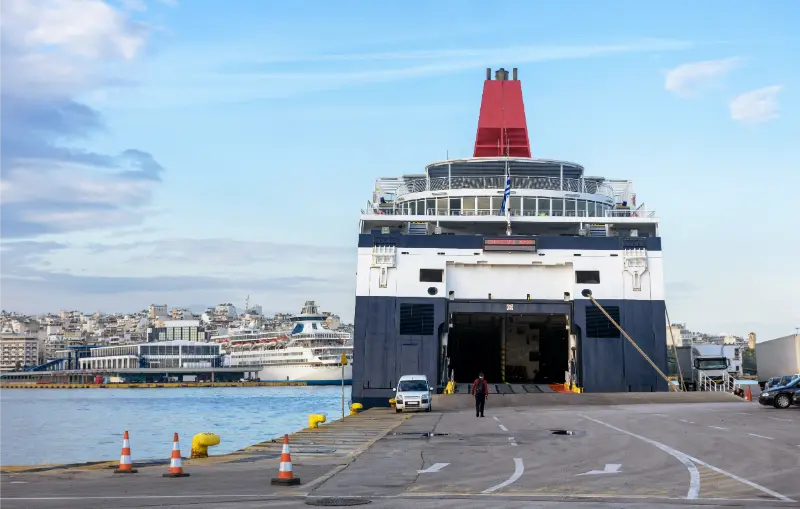
My Piraeus Port Guide goes deeper into the layout and airport connections.
Rafina: useful for the northern Cyclades
Rafina can be a smart choice for islands such as Andros, Tinos and Mykonos depending on the seasonal timetable. It is also relatively convenient from Athens International Airport, which can save time if you are connecting directly to a ferry rather than staying in central Athens first.
Always compare the complete door-to-door journey rather than only the ferry duration.
Lavrio: smaller but strategically useful
Lavrio is especially useful for Kea and Kythnos and can serve other routes seasonally. It is farther from central Athens, so the transfer needs more planning, but the port itself is smaller and can feel easier once you arrive.
Combine a Lavrio departure with my Lavrio guide if you are considering Cape Sounion or the southeastern Attica coast.
How to choose the right port
Start with the ferry route, then compare departure time, transfer cost, hotel location and buffer before sailing. A slightly longer ferry from a convenient port can be easier than a faster sailing that requires a stressful cross-city transfer.
If your trip involves several islands, use the Greek island hopping guide together with current operator schedules.
Airport arrival plus same-day ferry: when it works
A same-day flight-to-ferry connection can work, but only when the timetable has meaningful margin. Add immigration or baggage collection, traffic, port navigation and boarding cutoff time. If the final ferry of the day is the only option, the financial saving of avoiding one hotel night may not justify the risk.
When possible, I prefer either an early flight arrival with a later ferry or one night in Athens before a complicated island sequence.
A practical way to use this advice
Before departure, write down the three or four rules from this guide that actually apply to your itinerary. You do not need to memorise everything. A traveller using only Athens and Santorini will face different practical decisions from someone driving across Epirus or taking five ferries through the Cyclades.
Recheck anything that can change close to departure: timetables, opening hours, weather alerts, operator policies and prices. Evergreen travel advice is useful only when it is paired with current operational information.
Common mistakes to avoid
- Assuming a rule that worked on one island automatically applies everywhere in Greece.
- Building connections with no time buffer for weather, traffic or queues.
- Relying on one payment method, one copy of a document or one transport option.
- Using an old screenshot for a price, timetable or opening hour that may have changed.
- Trying to save a small amount of money at the cost of a much more stressful travel day.
The recurring lesson is to protect the parts of the trip that are hard to replace: flights home, special accommodation, health, mobility and major reservations. Smaller details can stay flexible.
Frequently asked questions
Which Athens port is best for the Cyclades?
It depends on the island and date. Piraeus has the broadest network; Rafina is particularly useful for some northern Cyclades routes; Lavrio serves selected routes including Kea and Kythnos.

Which port is closest to Athens airport?
Rafina is often the most convenient of the three from the airport, but transfer time depends on traffic and the transport option.
How early should I arrive?
Follow the ferry operator’s instructions and add extra time in summer, especially at large Piraeus gates or when carrying a vehicle.
Can I switch ports if a ferry is cancelled?
Only if another suitable sailing exists. Do not assume tickets transfer automatically between operators or ports.
Final thoughts
The best practical travel advice is the advice that disappears into the background once the trip begins. Set up a sensible system before departure, then spend your energy on Greece rather than on avoidable logistics.
Use official sources for anything time-sensitive, keep one backup plan and allow enough margin that a small delay or change does not control the whole day.
A realistic decision checklist
Before you finalise the trip, run this issue through a short checklist: what is the official source, what can change with weather or season, what happens if the first plan fails, and which part of the day is genuinely time-critical? This sounds simple, but it prevents a large percentage of travel stress. Greece is easiest when fixed commitments are few and well protected, while meals, beaches, neighbourhood walks and scenic stops stay flexible.
I also save key confirmations offline. Mobile data is generally easy to obtain, but ferry terminals, mountain roads, underground stations and crowded events are exactly the places where you do not want a booking reference to depend on a weak signal. A screenshot of the hotel address, transport ticket and essential contact number takes seconds and can save much more time later.
Finally, remember that a successful Greece itinerary does not need to optimise every euro or every minute. Paying slightly more for the simpler transfer, choosing the hotel with easier access, or leaving an empty afternoon can produce a better holiday than the mathematically cheapest or busiest plan. Practical travel decisions should protect your energy as well as your budget.
How I would plan this in a real itinerary
On a real trip, I would not treat Athens ferry ports as a separate research project. I would connect it to the days where it can actually cause a problem: arrival day, ferry day, a long road trip, a museum-heavy day or the final connection home. This keeps preparation proportional. The aim is to identify the moments where a small mistake has a large consequence, then leave the rest of the holiday flexible. Greece rewards that balance because many of the best experiences — a village lunch, an uncrowded beach, a sunset walk — do not need minute-by-minute planning.
For each fixed day I keep a Plan A and one simple Plan B. If a ferry is disrupted, I know which operator page to check. If a site is closed, I have a nearby museum, neighbourhood or beach. If heat makes a walk unreasonable, I move it to early morning. If a payment card fails, I have another card and some cash. This is not over-planning; it is creating enough redundancy that one ordinary travel problem does not become the story of the whole trip.
What to verify 48 hours before
Two days before any important transfer or booked attraction, I check the current official information again. In Greece, ferry gates, sailing times, museum hours, weather restrictions and road access can change with season or operational needs. I compare the official operator or attraction page with my booking confirmation and save the latest details offline. For a family or group, I also make sure everyone knows the meeting point rather than keeping all information on one person’s phone.
I also check the practical environment around the plan: expected temperature, wind, walking distance, luggage, parking and the time needed to eat. These details are often more important than the headline journey time. A 45-minute ferry connection may be easy with hand luggage and difficult with a rental car; a one-kilometre old-town walk can feel very different at noon in August than at 8:00 in May.
How to make the advice work for families and groups
Groups should plan for the least flexible requirement, not the fastest traveller. A child who needs a meal, a grandparent who prefers fewer stairs, or a friend with motion sickness can change which transfer is genuinely best. Build those needs into the decision from the start rather than trying to solve them at the port, airport or attraction entrance. The result is usually better for everyone because it creates more margin and fewer rushed arguments.
When travelling as a couple, I still split responsibilities. One person can keep transport documents while the other stores accommodation details and emergency numbers. Both should know the essential route. That way a lost phone, dead battery or separated queue does not stop the trip. Small organisational choices like this are more useful than carrying pages of generic travel tips.
A note on changing plans
Changing a plan is not a failed itinerary. Wind, heat, strikes, local events and personal energy can all make yesterday’s perfect idea less sensible today. If you have protected the expensive and time-critical parts of the trip, most other pieces can move. Greece has enough alternatives that a cancelled boat day can become a village drive, a hot archaeological afternoon can become a museum visit, and a rainy morning can become a long lunch followed by a coastal walk when conditions improve.
The practical skill is knowing what must be rebooked immediately and what can simply be replaced. Transport home, scarce accommodation and timed tickets deserve quick action. An ordinary beach, viewpoint or restaurant usually does not. Keeping that hierarchy clear makes travel decisions faster and calmer.