
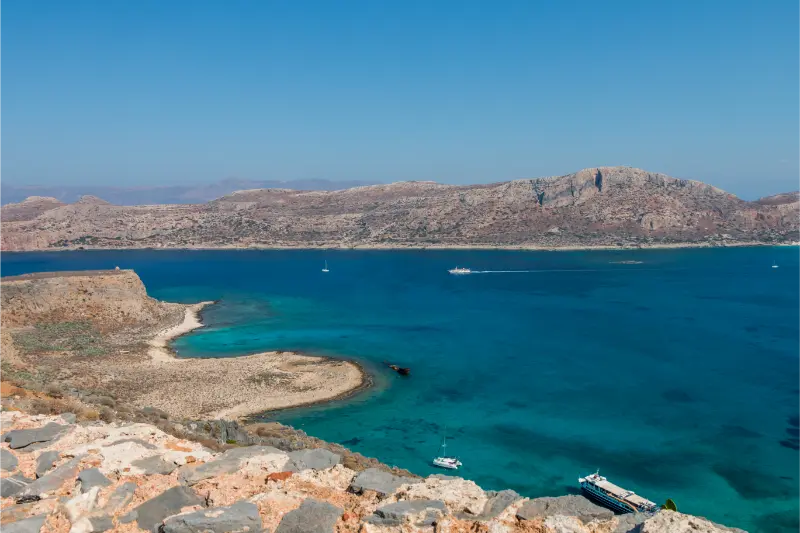
Balos is one of the most recognizable landscapes in Crete: a broad lagoon of pale sand and changing bands of turquoise water beneath the Gramvousa peninsula. It deserves its reputation, but it is also a place where transport choice can determine whether the day feels spectacular or stressful. You normally reach Balos either by boat from Kissamos, often combined with Gramvousa, or by driving toward the peninsula and walking down to the lagoon.
Neither option is universally better. The boat is easier for many travellers and adds a maritime perspective; the road option offers the famous high viewpoint and more control over timing but involves rougher access and a demanding return climb. If you are based in Chania, start with the Chania guide and compare Balos with the Elafonissi guide before filling every day with long excursions.
Why Balos is special
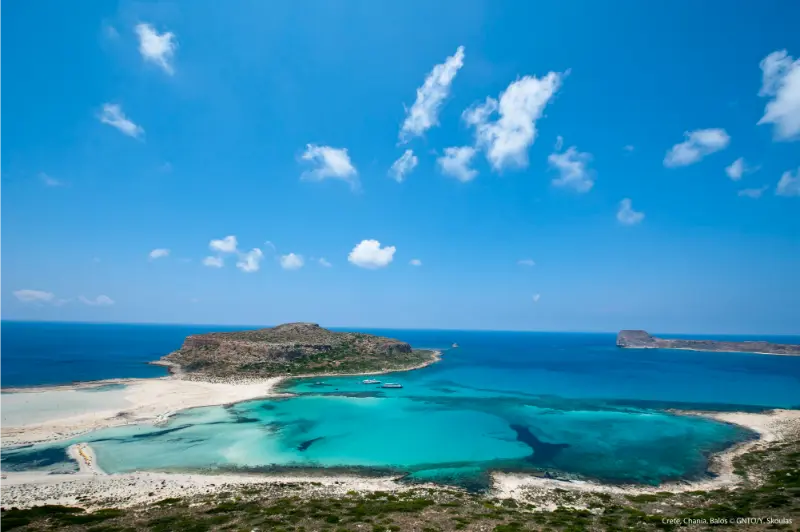
Balos is a lagoon rather than a conventional straight beach. The water shifts from very shallow areas to deeper channels, and the landscape changes visually with wind, light and sea conditions. The wide view from above is a major part of the experience and explains why many photographs are taken from the descent trail rather than at water level.

The area is environmentally sensitive. Visit Greece identifies Balos and nearby Gramvousa among the exceptional beaches of Chania and notes that the beach itself is not heavily serviced. That is a reminder to arrive self-sufficient and to treat the landscape as protected nature rather than a resort.
Option 1: boat from Kissamos
The boat option removes the rough road and steep walk, which is attractive for families and travellers who do not want to drive on an unpaved peninsula. Excursions commonly combine Balos with Gramvousa, where visitors can see the island and Venetian fortress area.
The main disadvantage is that you share the schedule with many other passengers. When several boats arrive, the beach can become busy quickly. You also have less freedom to change your day around wind or personal energy once the excursion is underway.
Option 2: driving and hiking
Driving lets you arrive earlier than many excursion boats and gives access to the elevated panorama. The final road is known for rough, dusty conditions and is not comparable to a normal paved highway. Rental-car rules can also matter: some contracts restrict use on certain unpaved roads, so read your agreement rather than assuming coverage.
From the parking area, you still need to walk down to the lagoon and then climb back up later. The return is the harder part because it comes after hours of sun and swimming. Carry enough water for the ascent and avoid flip-flops on loose ground.
Which option should you choose?
Choose the boat if you want simple logistics, enjoy being on the water or are uncomfortable with rough roads and steep walking. Choose the road route if the high viewpoint matters to you, you are comfortable with the access conditions and your rental agreement permits the route.
For small children, older travellers or anyone with mobility limitations, the boat may be more realistic, but even boat access can involve gangways, walking and strong sun. Ask the operator about accessibility rather than assuming a cruise automatically eliminates physical effort.
Best time to visit
Early in the season or in September can feel more comfortable than peak midsummer, although weather and boat schedules are less predictable outside July and August. If driving, early arrival is valuable because it reduces heat on the descent and gives you time before large boat groups arrive.
If taking a boat, you are tied to the operator timetable, so focus on choosing a day with favourable wind and sea conditions. Cancellations are inconvenient, but safety at sea is more important than preserving a rigid itinerary.
What to bring
- More water than you would bring to an urban beach, especially if hiking.
- Hat, sunscreen and clothing that covers exposed shoulders.
- Good walking shoes for the road-access trail; change into beach footwear later.
- Food or snacks, particularly if you have dietary needs.
- A waterproof pouch for phone and documents on boat days.
- A bag for all rubbish.
Do not count on abundant shade. If you carry a beach umbrella, use it only in permitted areas and secure it responsibly in wind. Natural coastal systems are easily damaged by careless anchoring or digging.
Swimming and lagoon conditions
Shallow water can warm significantly in summer and is appealing to children, while deeper sections provide more conventional swimming. Water depth and currents vary, so supervise children closely and pay attention to wind.
The most photogenic colour does not always correspond to the best swimming spot. Walk a little, observe conditions and choose a comfortable area rather than following the densest cluster of people.
Gramvousa
Boat excursions often stop at Gramvousa before or after Balos. The island’s fortress sits above the landing area, and the climb can be hot and exposed. If you choose to go up, wear proper shoes and watch the clock so you do not delay boarding.
If the fortress is not important to you, staying near the water can preserve energy for Balos. An itinerary is better when you decide what matters instead of automatically doing every optional climb because everyone else is moving in that direction.
Balos with children
Families can have an excellent day at Balos, but the access method should match the youngest traveller. A toddler carried down and back up a steep trail in strong heat creates a very different day from an older child who hikes comfortably.
For family travel, the boat is often simpler, while Elafonissi can be easier still. Read the Greece with kids guide for pacing ideas, and remember that a famous beach is not worth turning the whole family into exhausted passengers.
Environmental responsibility
Stay on established paths, do not remove sand or shells, and never leave rubbish. Balos receives heavy visitor pressure, so tiny individual choices add up. I also avoid single-use beach gear that is likely to be abandoned at the end of the day.
If new access rules, parking limits or visitor-management measures are introduced, follow them even if older blogs say something different. Protection measures are part of keeping the lagoon worth visiting.
How Balos fits into a Crete itinerary
From Chania, Balos is a full excursion day. I would not pair it with Samaria Gorge on adjacent days unless you are very active, because both require early starts and physical effort. A relaxed Chania day between them produces a better trip.
For a longer island journey, use the Crete road trip itinerary to group western Crete experiences together before moving east toward Rethymno and Heraklion.
Frequently asked questions
Is Balos better by boat or car?
The boat is easier logistically; the road route offers the famous high viewpoint and more control over timing. The right choice depends on mobility, driving confidence, rental-car rules and how much you value the panorama.
Can I drive a normal rental car to Balos?
Check your specific rental agreement. Unpaved-road restrictions and insurance exclusions vary, and contract terms matter more than advice from another traveller who used a different company.
How much walking is involved?
Road access still requires a substantial downhill walk and an uphill return. Boat access reduces that effort but does not eliminate walking, sun exposure or boarding steps.
Can I do Balos and Elafonissi in one day?
I would not. Each deserves its own day from Chania, and combining them turns two beautiful landscapes into a long driving exercise.
Photography without letting it dominate the day
The classic Balos photograph is taken from above, which is one reason the road-and-hike approach appeals to photographers. But the viewpoint is exposed and can become congested. Step aside after taking your photographs so other visitors can pass safely, and never move beyond barriers for a slightly wider composition.
At lagoon level, reflections and water colour change through the day. A phone camera is more than enough in bright conditions, and a polarising filter can help advanced photographers manage glare. Protect equipment from sand, salt and sudden wind; changing lenses on an exposed beach is an easy way to introduce dust into a camera body.
Most importantly, put the camera away for part of the visit. Balos is spatially much larger and quieter in feeling than a screen can communicate. Walking, swimming and watching the colour shift across the lagoon are the memories that make the logistical effort worthwhile.
Additional practical notes
Boat operators and sailing conditions vary, so compare departure time, vessel style and duration rather than choosing only by price. A smaller boat is not automatically more comfortable in rough conditions.
If you become seasick easily, take preventive measures you already know work for you and sit where motion is tolerable. Do not experiment with unfamiliar medication without appropriate advice.
A realistic Balos day
If you are driving, leave early enough that the approach road and descent happen before the strongest heat. Photograph the lagoon from the viewpoint while your legs are fresh, then continue down without spending an hour in direct sun. At beach level, identify shade strategy, water and meeting point before everyone scatters. This is especially useful for families and groups travelling with several bags.
If you are using the boat, arrive at Kissamos with a generous margin for parking, ticket collection and boarding. Ferry-style excursions can involve queues, and starting the day stressed makes the whole schedule feel more crowded. Once on board, note the return time immediately and set an alarm well before departure from each stop.
Whichever access method you choose, keep the evening simple. Balos is visually spectacular but physically tiring because of sun, walking or time at sea. A quiet dinner near your accommodation is usually a better finale than driving across western Crete for another viewpoint.
For deeper planning, continue with Kissamos, Falassarna.