

Modern Corinth is often bypassed by travellers who drive directly from Athens to Ancient Corinth or Nafplio, but it is a useful base in its own right. The contemporary city faces the Corinthian Gulf and sits close to the isthmus, suburban railway, canal, archaeological sites and westbound motorway. It is less romantic than Nafplio and less resort-focused than Loutraki, yet that practicality can be exactly what makes it work for one or two nights.
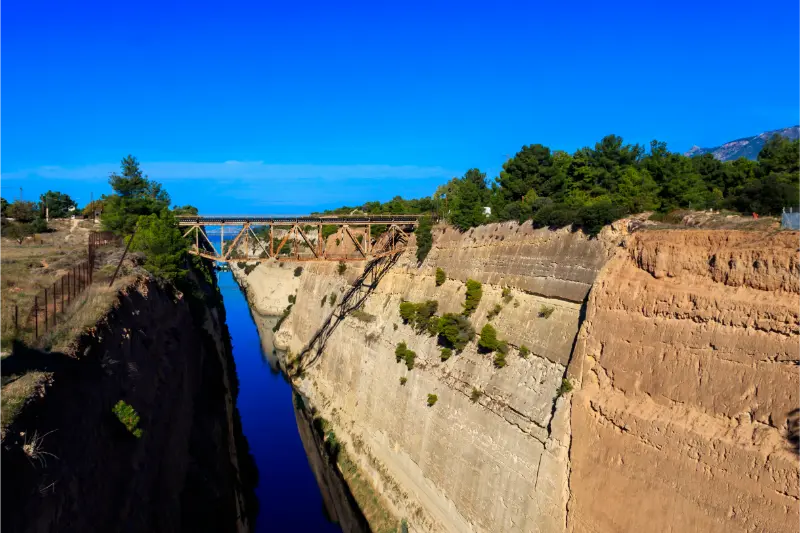
The city also helps separate three places that visitors often confuse: modern Corinth, the archaeological site of Ancient Corinth several kilometres inland, and the Corinth Canal at the isthmus. Staying in modern Corinth gives you urban services and transport while keeping both historic areas close.
Why this Corinthia stop is worth your time
Choose Corinth if you want an efficient transport base, a local city atmosphere and easy road access in several directions. It suits travellers arriving by suburban rail, people continuing west toward Patras, and road trippers who want to visit Ancient Corinth, Acrocorinth and the canal without staying in a tourist village. It is not the place I would choose for a purely beach-focused holiday, but it is excellent for logistics and short cultural stays.
Quick planning summary
- Best all-round seasons: April to June and September to October for sightseeing, walking and comfortable road trips.
- July and August: best for a classic beach holiday, but start archaeological visits early and expect more traffic on weekends.
- Winter: excellent for Trikala Corinthias, Ziria and Feneos when roads are clear; snow equipment may be necessary at altitude.
- Transport: coastal towns are reachable by bus or rail in several cases, while mountain routes and Perachora are much easier with a car.
- Driving: motorway distances are short, but mountain roads are slower than map estimates suggest.
- Always recheck: archaeological hours, KTEL or rail timetables, ski-centre operation, wildfire restrictions and mountain-road conditions.
What to see and do
Seafront and Pegasus Square
Begin around the central waterfront and Pegasus Square. The city is modern, open and easy to navigate on foot, with cafés, restaurants and everyday shops. The seafront is best in the evening when local life moves outdoors. Do not expect a preserved Ottoman or Venetian old town; Corinth’s interest is contemporary urban life combined with its extraordinary historical surroundings.
Allow more time than the map suggests. Corinthia changes quickly from motorway and coast to narrow village roads, archaeological paths or mountain terrain, so one well-planned stop is usually more satisfying than three rushed ones.
Historical and Folklore context
Small cultural venues and local collections help place modern Corinth after the earthquakes and rebuilding that shaped the present city. Opening hours for local museums can be limited, so verify them before planning a dedicated visit. The larger archaeological story is better handled at Ancient Corinth’s museum and the sites around the isthmus.
Allow more time than the map suggests. Corinthia changes quickly from motorway and coast to narrow village roads, archaeological paths or mountain terrain, so one well-planned stop is usually more satisfying than three rushed ones.
Corinth Canal viewpoints
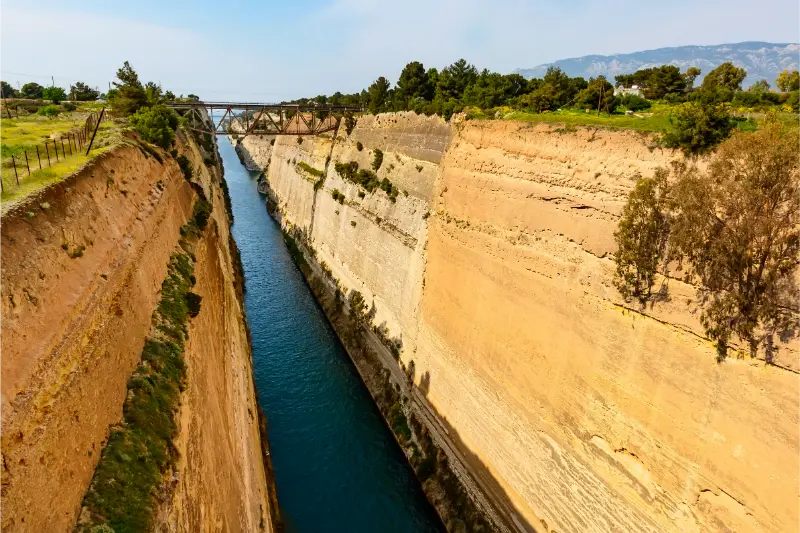
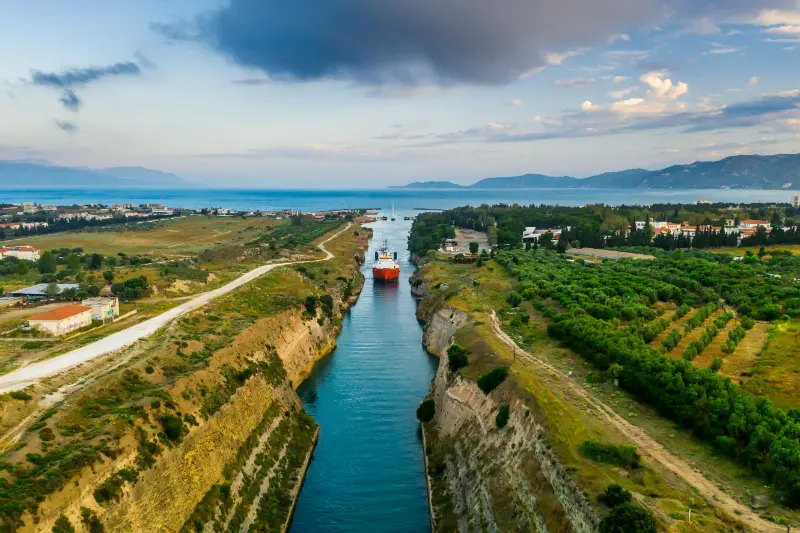
The canal is close enough for an easy visit by taxi or car. Use an official or established viewpoint rather than stopping unsafely on road shoulders. The straight cut through the isthmus is most impressive when you understand its scale and the much older idea of moving vessels across the land corridor via the ancient Diolkos.
Allow more time than the map suggests. Corinthia changes quickly from motorway and coast to narrow village roads, archaeological paths or mountain terrain, so one well-planned stop is usually more satisfying than three rushed ones.
Ancient Corinth
The archaeological site has the Temple of Apollo, Roman forum, fountains and a museum, and deserves several unhurried hours. It was a major Greek city and later the capital of Roman Achaea. The Apostle Paul connection is important to many visitors, but the site is much broader than one religious association. Go early for heat and photography.
Allow more time than the map suggests. Corinthia changes quickly from motorway and coast to narrow village roads, archaeological paths or mountain terrain, so one well-planned stop is usually more satisfying than three rushed ones.
Acrocorinth
Acrocorinth is the fortified height above the ancient city. It involves uneven uphill walking, exposed stone and large distances within the walls. Good shoes and water matter. The panorama helps you understand why control of the isthmus was strategically valuable across Greek, Roman, Byzantine, Frankish, Venetian and Ottoman periods.
Allow more time than the map suggests. Corinthia changes quickly from motorway and coast to narrow village roads, archaeological paths or mountain terrain, so one well-planned stop is usually more satisfying than three rushed ones.
Easy onward trips
From Corinth you can move east to Loutraki and Perachora, south toward Nemea and Argolis, or west toward Kiato and Xylokastro. That makes it an efficient hub for travellers who prefer one practical hotel over changing accommodation every night.
Allow more time than the map suggests. Corinthia changes quickly from motorway and coast to narrow village roads, archaeological paths or mountain terrain, so one well-planned stop is usually more satisfying than three rushed ones.
A realistic itinerary
- Day 1: arrive, explore the central waterfront and use the evening for a relaxed local dinner.
- Day 2: visit Ancient Corinth early, continue to Acrocorinth, then return to the city for the evening.
- Day 3: stop at the Corinth Canal and Isthmia before either continuing to Athens or starting a wider Peloponnese road trip.
Keep at least one part of the day flexible. Wind can change the best swimming coast, heat can make an exposed archaeological site unpleasant, and mountain weather can close or slow roads. A backup lunch, village walk or seaside stop is more useful than a rigid minute-by-minute schedule.
Where to stay
The city centre and waterfront are the most convenient areas for travellers without a car. Drivers can consider accommodation slightly outside the core if secure parking and motorway access matter more than nightlife. Check walking distance to the railway station if arriving by train because “Corinth” listings can cover a wider area than expected.
Before booking, check the exact pin on the map rather than relying only on the destination name. Coastal listings can stretch along several kilometres, while mountain properties may be on steep lanes. Confirm parking, heating or air conditioning, and whether dinner is realistically walkable.
For accommodation, compare current options on Booking.com. Map view and recent reviews are especially useful for parking, road noise, beach access and winter heating.
Getting there and getting around
Corinth is connected with Athens by road and suburban rail. For archaeological sites, taxis or a rental car save significant time because Ancient Corinth and Acrocorinth are not in the modern centre. The city also works as a connection point for buses toward other Peloponnese destinations, but schedules should be checked on the exact travel date.
Corinthia is close to Athens, but that does not mean every attraction is easy by public transport. The Athens–Corinth–Kiato corridor is the simplest without a car. Perachora, wineries, Acrocorinth and the highlands require more planning. If you drive, use legal parking and never block emergency or forest access.
Best time to visit
Spring is excellent for archaeological sites, wildflowers, hiking and mountain driving, although canyon routes can carry more water. June and September balance warm sea temperatures with easier sightseeing. July and August suit beach-focused trips but require early starts. Autumn is strong for food, wine and forest colour, while winter belongs to the mountain villages and occasional snow around Ziria and Feneos.
Microclimates matter. Loutraki can be mild while Trikala Corinthias is cold and cloudy; a calm gulf morning can turn windy by afternoon. Check both coastal and mountain forecasts when the itinerary changes altitude.
Food and local products
Eat where locals do rather than treating meals as a sightseeing exercise. Seafood from the gulf, grilled meats, pies, seasonal vegetables, local olive oil and wines from nearby Nemea are natural choices. For breakfast, bakeries are often faster and better value than hotel buffets if you are leaving early for archaeological sites.
Corinthia sits between sea, vineyards and mountain agriculture. Across the region look for fresh fish, olive oil, citrus, raisins, honey, cheeses, pies and Agiorgitiko wines from Nemea. The best meal is often a simple taverna dish that matches the landscape you are visiting rather than a generic tourist menu.
Travelling with children
Modern Corinth is easy with children because services, pharmacies and supermarkets are close. The challenge is archaeological heat. Split Ancient Corinth and Acrocorinth if children are young, and do not assume a fortress visit after a full museum morning will be enjoyable for everyone.
For family trips, alternate ruins with water, forest or village time. Shade is limited at many archaeological sites, and mountain roads can cause motion sickness. Carry water and snacks, avoid the strongest midday heat, and choose one main objective per half-day.
Costs and practical details
Corinthia can be good value because many landscape attractions cost little or nothing. Budget separately for archaeological tickets, spa sessions, wine tastings, organised canyoning, ski activities, tolls and fuel. Carry some cash in mountain villages and do not assume every small seasonal business accepts cards during network outages.
How this guide fits the wider region
Continue planning with Ancient Corinth and Canal guide; Acrocorinth guide; Isthmia and Corinth Canal; Loutraki guide. These pages are designed as one Corinthia cluster so you can move from coast to archaeology and mountains without duplicating research.
Common mistakes
- Confusing modern Corinth, Ancient Corinth and the canal as one walkable attraction.
- Skipping the archaeological museum at Ancient Corinth.
- Walking Acrocorinth in sandals or without water.
- Choosing accommodation by name alone without checking its exact map position.
- Using Corinth only as a petrol stop when it could simplify several regional day trips.
Frequently asked questions
How many days do I need in Corinthia?
Three days can cover the canal, Ancient Corinth and one coast or mountain area. Five days gives enough time to include Loutraki, Perachora, Nemea, western Corinthia and the Feneos highlands without constant driving.
Can I visit without a car?
Yes for Corinth, Loutraki, Kiato and parts of Xylokastro, using rail, KTEL and taxis. A car becomes much more useful for Perachora, Acrocorinth, wineries, Ziria and Lake Doxa.
Is Corinthia only a stop between Athens and Nafplio?
No. The region combines major archaeology, thermal tourism, gulf beaches, Nemea wine country and high mountains. It can easily fill a dedicated long weekend or a five-day road trip.
What is the biggest planning risk?
Trying to combine coast, archaeology and mountains in one day because distances look small. Road type, heat and opening hours matter more than kilometres.
What should I verify shortly before travelling?
Archaeological opening hours and ticket rules, current public-transport timetables, ski-centre operation, wildfire or trail restrictions, road conditions in the highlands and marine weather for swimming or boat activities.
Useful official source
For details that can change, check Visit Greece – Corinth and confirm current access, opening hours or transport close to your travel date.
Final advice
Corinthia rewards travellers who stop thinking of it as the first motorway section after Athens. Use the short distances intelligently: stay on the coast when you want easy evenings, dedicate a full day to the mountains, visit archaeological sites early, and leave room for a long lunch or unexpected viewpoint. That slower rhythm is what turns a transit region into a memorable part of a Greece trip.