
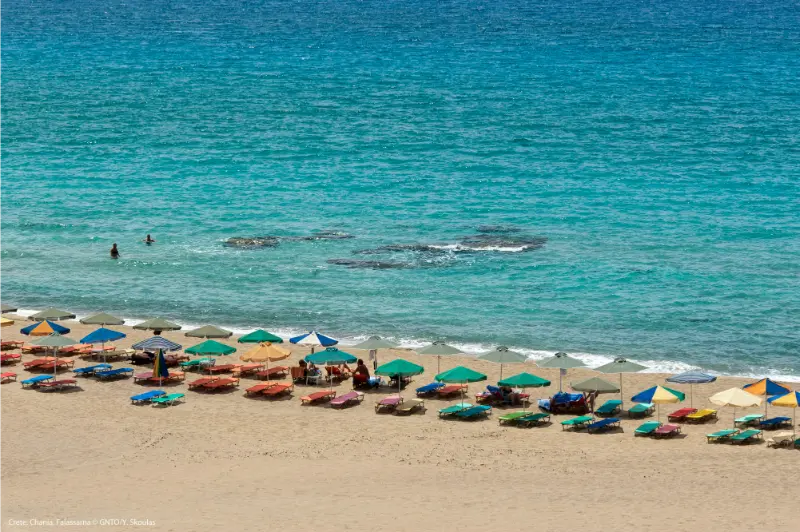
Falassarna is one of western Crete’s easiest big-beach days: a broad stretch of sand, open sea, clear water, organised sections and enough space to feel less compressed than some of the island’s headline lagoons. The wider area actually includes several beaches, with Pachia Ammos the best-known. Its west-facing position also makes sunset part of the experience. The trade-off is exposure: when the wind is strong, waves can be significant and the beach feels very different from a sheltered cove.
This guide is designed to help you decide not only what to see at Falassarna Beach Crete Guide, but how to fit it into a wider Greece itinerary without wasting time. For the bigger picture, use the Chania Travel Guide. You can also continue with the Elafonissi Beach Guide when it matches your route.
Why Falassarna Beach Crete Guide is worth adding to your trip
The strongest reason to include Falassarna Beach Crete Guide is that it offers a very specific experience rather than another generic stop. The landscape, local rhythm and practical details are different enough to justify dedicated time. It also works well as part of a larger route, so you do not need to build your entire holiday around it. The key is to give the place enough time to move beyond the first photograph: walk a little farther, arrive outside the busiest hour and leave space for a meal, swim, museum room or viewpoint that is not dictated by a checklist.
Top things to see and do
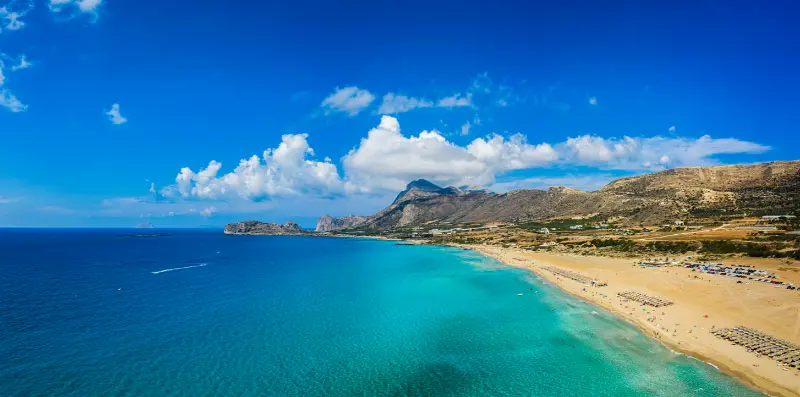
- Pachia Ammos and the long sandy shoreline
- clear water on calm days
- sunset over the western horizon
- ancient Falassarna nearby
- space for long beach walks
- easy pairing with Kissamos or northwest Crete
Pachia ammos and the long sandy shoreline
Pachia ammos and the long sandy shoreline is one of the defining parts of the visit. Rather than treating it as a five-minute photo stop, look at how it fits the setting around it. Arriving earlier or later than the main rush usually changes the experience significantly. Take time to notice access, shade, wind, pedestrian routes and where people naturally congregate; moving just a short distance from the obvious focal point often gives you a quieter view and a better understanding of the place.
Clear water on calm days
Clear water on calm days is one of the defining parts of the visit. Rather than treating it as a five-minute photo stop, look at how it fits the setting around it. Arriving earlier or later than the main rush usually changes the experience significantly. Take time to notice access, shade, wind, pedestrian routes and where people naturally congregate; moving just a short distance from the obvious focal point often gives you a quieter view and a better understanding of the place.
Sunset over the western horizon
Sunset over the western horizon is one of the defining parts of the visit. Rather than treating it as a five-minute photo stop, look at how it fits the setting around it. Arriving earlier or later than the main rush usually changes the experience significantly. Take time to notice access, shade, wind, pedestrian routes and where people naturally congregate; moving just a short distance from the obvious focal point often gives you a quieter view and a better understanding of the place.
Ancient falassarna nearby
Ancient falassarna nearby is one of the defining parts of the visit. Rather than treating it as a five-minute photo stop, look at how it fits the setting around it. Arriving earlier or later than the main rush usually changes the experience significantly. Take time to notice access, shade, wind, pedestrian routes and where people naturally congregate; moving just a short distance from the obvious focal point often gives you a quieter view and a better understanding of the place.
Space for long beach walks
Space for long beach walks is one of the defining parts of the visit. Rather than treating it as a five-minute photo stop, look at how it fits the setting around it. Arriving earlier or later than the main rush usually changes the experience significantly. Take time to notice access, shade, wind, pedestrian routes and where people naturally congregate; moving just a short distance from the obvious focal point often gives you a quieter view and a better understanding of the place.
Where to stay
Falassarna is most practical as a day trip from Chania, Kissamos or accommodation in western Crete. A rental car gives the most flexibility, especially if you want to stay for sunset. Seasonal buses may operate, but schedules should be checked locally because they can change outside peak summer.
When comparing accommodation, look at walking time and road access rather than distance in a straight line. On Greek islands, a hotel that appears close on a map can involve a steep climb, a busy road or difficult parking. For short stays, convenience is usually worth more than a small saving. For longer stays, choose a base that makes your most important day trips easy rather than trying to be equally close to everything.
Best time to visit
Choose a day with moderate wind rather than simply the hottest day of your trip. Early morning is quieter; late afternoon is excellent if you want sunset. Families should assess waves carefully because the open western coast can become rough even when conditions elsewhere on Crete seem calm.
Weather in Greece can change the character of a day even in summer. Wind is especially important on exposed islands and beaches, while heat matters at archaeological sites and on steep walking routes. Check the forecast the evening before and be willing to swap beach, museum and village days. Shoulder season travellers should also verify seasonal buses, boats and restaurant opening days because services are less frequent than in July and August.
How to get there and get around
For Falassarna Beach Crete Guide, transport should be planned around the wider region rather than in isolation. Rental cars offer flexibility for beaches and villages, but they are unnecessary in compact pedestrian centres. Buses can be excellent on popular summer routes but are less useful for combining several remote stops in one day. Taxis solve short gaps but become expensive if used as a substitute for a full-day car. If boats are part of the experience, confirm departure point, return time and cancellation policy before committing to the rest of your itinerary.
A realistic day plan
Arrive before late morning, choose the section of beach that matches your preference for facilities or space, and swim only in conditions that feel comfortable. Break the beach day with a visit to the ancient site if open and accessible, then return for the softer afternoon light and sunset.
Keep at least one flexible hour in the plan. That buffer absorbs parking delays, a longer lunch, a change in sea conditions or simply the discovery of a place where you want to stay. Greece rewards travellers who protect the essential logistics but do not schedule every thirty minutes. The goal is a day that feels full without becoming a race.
Food and drink
Do not choose a restaurant at Falassarna Beach Crete Guide only because it occupies the most photogenic terrace. Walk one or two streets away from the busiest viewpoint and compare menus, local clientele and whether dishes are cooked to order. Look for seasonal vegetables, grilled fish where appropriate, local cheeses, pies and regional wine. A long Greek lunch can be part of the sightseeing rather than a break from it, especially during the hottest hours of the day.

What to pack
- refillable water bottle
- sun hat and high-SPF sunscreen
- comfortable shoes with grip
- light layer for wind or evening
- swimwear and quick-drying towel when relevant
- offline map and enough phone battery
- small amount of cash for minor purchases
Footwear matters more than many visitors expect. Whitewashed towns can have polished stone, archaeological sites are uneven, and beach access may involve rough paths or stairs. Pack for the actual terrain rather than the photograph. In high summer, carrying water is not optional, particularly where natural shade is limited.
Common mistakes to avoid
- arriving at the same peak hour as everyone else
- assuming parking will be easy in July or August
- ignoring wind and sea conditions
- trying to combine too many distant stops
- booking transport without checking the return journey
- treating protected natural or archaeological areas like ordinary leisure spaces
The most common planning mistake at Falassarna Beach Crete Guide is overestimating how much fits into one day. Distances on a map are only part of the calculation: summer traffic, queues, steep access and the simple desire to stop for a swim or meal all add time. Build a route around two or three priorities and let secondary stops remain optional.
Is it good for families?
In most cases, yes, provided you adapt the day to heat, walking distance and water conditions. Families should start earlier, schedule shade and food before children are tired, and avoid building a day around a difficult late-afternoon return. Beaches with open sea require active supervision regardless of how clear the water looks. At museums and archaeological sites, a shorter focused visit is often more successful than trying to see every gallery or ruin.
Is it worth visiting without a car?
Often yes, but the answer depends on your base and season. Compact towns and major sights can be easier without a vehicle, while remote beaches and multi-stop road trips favour a car. If you prefer not to drive, design the itinerary around one well-connected base and use buses, organised excursions, boats or occasional taxis instead of trying to reproduce a driving itinerary with public transport.
FAQ
How much time do I need?
Allow at least half a day for a focused visit and longer if you are combining it with swimming, a museum, a boat trip or a long meal.
Do I need to book in advance?
For accommodation, popular summer restaurants, major museums and organised boat trips, advance booking is sensible in peak season. Simple beach visits and town walks usually do not require reservations.
What is the best time of day?
Early morning is usually best for lower temperatures and fewer people. Late afternoon can offer beautiful light, but always consider transport, wind, closing times and the journey back.
Can I visit in the shoulder season?
Yes. May, June, September and early October are often excellent, although seasonal transport and businesses may operate on reduced schedules outside the core summer months.
Should I trust old prices and timetables online?
No. Entrance fees, boat schedules, buses and access rules can change. Recheck official or local information shortly before the visit.
Final advice
Build your visit to Falassarna Beach Crete Guide around the conditions you actually find rather than a rigid online itinerary. Arrive with two or three priorities, verify any time-sensitive access information, and leave enough space to enjoy the setting. That approach gives you better photographs, calmer meals and a much more convincing sense of place than trying to collect every attraction in the shortest possible time.