
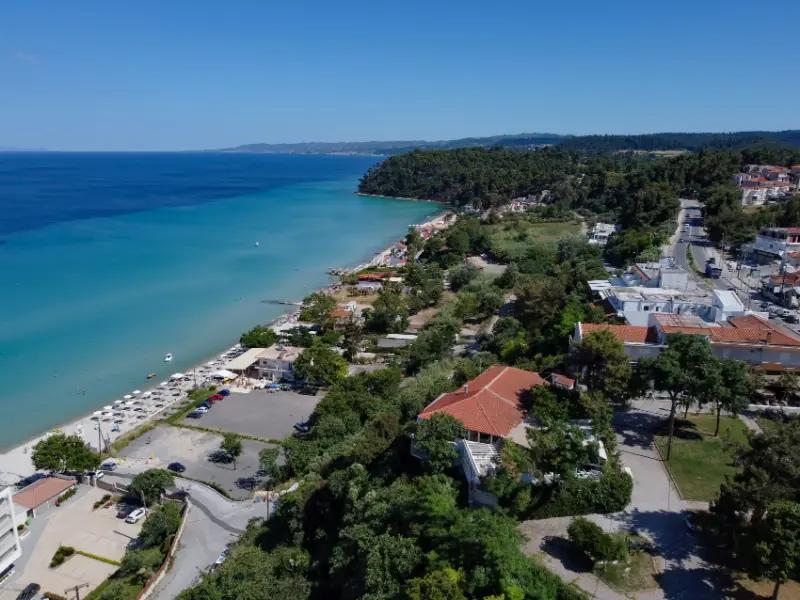
Kassandra is the western peninsula of Halkidiki and the easiest choice when you want classic beach holidays with a large concentration of hotels, restaurants, nightlife and organised services. It is also the closest of Halkidiki’s three peninsulas to Thessaloniki, which makes it attractive for shorter trips and for travellers who do not want a complicated road itinerary.
That convenience can make Kassandra sound generic, but it is more varied than the resort strip suggests. Afitos preserves stone-built village character above the Toroneos Gulf, Kallithea is one of the main commercial and nightlife centres, Nea Fokea adds a historic seafront stop, and the southern half becomes more relaxed around Pefkochori, Chrousso, Possidi and the thermal-spring area of Agia Paraskevi.

Why it is worth adding to your itinerary
The value is variety without extreme distances. You can combine one excellent swim, one village and one scenic drive in the same day without turning the itinerary into a race. The key is choosing fewer stops and giving the landscape time to change around you.
What to see and do
Walk Afitos slowly
Afitos is the place I would protect from an overfilled beach schedule. The village sits on a natural balcony above the gulf and keeps stone houses, cobbled streets and a traditional square. The local tourism authority highlights its preserved character and Folklore Museum. Go early or late, walk without a rigid route and stay for a meal with a view rather than treating it as a 20-minute photo stop.
Use Kallithea for energy and services
Kallithea is one of Kassandra’s main commercial hubs and is known for nightlife as well as beach access. That makes it useful if your group wants restaurants and activity after dark. It is less suitable if your priority is silence. Choose accommodation a little away from club areas if you want the convenience without the late-night soundtrack.
Add Nea Fokea
Nea Fokea gives the itinerary a more local harbour feel and breaks up the resort rhythm. It is an easy stop when moving along the east coast and works well for an early dinner. Do not force it into the same day as every major village; its value is that it lets the trip slow down.
Explore the southern beaches
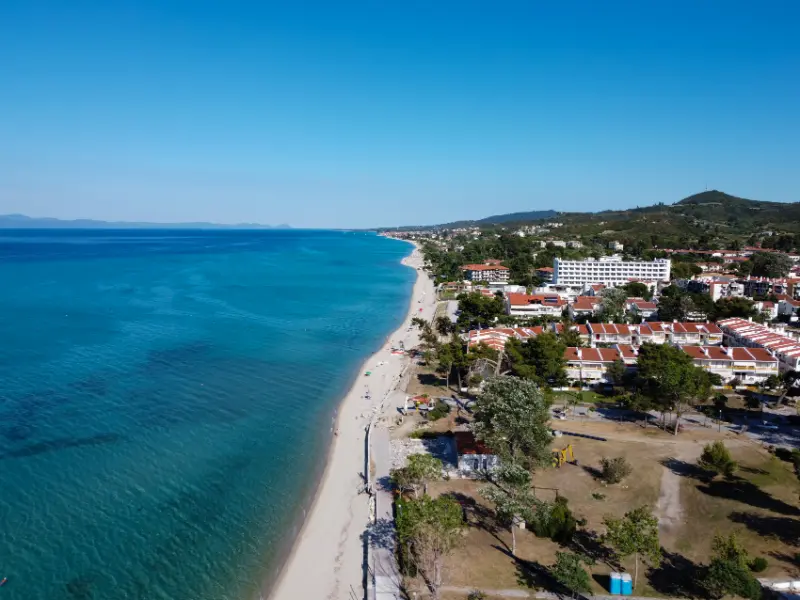
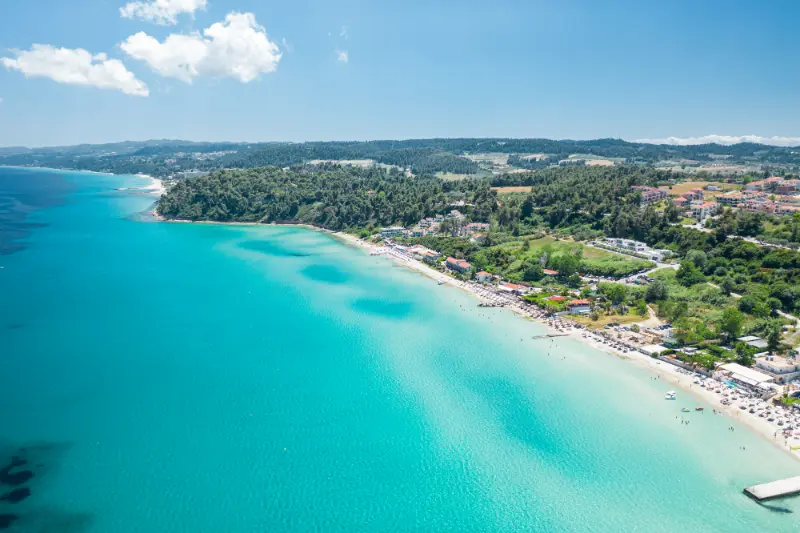
Pefkochori and Hanioti are busy bases with plenty of services, while beaches farther south can feel more spacious depending on season and wind. Rather than chasing a list, choose one beach for the morning and one village or sunset stop later. Kassandra works best when you stop measuring success by the number of pins visited.
Drive to the Possidi side
The west side gives different light, sea exposure and sunset possibilities from the east. Possidi and the surrounding coast are worth a dedicated half-day rather than a quick detour. Conditions can vary, so respect signs and currents and avoid walking onto exposed sand formations in rough weather.
A realistic itinerary
| Part of the day | Plan |
|---|---|
| Day 1 | Afitos village, beach and relaxed dinner |
| Day 2 | Kallithea beach and evening nightlife if wanted |
| Day 3 | Hanioti and Pefkochori with one long beach stop |
| Day 4 | Southern loop and Agia Paraskevi area |
| Day 5 | Possidi side, Nea Fokea or a flexible favourite beach |
Use this as a framework rather than a strict timetable. Northern Greece rewards flexibility: traffic, wind, mountain weather, ferry operations and opening hours can change the rhythm of a day. Protect the main experience and treat secondary stops as optional. That produces a better trip than racing to every pin saved on a map.
How to get there and move around
Kassandra is the easiest Halkidiki peninsula to reach by road from Thessaloniki, but peak-summer traffic can erase that advantage at popular times. A car is useful for village hopping, though travellers who want a simple resort holiday can choose one base and move less. Do not change hotels every night; the peninsula is small enough that one or two bases are usually sufficient.
How to plan the driving
Northern Greece often looks compact on a map, but coastal roads, village streets and summer traffic can slow a day dramatically. Choose one side of a peninsula for the morning and another for late afternoon instead of zigzagging between famous beaches. Download an offline map, keep fuel above half a tank on long loops, and treat scenic pull-offs as optional rather than mandatory stops.
Beach-day rhythm
A strong beach day is not necessarily the one with the most beaches. Arrive early at the place you care about most, swim while the water and parking are calmer, take a long lunch or shaded break, then move once in late afternoon. That rhythm usually produces more time in the sea and less time queuing behind rental cars.
Best time to visit
June and September are ideal for most travellers. July and August bring the fullest nightlife and warmest resort atmosphere, but they also bring higher demand, heat and traffic. May can be lovely for sightseeing with cooler water, while October is more weather-dependent but attractive for quiet road trips.
Check the same-day weather and any official operating information shortly before you leave. Northern Greece can combine coastal heat, mountain cloud and strong wind within the same regional itinerary. Planning by conditions rather than by a rigid spreadsheet is one of the easiest ways to improve the trip.
Food and local rhythm
Afitos is good for a slower dinner, Kallithea and Pefkochori have the widest range of options, and smaller waterfront stops are better when you want fish without a party atmosphere. Avoid choosing every restaurant by online popularity; a simple taverna close to where you already are is often the better travel decision.
Do not compress every meal into the smallest possible gap between attractions. A long lunch or early dinner is also a planning tool: it gives you shade, hydration and time to decide whether the next stop still makes sense. This matters even more on driving, hiking and boat days.
How to combine it with nearby places
After Kassandra, spend several nights in Sithonia if you want more scenic beach-hopping. For a cultural and island contrast, continue east to Ouranoupoli and Ammouliani.
When building a longer route, group places by geography. A northern-Greece itinerary becomes tiring when each day starts with a two-hour transfer in the opposite direction. Two or three nights per base usually produces more walking, swimming and local evenings than changing hotels every day.
Where to stay
Choose accommodation according to the part of the day you value most. If evenings on foot matter, stay near the village or waterfront centre. If road-trip access and parking matter more, a property on the edge can be the smarter choice. Read parking details carefully: “parking nearby” is not the same as a guaranteed private space.
Practical planning notes
Download an offline map before leaving the main city or resort area. Mobile coverage is generally good but can weaken in mountains, wetlands and isolated coastal stretches. Save the official destination name and your accommodation pin, and carry a charging cable or power bank on days with heavy navigation and photography.
Carry water, sun protection and a light layer even when the forecast looks simple. Coastal wind can cool a boat quickly, while archaeological parks and wetland roads can be completely exposed. In hiking areas, replace casual footwear with shoes that have reliable grip. Small preparation choices make a bigger difference than adding another attraction.
If you are travelling with children or older relatives, judge difficulty by heat, surfaces and standing time rather than kilometres. A short archaeological site under strong sun can feel harder than a longer shaded walk. Build in benches, café stops and permission to skip the final viewpoint.
Common mistakes to avoid
- Choosing Kallithea when you actually want silence
- Driving the full peninsula every day from the same northern base
- Skipping Afitos because it is not directly on a famous beach
- Expecting every beach to have identical wind and sea conditions
- Parking in residential lanes without checking restrictions
- Treating Kassandra only as nightlife and missing its villages
Official information
For current opening hours, tickets, access rules or regional information, check Visit Kassandra – official municipal tourism site shortly before the trip. I prefer official sources for variable details because transport timetables, admission prices and seasonal operations can change after older travel articles were published.
Frequently asked questions
Is Kassandra good for families?
Yes. It has extensive accommodation and organised beaches; choose a quieter base rather than the main nightlife areas.
Where is the best nightlife?
Kallithea is the best-known hub, with additional evening activity in larger resort towns such as Pefkochori and Hanioti.
How many days are enough?
Three days covers the main highlights; five gives you time to enjoy beaches rather than simply drive between them.
Should I stay in Afitos?
Yes if atmosphere and walkable evenings matter. It is one of Kassandra’s most distinctive villages.
Can I visit without a car?
Yes for a resort-based holiday, but a car makes village and beach exploration much easier.
Final advice
Build the day around one clear reason for coming, then let the surrounding region add depth. Northern Greece is especially rewarding when you leave margin for a good meal, a change in weather or a place you did not expect to enjoy. The goal is not maximum coverage; it is a route that still feels enjoyable on the final day.
For the wider picture, continue with Halkidiki Travel Guide, Sithonia Guide, Ouranoupoli Guide. These guides connect this stop to the rest of the region without unnecessary backtracking.