

Kastoria is one of northern Greece’s most distinctive city breaks: a lakeside settlement where Byzantine churches, merchant mansions and mountain scenery sit within an easy walking radius. It is ideal for travellers who want a different side of Greece and are willing to slow down for the lake, the old quarters and the surrounding villages.
Why Kastoria deserves more than a quick stop
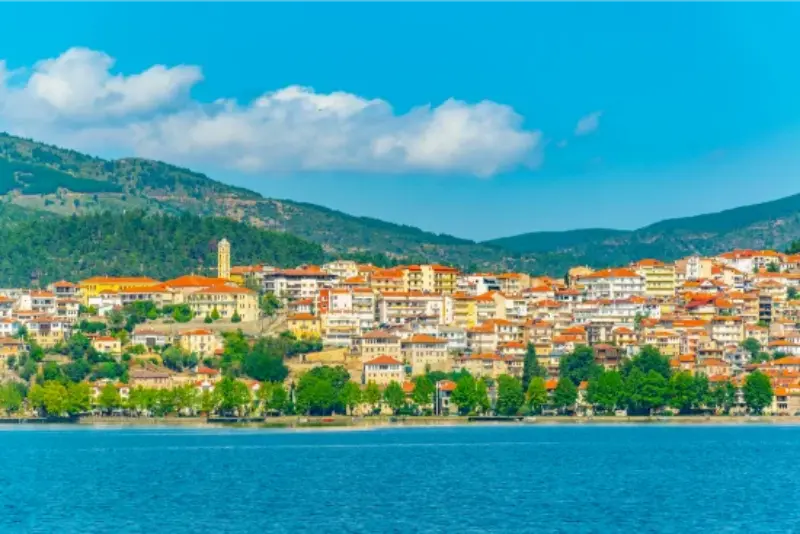
Kastoria is one of those mainland Greek cities that immediately feels different from the classic island image. The old town wraps around a narrow peninsula on Lake Orestiada, and the water is never just a backdrop: it shapes the walks, the light, the birdlife and the pace of the city. The result is a destination that works equally well for a romantic weekend, a northern Greece road trip or a slower cultural break between larger stops.
The city also rewards travellers who enjoy architecture and history. The Doltso and Apozari quarters preserve mansions linked to Kastoria’s commercial past, while Byzantine and post-Byzantine churches appear throughout the historic fabric. Instead of rushing from monument to monument, the best approach is to alternate short cultural visits with long lakeside walks and meals in neighbourhood tavernas.
Lake Orestiada: the heart of the city
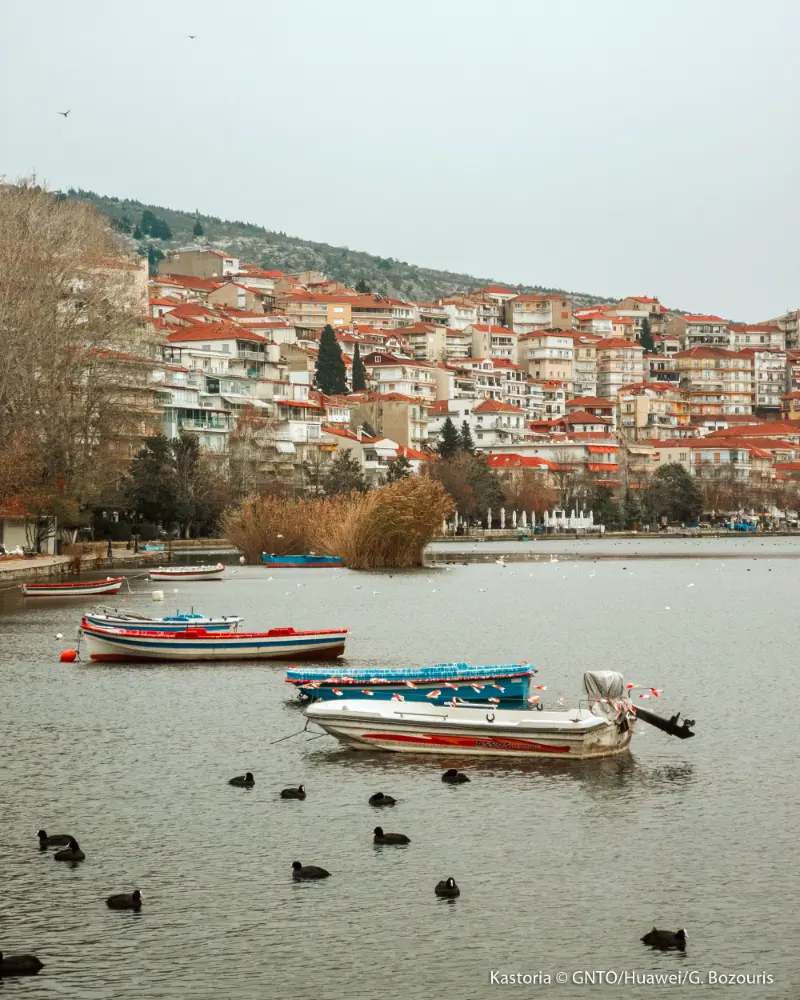
Lake Orestiada is the organising principle of Kastoria. A full circuit by car or bicycle reveals quiet viewpoints, reed beds, small chapels and changing perspectives of the peninsula. If you prefer to stay on foot, the promenade around the old quarters is enough to understand why Kastoria is considered one of the most atmospheric cities in northern Greece. Early morning is especially calm, while late afternoon brings softer light over the water.
The lake supports rich birdlife, so binoculars are useful even if you are not a dedicated birdwatcher. More than 200 bird species have been recorded in the wider wetland environment according to the Greek tourism authority. Treat the shore as a living ecosystem rather than simply a scenic park: keep to paths, avoid disturbing nesting birds and give yourself time to stop rather than turning the circuit into a checklist.
Doltso and Apozari: walking through old Kastoria
Doltso is the quarter I would prioritise on a first visit. Its narrow streets, stone walls and surviving mansions show the prosperity that once came through trade and the fur industry. Several buildings are not open as conventional attractions, but the pleasure is in the urban texture: courtyards, churches, lake views and details that make the area feel lived-in rather than staged for visitors.
Apozari, on the other side of the peninsula, offers a similarly elegant but quieter atmosphere. Linking Doltso and Apozari on foot gives you a natural half-day route and prevents the common mistake of seeing Kastoria only from the waterfront. Wear comfortable shoes because the historic streets include slopes and uneven surfaces.
Byzantine churches and museums
Kastoria has an unusually dense collection of Byzantine and post-Byzantine churches for a city of its size. Opening hours can vary, so it is more realistic to choose a few that fit your route than to expect to enter every church you pass. The Byzantine Museum is the best context-setting stop because its icons help explain the artistic importance of the city and the region.
If you enjoy local history, pair the religious heritage with one of the mansion museums in the old quarters. This combination explains both sides of Kastoria’s identity: a city shaped by Orthodox culture and by wealthy merchant families whose houses still define the old neighbourhoods.
The Dragon’s Cave and the lakeside route
A short distance from the centre, the Dragon’s Cave adds a natural stop to a mostly urban visit. The cave is known for underground chambers, lakes and formations, and it sits on the scenic road that follows the peninsula. Because access arrangements and visiting hours can change seasonally, check locally before building your day around a specific time slot.
The same side of the peninsula is ideal for a relaxed drive or cycle. Combine the cave with lakeside viewpoints and a stop at the Monastery of Panagia Mavriotissa. The point is not to cover maximum distance; it is to experience the transition from city streets to water, woodland and religious sites within a very compact area.
Where to stay in Kastoria
For a first visit, staying near the lake or in the old quarters gives you the strongest sense of place. Doltso is atmospheric and works especially well for couples, while the modern centre is practical for parking, cafés and services. Properties on the outer lake road can offer views and easier car access but may require more driving for evening meals.
If Kastoria is one stop in a longer road trip, prioritise easy parking over a romantic lane that is difficult to reach with luggage. In winter, also check whether the property has reliable heating and whether access roads are straightforward in bad weather. The city can be cold, and mountain conditions nearby are very different from coastal Greece.
What to eat and when to linger
Northern Greek cuisine is one of the reasons to slow down here. Look for bean dishes, pies, grilled meats, lake fish when available, local cheeses and seasonal mountain ingredients. Rather than searching for one famous restaurant, choose places that are busy with local diners and ask what is seasonal that day.
Kastoria suits long lunches especially well in colder months. In summer, the rhythm shifts toward shaded cafés and evening walks by the water. If you are combining Kastoria with the wider Macedonia region, compare this food culture with the markets and urban dining of the Thessaloniki guide.
A practical 3-day Kastoria itinerary
- Day 1: settle in, walk the lakefront, explore Doltso and Apozari, and finish with dinner near the historic centre.
- Day 2: visit the Byzantine Museum, selected churches, the Dragon’s Cave and the lakeside road around the peninsula.
- Day 3: make a regional excursion to Nymfaio, Prespa or another western Macedonia stop, depending on season and road conditions.
Three days gives Kastoria breathing room. With only one night, you can still enjoy the waterfront and old town, but you will miss the wider landscape that makes the city such a useful base. If you have four or five days, combine it with the new guides to Prespa Lakes and Nymfaio.
Best time to visit Kastoria
Spring and autumn are excellent for walking, birdlife and road trips without the heat of southern Greece. Summer is warm but generally less oppressive than lowland Athens, and evenings by the lake can be pleasant. Winter is the most atmospheric season if you enjoy fireplaces, mountain food and the possibility of snow in the surrounding region.
Do not treat winter weather casually. Frost, fog and mountain road conditions can affect excursions even when central Kastoria is clear. If you are driving, check forecasts and local advice before heading toward higher villages.
How to get there and get around
A car is the most flexible option for Kastoria because the city is far from the main tourist corridors and the surrounding destinations are spread across western Macedonia. Kastoria also has a small airport, while intercity buses link the region with larger Greek cities; schedules should always be checked close to travel because frequencies can change.
Inside the city, you can do most sightseeing on foot if you stay centrally. Use the car for the full lake circuit and regional day trips. If Kastoria is part of a longer northern Greece itinerary, read the Driving in Greece guide before planning mountain routes.
Frequently asked questions
How many days do you need in Kastoria?
Two full days are enough for the city and lake, while three days allow a relaxed regional excursion.
Is Kastoria worth visiting without a car?
Yes for the city itself, but a car makes day trips to Prespa, Nymfaio and mountain villages much easier.
Is Kastoria good in winter?
Yes. It is especially atmospheric in winter, but cold temperatures, fog and snow can affect surrounding roads.
Can you walk around Lake Orestiada?
You can walk long scenic sections from the city, while a full circuit is more practical by bicycle or car for most visitors.
What is Kastoria known for?
It is known for Lake Orestiada, Byzantine churches, historic mansions, old neighbourhoods and its long connection with the fur trade.
Extra practical planning note
One final planning point is to keep the lake and the old town on separate halves of the day. Kastoria looks compact, but photography stops, church visits and meals quickly stretch the schedule. If you are continuing to another mountain destination, refuel before leaving the city and avoid planning a long arrival drive after dark in winter.
Extra practical planning note
One final planning point is to keep the lake and the old town on separate halves of the day. Kastoria looks compact, but photography stops, church visits and meals quickly stretch the schedule. If you are continuing to another mountain destination, refuel before leaving the city and avoid planning a long arrival drive after dark in winter.
Extra practical planning note
One final planning point is to keep the lake and the old town on separate halves of the day. Kastoria looks compact, but photography stops, church visits and meals quickly stretch the schedule. If you are continuing to another mountain destination, refuel before leaving the city and avoid planning a long arrival drive after dark in winter.
Final advice
Give Kastoria at least two nights and let the lake set the pace. The city becomes much more memorable when you combine architecture and museums with unstructured walks, regional food and one excursion into western Macedonia.