

Kythnos is close enough to Attica for a relatively simple ferry trip, but it still feels understated compared with the headline Cyclades. The island combines whitewashed villages, dry valleys, small beaches and a long human history that is easy to miss if you visit only Kolona.
This guide is designed for independent travellers who want a realistic pace. Instead of treating the destination as a collection of photo stops, the plan leaves time for beaches, meals, transport delays and the simple pleasure of returning to the same square or waterfront more than once.
Why this destination is worth adding to a Greece trip
Kythnos is close enough to Attica for a relatively simple ferry trip, but it still feels understated compared with the headline Cyclades. The island combines whitewashed villages, dry valleys, small beaches and a long human history that is easy to miss if you visit only Kolona. It is particularly rewarding if you already know the most famous Greek destinations and want a trip with a stronger local rhythm.
The key is to match the destination to the right traveller. If your priority is nonstop nightlife, luxury shopping or a long list of major monuments, another Greek base may suit you better. If you value landscape, food, walking and days that are not over-scheduled, it can be an excellent choice.
How to get there and plan the arrival
Ferry connections vary by season and may use Lavrio or Piraeus depending on the service. Confirm the exact departure port before arranging an airport transfer. On arrival, Merichas is the main port and the practical transport hub for reaching Chora, Dryopida and beach areas.
I would avoid booking a tight international-flight-to-ferry or long-distance-bus connection on the same day. Greek transport is generally straightforward, but weather, traffic and seasonal timetables can turn an elegant spreadsheet into a stressful holiday. One buffer night is often worth more than an extra attraction.
Where to stay
Chora (Messaria)
The classic whitewashed capital, strongest in the evening when cafés and lanes become the focus. Choose this area if it matches the part of the trip you care about most; changing accommodation every night is rarely necessary.
Dryopida
A village with tiled roofs and a different architectural feel from chora. Choose this area if it matches the part of the trip you care about most; changing accommodation every night is rarely necessary.
Loutra
The northern seaside settlement associated with the island’s thermal-water tradition. Choose this area if it matches the part of the trip you care about most; changing accommodation every night is rarely necessary.
Merichas
Best for ferry convenience and straightforward access on arrival or departure days. Choose this area if it matches the part of the trip you care about most; changing accommodation every night is rarely necessary.
Kanala
A quieter southeastern base associated with the panagia kanala church and nearby beaches. Choose this area if it matches the part of the trip you care about most; changing accommodation every night is rarely necessary.
Best things to do
See Kolona from above and at water level
The narrow strip of sand connecting landforms is Kythnos’ signature image. Boat access can be attractive, but road and walking conditions should be checked if arriving independently.
Spend time in Dryopida
The inland village makes the island feel more complete. Its streets, churches and local museum options are a useful counterweight to beach days.
Explore Chora in the evening
Rather than rushing through at noon, visit when the sun softens and the lanes become social spaces.
Visit the Archaeological Museum
The museum in Chora presents finds spanning thousands of years of occupation, including material from ancient Vryokastro and prehistoric Maroulas. Check current opening days before planning around it.
Slow down in Loutra
The harbour and thermal-water history make Loutra a natural place for a quieter day in northern Kythnos.
Beaches and swimming
Beach conditions in Greece are shaped by wind as much as by sunshine. A beach that is perfect one morning can be exposed the next day, so ask locally and keep an alternative coast in mind. Water shoes can be useful on pebbly entries, and shade should never be assumed.
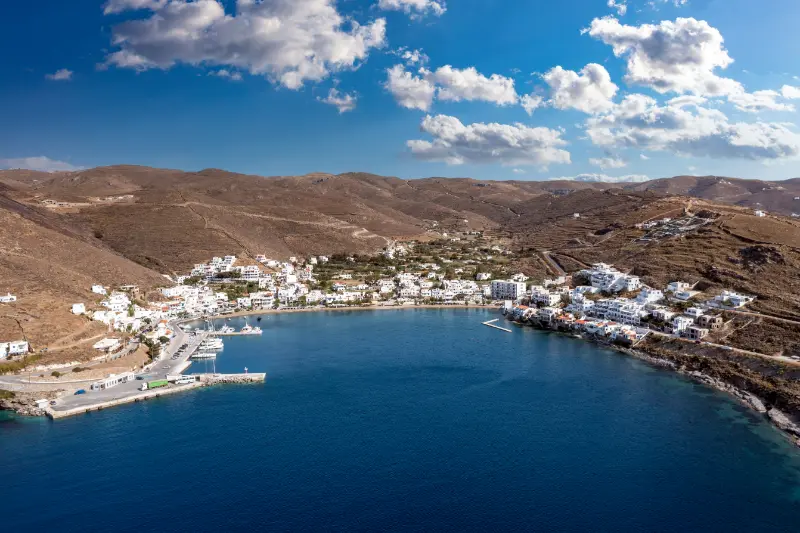
Kolona
The iconic choice, best approached with realistic expectations about summer demand. In July and August, arrive earlier if parking or limited shade is a concern.
Apokrousi
A useful beach to combine with the kolona side. In July and August, arrive earlier if parking or limited shade is a concern.
Loutra beaches
Convenient if you stay in the north. In July and August, arrive earlier if parking or limited shade is a concern.
Kanala area beaches
A good alternative for travellers exploring the southeast. In July and August, arrive earlier if parking or limited shade is a concern.
Getting around
For a short stay, the best transport choice depends on where you sleep. Central bases reduce the need for a vehicle, while beaches, trailheads and scattered villages often make a rental car useful. Before renting, read our guide to renting a car in Greece and driving in Greece guide.
Do not rent a scooter simply because it looks convenient. Wind, uneven road surfaces, heat and unfamiliar traffic can make two-wheel travel demanding. Use only a vehicle covered by your licence and insurance, wear proper protection and choose the slow option when conditions feel marginal.
What and where to eat
Kythnos suits taverna-style eating: pies, local cheeses, grilled meat, legumes, fish and seasonal dishes. Try to eat in more than one village because Chora, Dryopida and the port have different rhythms. As on many smaller islands, opening patterns outside the core season can be limited.
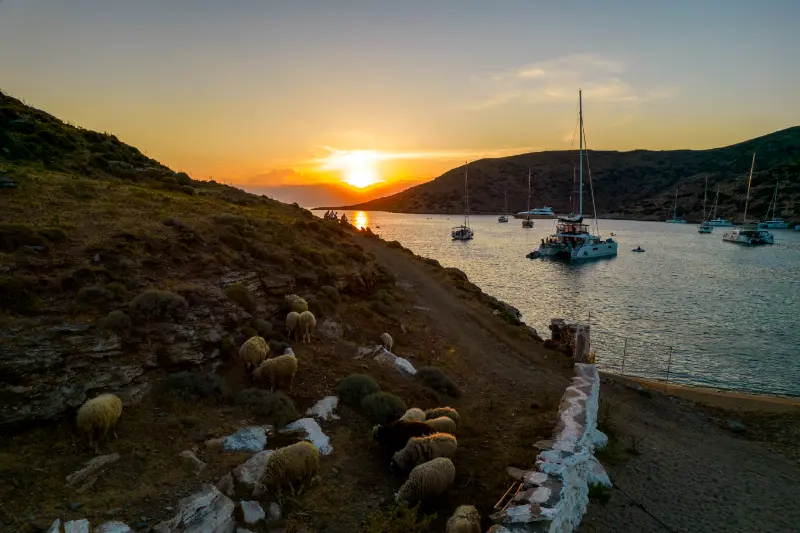
A useful rule is to separate “view meals” from “food meals”. A waterfront table can be worth choosing for atmosphere, while a backstreet taverna may offer better value and a more local menu. Over several days, do both rather than expecting one restaurant to deliver every part of the experience.
A realistic itinerary
- Day 1: arrive at Merichas, settle in and spend the evening in Chora.
- Day 2: visit Kolona and Apokrousi, keeping the schedule light so the beach is not just a photo stop.
- Day 3: explore Dryopida and add a nearby coast or cave/museum visit if currently open.
- Day 4: head north to Loutra, with time for swimming and a slow waterfront meal.
- Day 5: explore Kanala and the southeast before returning to the port.
The itinerary is intentionally not packed from breakfast to midnight. Build in one slow period every day. In Greece, the memorable part is often the hour you did not schedule: a swim after the wind drops, a village coffee, or a longer dinner because the light is beautiful.
Best time to visit
June and September are excellent for a balanced trip. July and August have the fullest island atmosphere but require more planning for rooms, cars and popular beaches. Spring appeals to walkers, while winter travel should be treated as a local-island experience rather than a conventional beach holiday.
For any shoulder-season trip, verify accommodation, ferry or bus frequency and museum opening days before paying for non-refundable bookings. Small destinations can feel wonderfully local outside summer, but that also means fewer services designed specifically for visitors.
Travelling without a car
A car-free trip is possible if you choose a central base and accept that you will see less of the destination. Build days around walking, local buses, taxis and boats instead of trying to reproduce a driving itinerary. Our Greece without a car guide explains how to design the wider trip around that idea.
Families, couples and solo travellers
Families should prioritise simple transfers, shade and accommodation within walking distance of food. Couples often get more from a quieter village base and late dinners than from trying to visit every beach. Solo travellers benefit from staying near the main settlement, where transport and evening dining are easier without a car.
For children, alternate sightseeing with swimming rather than scheduling several cultural stops in a row. For adults, remember that heat changes everyone’s patience and energy: a shorter plan executed comfortably is usually a better holiday than a “complete” itinerary completed exhausted.
Budget planning
The biggest variables are accommodation, vehicle rental and transport to the destination. Food can remain reasonable if you mix tavernas with bakeries and simple lunches. Book peak-summer rooms early, but compare cancellation terms rather than choosing the lowest headline price automatically. See our Greece on a budget guide for a broader strategy.
What to pack
Bring breathable clothing, strong sun protection, a reusable water bottle, swim shoes if you dislike rocky entries and at least one pair of footwear suitable for uneven lanes or trails. A light layer is useful on windy ferries and in shoulder season. For a complete checklist, use our Greece packing list.
Responsible travel tips
Water and waste management are real constraints in many Greek destinations. Use refillable bottles where safe, avoid unnecessary linen changes, never leave rubbish at remote coves, and stay on established paths in fragile landscapes. At archaeological and religious sites, follow local rules even when other visitors ignore them.
Useful nearby guides
If you are building a longer itinerary, these guides connect naturally with this destination: Kea travel guide, Serifos travel guide, ferry guide.
For the wider trip, start with the Greece travel guide for first-time visitors and then use the 7-, 10- and 14-day Greece itineraries to keep transfer time realistic.
Common mistakes to avoid
- Trying to see every beach or village in one day instead of choosing a coherent area.
- Assuming ferry, bus or museum schedules stay identical all year.
- Underestimating heat, wind and the time needed for uphill walking.
- Booking a rental vehicle before checking licence, insurance and parking conditions.
- Leaving no flexibility for weather-dependent boat trips or outdoor plans.
- Choosing accommodation only by price without checking how you will reach dinner, beaches and the departure port.
Frequently asked questions
Is Kythnos good for a first Cyclades trip?
Yes for travellers who value simplicity and beaches more than famous nightlife or major monuments.

How many days are enough?
Four nights gives enough time to see the main villages and several coasts without rushing.
Do I need a rental car?
It is very useful for a five-day trip, especially if you want Kolona, Kanala, Loutra and scattered beaches. Check road conditions and rental rules carefully.
Is Kolona the only reason to visit?
No. Chora, Dryopida, Loutra and the island’s archaeological history give Kythnos much more depth than its most famous beach image.
Final advice
The best version of this trip is not the one with the most pins saved on a map. Choose a sensible base, protect the middle of the day from excessive driving or hiking, and leave enough space to repeat the places you genuinely enjoy. That slower rhythm is often what turns a Greece itinerary into a holiday rather than a logistical exercise.