
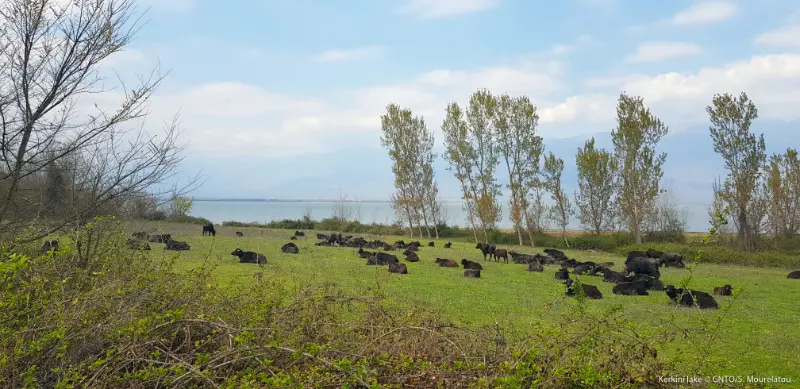
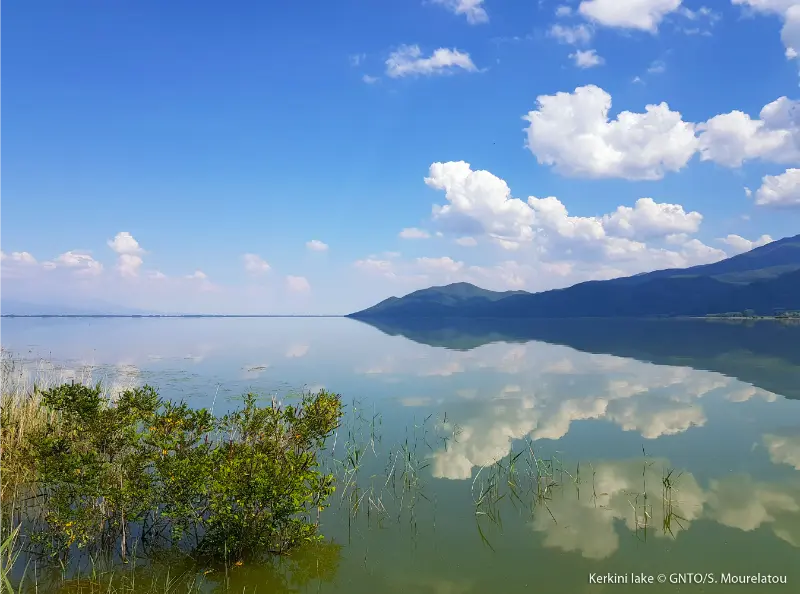
Lake Kerkini is one of the best places in northern Greece to replace sightseeing with observation. The lake is artificial, created after a dam was built on the Strymonas River in 1932, but over time it developed into one of the country’s most important wetlands. Visit Greece notes more than 300 bird species and highlights Dalmatian pelicans, water buffalo, boat trips, cycling and wildlife photography.
That makes Kerkini a strong two-day escape from Thessaloniki, especially for travellers who have already filled an itinerary with cities and archaeological sites. The goal is not to see every species. The goal is to spend enough time near the water that the landscape changes around you—light, birds, buffalo, fishing boats and mountain reflections all move at different speeds.
Why it is worth adding to your itinerary
This is a place where observation is the activity. Arrive with enough time to notice weather, wildlife, sound and changing light instead of expecting a fixed attraction to perform on demand. The less aggressively you schedule the visit, the more rewarding it tends to become.
What to see and do
Take a small-boat wildlife trip
A local boat excursion is the easiest way to understand the scale of the wetland. Good operators keep respectful distances and read conditions rather than chasing birds. Sit quietly, listen to the guide and use a longer camera lens or binoculars instead of asking the boat to approach wildlife more closely.
Watch Dalmatian pelicans
Dalmatian pelicans are the headline species for many visitors, but avoid making the day depend on one photograph. Bird behaviour changes with season, water levels and weather. The wider experience—cormorants, herons, raptors and open-water movement—is what makes Kerkini rewarding even when the pelicans are not performing on cue.
Look for water buffalo
The surrounding area is known for herds of water buffalo, another element emphasised by Visit Greece. You may see them from roads or organised activities. Treat farms and animals as working rural life rather than a petting-zoo attraction; stop only where safe and respect private property.
Cycle or walk the quieter edges
Flat sections around the lake make cycling appealing, while short walks give you time to notice reeds, insects and small birds that disappear when you are moving by car. Do not attempt to circle the entire lake simply to say you did it. Choose one or two sectors and spend more time outside the vehicle.
Stay for dawn or late afternoon
Wildlife activity and light are often better at the edges of the day. This is the main reason to sleep locally rather than treating Kerkini as a rushed return trip. Dawn mist, winter light or a quiet sunset can become the strongest memory even if your species list is short.
A realistic itinerary
| Part of the day | Plan |
|---|---|
| Day 1 morning | Arrive, orient yourself and take a guided boat trip |
| Day 1 afternoon | Village lunch, buffalo landscape and short lakeside walk |
| Day 1 evening | Sunset or quiet birding from an appropriate viewpoint |
| Day 2 early | Dawn observation or photography |
| Day 2 late morning | Cycling, second wetland sector and return to Thessaloniki |
Use this as a framework rather than a strict timetable. Northern Greece rewards flexibility: traffic, wind, mountain weather, ferry operations and opening hours can change the rhythm of a day. Protect the main experience and treat secondary stops as optional. That produces a better trip than racing to every pin saved on a map.
How to get there and move around
A car is the most practical way to reach different parts of Lake Kerkini, but once you arrive, reduce driving. Pre-book a reputable local boat or nature guide if wildlife is the main goal. Bring binoculars if possible, sun protection in warm months, a windproof layer in cooler weather and footwear that can handle muddy ground. Never block agricultural roads for photography.
Wildlife and landscape come first
Natural areas work best when you adapt to their conditions rather than expecting them to behave like urban attractions. Keep noise low, stay on established paths or boat routes, avoid approaching wildlife for photographs and follow local guidance. Binoculars, water and patience usually improve the experience more than an aggressive schedule.
Weather changes the day
In northern Greece, mountain and wetland conditions can change quickly. Heat, wind, rain and low cloud affect visibility and trail safety. Check the same-day forecast, start early, and keep a shorter alternative in mind. A flexible plan is not a compromise; it is part of travelling well in landscapes that are still genuinely wild.
Best time to visit
Kerkini is a year-round nature destination, and the “best” season depends on what you want to see. Spring brings migration and active wetlands; summer is hotter but lively; autumn has softer light; winter can be outstanding for birding and atmosphere. Ask local guides what is currently present rather than planning from a generic species calendar.
Check the same-day weather and any official operating information shortly before you leave. Northern Greece can combine coastal heat, mountain cloud and strong wind within the same regional itinerary. Planning by conditions rather than by a rigid spreadsheet is one of the easiest ways to improve the trip.
Food and local rhythm
This is an agricultural region, so let local products shape the meal. Buffalo products may appear on menus alongside meat, dairy and Macedonian dishes. Ask what is regional and seasonal. A warm meal after a cold morning on the lake can be one of the best parts of a winter visit.
Do not compress every meal into the smallest possible gap between attractions. A long lunch or early dinner is also a planning tool: it gives you shade, hydration and time to decide whether the next stop still makes sense. This matters even more on driving, hiking and boat days.
How to combine it with nearby places
Start or finish in Thessaloniki. If you have a week in northern Greece, contrast the wetland with Mount Olympus or a coastal stay in Halkidiki.
When building a longer route, group places by geography. A northern-Greece itinerary becomes tiring when each day starts with a two-hour transfer in the opposite direction. Two or three nights per base usually produces more walking, swimming and local evenings than changing hotels every day.
Where to stay
This works best from a stable regional base rather than as a one-night hotel change. Choose where to sleep according to your next morning as well as today’s attraction. An extra 20 minutes of driving can be worthwhile if it gives you a walkable evening and avoids repacking luggage.
Practical planning notes
Download an offline map before leaving the main city or resort area. Mobile coverage is generally good but can weaken in mountains, wetlands and isolated coastal stretches. Save the official destination name and your accommodation pin, and carry a charging cable or power bank on days with heavy navigation and photography.
Carry water, sun protection and a light layer even when the forecast looks simple. Coastal wind can cool a boat quickly, while archaeological parks and wetland roads can be completely exposed. In hiking areas, replace casual footwear with shoes that have reliable grip. Small preparation choices make a bigger difference than adding another attraction.
If you are travelling with children or older relatives, judge difficulty by heat, surfaces and standing time rather than kilometres. A short archaeological site under strong sun can feel harder than a longer shaded walk. Build in benches, café stops and permission to skip the final viewpoint.
Common mistakes to avoid
- Expecting wildlife to appear on a timetable
- Approaching birds for close photographs
- Doing the whole trip from inside a car
- Visiting only at midday in summer
- Blocking rural roads with a parked vehicle
- Assuming one season is universally best
Official information
For current opening hours, tickets, access rules or regional information, check Visit Greece – Lake Kerkini ecotourism shortly before the trip. I prefer official sources for variable details because transport timetables, admission prices and seasonal operations can change after older travel articles were published.
Frequently asked questions
Is Lake Kerkini natural?
The present lake is an artificial reservoir created after a dam on the Strymonas River in 1932, but it has become an exceptionally important wetland.
What wildlife is it famous for?
Dalmatian pelicans are especially famous, alongside many other bird species and local water-buffalo herds.
Do I need a guide?
Not for a simple visit, but a local nature or boat guide can dramatically improve wildlife observation and understanding.
Can I visit from Thessaloniki in a day?
Yes, but one night is better if dawn, sunset or bird photography matters.
Is winter worth it?
Yes. Winter can be excellent for birds, low light and a quieter atmosphere; dress for cold and wind.
Final advice
Build the day around one clear reason for coming, then let the surrounding region add depth. Northern Greece is especially rewarding when you leave margin for a good meal, a change in weather or a place you did not expect to enjoy. The goal is not maximum coverage; it is a route that still feels enjoyable on the final day.
For the wider picture, continue with Thessaloniki Travel Guide, Mount Olympus Guide, Halkidiki Travel Guide. These guides connect this stop to the rest of the region without unnecessary backtracking.
Serres is the most practical urban base for combining Lake Kerkini with other regional sights; see our Serres travel guide.

For another northern wetland landscape, compare Kerkini with our Lake Doirani guide and Axios Delta guide.
For more ideas in the region, see our Ano Poroia and Kerkini villages and Sidirokastro and Rupel Fort guides.
\nMore practical Serres guides: Where to Stay in Serres, Serres with Kids, Serres Without a Car, Serres Food Guide, Serres Nightlife Guide, Serres on a Budget, Solo Travel in Serres, Best Time to Visit Serres, Best Day Trips from Serres, Serres in One Day.
\nRelated nature and wildlife guides: Birdwatching in Greece: Best Wetlands, Islands, Seasons and Species, Wetlands of Greece: Kerkini, Prespa, Evros, Messolonghi and More.