
Larissa is one of Greece’s largest regional cities, but it rarely appears on first-time itineraries. That is precisely why it can be rewarding. An ancient theatre sits beside busy pedestrian streets, cafés fill the modern centre, the Pinios River creates a green edge to the city, and Thessaly’s agricultural plain shapes the food and markets around you.
Larissa works best for travellers who want an urban base without a heavy tourist layer. Give it one full day for the city and a second if you want Tempe, Ambelakia, Mount Ossa or a wider Thessaly road trip. It also makes sense as a stop between Athens, Meteora, Mount Olympus and the Aegean coast.
Quick planning notes
- Best for city-break travellers, food lovers and road trippers crossing Thessaly.
- Allow one full day for the centre, theatre, museums and river; add nights for regional excursions.
- The central pedestrian area is easy on foot and cycling is common on the flat terrain.
- Summer afternoons can be very hot on the Thessalian plain, so move outdoor sightseeing to morning and evening.
- A car is not necessary inside Larissa but becomes useful for Ambelakia, Mount Ossa and smaller villages.
- Check museum and archaeological-site opening times separately; they may close earlier than city attractions.
Why visit
Larissa Travel Guide fills an important gap in a mainland Greece itinerary because it combines a strong sense of place with practical connections to better-known destinations. Instead of treating it as a box to tick, build the visit around the landscape, local rhythm and one or two experiences that are genuinely specific to the area.
The biggest planning mistake is trying to compress too many nearby places into one day. Distances on the map can look modest, but mountain roads, museum hours, summer heat and long Greek lunches all slow a trip down. A realistic schedule usually produces better photographs, better meals and much more time actually inside the places you travelled to see.
What to see and do
Ancient Theatre of Larissa
The First Ancient Theatre sits directly beside the modern centre, creating one of Larissa’s most striking contrasts. Built into the slope of Frourio Hill, it reminds you that the city has occupied the same strategic landscape for centuries. Even when full access to the monument changes because of conservation or events, viewing it from the surrounding streets is worthwhile. Use it as the starting point for understanding the historic core.
Frourio district
The Frourio area layers ancient, Byzantine and Ottoman history above the commercial centre. Walk slowly around the hill, looking for surviving monuments and the way old routes connect with modern squares. The district is compact enough to explore on foot and works especially well in the late afternoon when cafés and pedestrian streets become livelier.
Diachronic Museum of Larissa
The Diachronic Museum provides the deeper historical framework that the open-air theatre cannot. Collections span prehistoric, classical, Roman, Byzantine and later periods from Thessaly, helping visitors understand the scale of settlement across the fertile plain. It deserves real time rather than being treated as a rainy-day backup.
Pinios River and riverside walking
The Pinios is central to Thessaly’s geography and gives Larissa a greener, more relaxed edge. Riverside areas are useful for walking, cycling and taking a break from the dense centre. Conditions vary by season and river level, so stay on maintained paths and respect any temporary closures after heavy weather.
Markets, pedestrian streets and café culture
Larissa is a city to experience at street level. The pedestrian centre is busy with shops, bakeries, coffee bars and restaurants, especially in the evening. Rather than chasing a long monument list, allow time to observe how a major inland Greek city functions. This everyday energy is one of the main reasons to stay overnight.
Alcazar Park and green spaces
The Alcazar area offers additional green space near the river and helps balance museum-heavy sightseeing. It is particularly useful for families or anyone travelling in shoulder season when you can spend longer outdoors. Pair it with the riverside rather than crossing the city repeatedly.
A realistic itinerary
- Begin at the Ancient Theatre and Frourio district before the centre becomes busy.
- Walk through the pedestrian commercial streets and stop for coffee or a bakery breakfast.
- Spend late morning in the Diachronic Museum, allowing enough time for the regional collections.
- After lunch, head toward the Pinios River and Alcazar for a slower outdoor afternoon.
- Stay for dinner in the centre; on day two, drive to Tempe and Ambelakia or continue toward Mount Olympus or Meteora.
Where to stay
Stay in the central pedestrian-zone area if you want to walk to restaurants, the theatre and cafés. Drivers may prefer a hotel with dedicated parking just outside the tightest core. Larissa offers more conventional city hotels than mountain guesthouses, making it a practical base for work-and-leisure trips or road travellers who need dependable services.
For current accommodation availability, compare options on Booking.com. I prefer to choose location first and only then compare room score, cancellation terms and parking, because a cheaper hotel can cost time if it is on the wrong side of your daily route.
Getting there and getting around
Larissa is a major rail and road hub, although railway operations in Greece can change and should always be checked close to travel. Intercity buses connect the city widely. The centre is flat and walkable; bicycles are common. For Tempe, Ambelakia, Mount Ossa and rural Thessaly, driving gives far more flexibility.
If you are driving, download an offline map before leaving the main road and avoid building the day around the fastest route suggested by navigation. In mainland Greece the most interesting roads are often slower, and weather, roadworks or seasonal traffic can change travel times. If you are using buses, verify the exact KTEL operator and timetable for your date rather than relying on a generic journey planner.
Best time to visit
Spring and autumn are the easiest times for city walking and regional drives. Summer can be intensely hot, but evenings remain lively and the Aegean coast is within excursion range. Winter is good for museums, food and links to mountain destinations, though fog and weather can affect longer drives.
Whatever the season, check the conditions that matter for your main activity on the morning of travel: museum opening, trail access, fire risk, snow, lift operation or bus departures. That small habit is more useful than memorising a timetable months in advance.
What to eat
Thessaly is one of Greece’s great agricultural regions, and Larissa’s food reflects that abundance. Look for pies, grilled meats, local cheeses, seasonal vegetables, legumes, tsipouro and wines from the wider region. The city’s advantage is choice: you can move from traditional tavernas to contemporary restaurants without leaving the centre.
For a more local meal, move one or two streets away from the most obvious sightseeing point and look for places serving a short menu to Greek families and workers. Opening days can be unpredictable outside the busiest season, so keep a second option in mind instead of driving a long distance for one restaurant.
Good day trips and onward routes
Vale of Tempe and Ambelakia
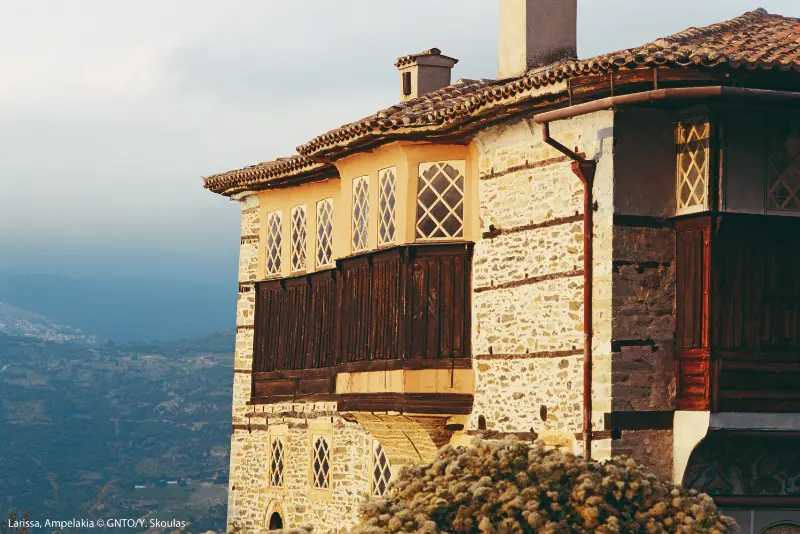
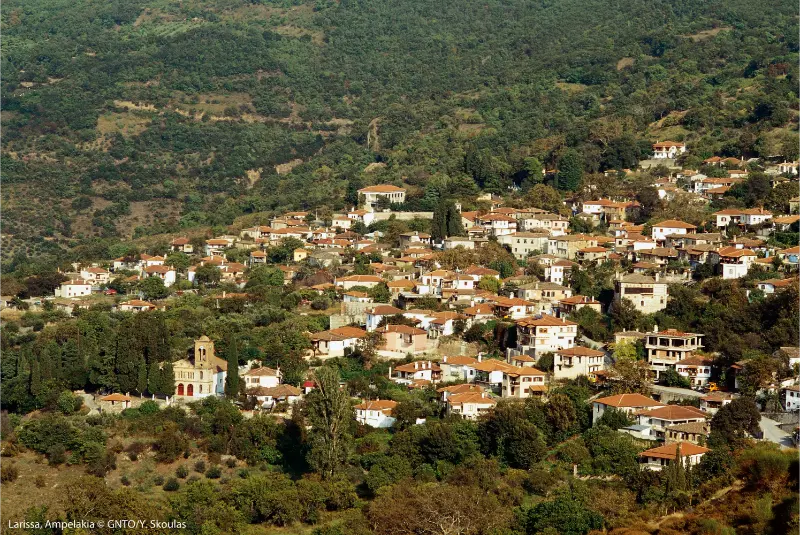
The easiest history-and-landscape day trip from Larissa. Read our Vale of Tempe and Ambelakia guide.
Mount Olympus
Continue north toward Litochoro for Greece’s most famous mountain. Read our Mount Olympus guide.
Meteora
Travel west for monasteries and a radically different Thessalian landscape. Read our Meteora guide.
Volos
Head south-east for the Pagasetic Gulf, tsipouradika and Pelion. Read our Volos guide.
How to plan the day well
- Choose one anchor experience for the morning and one for the afternoon; everything else should be optional.
- Keep museums and archaeological interiors for the hotter or wetter part of the day when possible.
- Carry water, sun protection and a light layer. Mainland weather can change quickly between plains, gorges and mountains.
- Do not schedule a long mountain drive after a heavy lunch or alcohol; Greek regional roads often demand more concentration than the distance suggests.
- Carry some cash for small villages, parking areas and family businesses even when cards are widely accepted in larger towns.
- For religious sites, cover shoulders and knees and follow local photography rules. For protected nature areas, conservation and fire-safety restrictions always override an online itinerary.
Internal planning links
This new Central Greece and Thessaly cluster is designed to work as a connected route. Depending on your direction of travel, continue with Lamia, Thermopylae, Livadeia, Amfissa and Itea, Hosios Loukas. These links are most useful when you build two- or three-night bases instead of changing hotels every day.
Frequently asked questions
Is Larissa worth visiting?
Yes if you enjoy living cities, archaeology and food without heavy tourism. It is especially useful as a Thessaly transport and road-trip base.
How many days do you need?
One day covers the main city sights; two nights are better if you want an excursion to Tempe, Ambelakia or Mount Ossa.
Can you explore Larissa on foot?
Yes. The central area is flat and pedestrian-friendly, though the Diachronic Museum and some outer areas may require a taxi, bus or bicycle.
What is the best day trip?
Tempe and Ambelakia combine landscape and history. Mount Olympus, Meteora and Volos are bigger onward destinations rather than casual half-day trips.
Should I book everything in advance?
Book accommodation in advance for weekends, festivals and winter mountain periods, but keep the daily sightseeing plan flexible. Museums, weather-dependent activities and local transport are better reconfirmed close to the date. A flexible structure usually works better than prepaid timing for every hour.
Useful official sources
For details that can change, use the official sources before travelling: Visit Greece – Larissa Municipality of Larissa – City Tour. Recheck opening hours, ticket arrangements, road access, weather restrictions and public transport shortly before departure.
Final advice
The best way to use this Larissa travel guide is to choose a pace that matches the place. Mainland Greece rewards travellers who leave room for riverside walks, village squares, museum conversations and unplanned food stops. If you only move between headline sights, you miss the character that makes these destinations different from the islands and from Athens.
Plan the route logically, sleep where evenings are enjoyable, and use the quieter towns as real bases rather than emergency stops. That approach reduces driving, strengthens internal links across the site and, most importantly, produces a trip that feels coherent instead of like a sequence of pins on a map.