
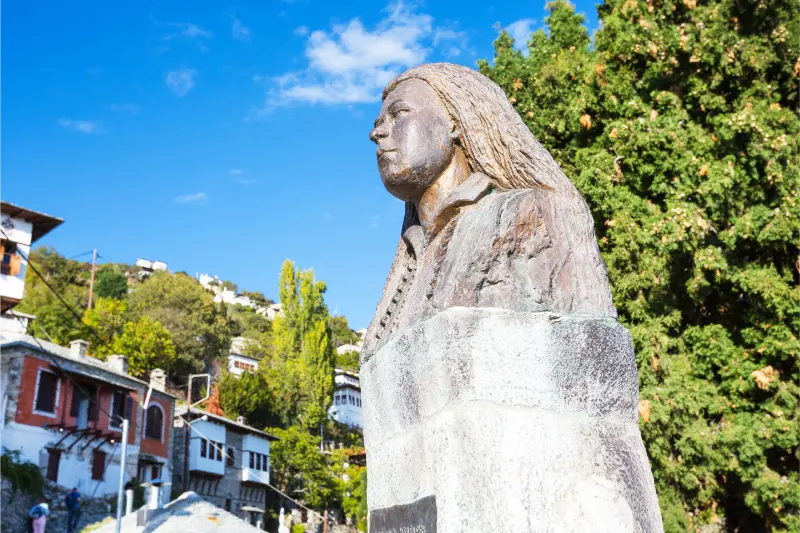
Makrinitsa is one of those Pelion villages that works best when you stop treating it as a viewpoint and start walking slowly. The settlement climbs the mountain above Volos, so even a short route can involve stone steps, shaded lanes, fountains and changing views over the Pagasetic Gulf. That vertical layout is part of the experience, but it also means that the easiest visit is not the one with the longest checklist. It is the one that leaves enough time to wander without repeatedly returning to the car.
I would use Makrinitsa as a half-day or evening stop rather than a rushed photo break. It pairs naturally with nearby Portaria and with the broader Pelion travel guide. If you are based in Volos, the village also makes a simple mountain escape before dinner back on the waterfront.

Quick planning facts
- Allow 2–4 hours for a relaxed first visit.
- Use designated parking and expect to walk uphill.
- Combine Makrinitsa with Portaria rather than treating both as separate full days.
- Visit early or late for easier photography and cooler walking.
- Keep a layer with you: mountain weather can change faster than on the Volos waterfront.
Why Makrinitsa deserves more than a quick stop
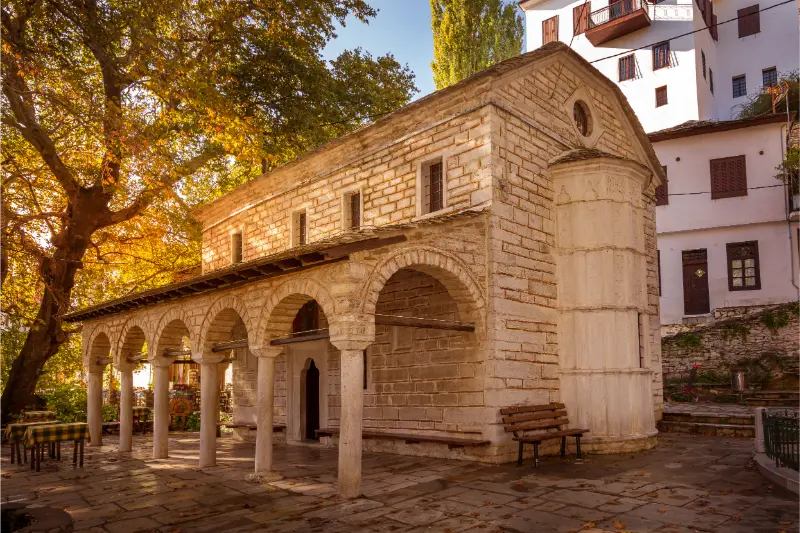
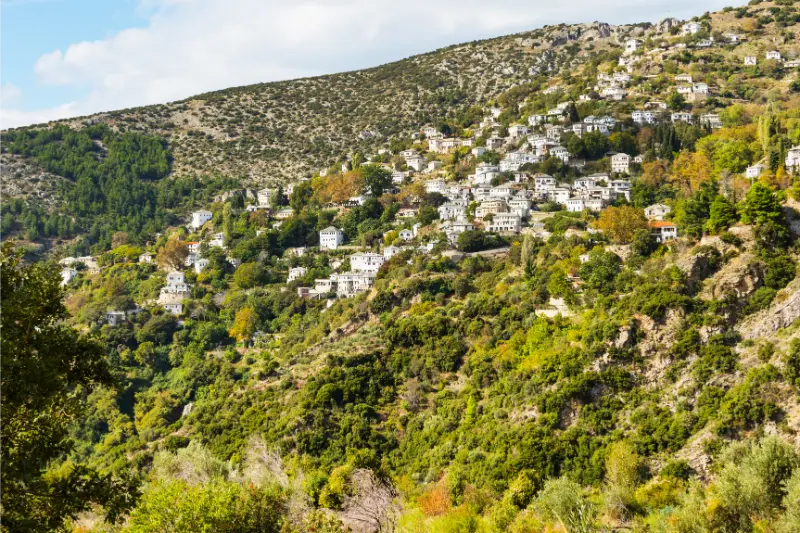
Makrinitsa shows the architectural language that makes Pelion feel different from many Greek mountain regions: stone-built houses, slate roofs, narrow kalderimia and homes adapted to steep terrain. The official Greek tourism portal highlights Makrinitsa among Pelion’s traditional villages and describes the wider region as a landscape where village architecture is inseparable from mountain and sea. The pleasure here is not a single monument; it is the relationship between the built fabric and the slope.
That makes the village especially rewarding outside the busiest middle hours. In the morning you notice local movement and cooler stone lanes. In the late afternoon, the light over the Pagasetic Gulf changes quickly and the square becomes a better place to sit than to rush onward. If your itinerary gives Makrinitsa only thirty minutes, you will see the panorama but miss the texture that makes the village memorable.
A simple walking route through the village
Start from the upper edge of the accessible road and walk toward the central square rather than trying to drive deeper into the settlement. From there, let the route form a loop: square, viewpoints, fountains, side lanes and a few short uphill detours. The most satisfying streets are often the ones that seem to go nowhere. They reveal courtyards, rooflines, carved stone and glimpses toward Volos without feeling like a formal attraction.
Wear shoes with grip. Pelion stone paving can be polished by time and becomes slippery after rain. If you are travelling with a stroller, large luggage or someone with limited mobility, keep expectations realistic: Makrinitsa is beautiful precisely because it is steep and old, and not every lane is accessible. A shorter route around the main square and viewpoints can still be worthwhile.
Views, photography and the best light
The village faces toward Volos and the Pagasetic Gulf, so clear days produce a wide layered view: tiled roofs, forested slopes, the city below and water beyond. For photographs, I prefer late afternoon when the light softens and the houses stop looking flat. Early morning is better if you want emptier lanes and less contrast.
Do not photograph only outward. Some of the strongest images are details: slate roofs, wooden balconies, a fountain under plane trees, a doorway framed by greenery. Pelion architecture developed over centuries and the official tourism material describes three-storey mansions, timber reinforcement and carefully adapted stone construction. Looking closely makes the village more interesting than a single “balcony” panorama.
Parking and driving strategy
Driving in Pelion requires patience. Roads can be narrow, bends are frequent and village approaches become busy on summer weekends and winter holiday periods. In Makrinitsa, the smartest approach is to use the designated parking areas and accept that the final part of the visit is on foot. Trying to save a few minutes by hunting for the closest possible space usually creates more stress than it removes.
If you are combining Makrinitsa and Portaria, avoid repeatedly moving the car for tiny distances unless weather or mobility makes that necessary. Build the day around one or two deliberate parking stops, then walk. For a wider mountain loop, see my 7-day Pelion road-trip guide and Volos guide.
What to eat in Makrinitsa
Pelion food suits the setting. Look for spetzofai, pies, seasonal greens, mountain herbs, spoon sweets and local products based on apples, chestnuts or preserves. The region’s cuisine is shaped by both mountain and coast, and the official tourism portal specifically identifies spetzofai, Zagora apples, chestnuts, mushrooms, wild greens and spoon sweets as characteristic products.
Choose a meal for location and kitchen rather than simply the biggest view. A terrace is wonderful, but a smaller taverna or café a lane away can be calmer. If you are continuing to Volos later, leave room for tsipouro and small seafood dishes there; Makrinitsa and Volos work well as two very different food experiences on the same day.
Best time to visit
Spring and autumn are excellent for walking because temperatures are comfortable and the forests change dramatically. Summer is pleasant at altitude, but weekends and holiday periods can be busy. Winter gives Makrinitsa a completely different atmosphere, with fireplaces, mist and the possibility of snow in the wider Pelion area, though road conditions deserve more attention.
For a first visit I would aim for a clear weekday afternoon, spend two to four hours in the village, then either stay for dinner or continue to Portaria. If clouds sit low on the mountain, do not dismiss the day: the lost panorama is often replaced by a particularly atmospheric walk through the stone lanes.
Where Makrinitsa fits in a Pelion itinerary
Makrinitsa works especially well at the beginning or end of a Pelion trip because it is close to Volos. I would not use it as the only base if your priority is the Aegean beaches around Tsagarada or Zagora; the mountain roads make repeated east-coast day trips longer than they appear on a map. Instead, split the region into logical zones.
A practical structure is Volos plus Makrinitsa/Portaria first, then Milies and Vyzitsa on the Pagasetic side, followed by Tsagarada, Damouchari or Zagora on the Aegean side. That route reduces backtracking and gives you very different versions of Pelion.
Staying in Makrinitsa versus visiting from Volos
If the village atmosphere is central to your trip, an overnight in Makrinitsa gives you quiet early mornings and evenings after the day visitors leave. If you mainly want the view and a walk, staying in Volos can be more practical because you keep easy access to the waterfront, restaurants and onward transport. The decision depends less on distance than on how much mountain atmosphere you want after dark.
For a multi-day Pelion road trip, I prefer not to keep returning to Volos every night. One night around Makrinitsa or Portaria, followed by nights farther east or south, reduces repeated mountain driving and lets each area feel like a destination rather than an excursion.
Practical planning checklist
- Check the mountain forecast as well as the Volos/coastal forecast before driving or hiking.
- Keep offline directions and your accommodation phone number because mountain roads and village lanes can be confusing after dark.
- Allow more driving time than the kilometre count suggests; Pelion roads are scenic but winding.
- Do not overfill the day. One village, one walk and one meal often produces a better Pelion experience than five rushed stops.
- For the wider region, use my complete Pelion travel guide and Volos travel guide.
Frequently asked questions
Is Makrinitsa worth visiting if I only have one day in Pelion?
Yes. It is one of the easiest villages to combine with Volos and gives you a strong introduction to Pelion architecture, mountain views and village life.
How long do you need in Makrinitsa?
Two hours is enough for the central square and a short walk; three to four hours is better if you want lunch, photography and side lanes.
Can you drive into the centre?
Do not plan on using a car for the historic core. Park in designated areas and walk; the steep pedestrian lanes are part of the experience.
Is Makrinitsa good in winter?
Yes, but check mountain weather and road conditions. Winter creates a beautiful atmosphere, while spring and autumn are easier for long walks.
Final thoughts
Makrinitsa is at its best when you let the village set the pace. The view is impressive, but the real reason to stay longer is the walk between stone houses, fountains, shaded squares and small architectural details.
Use it as part of a coherent Pelion route rather than an isolated photo stop, and the village becomes an excellent introduction to why this mountain deserves several days rather than a quick excursion from Volos.
How I would make the day less rushed
The easiest way to enjoy Makrinitsa Pelion guide is to protect one slow block of time. I would avoid booking a timed attraction immediately before or after a mountain drive, and I would not assume that a short road distance means a quick transfer. Pelion travel is shaped by bends, parking, walking surfaces and the temptation to stop for views. Build those realities into the plan instead of treating them as delays.
I also keep one alternative nearby. If the Aegean is rough, I switch to a village walk. If rain makes stone paths slippery, I use the time for food, architecture or a shorter route. If parking is chaotic, I move on and return later. This flexibility is one of the reasons Pelion is rewarding: mountain, forest, village and sea give you several good versions of the same day.
What to verify before you leave your hotel
Before driving, check the weather, road route, parking location and whether your chosen restaurant or attraction is actually open that day. Seasonal businesses may change hours outside peak summer. For hikes, ask whether recent rain, maintenance or fallen trees have affected the path. For beach days, look at wind and sea conditions rather than only air temperature.
Save your route offline and carry water. In a region of dense forest and winding roads, mobile coverage can vary. These are small preparations, but they keep a pleasant day from becoming an unnecessary logistical problem.