
Monodendri Zagori Guide is a useful way to experience a central Zagori village that works both as a destination in its own right and as one of the easiest bases for experiencing the southern rim of Vikos Gorge. This guide is designed for travellers who want more than a list of sights: it explains how to sequence the day, where driving or walking time is often underestimated, and which details matter when you are actually on the ground in Epirus.
For wider context, start with the Zagori Travel Guide and the Ioannina Travel Guide. If hiking is central to your trip, also use the Hiking in Greece guide. Those pages cover the broader region; this article stays focused on the practical choices that make this specific stop work smoothly.
Quick planning facts
- Monodendri is one of the best-known villages of central Zagori.
- It provides access to the Agia Paraskevi monastery and several famous Vikos Gorge viewpoints.
- The long Vikos crossing is a demanding hiking day and should not be confused with short viewpoint walks.
- The village is part of the wider UNESCO-listed Zagori Cultural Landscape.
- Monodendri combines particularly well with Vitsa, Kipi, Kapesovo and Vradeto on a road trip.
Why this place deserves its own stop
The main reason to include this stop is that it reveals a different layer of Epirus from the famous headline sights. A central zagori village that works both as a destination in its own right and as one of the easiest bases for experiencing the southern rim of vikos gorge. The experience becomes much richer when you leave enough time for walking, food and the changing mountain light instead of treating the place as a roadside photograph.
Zagori and the wider Pindus reward slow travel. Roads twist around valleys, parking in old settlements is limited, and weather can change the order of the day. I therefore plan by geographic clusters: one village group, one outdoor objective and one relaxed meal. That structure leaves room for an unexpected viewpoint, a local recommendation or a trail that takes longer than the sign suggests.
The village itself
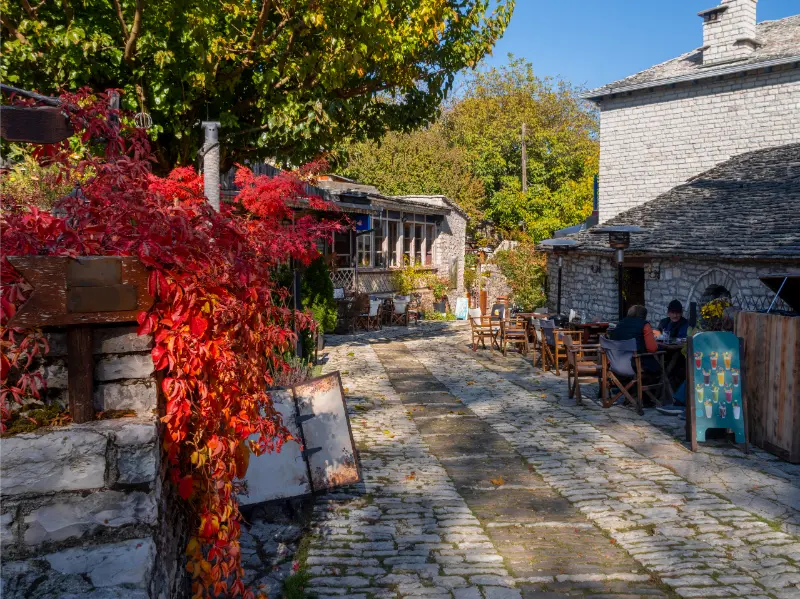
Monodendri deserves time before or after the gorge. Stone houses, paved lanes and the central square create a compact mountain settlement where it is easy to slow down. Rather than parking, photographing the square and leaving, walk the side lanes and notice how the village is fitted to the slope. This context helps the viewpoints make more sense: Zagori is as much a cultural landscape as a geological one.
My approach here is to allow more time than the minimum. Even when the main sight takes less than an hour, the surrounding paths, views and village atmosphere are what make the stop memorable. If weather closes in, shorten the outdoor section rather than compensating by driving faster to the next place.
Agia Paraskevi monastery
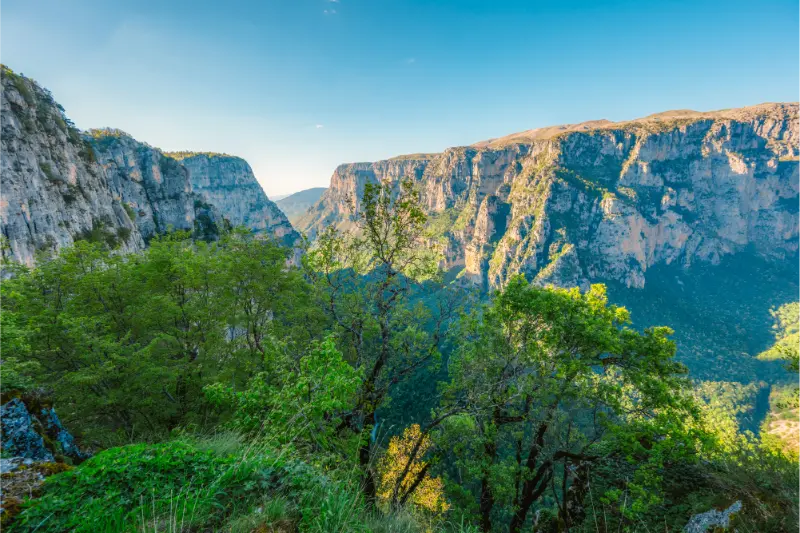
The walk toward the monastery of Agia Paraskevi is one of the most accessible ways to experience the edge of Vikos without committing to the full gorge crossing. The monastery sits dramatically above the canyon. Stay on safe, established paths and do not treat exposed edges as photo platforms; the depth of the gorge is difficult to judge in photographs.
My approach here is to allow more time than the minimum. Even when the main sight takes less than an hour, the surrounding paths, views and village atmosphere are what make the stop memorable. If weather closes in, shorten the outdoor section rather than compensating by driving faster to the next place.
Oxya viewpoint
Oxya is one of the classic road-access viewpoints over Vikos Gorge and is a natural complement to Monodendri. Go when visibility is good and allow time simply to look rather than racing between viewpoints. Clouds, haze and low light can completely change the atmosphere, which is why flexibility is more useful than a rigid schedule.
My approach here is to allow more time than the minimum. Even when the main sight takes less than an hour, the surrounding paths, views and village atmosphere are what make the stop memorable. If weather closes in, shorten the outdoor section rather than compensating by driving faster to the next place.
Hiking choices
The full Vikos Gorge crossing is an all-day undertaking for prepared hikers, while Monodendri also offers shorter walks. Choose a route based on distance, elevation, weather and exit logistics. The official regional tourism guidance warns that snowmelt and rain can make sections difficult, so a route that looks straightforward on a map can be unsuitable on the day.
My approach here is to allow more time than the minimum. Even when the main sight takes less than an hour, the surrounding paths, views and village atmosphere are what make the stop memorable. If weather closes in, shorten the outdoor section rather than compensating by driving faster to the next place.
How I would plan the visit
A relaxed two-day stay works very well. On the first afternoon, explore the village and walk toward Agia Paraskevi, then use the evening for a local dinner. On day two, visit Oxya early, continue toward Kapesovo and Vradeto or the Kipi bridges, and return before dark. If you are crossing Vikos Gorge, give that hike its own day and arrange transport between trailheads in advance.
The key is to preserve a margin. In mountain Greece, a 30-minute delay can come from roadworks, livestock, a photo stop, a slow lunch or simply a narrow road behind another vehicle. Building slack into the itinerary means you can enjoy those moments rather than treating them as problems. I also avoid scheduling a long transfer immediately after the main hike or outdoor activity.
Where to stay
Monodendri is a convenient base if your priority is Vikos viewpoints and central Zagori. It has enough accommodation and food to avoid constant driving, while still feeling like a mountain village. If you are planning early starts, staying in the village is more practical than commuting from Ioannina. Confirm parking and breakfast times if you need to leave before normal service begins.

For booking, I pay more attention to parking instructions, heating, breakfast timing and road access than to a long amenities list. Historic villages often have pedestrian lanes and accommodation entrances that are not obvious from a map. A message to the property before arrival can save a stressful search with luggage on steep stone streets.
Getting around and driving
A car gives the greatest flexibility in this part of Epirus, but driving style matters. Mountain roads can be narrow, with blind bends, occasional animals and limited shoulders. Keep fuel comfortably above empty, download an offline map, and avoid relying on optimistic map-app journey times. After dark, familiarity with the route matters more than the number of kilometres.
If you prefer not to drive, organised excursions, taxis and local transfers can cover some major sights, but they are not a complete substitute for a car when you want several small villages. For point-to-point hikes, pre-arranged transport is often more important than getting to the trailhead itself. Confirm the pickup plan before setting out.
Food and local rhythm
The village is a good place to try Zagori’s savoury pies, local cheeses, mushrooms and hearty mountain cooking. Portions can be generous, so a heavy lunch before a strenuous walk is not always ideal. I prefer a lighter meal before hiking and a longer dinner afterward, when there is no pressure to drive immediately.
Opening patterns are seasonal. A village that feels busy on an autumn weekend can be extremely quiet on a weekday outside peak periods. I do not assume that a café, petrol station or taverna shown online will be open at a precise hour. Carrying water and a small snack gives you the freedom to keep the day relaxed.
Best time to visit
Late spring and early autumn are excellent for most road trips and walking because temperatures are usually more comfortable than midsummer. Summer offers long daylight, but exposed paths can still be hot. Autumn colours are particularly attractive around the Pindus. Winter creates a completely different atmosphere, with snow possible at altitude and a much greater need to check tyres, chains, forecasts and road conditions.
There is no single best month for every traveller. Hikers should prioritise stable conditions; photographers may prefer changing weather; families often value long daylight and simpler roads. Whatever the season, recent local information is more important than a fixed annual rule when mountains, rivers or snow are involved.
Travelling with children
Short village walks and viewpoints can work well for families, but exposed gorge edges demand constant attention. The full crossing is not a default family walk. Choose paths with known duration and terrain, and remember that stone paving can become slick after rain. A slower itinerary with one major outing per day is more enjoyable than trying to tick off every viewpoint.
A useful family rule in Zagori is one major objective per day. Children often enjoy the bridges, water, village squares and short paths more than a long checklist of viewpoints. Build in warm food, toilet stops and time to play. If a route has exposure, fast water or loose stone, adult supervision matters more than the route’s reputation for being easy.
Photography without turning the trip into a photo shoot
Monodendri is photogenic in several different ways: the geometry of stone lanes, broad canyon views and the contrast between village architecture and the gorge. Morning often brings clearer air; after storms, clouds can add drama but also obscure the view. Never climb barriers or leave paths to imitate photographs taken from unsafe positions.
The best images often come when you stop looking for a single iconic frame. Stone walls, slate roofs, old paths, water and cloud layers tell the story of the region. Use safe pull-offs, never block a road or doorway, and remember that monasteries, churches and homes may have photography restrictions or deserve privacy even when no sign is posted.
Responsible travel in the UNESCO landscape
This part of Epirus is not a theme park: villages are lived-in communities and many trails cross a protected mountain landscape. Park only where you do not block residents or emergency access, keep noise low in village lanes, carry your rubbish out, and stay on established paths when the ground is fragile. In summer, fire restrictions can change quickly; in winter, snow and ice can turn an easy-looking road or path into a serious problem. Local advice on the day is more valuable than an old blog post when conditions are changing.
UNESCO describes Zagori as a cultural landscape in which villages, stone bridges, paths, staircases, sacred forests and mountain terrain form one connected system. That is a useful way to travel here too: support local businesses, walk respectfully through settlements and avoid reducing the region to a collection of viewpoints. The character visitors come to see depends on villages remaining viable places to live.
Common mistakes to avoid
- Treating Monodendri only as a parking stop for Vikos.
- Confusing a viewpoint visit with the full gorge hike.
- Starting long hikes without arranging return transport.
- Packing too many Zagori villages into one afternoon.
- Walking exposed edges for a photograph.
Most mistakes come from trying to make the day more efficient than the landscape allows. The cure is simple: fewer stops, earlier starts for outdoor activities, a clear parking plan and a willingness to change the route when weather or fatigue says so. In Epirus, a slower day often produces more memorable travel than a longer checklist.
Official information and useful context
For current destination information, consult the Epirus for All Seasons guide to Zagori. For the wider heritage context, UNESCO’s Zagori Cultural Landscape page explains why the villages, stone infrastructure and surrounding landscape are protected as one cultural system. Recheck opening hours, trail conditions and activity schedules close to your travel date.
Frequently asked questions
Is Monodendri a good base for Zagori?
Yes. It is especially convenient for Vikos viewpoints and the central Zagori villages, while still being close enough to Ioannina for the start or end of a road trip.
Can you see Vikos Gorge without hiking it?
Absolutely. Agia Paraskevi and road-access viewpoints such as Oxya allow you to appreciate the scale of the gorge without attempting the full crossing.
How long should you stay?
One night works for a brief visit, but two nights give you a full day for viewpoints, nearby villages or a proper hike.
Is the Vikos hike difficult?
The classic crossing is long and requires fitness, suitable footwear, water, weather checks and transport planning. It is not technically extreme, but it should be treated as a serious mountain day.
When should you visit?
Spring and autumn suit hiking, summer offers long daylight, and winter is atmospheric but can bring snow, ice and reduced access.
Final thoughts
Monodendri Zagori Guide works best when it is given enough time to feel like part of a mountain journey rather than another pin on a map. Keep the day realistic, connect it with nearby villages instead of distant attractions, and let food, weather and walking pace shape the itinerary. That approach is exactly what makes Epirus different from a fast island-hopping schedule.