

The Old Village of Alonissos, often called Old Chora, sits high above the island and feels completely different from the port at Patitiri. Stone lanes, restored houses and wide sea views make it one of the easiest places to understand the island’s older settlement pattern and quieter character.
The village works best late in the day, when the light softens and restaurants begin to fill. It is not a place that needs a checklist of monuments; the reward comes from wandering. For the island as a whole, start with the Alonissos travel guide.
Why this place deserves more than a quick stop
Alonissos is often chosen for beaches and the marine park, yet the Old Village gives the trip cultural depth. It shows how island life was organized before the modern port became the main arrival point and before tourism reshaped the coast.
Visit Greece describes the village as a scenic hilltop settlement with views toward Skopelos, Skiathos and Mount Pelion on clear days, and notes that summer cultural events bring additional life to the old streets.
At a glance
| Best for | Sunset, village atmosphere, short walks, food and photography |
| Ideal time | Half day or evening; 1 night if you want quiet atmosphere |
| Main base | Patitiri for transport convenience or Old Village for ambience |
| Transport | Bus, taxi or car from Patitiri; walking inside the village |
| Pair it with | Patitiri, marine park excursions and island beaches |
What to see and do
The village is compact enough to explore without a map, which is exactly how I would do it.
- Walk the main lanes slowly and take side turns.
- Look for broad sea views from the upper settlement.
- Stop at small cafés or shops rather than rushing through.
- Return after sunset if you are staying nearby.
- Notice how restored homes coexist with older stone fabric.
Why the village sits above the coast
Older Aegean settlements were often placed away from exposed shorelines for security and practical reasons. Alonissos’ hilltop Chora reflects that pattern, while modern Patitiri developed as the island’s main port. Understanding that relationship makes the two settlements feel complementary rather than competing.
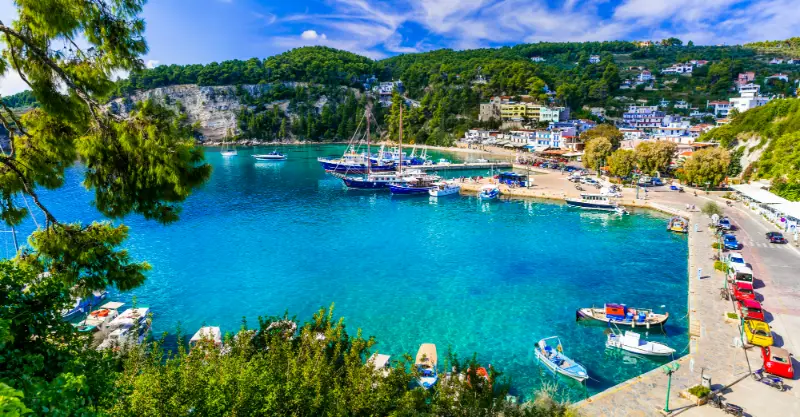
The Old Village suffered major damage in the 1965 earthquake, after which many residents moved toward Patitiri. Restoration and new uses later brought life back. Today the village combines historical memory, local residences, tourism and seasonal activity.
Views, cafés and evening atmosphere
The views are not limited to one terrace. As you move through the upper lanes, openings reveal different directions across the Aegean. Clear conditions can extend sightlines toward neighbouring Sporades islands and Pelion.
Evening is especially appealing because heat falls and the village becomes a dining destination. If you are driving, arrive before the main dinner rush so parking and orientation are easier.
A practical route that works
A simple loop leaves enough time for unplanned stops.
- Arrive in late afternoon and orient yourself at the village entrance.
- Walk upward through the main lanes, taking side turns toward viewpoints.
- Stop for a drink or sweet before sunset.
- Choose dinner in the village rather than rushing back to Patitiri.
- If transport permits, linger after dark when the streets become quieter.
In hot weather, this timing is far more comfortable than arriving in the middle of the day simply because the village is “on the list.”
Getting there
Urban KTEL bus routes connect Patitiri with the Old Village, according to Visit Greece, making this one of the easiest inland experiences on Alonissos without a car. Seasonal frequency can vary.

Taxis and rental vehicles provide flexibility for combining the village with beaches or viewpoints. If you drive, park where signed and walk the rest rather than trying to enter narrow lanes.
Getting around
Inside the village, walking is essential. Expect uneven surfaces, stairs and gradients typical of a historic hill settlement.
Travellers with limited mobility should ask about the most accessible drop-off and restaurant areas instead of assuming the entire village is step-free.
Where to stay
Staying in the Old Village gives you atmosphere after day visitors leave and beautiful mornings, but it separates you from the port’s immediate transport connections.
Patitiri is more practical for ferries and boat trips. A good first-trip strategy is to stay there and spend one long evening in the Old Village.
Food and local rhythm
The village has seasonal cafés and tavernas where the setting is part of the meal. Avoid choosing solely by the widest view; look for a menu that suits you and an atmosphere where you want to spend time.
Local sweets, seafood and traditional Greek dishes fit naturally into a slow evening. Booking can be sensible in peak August if a particular restaurant matters to you.
Best time to visit
Late spring through early autumn is ideal for evening village life. July and August are busiest, especially around cultural events and the Dormition period.
Outside summer the village is much quieter, and not every seasonal business will be open. That can be peaceful but changes the experience substantially.
How long do you need?
Two or three hours are enough for a walk and drink. Add dinner and the village naturally becomes a half-day experience.
One overnight is worthwhile for travellers who value atmosphere over port convenience, but unnecessary for most short island itineraries.
A realistic mini-itinerary
- Late afternoon: travel from Patitiri and explore the upper lanes.
- Sunset: find a viewpoint or terrace without blocking paths.
- Evening: dinner and a slow walk through illuminated streets.
- Next morning if staying: quiet coffee before returning to the coast.
Mistakes to avoid
- Visiting only at midday when the village is hottest and least atmospheric.
- Driving into lanes not intended for visitor traffic.
- Expecting a large museum-style attraction.
- Leaving immediately after sunset and missing the evening mood.
The village is about pace, not quantity. A few unplanned hours are more rewarding than a twenty-minute photo stop.
Responsible travel and practical etiquette
People live in the Old Village. Keep photographs respectful, avoid peering into private homes and limit late-night noise in residential alleys.
Use established bins and avoid leaving cigarette butts or glass in dry summer conditions. Hill settlements can be vulnerable to fire, and local restrictions should be taken seriously.
How to combine it with the rest of Greece
Pair the village with the National Marine Park of Alonissos guide for a trip that balances cultural landscape and protected nature.

If you are island hopping, connect Alonissos with Skopelos or Skiathos rather than adding distant island groups to a short itinerary.
Useful official information
Visit Greece has a dedicated Old Village of Alonnisos page, including bus information and cultural context.
FAQ
Is the Old Village the same as Patitiri?
No. Patitiri is the modern port and capital, while the Old Village is the historic hilltop settlement inland.
Can I get there by bus?
Yes, seasonal local bus services connect Patitiri and the Old Village; verify the current timetable.
When is the best time to go?
Late afternoon through evening is ideal for cooler temperatures, sunset light and dinner.
How long do I need?
Allow two to four hours, longer if you plan dinner.
Is it worth staying overnight?
Yes for atmosphere and quiet mornings, but Patitiri is more convenient for ferries and marine excursions.
Final thoughts
The Old Village is one of those places where Alonissos becomes more than a beach-and-boat destination. Its lanes and views add a human history to the island’s strong nature identity.
Give it an evening rather than a rushed midday stop. That single decision makes the village feel lived-in and memorable instead of simply picturesque.
Extra planning notes
Before locking in accommodation, compare the real transfer sequence for your dates rather than relying on a generic map. Greek island and regional travel is often simple once you are there, but seasonal timetables, wind, road conditions and the location of your hotel can change how a day feels. I prefer to leave one part of the itinerary intentionally flexible: a beach can move to another day, a hike can start earlier, and a boat trip can shift when the sea is calmer. This is especially useful in places where the landscape is the attraction, because forcing an activity in poor conditions rarely creates the experience you imagined.
A second practical rule is to plan around energy as much as distance. A short drive followed by stairs, heat or a long swim may be more tiring than a longer transfer on paper. Build in shade, water, unhurried meals and time to return to your base before dinner. That slower rhythm is not wasted time; it is often what separates a holiday that feels like a sequence of logistics from one that actually feels like Greece.
Practical pacing for a better trip
One final detail that improves this trip is to keep the day deliberately under-filled. Leave room for a delayed bus, a longer meal, a change in wind or a viewpoint that deserves more time than expected. In Greece, the most frustrating itineraries are often the ones that look perfectly efficient on paper. A realistic plan has enough slack to move an outdoor activity, return to the hotel for a break or stay longer in a village without creating a chain of missed reservations.
If you are travelling in the busiest summer weeks, start earlier than you think you need to and avoid making the hottest part of the afternoon your most demanding walking period. Carry water, use sun protection and check local advice for fire risk, trail access and sea conditions. These small choices are more useful than adding another attraction to the schedule, and they make the destination feel more relaxed and personal.