
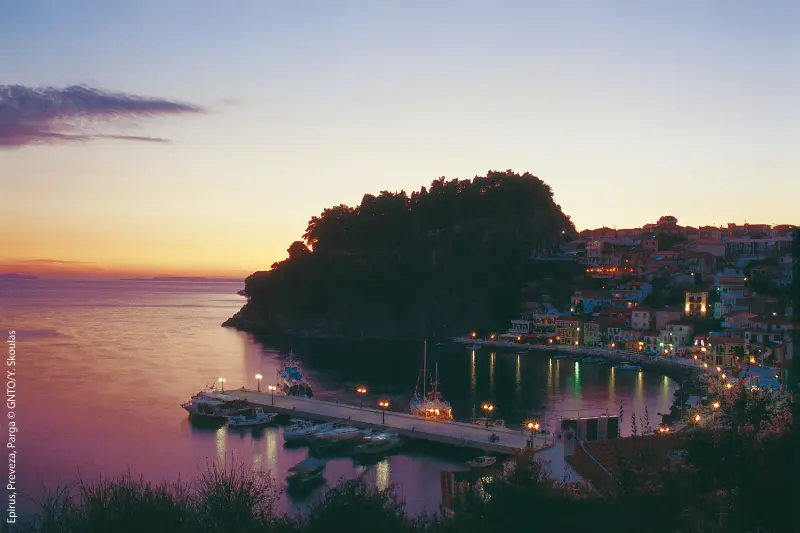
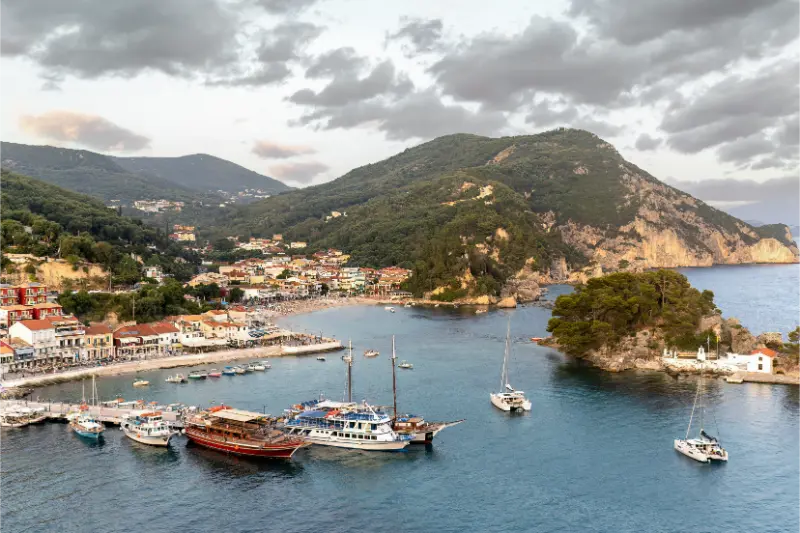
Preveza feels more like an island town than a typical mainland city. It sits on a peninsula at the entrance to the Ambracian Gulf, with sailing boats along the waterfront, narrow streets behind the harbour and a long Ionian beach coast beginning only a short drive away. That combination makes it one of the easiest places in Epirus to mix archaeology, swimming and relaxed evenings without changing hotels every day.
The city is also a smart logistics base. Aktion Airport is close, Ancient Nikopolis is on the outskirts, Lefkada is reachable by road, and Parga or Syvota can be added without turning the trip into a long expedition. I would stay at least two nights; three nights are better if you want one beach day and one archaeological or nature day.
Quick planning notes
- Best for independent road trippers who want to go beyond the best-known Greek islands and headline archaeological stops.
- Allow at least one full day for the main sights; two nights usually produce a more relaxed experience with an evening in the destination.
- A car gives the most flexibility for surrounding villages, beaches and archaeological sites, although the central area can usually be explored on foot.
- Start exposed outdoor sights early in summer and keep midday for lunch, museums or a slower waterfront break.
- Reconfirm museum hours, local buses, boat departures and seasonal businesses shortly before travel rather than relying on an old timetable.
- Keep one part of the day flexible for weather, heat or a place you discover locally and want to stay longer.
Why this place deserves more than a quick stop
Preveza Travel Guide is useful because it fills a gap between better-known destinations without feeling like filler in an itinerary. The strongest trips in mainland Greece are built around regions: one town for evenings, one archaeological or natural focus during the day, and enough time to understand how landscape, food and history connect. Here, that regional logic is more rewarding than collecting isolated photo stops.
I would resist the temptation to copy a route simply because every place looks close on Google Maps. Mountain roads, coastal detours, archaeological opening hours and long lunches all affect the real pace. Choose two or three priorities per day. If you finish early, add a nearby beach, viewpoint or café rather than turning the afternoon into another long transfer.
What to see and do
The waterfront and marina
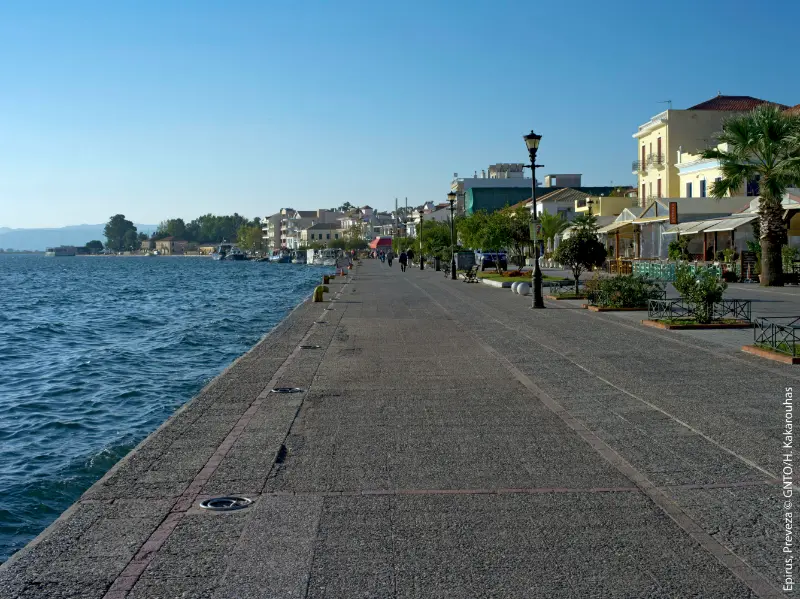
The seafront is Preveza’s social spine. Walk it once in daylight to understand the harbour and again in the evening when tables fill and the town becomes more animated. The marina brings an international sailing crowd, but the atmosphere remains distinctly local a few streets inland. This is a place where a slow coffee and a long dinner are part of sightseeing rather than time taken away from it.
Practical approach: treat the waterfront and marina as part of a route rather than an isolated pin. Check access and parking before setting out, carry water in warm weather, and give yourself enough time to walk beyond the first viewpoint. If conditions are poor or a site is unexpectedly closed, use the saved time for the nearest village or local museum instead of forcing the schedule.
Old town lanes and Seytan Pazar
Behind the waterfront, the narrow pedestrian lanes create the most enjoyable part of central Preveza. Seytan Pazar is often highlighted for its historic character, small shops and tavernas. Rather than following a rigid route, wander between churches, older houses and cafés. The scale is small, and the pleasure comes from noticing how quickly the city shifts from busy harbour to intimate lanes.
Practical approach: treat old town lanes and seytan pazar as part of a route rather than an isolated pin. Check access and parking before setting out, carry water in warm weather, and give yourself enough time to walk beyond the first viewpoint. If conditions are poor or a site is unexpectedly closed, use the saved time for the nearest village or local museum instead of forcing the schedule.
Pantokrator and the coastal forts
Preveza’s strategic position left a chain of fortifications around the peninsula. Pantokrator is the most atmospheric coastal stop, especially when paired with a sunset drive or walk. The forts are not all presented like polished museum sites, so go for the setting and historical context rather than expecting elaborate exhibitions. They make the geography of the entrance to the Ambracian Gulf much easier to understand.
Practical approach: treat pantokrator and the coastal forts as part of a route rather than an isolated pin. Check access and parking before setting out, carry water in warm weather, and give yourself enough time to walk beyond the first viewpoint. If conditions are poor or a site is unexpectedly closed, use the saved time for the nearest village or local museum instead of forcing the schedule.
Monolithi and the Ionian beach coast
The coast north of Preveza gives you kilometre after kilometre of open Ionian swimming. Monolithi is the headline beach, backed by forest and broad enough to feel different from a small island cove. Wind and waves can vary, so choose the beach according to conditions rather than loyalty to one famous name. Families should also pay attention to shade, parking and facilities on the exact section they use.
Practical approach: treat monolithi and the ionian beach coast as part of a route rather than an isolated pin. Check access and parking before setting out, carry water in warm weather, and give yourself enough time to walk beyond the first viewpoint. If conditions are poor or a site is unexpectedly closed, use the saved time for the nearest village or local museum instead of forcing the schedule.
The Ambracian Gulf
The Ambracian is not just a body of water beside the city; it is a protected wetland system with dolphins, sea turtles and important birdlife. Wildlife cruises and kayaking can be worthwhile when run responsibly. Keep expectations realistic: wild animals are not guaranteed. The point is to experience a calm, ecologically rich gulf that feels very different from the open Ionian side of Preveza.
Practical approach: treat the ambracian gulf as part of a route rather than an isolated pin. Check access and parking before setting out, carry water in warm weather, and give yourself enough time to walk beyond the first viewpoint. If conditions are poor or a site is unexpectedly closed, use the saved time for the nearest village or local museum instead of forcing the schedule.
Ancient Nikopolis
Nikopolis is the essential cultural excursion. Founded by Octavian after the Battle of Actium, the Roman city spreads across a huge archaeological landscape with walls, theatre, odeon, stadium and early Christian monuments. Pair the site with the Archaeological Museum rather than choosing one or the other. They tell the same story from different angles and together justify a half-day or more.
Practical approach: treat ancient nikopolis as part of a route rather than an isolated pin. Check access and parking before setting out, carry water in warm weather, and give yourself enough time to walk beyond the first viewpoint. If conditions are poor or a site is unexpectedly closed, use the saved time for the nearest village or local museum instead of forcing the schedule.
How to structure your day
- Morning: wander the old town and harbour before temperatures rise.
- Late morning: drive to Ancient Nikopolis and its museum.
- Lunch: return to Preveza for seafood or an Epirote pie-focused meal.
- Afternoon: swim on the Monolithi coast or take a wetland-focused excursion.
- Sunset: Pantokrator or the waterfront promenade.
- Extra day: choose Syvota/Parga, Lefkada or the Ambracian Gulf rather than trying to combine all three.
This order is deliberately conservative. It leaves the hottest part of the day for lunch or a less exposed stop and avoids driving back and forth. Reverse it if your accommodation, opening hours or weather make another sequence more logical. In summer, the difference between an 08:30 archaeological visit and a 12:30 visit can completely change how much you enjoy the site.
Where to stay
For a first visit, stay between the old town and waterfront so evenings require no driving. Beach accommodation north of town works better for travellers who prioritise swimming and have a car. If you arrive late through Aktion Airport, Preveza is an easier first-night base than immediately driving deep into Epirus or across to an island.
If you are ready to compare accommodation, check current places to stay in Preveza on Booking.com. I prefer booking a base that makes evenings walkable rather than saving a small amount on a room that forces an extra drive every night.
What to eat
Preveza is one of the places where seafood should shape your food plan. Look for local papalina sardines, Ambracian shrimp when available, mullet, bottarga and simple grilled fish. The city also carries the pie and meat traditions of Epirus. I would have one seafood dinner near the water and another meal in the lanes away from the most obvious harbour frontage.
A useful rule in smaller mainland destinations is to ask what is local and seasonal before ordering. Menus can be long, but the most memorable dishes are usually the ones tied to the landscape around you: river or lagoon fish where relevant, pies and cheeses in Epirus, grilled meat inland, and simple seafood along the Ionian coast. Leave space for a slow meal instead of squeezing dinner between driving legs.
Getting there and getting around
For a multi-stop mainland itinerary, a rental car is usually the most practical option because it lets you connect archaeological sites, beaches, wetlands and villages that are not designed around a tourist shuttle network. Intercity KTEL buses connect the larger towns, but local onward services may be limited or timed for residents rather than sightseeing. If travelling without a car, choose accommodation centrally and plan each excursion around the actual current timetable.
Driving itself is generally straightforward on the main roads, but secondary mountain and coastal roads can be narrower, slower and darker than expected at night. Do not estimate travel time only by distance. Refuel before remote loops, keep offline maps available, and avoid committing to the last possible ferry, museum entry or restaurant booking after a long driving day.
Best time to visit
May, June, September and early October balance beach weather with comfortable city walking. July and August bring the liveliest atmosphere and strongest beach demand. Winter is much quieter but still works for food, history and local life; some sea-based activities and resort businesses become seasonal.
For most travellers, shoulder season also makes spontaneous planning easier: parking is less stressful, restaurants have more time for guests and walking is more pleasant. Peak summer is still the right choice for guaranteed beach atmosphere and the widest range of boat services, but it rewards early starts and pre-booked accommodation.
How to connect this stop with the rest of Greece
Build the route as a cluster rather than an out-and-back. Useful next reads are Ancient Nikopolis guide Syvota Epirus guide Vonitsa and Palairos guide. Linking nearby destinations this way reduces repeated driving and gives each overnight stop a clear reason to exist.
If you have only a week, choose one coast-and-inland combination rather than trying to cross the whole region. With ten to fourteen days, you can combine Epirus with Western Greece or the Ionian Islands while still keeping two-night bases. The best road trips here are not the ones with the most pins; they are the ones where the landscape changes gradually and the evenings still feel relaxed.
Common planning mistakes
- Trying to visit every nearby attraction on the same day simply because the driving distances look short.
- Assuming archaeological sites, small museums, boats and seasonal restaurants keep identical hours all year.
- Arriving at exposed sites in the middle of a summer afternoon without enough water or shade.
- Booking remote accommodation for the view without checking the real drive to dinner, groceries and the next morning’s route.
- Treating wetlands, rivers and archaeological areas as photo sets rather than working or protected landscapes.
- Leaving no flexible time for weather, local advice or a beach and village that turns out to deserve longer.
Frequently asked questions
How many nights do I need?
One night can work for a transit-focused visit, but two nights are usually better because they give you one full day without packing the car. Add a third night when beaches, hiking, birdwatching or boat trips are a major part of the plan.
Do I need a car?
Not always for the town centre, but a car makes the wider region dramatically easier. Without one, choose a central hotel and verify KTEL, taxi or excursion options for the exact day you want to travel.
Is this a good stop with children?
Yes if you simplify the itinerary. Choose one major sight in the morning, a long lunch and a beach or easy walk later. Avoid combining several exposed archaeological sites with a long afternoon drive in summer.
Can I visit in winter?
Yes, especially for food, history and local life. Expect shorter daylight, more variable weather and reduced seasonal tourism services. Mountain roads and wetland tracks may require extra flexibility after heavy rain.
Should I book activities in advance?
Reserve popular boat trips, special guided tours and peak-summer accommodation in advance. For ordinary sightseeing, keep some flexibility and recheck current opening hours a day or two before the visit.
Useful official source
For details that can change, use Visit Greece – Preveza and recheck opening hours, tickets, weather restrictions, transport and seasonal services shortly before departure. Official pages are especially important for archaeological sites, protected areas and boat schedules.
Final advice
The main advantage of travelling through this part of Greece is variety without huge distances: a morning can be archaeological, the afternoon can move to a river, lagoon or Ionian beach, and dinner can still happen in a real working town rather than a purpose-built resort. Use that variety, but do not let it push you into overplanning.
Choose a logical base, start early when heat or opening hours matter, and let one or two experiences carry each day. That is the balance that turns a collection of lesser-known stops into a coherent Greece itinerary—and it is also what makes these places memorable enough to deserve their own articles rather than a paragraph in a generic regional guide.