

Sitia is one of the best bases in Crete if you want the island to feel less compressed by headline tourism. The town has a working waterfront, a compact centre and enough restaurants and cafés for easy evenings, but its real strength is location: it opens the door to Vai, Toplou, Palaikastro, Zakros and the wild landscapes of eastern Lasithi.
The wider Sitia Geopark covers more than 700 square kilometres and belongs to the UNESCO Global Geoparks Network. That single fact explains why east Crete feels so different: gorges, caves, dry-stone landscapes, olive country and remote coastlines sit close together. Use Sitia for at least two or three nights rather than treating it as a lunch stop on a cross-island drive.
Why this place deserves its own stop
The reason to stay rather than pass through is the rhythm of the place. A few hours shows the main sights; an overnight stay reveals the morning market, the evening promenade and the ordinary streets between attractions. That slower rhythm is what makes a travel guide useful rather than just a list of things to photograph.
What to see and do
Walk the waterfront
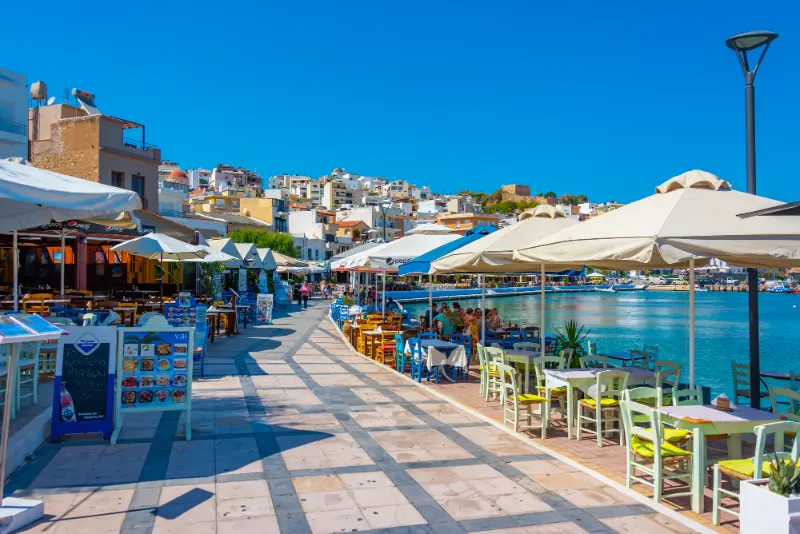
Sitia’s seafront is the simplest introduction to the town. Fishing boats, cafés and the curve of the bay create a relaxed atmosphere that works best in the morning and again in the evening. The town is not trying to be a museum-piece old port; it feels lived in, and that is part of its appeal after several days in more tourism-focused places.
Climb to the Kazarma
The Kazarma fortress above the town is a useful orientation point. Even if you are not deeply interested in fortifications, the elevated position helps you understand Sitia’s relationship with the bay and surrounding hills. Go when the light is softer and check current access rather than assuming the interior is always open.
Use the Archaeological Museum for context
Eastern Crete has major Minoan sites, and a museum visit makes later stops at Palaikastro or Zakros much easier to understand. Give the museum a focused hour instead of leaving all archaeology for outdoor sites. It also works well during the hottest part of the day.
Explore the Sitia Geopark
The geopark is not one fenced attraction. It is a network of landscapes and routes across the eastern tip of Crete. Visit Greece describes marked hiking and cycling routes connecting features such as Toplou Monastery, Itanos, Vai and the Gorge of the Dead. Plan by area rather than trying to “do the geopark” in a single afternoon.
Eat and drink locally
Sitia has a strong agricultural identity. The region is known for olive oil and wine, and Visit Greece lists Sitia among Crete’s PDO wine areas. Look for local oil, cheeses, seasonal vegetables and fish, and leave one evening free for a slow meal without a long return drive.
A realistic plan
| Part of the day | Plan |
|---|---|
| Day 1 | Sitia waterfront, centre, Kazarma and museum |
| Day 2 | Toplou, Itanos and Vai |
| Day 3 | Zakros, Gorge of the Dead or a gentler east-coast road trip |
| Extra day | Palaikastro, Chiona and a slower geopark route |
| Departure | Continue to Agios Nikolaos or stay east for Xerokampos |
Use this as a framework rather than a timetable. Crete rewards flexibility: parking can take longer than expected, mountain roads slow down, a good lunch becomes part of the day, and heat can change the order of activities. The best itinerary is the one that leaves enough margin to enjoy the main experience rather than simply arriving at every planned pin on a map.
How to get there and move around
Sitia has its own airport with limited routes, but many visitors arrive by road from Heraklion or Agios Nikolaos. The drive from central Crete is longer than the map may suggest because the coastal road bends and passes through towns. A car is the most practical choice for the geopark and remote east-coast sites. In town, park once and walk the waterfront and centre.

How to pace the visit
Do not treat the historic centre as a checklist. A good walking day has pauses built into it: one museum or monument, one long section on foot, a proper lunch and a quieter hour late in the afternoon. That rhythm is especially important in Crete, where heat and bright light can make a route that looks short on a map feel much longer. Keep the most exposed walking for morning or early evening and use midday for food, museums or a shaded café.
Parking and luggage
If you are driving, decide where the car will stay before you choose accommodation. Historic cores often have narrow or pedestrian streets, limited access and parking that fills quickly in high season. A hotel that looks perfectly central can be awkward if you arrive with large luggage and a rental car. I prefer to park once, walk the old centre, and only use the car again when leaving for a day trip.
Best time to visit
May, June, September and early October are excellent for combining coast and walking. July and August work for beach-focused trips but require early starts for exposed hikes and archaeological sites. Winter is much quieter; some tourist services reduce hours, but Sitia remains a real town rather than a resort that shuts completely.
For any outdoor or archaeological visit, check the same-day forecast and the official operating information. Crete can have very local conditions: wind on one coast, heat in an inland valley and cloud over the mountains at the same time. Planning by region and keeping one backup option nearby is more effective than relying on a rigid island-wide schedule.
Food and local rhythm
Try local olive oil, fresh fish, cheeses, small pies, vegetables and regional wine. Do not assume the most elaborate menu is the best one. In Sitia, a modest taverna serving a few well-cooked dishes can be more memorable than a place built around international resort expectations.
One of my favourite planning rules in Crete is to protect lunch. Do not schedule every meal as a 20-minute gap between attractions. A proper stop gives you shade, hydration and a chance to ask local staff about road, wind or beach conditions. It also makes the day feel like a trip through Crete rather than a sequence of parking lots.
How to combine it with nearby places
The essential east-Crete pairings are Vai and Kato Zakros. For a broader route, connect Sitia with Agios Nikolaos rather than trying to commute from Chania or Rethymno.
If your route already includes two long drives, resist adding a third distant highlight simply because it is famous. Crete is large enough that geographic discipline improves almost every itinerary. A day focused on one corner of the island usually produces more time walking, swimming or eating and less time looking through a windscreen.
Where to stay
Stay centrally if you want to walk to dinner and avoid driving at night. A property on the edge of town can be better if parking and early road trips are priorities. Check the exact parking arrangement before booking; “parking nearby” can mean a public area rather than a guaranteed private space. For a road trip, easy access to the main road is often more valuable than being fifty metres closer to the waterfront.
Photography and timing
The most flattering light is usually early or late, but photography should not dictate unsafe timing. On exposed roads, gorges and archaeological sites, practical considerations come first. Carry a phone or camera securely, avoid stepping backward near drops or uneven stones, and take a moment to look without a screen. The best photographs often come after you have understood the shape of the place.
Common mistakes to avoid
- Using Sitia only as a lunch stop on a long drive
- Trying to visit Vai, Zakros and several gorges in one day
- Underestimating east-Crete driving time
- Staying in Heraklion and repeatedly day-tripping all the way east
- Ignoring the museum and then visiting Minoan sites without context
- Planning remote hikes in midsummer without early starts and enough water
Official information
For current access, opening hours, tickets or regional information, check Visit Greece – Sitia Geopark shortly before the trip. I use official pages for variable details because older travel articles can remain online long after rules have changed.
Frequently asked questions
How many days do I need in Sitia?
Three nights is an excellent minimum for the town plus Vai and Zakros. Two nights works if you choose only one major day trip.
Is Sitia worth staying in?
Yes, especially for travellers who want eastern Crete without resort crowds and prefer a real town with easy evening life.
Do I need a car?
For the town itself, no. For the geopark, Vai, Toplou and Zakros, a car is the most practical option.
Is Sitia good for families?
Yes if your family enjoys road trips, beaches and relaxed evenings. Keep gorge walks optional for younger children.
Can I combine Sitia with Agios Nikolaos?
Yes. They make a logical two-base eastern Crete itinerary and reduce unnecessary backtracking.
Final advice
Build this stop around one clear reason for going, then let the surrounding area add depth. That approach keeps the day realistic and usually creates better memories than a checklist. In Crete, distance, heat and road shape matter as much as the number of attractions on a map.
For the wider picture, continue with Vai Palm Beach Guide, Kato Zakros Guide, Agios Nikolaos Guide. These guides make it easier to connect this stop to the rest of the island without unnecessary backtracking.