

Skiathos is usually sold as a beach island, but the interior is crossed by one of the most interesting walking networks in the Sporades. Forest tracks, old cobbled paths, springs, chapels and viewpoints connect the town with Evangelistria, Kastro, remote beaches and the western pine forests. Hiking is the easiest way to see the island beyond the bus corridor.
The Municipality of Skiathos describes a network of about 197 km of trails and says the routes range from short walks to outings of several hours. The island’s highest point is only around 433 metres, but distance, heat and repeated climbs can still make a route demanding. For the broad island overview, start with my Skiathos travel guide. For the capital, harbour and evening walks, use the Skiathos Town guide; and for the island’s best-known south-west beach, see the Koukounaries Beach guide.

Hiking Skiathos at a glance
| Question | Practical answer |
|---|---|
| Best months | April–May and September–October are especially comfortable |
| Summer strategy | Start early; avoid long exposed climbs in midday heat |
| Navigation | Use official route information plus offline maps |
| Best cultural route | Town to Evangelistria |
| Best historic objective | Kastro and the north-side routes |
The official Skiathos trail network
The Municipality of Skiathos hiking page describes a broad network crossing forests, agricultural land, religious sites and coastal scenery. Routes have been reorganised with modern wayfinding principles and are intended for different ability levels, but signage should complement—not replace—basic navigation preparation.
Download or save the route information before leaving. On a wooded junction it is much easier to make a good decision with an offline map than by trying to reload a website with weak signal.
Route ST5: Town to Evangelistria
The official network identifies ST5 as one of the main routes, connecting Skiathos Town with Evangelistria Monastery through olive groves, springs, chapels and old paths. It is an excellent first hike because the destination has cultural value and you can potentially use a bus or taxi for one direction.
If you walk both ways, start early and allow time at the monastery. Do not count museum or church visiting time as a rest from the heat unless you are actually sitting in shade and drinking water.
Kastro and the northern routes
The northern network leads toward Kastro, with routes through chapels, broadleaf forest and historic landscapes. Kastro itself is an exposed rock, so save energy for the final approach and the return. A north-coast swim may be possible in good weather but should not be your only cooling strategy.
Longer Kastro outings suit walkers who are comfortable with several hours on uneven terrain. If you mainly want to see the historic settlement, use a shorter land approach or boat trip instead of turning the day into an endurance test.
Western forest and Mandraki-area walks
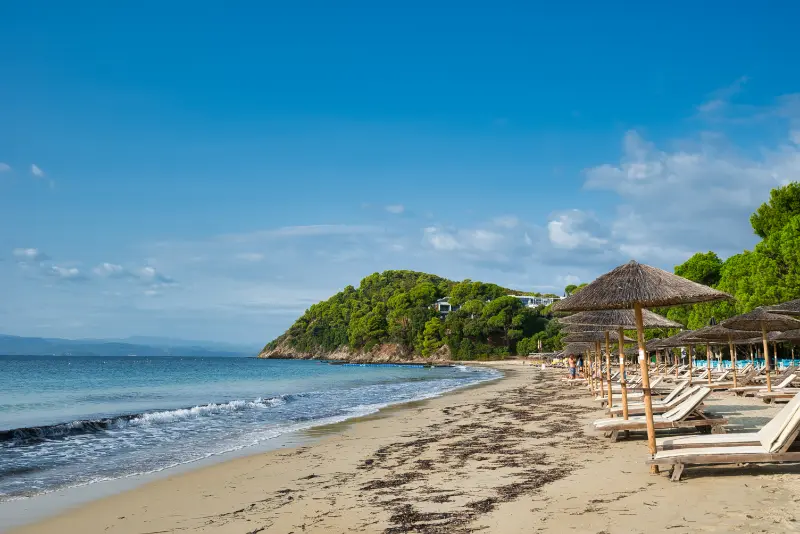
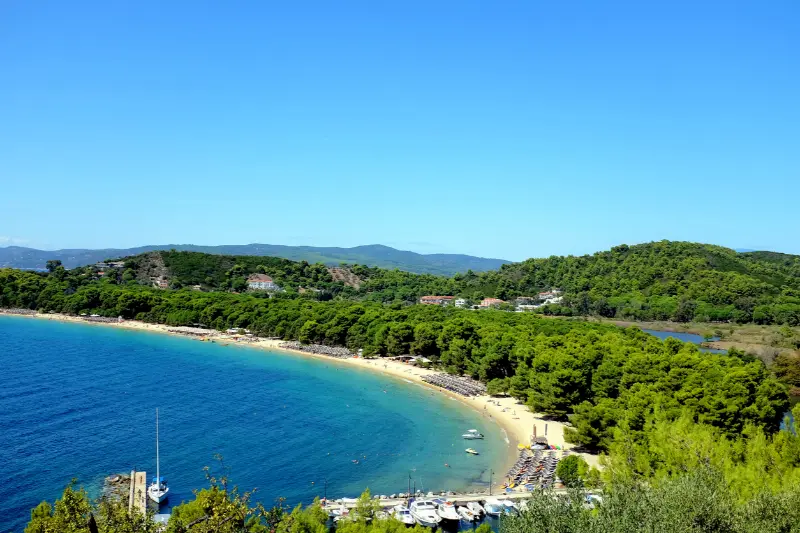
Around Koukounaries and the western side, pine forest routes give access to quieter beaches such as Mandraki, Elias and Agkistros. These walks are appealing because you can combine forest shade with swimming, but the sand and heat can still be tiring after several kilometres.
Use Koukounaries as a practical transport anchor if you are travelling by bus. Confirm the last return service before committing to a late-afternoon forest loop.
How difficult are Skiathos hikes?
Low altitude does not automatically mean easy. Loose surfaces, steep short climbs, heat and cumulative distance matter. A route that feels effortless in April can be uncomfortable at 13:00 in August. Judge difficulty using time, elevation, surface and exposure together.
If you are new to hiking, choose a 1–3 hour route with an obvious destination and simple return. Experienced walkers can link routes, but should still carry enough water and tell someone the plan.
Hiking safety and fire awareness
In dry summer conditions, wildfire risk can affect access to forests and trails. Follow official restrictions immediately and never enter a closed area because a route app still shows a line. Avoid smoking on trails and do not park vehicles where they block emergency access.
Wear proper shoes, use sun protection, keep a charged phone and carry basic first aid. On hot days, turn around at the first sign that water or energy is running low; there is no reason to finish a recreational hike at all costs.
A 3-hike progression for a first trip
| Hike | Why choose it |
|---|---|
| Town/short local route | Learn the signs and terrain close to services |
| Town–Evangelistria | Cultural destination plus varied countryside |
| Kastro or western forest route | Longer scenery-focused day once you know your pace |
Hiking with buses and taxis
The 2026 bus network serves the south coast and Evangelistria area and was extended toward the Kastro junction. That creates useful one-way possibilities. Check Skiathos Transport on the morning of the hike rather than assuming the same service runs every month.
A taxi can also turn a point-to-point trail into a manageable outing. Agree the pickup place clearly, especially if the trail ends at a junction rather than a named beach.
When to go and how to use the weather
For Skiathos Hiking Guide, I would treat the weather as part of the plan rather than background information. Skiathos is green, exposed to changing Aegean conditions and small enough that one coast can feel very different from another. In July and August the strongest sun usually falls in the middle of the day, so exposed walks and historic sites are more comfortable early or later. Spring and early autumn are particularly attractive for walking, while the sea remains the priority for most summer visitors.
Wind matters even more than temperature. A calm morning can be ideal for the north coast, while a northerly wind can cancel small-boat departures or make open beaches uncomfortable. Check the marine forecast and ask local operators about the actual sea, not only the air temperature. If conditions are poor, switch to the south coast, town, a monastery or a forest walk and keep the exposed plan for another day.
Food, water and a sensible pace
Skiathos makes it easy to over-plan because distances look short. Leave time for a proper lunch, a swim and an unhurried return. On remote beaches and hiking routes, carry more water than you think you need; tavernas and beach bars are common on the developed south coast but not guaranteed on the north. A refillable bottle and a small snack are worth carrying even on a half-day outing.
For meals, use the geography of the day. Eat near the beach or village you are already visiting instead of driving back to Skiathos Town for every lunch. In the evening, the town gives you the widest choice, but staying in Troulos, Agia Paraskevi or Koukounaries can be more relaxing if your hotel is on the west side of the bus corridor.
What to pack for this part of Skiathos
- High-SPF sunscreen, a hat and enough drinking water for exposed stops.
- Shoes with grip for paths, rocky viewpoints and historic sites; flip-flops are not hiking shoes.
- A light layer for boat rides and breezy evenings, even in warm weather.
- Offline maps or saved pins for remote beaches and trail junctions.
- A small dry bag if the day includes a boat, tender transfer or swimming stop.
- Cash as a backup for small seasonal businesses, although cards are widely used in tourist areas.
A planning rule that saves time
Group each day by geography. The south-coast bus corridor, the Koukounaries end of the island, the northern Kastro area and the town/monastery side each work best as separate clusters. Crossing the island several times in one day adds traffic and parking without adding much experience.
Also keep the last day conservative if you have a flight or ferry connection. Boat trips can be delayed by weather, buses can run differently outside peak season and summer road traffic around town and the airport can slow unexpectedly. A relaxed final day near your departure point is a better insurance policy than squeezing in a remote north-coast beach.
Local transport and timing checks before you leave
For Skiathos Hiking Guide, check the official Skiathos Transport information on the same day you travel. The network changed several times during the 2026 season, including an extension from Evangelistria toward Profitis Ilias and the Kastro junction, and a revised timetable valid from 18 September. That is useful progress for visitors, but it also means an old screenshot can be wrong. Save the current timetable offline, note the last useful return and allow extra time at busy beach stops when buses can fill quickly.
Boat schedules deserve the same treatment. North-coast trips depend on sea conditions, and responsible captains may change the order of stops or cancel a landing. Keep one flexible day in the itinerary so weather becomes a planning variable instead of a crisis. If you have a flight or ferry the next morning, spend the final afternoon somewhere easy to reach rather than on the most remote excursion of the holiday.
Responsible travel on a small island
Skiathos receives intense summer demand, yet many of its most attractive places are small beaches, forest paths and religious or historic sites. Use marked routes, take rubbish away from remote coves, respect private property and never remove stones or natural material from protected landscapes such as Lalaria. On organised beaches, use the bins provided and keep noise reasonable away from the main beach-bar areas.
Wildfire risk is another reason to behave carefully in the dry season. Do not smoke on forest trails, do not park where vehicles block narrow access roads and follow any temporary closure immediately. These habits are simple, but they matter on a pine-covered island where a small mistake can have a large effect.
Frequently asked questions
Is Skiathos good for hiking?
Yes. The island has an extensive official trail network through forests, chapels, historic sites and remote beaches.
When is the best time to hike?
Spring and early autumn are especially comfortable; in summer, start early and shorten exposed routes.
Can I hike to Evangelistria Monastery?
Yes. The official ST5 route connects Skiathos Town and the monastery.
Can I hike to Kastro?
Yes, with several possible approaches; choose the route according to your fitness and heat conditions.
Do I need hiking boots?
For longer routes, shoes with good grip and foot support are preferable. Avoid flip-flops on uneven paths.
Final thoughts
Walking is the best antidote to the idea that Skiathos is only a line of beaches. Start with a short official route, learn how the terrain feels and then build toward Evangelistria, Kastro or the western forest. In the right season, hiking can become one of the highlights of the island.