
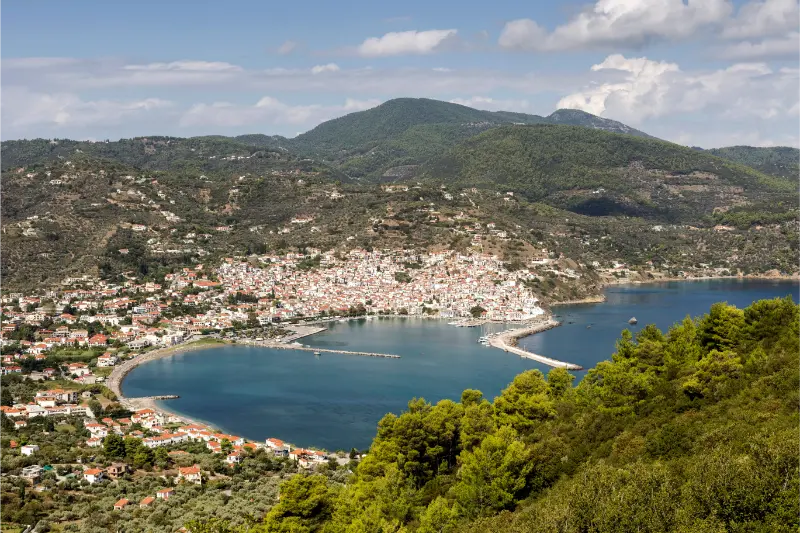
Skopelos Chora rises from the harbour in layers of white houses, tiled roofs, churches and narrow lanes. It is the island’s practical centre, but its real appeal appears when you leave the waterfront and climb gradually into the old settlement, where viewpoints open between houses and the pace becomes quieter.
The town deserves at least one evening and one unhurried morning even if your trip is mainly about beaches. For the whole island, use the Skopelos travel guide; this article focuses on how to experience Chora itself rather than using it only as a ferry stop.
Why this place deserves more than a quick stop
Skopelos Chora gives you the island’s strongest combination of architecture, food, harbour life and walkability. It is also useful logistically: ferries, buses, taxis, rental services and excursion boats converge nearby, making it a practical base for travellers without a car.
Visit Greece highlights the island’s traditional architecture and the way pine-covered landscapes meet the sea. Chora expresses the cultural side of that identity through dense lanes and religious architecture rather than through a single monumental attraction.
At a glance
| Best for | Architecture, evening walks, food, car-free stays and first-time visitors |
| Ideal time | 1–2 days in town; longer as an island base |
| Main base | Harbour area for convenience or higher old-town lanes for atmosphere |
| Transport | On foot in Chora; buses, taxis or car for the island |
| Pair it with | Agios Ioannis Kastri, beaches and Glossa |
What to see and do
The town rewards slow exploration. The aim is not to follow one rigid route but to climb gradually, pause at viewpoints and return to the waterfront by a different lane.
- Walk the harbour early and again after sunset.
- Climb toward the castle area and upper viewpoints.
- Notice the density of small churches and traditional houses.
- Explore side lanes rather than following only shopping streets.
- Have at least one meal away from the immediate ferry quay.
From the harbour to the upper town
The harbour gives a clear view of how the town rises uphill. Start here for orientation, then move into the interior before the day becomes hot. The climb is not a mountain hike, but repeated steps and uneven lanes make supportive shoes more comfortable than beach sandals.
As you gain height, views back over the port become part of the experience. Do not rush to one “best” viewpoint. Small openings between houses create changing compositions, especially in early morning and late afternoon light.
Churches, architecture and everyday life
Skopelos is known for its many churches and chapels, and Chora contains a remarkable concentration. You do not need to enter every building. The value is in seeing how religious spaces, homes, courtyards and lanes form one urban fabric.
Photograph respectfully and remember that many lanes are residential. Doorways, terraces and courtyards are not public sets. A quieter approach also helps you notice architectural details that disappear when you move through the town as quickly as possible.
A practical route that works
A half-day loop can cover the main layers of Chora without reducing it to a checklist.
- Start at the harbour before mid-morning.
- Climb gradually through the old lanes toward the castle area.
- Pause at viewpoints and churches rather than trying to visit everything.
- Descend on a different route and stop for lunch.
- Return to the waterfront at sunset when the town becomes more social.
Repeat part of the route the next morning if you stay overnight; Chora feels completely different before shops and excursion traffic fully start.
Getting there
Most visitors arrive on Skopelos by ferry because the island has no commercial airport. Skiathos is a common air gateway, with onward ferries operating seasonally. Other mainland and island connections depend on the timetable for your dates.

If your ferry arrives at another Skopelos port, plan the onward road transfer before assuming you can simply walk to your accommodation in Chora.
Getting around
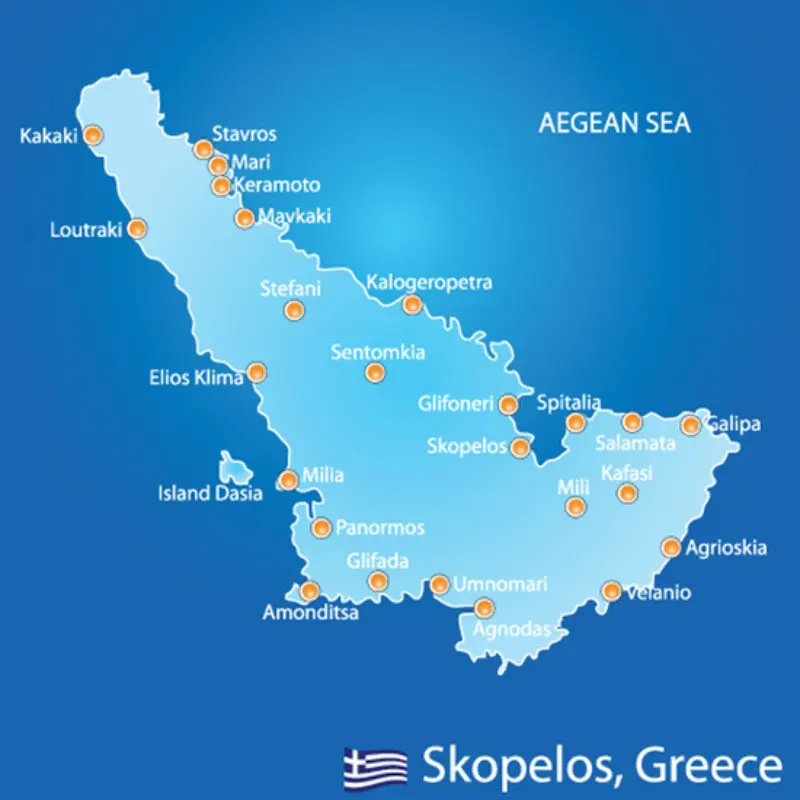
Inside Chora, walking is the only sensible way to explore the historic lanes. A car becomes useful for remote beaches and inland routes but can be a burden if your accommodation does not include convenient parking.
Buses can work well for major beach corridors in season. Travellers without a car should choose accommodation based on both the harbour and bus access, not just a pretty view on a booking map.
Where to stay
The harbour area is best for very short stays, ferry connections and level access to restaurants. It can also be busier and noisier.
Higher lanes offer atmosphere and views but may involve stairs with luggage. Ask the property for the actual walking route before booking if mobility or heavy bags are concerns.
Food and local rhythm
Chora is the easiest place on Skopelos to sample local dishes without planning every meal around a driving route. Skopelos cheese pie is the obvious local speciality, but use it as a starting point rather than the entire food experience.
Lunch can be simple; save one evening for a slower taverna meal after the day-trippers and beach crowds settle. The harbour is attractive, but inland lanes often provide a calmer atmosphere.
Best time to visit
May, June and September are excellent for walking. High summer brings more ferries, visitors and nightlife, but also more heat during the uphill parts of town.
If you visit outside the main season, expect a quieter island and fewer seasonal services. That can be appealing, but confirm ferries and accommodation before building a tight island-hopping route.
How long do you need?
One full day covers the main town experience. Two nights are better because you can see both evening and early-morning Chora.
Four or five nights make sense if you use Chora as your base for beaches and island excursions rather than changing accommodation.
A realistic mini-itinerary
- Day 1: harbour orientation, old-town climb, lunch, relaxed afternoon and sunset walk.
- Day 2: early lanes, local breakfast, then a beach or island excursion before returning for dinner.
- Extra day: road trip to Glossa and Agios Ioannis Kastri.
Mistakes to avoid
- Dragging large luggage through upper lanes without checking access.
- Trying to explore at the hottest time of day.
- Parking as close as possible to the old lanes instead of using practical parking areas.
- Assuming the harbour alone represents the town.
The best Chora experience comes from giving yourself permission to wander rather than optimizing every minute.
Responsible travel and practical etiquette
The old town is a living settlement. Keep voices low late at night in residential lanes, avoid blocking steps for photographs and do not enter private courtyards for a better angle.
In summer, water use and waste pressure rise sharply on islands. Refill where possible, carry your rubbish to proper bins and support local businesses beyond the busiest harbour frontage.
How to combine it with the rest of Greece
Pair Chora with the Agios Ioannis Kastri guide for the island’s most famous cliff-top church setting.
Skopelos also combines naturally with Skiathos and Alonissos when ferry schedules make a multi-island Sporades trip realistic.
Useful official information
The official Visit Greece Sporades page highlights Skopelos for its pine forests, traditional architecture and Ai Giannis at Kastri.
FAQ
Is Skopelos Chora worth staying in?
Yes. It is the most convenient base for ferries, restaurants and evenings on foot, especially on a first trip.
Is Chora steep?
Parts of the old settlement involve steps and uphill lanes. The harbour itself is much easier and flatter.
How long do I need?
One day is enough for sightseeing, but two nights give you the best early-morning and evening atmosphere.
Do I need a car?
Not for Chora. A car is useful for beaches and wider island exploration.
Is it the same as Skopelos Town?
Yes. Chora is the traditional Greek term commonly used for the island’s main town.
Final thoughts
Skopelos Chora is not a town to rush through on the way to a famous beach. Its harbour, steps, churches and rooflines provide the cultural counterweight to the island’s green coast.
Stay long enough to climb the lanes twice—once in daylight and once after the heat fades—and the town becomes one of the most memorable parts of a Sporades trip.
Extra planning notes
Before locking in accommodation, compare the real transfer sequence for your dates rather than relying on a generic map. Greek island and regional travel is often simple once you are there, but seasonal timetables, wind, road conditions and the location of your hotel can change how a day feels. I prefer to leave one part of the itinerary intentionally flexible: a beach can move to another day, a hike can start earlier, and a boat trip can shift when the sea is calmer. This is especially useful in places where the landscape is the attraction, because forcing an activity in poor conditions rarely creates the experience you imagined.

A second practical rule is to plan around energy as much as distance. A short drive followed by stairs, heat or a long swim may be more tiring than a longer transfer on paper. Build in shade, water, unhurried meals and time to return to your base before dinner. That slower rhythm is not wasted time; it is often what separates a holiday that feels like a sequence of logistics from one that actually feels like Greece.