
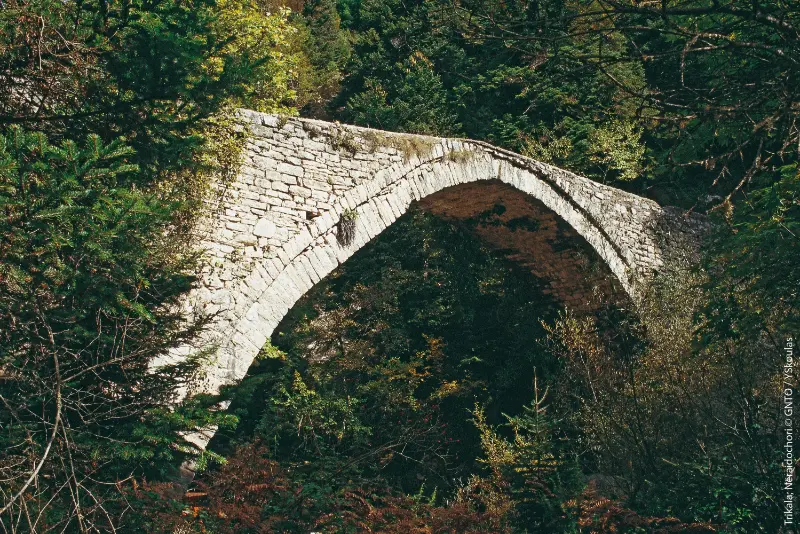
Trikala Corinthias is not one village but a mountain destination spread across three neighbourhoods—Kato, Mesea and Ano Trikala—on the slopes of Mount Ziria. At more than 1,000 metres in its upper sections, the area feels completely different from the Corinthian Gulf only a short drive away. Fir forests, stone guesthouses, fireplaces and mountain tavernas make it one of the Peloponnese’s classic winter escapes, while spring and autumn are excellent for hiking.
Visit Greece specifically identifies the three settlements and describes Trikala as a gateway to Mount Ziria, the second-highest mountain of the Peloponnese. The nearby small ski centre adds winter appeal, but the destination works best when you see it as a year-round mountain base rather than a ski resort alone.
Why this Corinthia stop is worth your time
This is the right choice for travellers who want cool nights, mountain food, forest walks and a slower village rhythm. It is romantic in winter, comfortable for families who like snow play, and rewarding for hikers in shoulder seasons. The trade-offs are car dependence, steep roads and weather variability. A mountain weekend here should be planned around conditions, not a fixed checklist.
Quick planning summary
- Best all-round seasons: April to June and September to October for sightseeing, walking and comfortable road trips.
- July and August: best for a classic beach holiday, but start archaeological visits early and expect more traffic on weekends.
- Winter: excellent for Trikala Corinthias, Ziria and Feneos when roads are clear; snow equipment may be necessary at altitude.
- Transport: coastal towns are reachable by bus or rail in several cases, while mountain routes and Perachora are much easier with a car.
- Driving: motorway distances are short, but mountain roads are slower than map estimates suggest.
- Always recheck: archaeological hours, KTEL or rail timetables, ski-centre operation, wildfire restrictions and mountain-road conditions.
What to see and do
Kato Trikala
The lower settlement is the easiest introduction and has traditional houses, a central square and access toward the coast. It can suit travellers who want mountain atmosphere without the highest, coldest roads. Walk the lanes slowly and compare restaurant menus rather than treating each neighbourhood as a drive-through photo stop.
Allow more time than the map suggests. Corinthia changes quickly from motorway and coast to narrow village roads, archaeological paths or mountain terrain, so one well-planned stop is usually more satisfying than three rushed ones.
Mesea Trikala
The middle settlement is the most active for tavernas and guesthouses. It works well if you want to walk to dinner and still have a broad accommodation choice. Winter weekends are busy, so book early but verify cancellation terms because snow and storms can affect road plans.
Allow more time than the map suggests. Corinthia changes quickly from motorway and coast to narrow village roads, archaeological paths or mountain terrain, so one well-planned stop is usually more satisfying than three rushed ones.
Ano Trikala
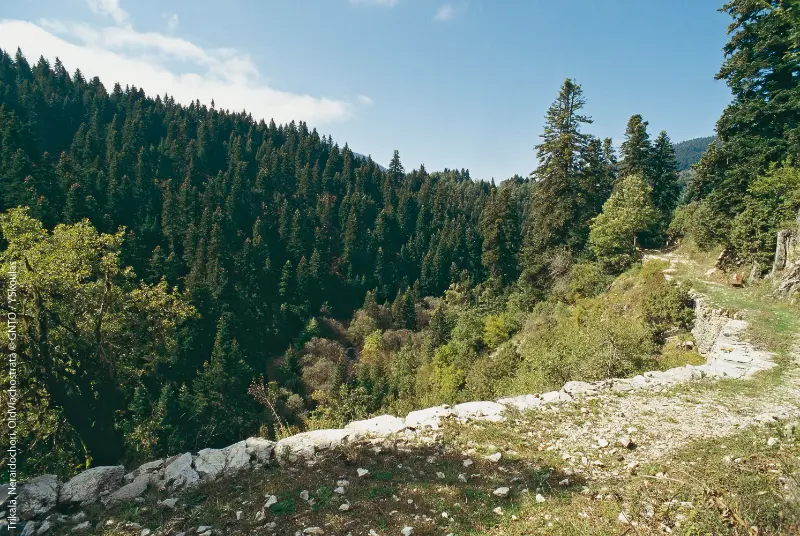
Upper Trikala gives the strongest mountain feeling and broad views. Nights are cooler even outside winter. Choose it if quiet and scenery matter more than immediate access to every service. In icy conditions, follow local advice on chains or winter tyres rather than assuming a normal city rental car is enough.
Allow more time than the map suggests. Corinthia changes quickly from motorway and coast to narrow village roads, archaeological paths or mountain terrain, so one well-planned stop is usually more satisfying than three rushed ones.
Mount Ziria
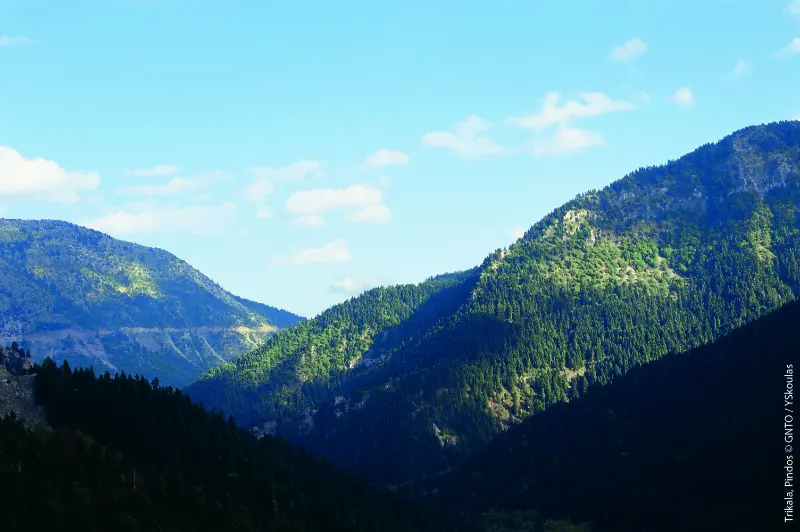
Ziria provides the natural backdrop for hiking, scenic drives and seasonal outdoor activities. Route difficulty varies greatly. Use mapped trails, check weather and avoid committing to a summit-style outing based on distance alone; altitude, wind and cloud can turn a simple-looking route into a serious day.
Allow more time than the map suggests. Corinthia changes quickly from motorway and coast to narrow village roads, archaeological paths or mountain terrain, so one well-planned stop is usually more satisfying than three rushed ones.
Ziria Ski Centre
Visit Greece places the ski centre around 12 km from Trikala Corinthias. It is smaller than Greece’s major ski resorts, which can be an advantage for a relaxed snow day. Operations depend on snow and weather, so check the centre’s own daily updates before driving up.
Allow more time than the map suggests. Corinthia changes quickly from motorway and coast to narrow village roads, archaeological paths or mountain terrain, so one well-planned stop is usually more satisfying than three rushed ones.
Mountain food and winter evenings
The appeal of Trikala is also indoors: long lunches, local meat dishes, pies, soups, dairy products and fireplaces. Build time for this into the itinerary. Rushing back to the coast after a hike misses half the reason to stay overnight.
Allow more time than the map suggests. Corinthia changes quickly from motorway and coast to narrow village roads, archaeological paths or mountain terrain, so one well-planned stop is usually more satisfying than three rushed ones.
A realistic itinerary
- Day 1: arrive before dark, explore the three neighbourhoods and choose a long dinner near your guesthouse.
- Day 2: hike or visit Ziria depending on season and weather, then keep the afternoon flexible for cafés and village walks.
- Day 3: descend toward Lake Doxa and Feneos or return via Xylokastro for a coastal walk.
Keep at least one part of the day flexible. Wind can change the best swimming coast, heat can make an exposed archaeological site unpleasant, and mountain weather can close or slow roads. A backup lunch, village walk or seaside stop is more useful than a rigid minute-by-minute schedule.
Where to stay
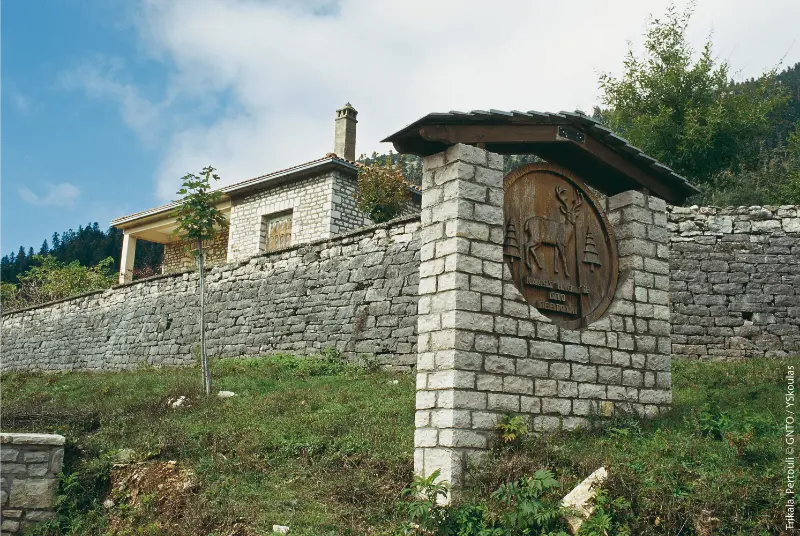
Mesea Trikala is the easiest all-round base for restaurants and guesthouses. Ano Trikala suits travellers prioritising views and quiet; Kato Trikala is practical for lower-elevation access. In winter, ask explicitly about parking gradient, heating, fireplace rules and road access before booking.
Before booking, check the exact pin on the map rather than relying only on the destination name. Coastal listings can stretch along several kilometres, while mountain properties may be on steep lanes. Confirm parking, heating or air conditioning, and whether dinner is realistically walkable.
For accommodation, compare current options on Booking.com. Map view and recent reviews are especially useful for parking, road noise, beach access and winter heating.
Getting there and getting around
A car is by far the easiest option. Bus connections exist but are less useful for combining villages and trailheads. Winter visitors should check road reports before departure and carry legally required equipment. Do not wait until you reach a snowy incline to learn how chains fit your vehicle.
Corinthia is close to Athens, but that does not mean every attraction is easy by public transport. The Athens–Corinth–Kiato corridor is the simplest without a car. Perachora, wineries, Acrocorinth and the highlands require more planning. If you drive, use legal parking and never block emergency or forest access.
Best time to visit
Spring is excellent for archaeological sites, wildflowers, hiking and mountain driving, although canyon routes can carry more water. June and September balance warm sea temperatures with easier sightseeing. July and August suit beach-focused trips but require early starts. Autumn is strong for food, wine and forest colour, while winter belongs to the mountain villages and occasional snow around Ziria and Feneos.
Microclimates matter. Loutraki can be mild while Trikala Corinthias is cold and cloudy; a calm gulf morning can turn windy by afternoon. Check both coastal and mountain forecasts when the itinerary changes altitude.
Food and local products
Order mountain dishes rather than defaulting to the same coastal menu: slow-cooked meat, soups, pies, cheeses, beans, wild greens and mushrooms in season. Portions can be generous. A long lunch after a morning outside is often better than trying to fit two distant attractions into one winter day.
Corinthia sits between sea, vineyards and mountain agriculture. Across the region look for fresh fish, olive oil, citrus, raisins, honey, cheeses, pies and Agiorgitiko wines from Nemea. The best meal is often a simple taverna dish that matches the landscape you are visiting rather than a generic tourist menu.
Travelling with children
Families can enjoy snow play, short forest walks and village squares, but weather is the controlling factor. Choose accommodation where children can reach dinner without repeated car trips on icy roads. For sledding or ski activities, use designated areas and proper equipment.
For family trips, alternate ruins with water, forest or village time. Shade is limited at many archaeological sites, and mountain roads can cause motion sickness. Carry water and snacks, avoid the strongest midday heat, and choose one main objective per half-day.
Costs and practical details
Corinthia can be good value because many landscape attractions cost little or nothing. Budget separately for archaeological tickets, spa sessions, wine tastings, organised canyoning, ski activities, tolls and fuel. Carry some cash in mountain villages and do not assume every small seasonal business accepts cards during network outages.
How this guide fits the wider region
Continue planning with Xylokastro guide; Lake Doxa and Feneos; Corinthia road trip; Peloponnese road trip. These pages are designed as one Corinthia cluster so you can move from coast to archaeology and mountains without duplicating research.
Common mistakes
- Booking upper-village accommodation without checking winter-road access.
- Assuming the ski centre operates every winter day.
- Planning a high mountain hike from a city weather forecast.
- Driving between all three villages repeatedly instead of choosing a walkable base.
- Skipping the area outside winter when spring and autumn hiking can be excellent.
Frequently asked questions
How many days do I need in Corinthia?
Three days can cover the canal, Ancient Corinth and one coast or mountain area. Five days gives enough time to include Loutraki, Perachora, Nemea, western Corinthia and the Feneos highlands without constant driving.
Can I visit without a car?
Yes for Corinth, Loutraki, Kiato and parts of Xylokastro, using rail, KTEL and taxis. A car becomes much more useful for Perachora, Acrocorinth, wineries, Ziria and Lake Doxa.
Is Corinthia only a stop between Athens and Nafplio?
No. The region combines major archaeology, thermal tourism, gulf beaches, Nemea wine country and high mountains. It can easily fill a dedicated long weekend or a five-day road trip.
What is the biggest planning risk?
Trying to combine coast, archaeology and mountains in one day because distances look small. Road type, heat and opening hours matter more than kilometres.
What should I verify shortly before travelling?
Archaeological opening hours and ticket rules, current public-transport timetables, ski-centre operation, wildfire or trail restrictions, road conditions in the highlands and marine weather for swimming or boat activities.
Useful official source
For details that can change, check Visit Greece – Trikala Corinthias and confirm current access, opening hours or transport close to your travel date.
Final advice
Corinthia rewards travellers who stop thinking of it as the first motorway section after Athens. Use the short distances intelligently: stay on the coast when you want easy evenings, dedicate a full day to the mountains, visit archaeological sites early, and leave room for a long lunch or unexpected viewpoint. That slower rhythm is what turns a transit region into a memorable part of a Greece trip.