

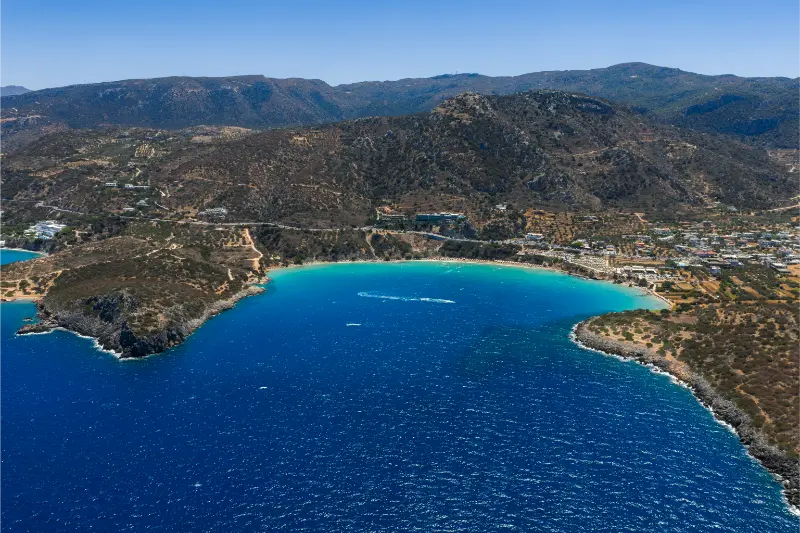
Voulisma is one of the beaches most often shown in photographs of eastern Crete: bright water, pale sand and a curved bay near the village of Istro. The wider area has several beaches rather than one single strip, which is useful because wind, crowding and parking conditions can vary from cove to cove.
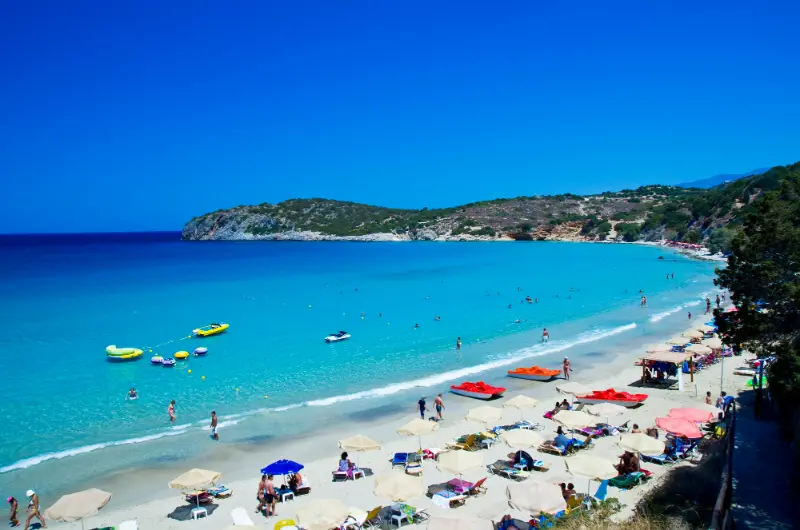
This is an easy half-day or full-day excursion from Agios Nikolaos. The key is not to arrive at noon expecting an empty beach. Start early, choose the cove that suits the day and leave enough time for lunch in Istro or Kalo Chorio.
Quick planning notes
- Eastern Crete rewards early starts because archaeological sites, gorges and remote beaches are more comfortable before peak afternoon heat.
- A rental car is the most practical way to connect villages, trailheads and beaches; public transport is useful on selected routes but not for every remote stop.
- Do not estimate driving time by kilometres alone. Coastal and mountain roads can be winding, narrow and slower than expected.
- Carry water, sun protection and offline maps whenever you leave the main resort towns.
- Check current monument hours, protected-area restrictions, fire-risk closures and boat conditions close to the day of travel.
- Choose one major activity and one softer stop per day rather than trying to collect every beach and archaeological site.
Why this place belongs in an East Crete itinerary
East Crete feels different from the better-known route between Chania and Heraklion. Distances are not enormous, but the landscape is more open, services become thinner and the journey often matters as much as the destination. That is exactly why a focused stop here deserves its own article rather than a paragraph inside a generic Crete itinerary.
The best way to use this guide is to connect it with nearby places instead of treating it as an isolated pin. A coastal village can be paired with archaeology, a gorge can finish with lunch beside the sea, and a beach day can include a monastery or mountain village. Keep the combinations logical and leave enough margin for heat, wind and slow roads.
What to see and do
Voulisma Beach
Voulisma is the headline bay and usually the busiest. Organised sections provide sunbeds and basic services in season, while the water colour can be spectacular in calm conditions. Arrive early for easier parking and a better choice of space.
Practical tip: for voulisma beach, check the exact access conditions on the day, especially in high summer. Park only where permitted, avoid blocking narrow roads, and carry enough water for the time you expect to spend away from the car. If conditions are poor, switch to a village, museum or easier beach rather than forcing the original plan.
Golden Beach and nearby coves
The Istro coastline includes several adjacent beaches with different levels of organisation and exposure. If Voulisma is crowded, a nearby cove may feel much more relaxed. Walk or drive carefully between them rather than assuming one famous beach is the only option.
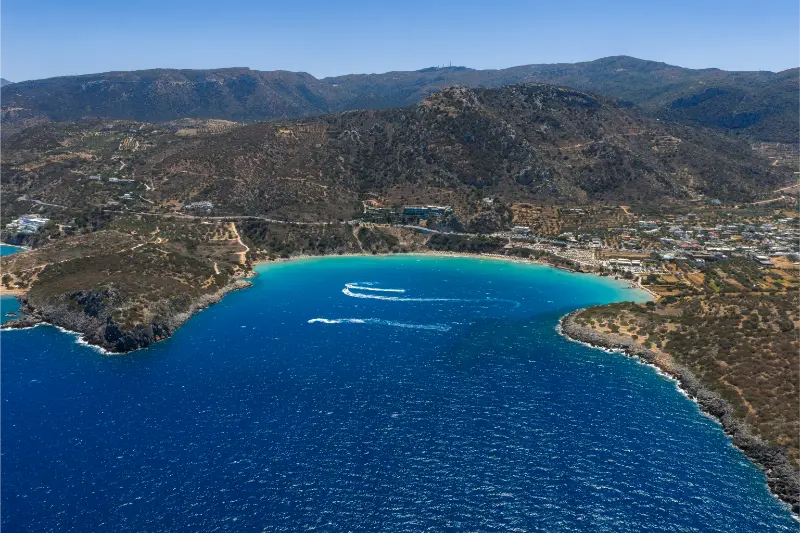
Practical tip: for golden beach and nearby coves, check the exact access conditions on the day, especially in high summer. Park only where permitted, avoid blocking narrow roads, and carry enough water for the time you expect to spend away from the car. If conditions are poor, switch to a village, museum or easier beach rather than forcing the original plan.
Wind and sea conditions
A beach that looks calm online can change completely with wind direction. Families should judge the actual waves before settling in. If the sea is rough, use the day for Agios Nikolaos, Kritsa or an archaeological stop rather than forcing a swim because you planned it in advance.
Practical tip: for wind and sea conditions, check the exact access conditions on the day, especially in high summer. Park only where permitted, avoid blocking narrow roads, and carry enough water for the time you expect to spend away from the car. If conditions are poor, switch to a village, museum or easier beach rather than forcing the original plan.
Parking and access
Roadside and designated parking can fill quickly in peak season. Do not block narrow access or park on vegetation. Bring only what you can comfortably carry down to the beach because some sections involve steps or slopes.
Practical tip: for parking and access, check the exact access conditions on the day, especially in high summer. Park only where permitted, avoid blocking narrow roads, and carry enough water for the time you expect to spend away from the car. If conditions are poor, switch to a village, museum or easier beach rather than forcing the original plan.
Lunch in Istro or Kalo Chorio
Leaving the beach for lunch is often better than spending the entire day on a sunbed. The villages behind the coast have tavernas and a more local rhythm. A proper lunch also gives you a useful break from midday sun.
Practical tip: for lunch in istro or kalo chorio, check the exact access conditions on the day, especially in high summer. Park only where permitted, avoid blocking narrow roads, and carry enough water for the time you expect to spend away from the car. If conditions are poor, switch to a village, museum or easier beach rather than forcing the original plan.
Combine with Agios Nikolaos or Kritsa
If you do not want a full beach day, swim in the morning and spend late afternoon around Lake Voulismeni in Agios Nikolaos or in Kritsa. This creates a better-balanced day than trying to visit several beaches in a row.
Practical tip: for combine with agios nikolaos or kritsa, check the exact access conditions on the day, especially in high summer. Park only where permitted, avoid blocking narrow roads, and carry enough water for the time you expect to spend away from the car. If conditions are poor, switch to a village, museum or easier beach rather than forcing the original plan.
A realistic way to structure the day
- Arrive at Voulisma before the main late-morning crowd.
- Swim for two or three hours and reassess wind conditions.
- Lunch in Istro or Kalo Chorio.
- Choose a second nearby cove or return to the same beach.
- Finish in Agios Nikolaos for an evening walk around the lake.
This sequence deliberately leaves some flexibility. In eastern Crete, a strong north wind, a late-running lunch or an unexpected road closure can change a day quickly. Protect the one experience you care about most and treat the rest as optional. That produces a much better trip than driving aggressively between a list of saved map pins.
Where to stay
Istro works well for travellers who want a beach-focused stay close to Agios Nikolaos without sleeping in the town. Agios Nikolaos is better for nightlife, shopping and transport. A rental car gives the most flexibility for comparing beaches and adding inland stops.
If you are comparing accommodation, check current places to stay in Istro on Booking.com. For this part of Crete I would prioritise a base that reduces evening driving and makes the next morning’s first stop easy.
What to eat
Beach bars are convenient but should not be your only plan. Istro and Kalo Chorio have tavernas for grilled meat, salads, fish, local cheese and Cretan dishes. Keep lunch light if you plan to swim again and drink more water than you think you need in midsummer.
Across Lassithi, look for dishes that reflect local agriculture rather than only the pan-Greek classics: good olive oil, seasonal vegetables, local cheese, herbs, goat or lamb inland and seafood on the coast. Ask what is local and what was cooked that day. A long lunch is also a practical heat-management strategy on an active summer road trip.
Getting there and getting around
A car gives the most freedom in eastern Crete. Agios Nikolaos, Sitia and Ierapetra have bus connections, but trailheads, archaeological sites and remote beaches may require careful timetable planning or a taxi. If you are not driving, choose one of the larger towns as a base and build day trips around transport that is actually operating on your dates.
Fuel before remote loops, especially toward Zakros and Xerokampos. Keep offline navigation available and avoid scheduling a long mountain drive immediately before a flight or ferry. Night driving on unfamiliar narrow roads is possible, but it is much less relaxing than reaching your base before dark.
Best time to visit
June and September are ideal for warm water and easier parking. July and August bring the fullest services and the biggest crowds. May and October can be lovely on warm days, though water temperatures and beach-bar opening vary.
For hiking, archaeology and road trips, shoulder season is usually easier than peak summer. For swimming, June through September gives the most reliable warm-sea experience. Fire-risk restrictions can affect access to natural areas during very hot or windy periods, so official local announcements matter more than a fixed annual calendar.
How to connect this stop with nearby East Crete
Useful next reads are Agios Nikolaos guide; Kritsa village guide; Best beaches in East Crete. Build the route geographically so you are not repeatedly crossing the same mountain roads. A two- or three-night base usually creates more value than changing hotels every day.
Common mistakes
- Treating every remote beach as a quick roadside stop and spending more time parking than swimming.
- Starting an exposed hike late in the morning during a heatwave.
- Relying on an old blog post for archaeological opening hours or protected-area access rules.
- Assuming a short map distance means a fast drive on the far-eastern road network.
- Leaving groceries, fuel and water until after reaching a very small coastal settlement.
- Trying to combine Vai, Zakros, Xerokampos and Sitia in a single rushed day.
Frequently asked questions
Do I need a rental car?
For most of the places covered in this East Crete cluster, a car is the easiest option. If you do not drive, base yourself in Agios Nikolaos, Sitia or Ierapetra and use buses, taxis and organised excursions for selected days.
How many nights should I allow?
For a single stop, one or two nights may be enough. For the wider East Crete region, five to seven nights creates a much better pace because the far east is too spread out for repeated day trips from Heraklion.
Is East Crete good with children?
Yes, especially around sheltered beaches and the larger towns. Keep archaeological visits short, avoid long exposed hikes in midday heat and choose accommodation that makes dinner and swimming easy.
Can I visit outside summer?
Yes. Spring and autumn are excellent for walking, archaeology and road trips. Winter is much quieter and some beach businesses close, but larger towns remain active and the landscape can be very rewarding.
What changes most from year to year?
Boat services, archaeological hours, protected-area restrictions, road works and seasonal beach facilities are the details most likely to change. Recheck them shortly before travel.
Useful official source
For details that can change, use Visit Greece – Agios Nikolaos and recheck opening hours, tickets, access restrictions, weather and transport shortly before departure.
Final advice
Eastern Crete is at its best when you stop trying to see it like a checklist. Give the road time, choose fewer beaches, start important hikes early and let meals and villages slow the day down. The reward is a version of Crete that feels spacious, varied and far less compressed than the classic first-time route.