
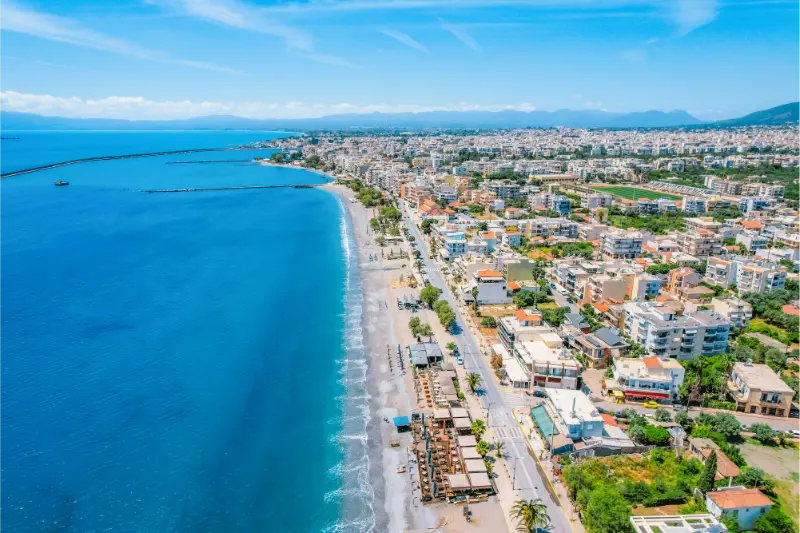
Kalamata deserves more than a seafront evening. Its historic centre sits inland beneath the castle and contains the best concentration of museums, churches, squares and small streets for understanding the city’s identity. A focused Old Town day also works well when beach weather is poor or when you want a break from driving around Messinia.
The easiest plan is to move downhill: start near the castle, walk through the historic centre, visit one or two museums, continue toward the central market or Aristomenous Street, then finish at the waterfront later in the day. This keeps the visit coherent rather than bouncing between isolated sights.
Quick planning summary
- Best cultural walking area in Kalamata
- Archaeological Museum currently lists €10 admission
- Visitor Center: Aristomenous 28
- Allow most of a day if you include two museums
Kalamata Castle and the upper Old Town
The castle rises above the historic centre and gives useful orientation over the modern city and Messinian Gulf. The site has medieval layers associated with Frankish rule, but the hill’s history is older. Even when you are not doing a detailed castle study, the viewpoint explains Kalamata’s position between sea, plain and Taygetos.
Opening access can vary with events and maintenance. Wear shoes suitable for uneven ground and avoid the hottest part of a summer day. The castle works best as the starting point for a downhill walk rather than a rushed add-on after hours on the seafront.
23rd March Square and Agioi Apostoloi
At 23rd March Square, the small Church of the Holy Apostles is closely tied to Kalamata’s memory of the Greek War of Independence. The official city tourism site presents the square and church as central symbols of the events of March 1821 and the city’s liberation.
This is a place where modern cafés and historical memory overlap. Pause long enough to read the context rather than treating the church as a quick photograph. The surrounding lanes are among the best parts of the Old Town for a slow walk.
Archaeological Museum of Messenia: the essential indoor stop
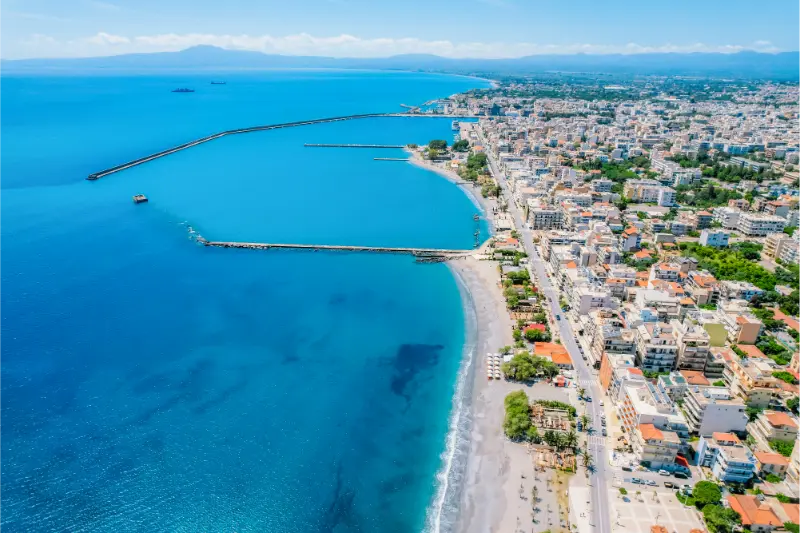
The Archaeological Museum of Messenia occupies the reconstructed old municipal market building and organises its collection geographically: Kalamata, Messini, Trifylia and Pylos. That structure is ideal if your trip includes sites such as Ancient Messene, the Palace of Nestor, Peristeria or Thouria.
The official museum portal currently lists €10 admission. For the summer season it lists 08:00–20:00, with Tuesday 12:30–20:00; winter is 08:30–15:30 with Tuesday closed. Confirm before arrival because state-museum schedules can be adjusted.
Historical and Folklore Museum
The Historical and Folklore Museum in the Benakeion building focuses on local history, everyday life, costumes, tools, photographs and social traditions rather than monumental archaeology. It is a useful counterpoint to the Archaeological Museum.
If you only have time for one museum, choose archaeology when your wider trip is site-heavy and folklore when you want to understand nineteenth- and twentieth-century local life. With a full day, the two work well together because they answer different questions.
Ypapanti, Kalograion and the religious landscape
Ypapanti Cathedral is the major religious landmark of the historic centre. Nearby, the Kalograion Monastery is associated with a silk-weaving tradition and the Kalamata silk scarf. These sites add craft and religious history to a walk otherwise dominated by archaeology and 1821.
Remember that active religious sites are not simply museums. Dress respectfully, keep voices low and do not assume every part of a monastery is open to visitors.
The Visitor Center and practical orientation
Kalamata’s official visitor centre is in the Historic Town Hall at Aristomenous 28. The city lists free admission and Monday–Friday opening from 08:00–21:00, alongside maps, local-product displays and digital interpretation.
It is worth stopping early in your stay, especially if you are planning day trips. Current local information about events, road conditions and seasonal museum changes is often more valuable than adding another generic attraction to your itinerary.
A realistic one-day walking plan
Start at the castle before the heat, descend through Ypapanti and the Old Town, spend late morning in the Archaeological Museum, then stop for lunch around the historic centre or market. Use the afternoon for the folklore museum, shopping or a break before heading to the seafront.
This walking day pairs well with a separate beach day or with Ancient Thouria on another morning. See the full Kalamata and Messinia guide for broader transport, beaches and regional planning.
Best time to visit
For most of Messinia, May, June, September and early October give the best balance of warm weather, comfortable sightseeing and functioning seasonal services. July and August are ideal for beach-focused travel but bring stronger heat and heavier demand. Archaeological sites, gorges and hill towns are much easier early in the day during midsummer.
Winter can be excellent for Kalamata, archaeology, food and quiet road trips, but some beach businesses, boat excursions and smaller visitor services operate on reduced schedules. Nature sites such as gorges require extra caution after heavy rain. Always let the actual forecast and local conditions override a fixed itinerary.
Getting there and getting around
Kalamata is the main transport hub for Messinia, with road connections to Athens and the rest of the Peloponnese. A car gives the greatest flexibility for beaches, archaeological sites and small villages because regional attractions are spread widely and public transport is not designed around a tourist circuit.
If you travel without a car, build the trip around one or two walkable bases and use intercity buses, local taxis or organised excursions selectively. Confirm the return journey before leaving for a remote site, and download maps for rural areas where signal can be inconsistent.
How much time to allow
Messinia rewards slower planning. Distances may look short, but castle walks, parking, mountain bends, beach stops and long meals add time. I prefer one major attraction plus one lighter stop in the same geographic area rather than crossing the region several times in a single day.
For a broader regional trip, five to seven nights let you combine Kalamata, archaeology, Navarino/Pylos, one castle coast and either Messinian Mani or Trifylia without changing hotel every night. Shorter trips should choose one side of the region and accept that the rest belongs to a future visit.
Where to stay
Choose the base that matches the next morning rather than the most famous town name. Kalamata works for flights, museums and central/eastern Messinia; Pylos or Gialova suit Navarino and Voidokilia; Finikounda works for the south-west coast; Stoupa or Kardamyli are best for Messinian Mani; Kyparissia or Marathopoli reduce driving in Trifylia.
Check current accommodation options
Useful internal guides
Continue planning with Kalamata and Messinia travel guide, Ancient Thouria Guide, Messinia Food Guide, Ancient Messene guide and Palace of Nestor and Chora Guide.
Practical mistakes to avoid
- Trying to combine attractions on opposite sides of Messinia because the straight-line distance looks short.
- Trusting old museum hours, ticket prices, boat timetables or seasonal opening information without checking again.
- Underestimating heat and sun exposure at archaeological sites, castles and beaches with little natural shade.
- Parking in narrow village streets or on protected dune and wetland areas instead of using appropriate spaces.
- Assuming every beach, gorge or archaeological site has water, toilets, lifeguards or staffed facilities.
- Leaving a boat trip or weather-dependent activity as the only plan for the day without a realistic backup.
Responsible travel
Messinia combines active agricultural land, archaeological sites, wetlands, beaches, fishing villages and mountain landscapes. Stay on marked routes, never move archaeological material, protect dunes and nesting or wetland habitat, and treat working harbours and farms as workplaces rather than attractions staged for visitors.
Spending locally is one of the simplest ways to improve the trip: buy from bakeries and producers, eat in village tavernas, use locally based guides when you need one and choose accommodation that keeps you close to the places you plan to explore.
Frequently asked questions
How much is the Archaeological Museum of Messenia?
The official museum portal currently lists €10 admission. Check again before travel.
What are the museum hours?
The current official listing gives summer hours 08:00–20:00, with Tuesday 12:30–20:00; winter is 08:30–15:30 with Tuesday closed.
Is Kalamata Old Town walkable?
Yes, but the castle and upper streets involve slopes. A downhill route from the castle is the easiest way to organise the day.
Where is the official visitor centre?
At the Historic Town Hall, Aristomenous 28. The city currently lists free admission and weekday opening 08:00–21:00.
Useful official and specialist sources
For current details and deeper background, use Visit Kalamata – Old Town, Ministry of Culture – Archaeological Museum of Messenia, Visit Kalamata Visitor Center.

For details that can change, I check an official source again shortly before travel. Museum and archaeological-site hours, seasonal boat trips, road access, water conditions and organised-beach services can all change after publication. Useful starting points are Visit Peloponnese – Messinia, Ephorate of Antiquities of Messenia and Hellenic Heritage.
Final advice
The strongest Messinia itineraries are regional rather than frantic. Build each day around one landscape — Kalamata and the plain, Navarino and the west coast, Trifylia, the castle coast or Messinian Mani — and let meals, swims and small discoveries fill the gaps instead of turning the journey into a checklist.
That approach also makes the information in this guide more useful: opening hours and famous sights matter, but the quality of the trip is determined by how realistically you connect them.
Leave a Reply