

Chora and Kapsali are the easiest places to understand Kythira’s south in one day. Chora sits above the coast with white lanes and a Venetian castle, while Kapsali spreads around two bays directly below. Together they combine the island’s strongest classic view, a practical swimming stop and one of the best evening atmospheres.
I would not treat them as two separate sightseeing jobs. Start high in Chora when the lanes and castle are cooler, then descend to Kapsali for lunch, swimming and the late-afternoon light. If sea conditions cooperate, a boat trip toward Chytra adds a very different perspective on the coast.
Quick planning summary
| Question | Practical answer |
|---|---|
| Best for | Chora And Kapsali Kythira travellers and first-time visitors |
| Car needed? | Very useful for broad island exploration; selected bases can work without one |
| Best timing | Morning and late afternoon for walking; beach or shade around midday in summer |
| What to verify | Seasonal hours, road access, wind and local transport close to the travel date |
Why Chora deserves more than a quick photo stop
The official destination site describes Chora as the capital established in its present role during Venetian rule. The castle above the settlement was built in 1503 on earlier fortifications, and the lanes below combine Aegean forms with Venetian and later British influences. That mixture is exactly why I would walk rather than drive from one pinned sight to another.
Chora has two principal squares and a compact network of churches, small shops and viewpoints. The best experience is unstructured: walk toward the castle, look back over the roofs, then return through side lanes rather than retracing the fastest route. Early morning gives clearer streets; late afternoon gives warmer light.
The Venetian castle and the view over Kapsali
The castle is the visual anchor of southern Kythira. From the ridge you understand how Chora, Kapsali and the sea fit together, and why the settlement was positioned above the coast. Wear shoes with grip because old stone can be polished and uneven, and check current access locally if you are travelling outside the main season.
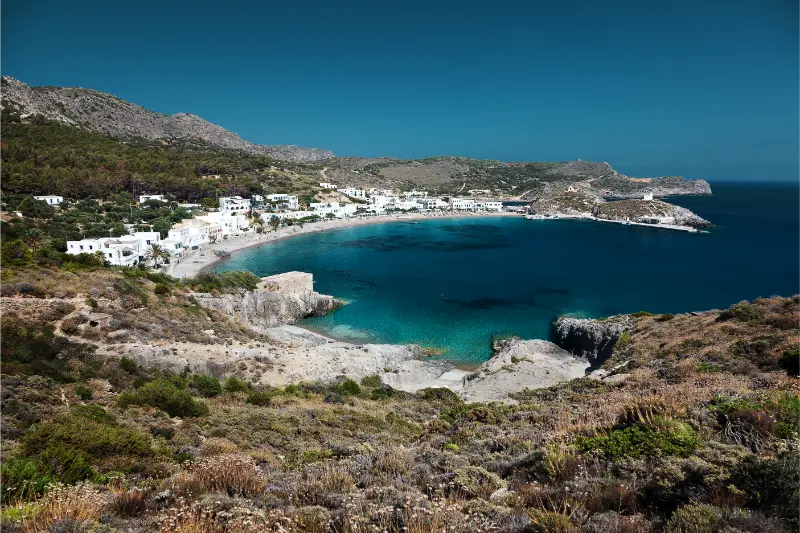
Do not rush the viewpoint. The twin bays of Kapsali, the surrounding hills and open sea are more useful for planning the rest of the day than a dozen map screenshots. On a clear afternoon, this is also one of the most satisfying places to watch the island change from bright midday colour to softer evening tones.
Kapsali: twin bays, swimming and an easy evening
Kapsali is the harbour settlement below Chora and is built around two photogenic bays. The waterfront has the practical ingredients most travellers want after sightseeing: swimming, cafés, restaurants and a promenade. It is one of the easiest places on Kythira to let the afternoon run without a strict plan.

Families often find the organised parts of Kapsali easier than wilder coves because food and facilities are close. Conditions still matter, so judge the sea on the day. If you want a quieter swim, ask locally about nearby Sparagario and other small coves rather than assuming the main bay is the only option.
Chytra islet and the sea cave
One of the classic boat experiences from Kapsali heads toward Chytra, the rocky islet offshore. Local tourism information highlights the sea cave, where reflected light can create striking water colours when conditions are suitable. Boat trips are weather-dependent, so I would never schedule one immediately before a ferry departure or a fixed dinner reservation.
Ask exactly what the trip includes: duration, swimming stop, shade, life jackets and whether the boat actually enters or only approaches the cave. Sea state determines what is possible, and responsible operators will change the plan when conditions are not safe.
A realistic half-day and full-day plan
For a half-day, arrive in Chora early, walk the castle and lanes, then move to Kapsali for lunch and a swim. For a full day, add a Chytra boat trip or a second nearby cove and stay through sunset. I would avoid adding Avlemonas or Mylopotamos to the same day unless you genuinely enjoy long driving loops.
If you sleep in Chora, reverse the rhythm: use the beach earlier, return uphill to shower, then enjoy the capital after day-trippers have dispersed. If you sleep in Kapsali, the advantage is immediate sea access and a flatter evening routine, while Chora gives a quieter historical atmosphere.
Where to stay: Chora or Kapsali?
Choose Chora for atmosphere, architecture and cooler evenings; choose Kapsali for swimming, waterfront meals and an easier holiday rhythm. Couples often enjoy Chora’s lanes, while families and travellers who want to walk to the beach may prefer Kapsali. Neither is automatically better—the right choice depends on whether you want your first daily step to lead toward a castle or the sea.
Before booking, check parking, stairs and the exact route from the room to restaurants. Some properties that look close on the map sit on a slope. If mobility matters, ask the host to describe the approach rather than relying only on distance.
How Kythira changes the way you plan a Greek-island day
Kythira is not a compact resort island where every attraction sits around one bay. Villages, beaches and historical sites are spread across a rugged landscape, so the best days normally focus on one side of the island rather than crossing from north to south several times. I plan mornings around one anchor place, add a nearby beach or village, and leave dinner close to wherever the afternoon naturally ends.
The island also rewards flexibility. Wind can change which beach feels comfortable, a waterfall can be less dramatic after a dry period, and seasonal businesses do not all keep the same hours outside the busiest weeks. Treat the itinerary as a framework, not a contract. One unhurried village, one swim and one meaningful cultural stop often produce a better day than a long checklist.
Driving, parking and realistic travel time
Even when map distances look short, allow extra time for bends, village streets, parking and short walks from the road. Kythira is manageable by car, but it is not an island where I would schedule activities back-to-back. In popular places such as Chora, Kapsali, Kaladi or Mylopotamos, arriving earlier also makes parking and photography noticeably easier.
If you rent a car, choose a vehicle you are comfortable using on narrow roads and never assume that every road to a remote beach has the same surface. Ask locally about the final approach before committing to an isolated cove, especially after unusual weather. For no-car travel, build the holiday around a strong base and use taxis or seasonal public transport selectively rather than trying to imitate a full road trip.
Best season and daily rhythm
Late spring and early autumn are especially attractive if walking, villages and archaeology matter as much as swimming. July and August deliver the warmest sea and the widest choice of seasonal services, but they also require earlier starts, more careful parking and a serious approach to shade and hydration. September is often a useful compromise for travellers who want warm water without the same daytime intensity.
In summer, I keep exposed walks, castles and viewpoints for morning or late afternoon. Midday is better for a shaded lunch, a protected beach or a long break. Kythira’s most memorable places are often atmospheric rather than monumental, so giving them time is part of the experience rather than wasted schedule space.
Food, water and what to carry
Kythira is known for products such as thyme honey, local rusks and the aromatic Fatourada liqueur, but the practical food rule is simpler: eat where the day already takes you. A lunch in Mylopotamos, a waterfront meal in Kapsali or Avlemonas, and a village dinner in the north all make more sense than driving across the island for one saved restaurant pin.
For remote beaches and trails, carry water, sun protection and at least a small snack. Some coves have seasonal facilities while others have none. I also keep swim shoes, a light shoulder cover for churches and monasteries, and an offline map on my phone. Small preparations matter more here than on an island built around organised beaches.
Accessibility and slower travel
Historic settlements, castle approaches, waterfall paths and rocky coves can involve steps or uneven ground. Travellers with limited mobility should ask accommodation hosts very specific questions about stairs, parking distance and the route to the nearest restaurant or beach. A beautiful room can be inconvenient if every outing begins with a steep climb.
Slow travel works exceptionally well on Kythira. Staying longer in one area reduces driving and makes room for repeat swims, village cafés and weather changes. If you have only three nights, do less. With a week, divide the island into south, east, west/inland and north rather than changing hotels repeatedly.
Common mistakes to avoid
The most common mistake is underestimating how spread out the island feels. The second is treating every beach recommendation as suitable in every wind direction. Other avoidable errors include wearing sandals on rough trails, arriving at a cave or museum without checking seasonal hours, and assuming a waterfall will look identical in late August and after spring rain.
I would also avoid booking accommodation solely on a low map price. Location affects almost every day on Kythira. A base with dinner, a swim and a useful road connection nearby can save enough driving and taxi time to be worth a slightly higher room rate.
How this fits into a complete Kythira trip
Use this guide as one part of a regional plan. The existing Kythira Travel Guide gives the island-wide overview, while the dedicated guides below let you plan the areas and travel styles in more detail. I would normally combine one cultural or walking focus with one beach area each day rather than criss-crossing the island.
Continue planning with Chora and Kapsali Kythira Guide: Castle, Twin Bays, Chytra and Where to Stay; Avlemonas and Paleopolis Kythira Guide: Coves, History, Beaches and Where to Stay; Agia Pelagia Kythira Guide: Beaches, North Coast, Food and Where to Stay; Mylopotamos Kythira Guide: Kato Chora, Watermills, Waterfall and Village Life; Kythira Waterfalls and Caves Guide: Fonissa, Watermills and Agia Sophia; Best Beaches in Kythira: 15 Beaches for Families, Snorkelling and Wild Scenery; Kythira Hiking Guide: Best Kythera Trails, Gorges, Villages and Safety; Kythira Without a Car: Taxis, Buses, Transfers and the Best Bases; Kythira with Kids: Family Beaches, Easy Days and Practical Tips; Where to Stay in Kythira: Chora, Kapsali, Avlemonas, Agia Pelagia or Mylopotamos?.

Chora And Kapsali Kythira Guide FAQ
Can I walk between Chora and Kapsali?
There are walking routes between the two areas, including the signed M1 trail, but heat and elevation matter. In summer, use cooler hours.
Is Chora worth visiting if I do not like museums?
Yes. The castle, architecture, lanes and views are the main experience.
Can I take a boat to Chytra from Kapsali?
Seasonal boat trips are commonly offered when sea conditions allow. Confirm locally.
Which is better for families?
Kapsali is usually easier for immediate beach access and meals, while Chora is stronger for atmosphere and history.
How long do I need?
A half-day covers the essentials; a full day allows a swim and boat trip without rushing.
Useful official information
For stable background information I use Visit Kythera – Chora and the official tourism information for Kapsali. Recheck boat departures, castle access and seasonal businesses shortly before the day you visit.
Opening times, local road conditions, public transport, boat trips and seasonal businesses can change. Recheck anything time-sensitive shortly before you use it, especially outside July and August or after unusual weather.
Leave a Reply