

Kimolos is close enough to Milos to tempt almost every traveller into a day trip, especially if they are staying in Pollonia. The islands are neighbours, but the best day is not created by cramming every famous beach and village into a few hours. Kimolos is small, quiet and best experienced with enough buffer around the boat connection to avoid turning the return journey into the main memory.
I would choose a day trip if you already have at least four or five nights on Milos and want a contrast in pace. If you have only two or three nights on Milos, there is already more than enough to see without adding another island. If Kimolos itself is a major interest, staying overnight is much better than treating it as a side excursion.
For the bigger picture, start with my Milos Travel Guide. Milos is easiest to enjoy when each day follows geography and wind rather than a rigid checklist, so this article focuses only on the details that matter for this particular stop.
Quick planning facts
- Pollonia is the usual Milos-side departure area for the short local connection toward Kimolos.
- Boat schedules vary by season, weather and operator; confirm the same day.
- Chorio is the main settlement on Kimolos and deserves time beyond a quick transfer.
- Prassa is one of the island’s best-known beaches, but reaching it depends on transport and road conditions.
- A day trip needs a generous return buffer because small-vessel services are weather-sensitive.
Why this place is worth adding to a Milos itinerary
Milos rewards travellers who separate sightseeing from beach time. A morning archaeological visit, a slow village evening or one carefully chosen cove usually works better than trying to fit four corners of the island into the same day. Roads are not long in absolute distance, but parking, wind, heat and narrow approaches can make a packed schedule feel much more demanding than it looks on a map.
The other reason to plan selectively is that Milos changes character from coast to coast. The north can be dramatically exposed when the meltemi blows, while the south may be calmer; a village can feel almost empty at midday and crowded at sunset; a tiny harbour that looks like a ten-minute stop can become the place where you want to sit for an hour. Use the weather and your own energy as planning tools.
What to see and what to pay attention to
The crossing
The short sea crossing is part of the appeal, but never build a zero-margin itinerary around the final boat if you have a flight or major ferry later the same day.
Chorio
The main village is worth a slow walk through lanes, small churches and squares. Have coffee or lunch rather than treating it only as a transit point.
Beach choice
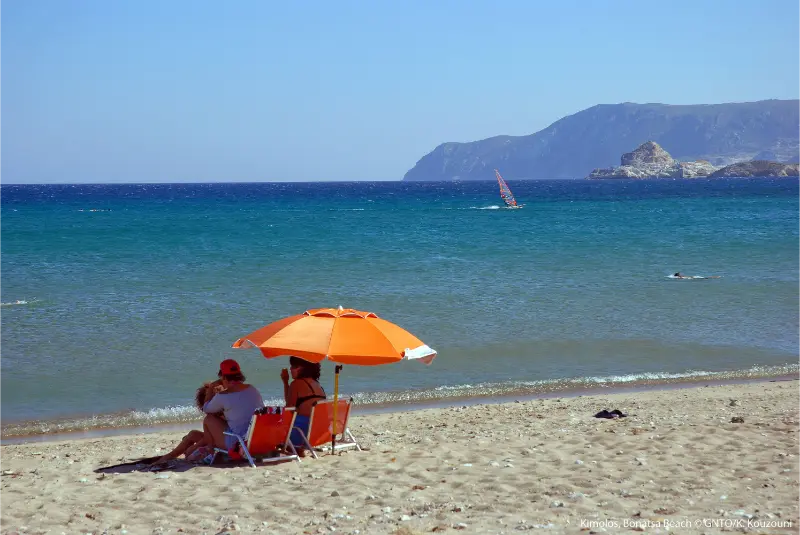
Choose one beach rather than chasing three. Prassa is famous, but a closer option can produce a better day if transport timing is awkward.
Scooter, car or local transfer
Your best transport depends on season and confidence. A day trip becomes inefficient if most of it is spent waiting for a vehicle or searching for parking.
Why an overnight can be better
Staying one night lets you experience Chorio after day visitors leave and removes pressure from the return connection. For slow travellers, that can be worth more than another Milos beach.
A realistic way to structure the visit
Take an early connection from Pollonia if available, go first to Chorio, then choose one beach or coastal area for the middle of the day. Return to the port with a generous buffer and avoid booking a critical onward ferry from Adamas immediately after your Kimolos return. If schedules look unreliable or wind is increasing, simplify the day rather than gambling on the final boat.
I would keep at least one flexible block in every two days on Milos. Wind can cancel or reroute boat trips, parking can become difficult at famous beaches, and you may simply discover that one place deserves more time than expected. A flexible afternoon lets you swap a north-coast stop for the south, move a sunset village to another day or take a longer lunch without breaking the entire itinerary.
Getting there and transport
Reach Pollonia from your Milos accommodation with enough time for parking or bus delays. Confirm exactly where the boat departs and how tickets are handled. On Kimolos, pre-plan whether you will walk, use local transport or rent a vehicle; availability can be limited in peak periods.
If transport is a major concern, also use my Greece ferry guide for inter-island planning and the Greek island-hopping guide if Milos is part of a longer Cyclades route. Ferry times, local bus frequency and excursion departures are seasonal, so always verify the current timetable rather than relying on a screenshot from an older trip.
Who this is best for
The day trip is best for travellers with a longer Milos stay, island-hopping fans and anyone curious about a quieter Cycladic atmosphere. It is not ideal on a tight two-day Milos itinerary or immediately before a flight.
Best time of day and season
June and September are often excellent for balancing warm sea temperatures with slightly less pressure than peak August, while May and October can be very rewarding for walking and villages if your priority is not guaranteed beach weather. In July and August, start exposed walks and archaeological sites early, keep midday for swimming or shade, and approach sunset hotspots with extra parking time. Outside the main season, confirm restaurants, buses and visitor sites before building a day around them.
Wind matters as much as temperature. Milos is an Aegean island, and the same beach can look completely different on two consecutive days. Check a reliable marine forecast, ask locally and move to a more sheltered coast when needed. This is especially important for cliff-backed coves and boat excursions, where rough sea or falling material can create genuine safety issues.
Parking, roads and practical comfort
Do not underestimate short island drives. The main roads are manageable, but final approaches to fishing villages and beaches can be narrow, dusty or crowded. Park legally even if it means walking farther, never block turning space, and avoid taking a rental vehicle onto tracks your contract excludes. Carry water, sun protection and secure footwear in the car so a spontaneous stop does not become uncomfortable.
If you travel without a car, base selection becomes more important. Adamas gives the strongest transport flexibility, while Pollonia is convenient for Kimolos and north-east Milos. Taxis are useful for sunset evenings when parking pressure is high, but availability can tighten in summer, so arrange important rides in advance rather than assuming a car will appear immediately.
Food, water and a slower rhythm
One of the easiest ways to improve a Milos itinerary is to stop treating meals as interruptions. Villages such as Plaka, Pollonia and Adamas are more enjoyable when you sit down before you are exhausted. Carry water to beaches and archaeological sites, but use lunch or an early dinner as a deliberate rest period. Local dishes, cheeses, pies and seafood can vary by restaurant and season, so ask what is genuinely available rather than ordering only from a pre-made online list.
Photography without making the trip miserable
The island photographs beautifully because volcanic rock, white villages and blue water create strong contrast, but the best light often comes with the biggest crowds. Arrive early or stay later instead of fighting for the same viewpoint. Never cross barriers, climb unstable cliffs or enter private terraces for a marginally better angle. At fishing villages, remember that coloured doors and waterfront steps may belong to somebody’s home or working space.
Common mistakes to avoid
- Planning the island as if every famous beach must be visited regardless of wind.
- Arriving at sunset hotspots at the last minute and expecting easy parking.
- Wearing flip-flops for archaeological paths, steep village steps or difficult beach access.
- Treating small fishing settlements as photo sets instead of residential places.
- Booking a critical onward ferry immediately after a weather-sensitive boat excursion.
- Trying to combine the far west, north coast and south coast in one rushed day.
What to combine nearby
Depending on your route, useful related guides include Sarakiniko Beach guide, Kleftiko boat trip guide, Kimolos Travel Guide. The goal is not to do all of them together, but to group stops by geography and weather so you spend more time experiencing Milos and less time driving back and forth.
Current information and official sources
For details that can change—opening hours, admission, access restrictions or local notices—check the official source used for this guide shortly before your visit. Milos is a living island, not a static attraction, and weather or operational changes can matter more than what any travel article said months earlier.
Frequently asked questions
Can you visit Kimolos as a day trip from Milos?
Yes, commonly from Pollonia, but the exact schedule must be checked for your date and weather.

How much time do you need?
A full day is much better than a rushed half-day because you need buffer around the boat crossing.
Should you take a car?
It can help, but vehicle transport and rental logistics vary. For a simple day, local transport plus one beach may be easier.
Is Prassa essential?
No. It is beautiful, but a day trip should not become stressful just to reach one beach.
When should you stay overnight instead?
Stay overnight if you want slow village evenings, multiple beaches or a less schedule-dependent experience. See the full Kimolos guide for a longer plan.
Final thoughts
Kimolos Day Trip from Milos works best when you give it a clear role in the day instead of squeezing it between unrelated stops. Build around one main experience, leave room for weather and parking changes, and keep the pace slow enough to notice why Milos feels different from the other Cyclades.
That approach also keeps the site more useful for future trips: one day can be geology and beaches, another archaeology and villages, another a boat trip, and another Kimolos or the quieter north-east. Milos does not need to be conquered in a checklist. It rewards travellers who let the island’s wind, landscape and small settlements shape the route.
If your day trip makes you want to stay longer, continue with our where to stay in Kimolos, Kimolos beaches guide and 2026 Kimolos ferry guide.