
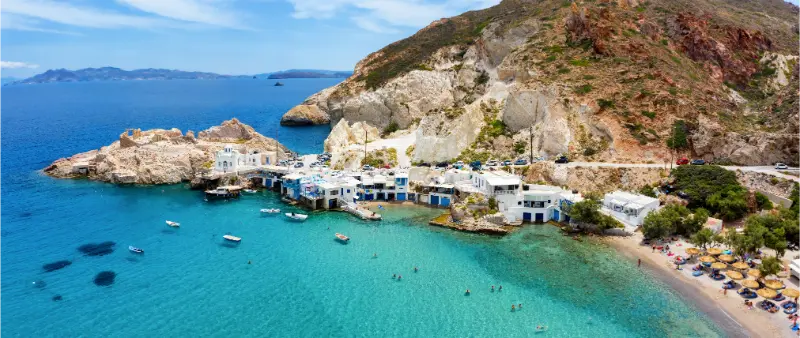
Milos is the Cyclades island I would choose for travellers who care most about unusual coastlines. Volcanic geology has created white rock formations, colourful cliffs, sea caves and beaches that look completely different from one another. The island also has small fishing settlements with brightly painted boat houses, a pleasant hilltop capital and an excellent reason to spend at least one day on the water.
Milos is often marketed as a romantic island, and it certainly works for couples, but the real appeal is geological variety. The best itinerary mixes land and sea because some of the most dramatic coastline is easier to appreciate from a boat.
How many days do you need?
Four days is enough for a first taste. Five days gives you room for a full boat trip, two beach areas, villages and a weather buffer. A week is ideal if you want slow mornings or if Milos is the main destination rather than one stop in a fast island-hopping route.
Do not combine Milos with three other Cyclades islands in a single week. Ferry transfers consume more time than they appear to on booking screens. My Greek islands guide explains how to choose combinations that feel like a holiday rather than logistics practice.
Where to stay: Adamas, Plaka or Pollonia?
Adamas is the main port and the most practical base for ferries, boat excursions, car rentals and buses. It suits first-time visitors who want convenience. Plaka, the island capital, sits inland on higher ground and offers atmospheric lanes and sunset views but no direct beach.
Pollonia in the northeast has a quieter seaside feel with restaurants around the bay. It works well for couples and travellers with a rental car. Before choosing, decide whether you want to walk to dinner, walk to the boat, or wake up near a beach; no single base does everything perfectly.
Sarakiniko: go beyond the famous photograph
Sarakiniko is Milos’s iconic landscape, with smooth pale volcanic rock surrounding blue water. Sunrise and early morning are popular because the light is softer and crowds are smaller. The area is exposed, so sun protection and water matter even if you plan only a short visit.
Do not climb or jump from rocks simply because you see others doing it. Sea conditions, underwater depth and rock surfaces can be dangerous. Use established access points and choose swimming according to the conditions that day.

Klima and the fishing villages
Klima is known for syrmata, traditional boat houses with colourful doors built at the water’s edge. It is small and best approached as a short atmospheric stop rather than a full-day destination. Parking is limited, and the final access can be narrow.
Other fishing villages provide similar glimpses of the island’s relationship with the sea. Visit respectfully because these are not film sets; people live and work around the buildings visitors photograph.
Plaka, Tripiti and ancient Milos
Plaka’s narrow lanes are especially attractive later in the day when the heat eases. Walk up toward viewpoints and enjoy dinner after sunset. Nearby Tripiti and the ancient theatre add archaeological interest, and the area is associated with the discovery of the Venus de Milo, now in the Louvre.
The early Christian catacombs are another important site. Opening conditions can vary, so check current official information before arranging the day around a specific entry time.
A boat trip around Milos
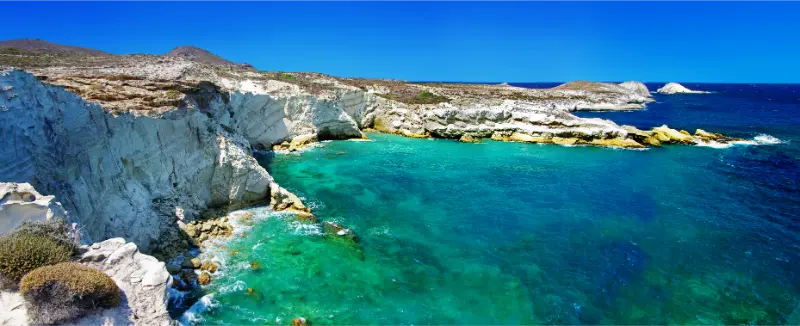
A full or half-day boat excursion is one of the experiences I would prioritise. Routes often focus on the south and west coast, including areas difficult to reach by normal rental car. Kleftiko, with sea caves and pale rock formations, is a common highlight.
Boat choice matters. Compare passenger numbers, shade, swimming access, toilet facilities, food, route and what happens in rough weather. A smaller boat is not automatically better if you dislike motion, and a larger boat is not automatically less enjoyable if it provides more comfort.
Beaches: choose by wind and access
Milos has dozens of beaches with very different geology. Firiplaka and Tsigrado are often discussed together, but access is not equally easy. Some beaches involve ladders, steep paths or rough roads and are unsuitable for everyone.
Instead of chasing a top-ten list, keep several options saved by coast. Ask which side is sheltered from the day’s wind. This simple strategy can turn an uncomfortable beach plan into a calm swim ten kilometres away.
Do you need a car?
A car is very useful for Milos, especially if you stay outside Adamas or want early and late access to beaches. Buses serve key areas in season, so car-free travel is possible with more structure. ATVs and scooters are common but involve greater exposure to wind, dust and road conditions.
Some western roads may be restricted by rental contracts or unsuitable for standard vehicles. Read the agreement and ask the rental company directly. Do not assume a map line means your vehicle is authorised to drive there.
A five-day Milos itinerary
Day 1: Adamas and Plaka
Arrive, settle in and keep the first afternoon easy. Explore Adamas, then head to Plaka for an evening walk and sunset if your energy allows.
Day 2: Sarakiniko and north coast
Visit Sarakiniko early, then continue to another northern beach or village according to wind. Rest in the afternoon and have dinner near your base.
Day 3: boat trip
Dedicate the day to the sea. Choose a route that reaches Kleftiko or other inaccessible coastline, and avoid planning an important evening reservation immediately after a long boat day.
Day 4: south-coast beaches
Choose two beaches with realistic access. Spend several hours at one instead of photographing six. Return via an inland stop or local restaurant.
Day 5: Klima, archaeology and favourite place
Visit Klima and the ancient sites around Tripiti, then use the rest of the day to repeat the landscape you enjoyed most. This flexible ending also covers a boat trip postponed by weather.
Milos for couples
Milos suits couples because the days naturally alternate between exploration and quiet. Sunset in Plaka, a small boat excursion and dinner in Pollonia can feel special without the intense crowd concentration of Santorini’s caldera villages.
If you want iconic hotel views and a strong luxury scene, Santorini may fit better. Milos is stronger for travellers who want to be out exploring coastlines.
Milos with children
Families can enjoy Milos, but beach access requires more research than on Naxos. Avoid beaches with difficult ladders or steep descents and choose boat trips with shade, appropriate life jackets and manageable durations. Sarakiniko is fascinating for children but has exposed rock and drop-offs, so supervision must be constant.
For very young children, base yourself near easy services and use short drives rather than a daily island circuit. Naxos may be simpler for a purely family beach holiday; compare my Naxos guide.
When to visit Milos
June and September offer an excellent balance of warm weather and slightly lower demand than peak August. July and August have the fullest range of services and boat departures but require earlier accommodation booking. Shoulder months can be beautiful for walking, though sea conditions and seasonal services vary.
Wind matters more than the air temperature because it influences boat routes and beach comfort. Keep at least one land day and one sea day flexible.
Milos, Paros or Naxos?
Choose Milos for geology and boat exploration, Paros for social towns and an easy Antiparos side trip, and Naxos for long sandy beaches, mountains and villages. None is universally best. The right choice is the island that matches how you want your days to feel.
If you have enough time, Milos can combine with another Cyclades island, but check actual ferry links. A route that looks obvious geographically may not have a convenient direct sailing on your dates.
Common mistakes to avoid
- Building the trip around one boat departure with no weather buffer.
- Driving rental vehicles onto restricted or unsuitable western roads.
- Attempting difficult beach access in sandals or with small children.
- Treating Sarakiniko as a safe climbing playground.
- Booking too many islands and giving Milos only one full day.
- Ignoring wind direction when choosing beaches.
Frequently asked questions
Is Milos expensive?
It can become expensive in high season, especially for sought-after accommodation and private boat experiences. Costs are easier to manage by booking early, using buses for some days and choosing small-group rather than private excursions.
Can I visit without renting a car?
Yes, particularly if you stay in Adamas and use seasonal buses plus a boat tour. A car adds flexibility for sunrise, remote beaches and village evenings.
Is Milos good for island hopping?
Yes when ferry schedules align with your chosen neighbouring islands. Keep at least four nights so the travel effort is worthwhile. For another easy Cyclades base, see my Paros guide.
Why Milos stands out
Many Greek islands have beautiful beaches; Milos feels different because the coastline keeps changing shape and colour. The island rewards curiosity: drive around a bend and the rock turns red, take a boat and white sea caves appear, walk through a village and the landscape becomes quiet again. Give the sea one full day and the land several unhurried ones, and Milos earns its reputation without needing to imitate Santorini or Mykonos.
