
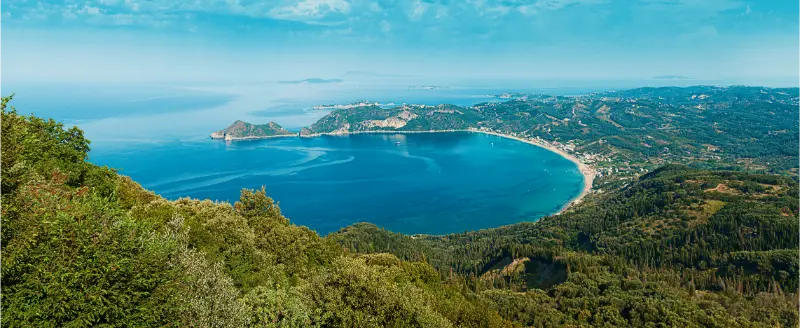
A Corfu road trip should not be a race around the island’s edge. The island is long enough, mountainous enough and busy enough in summer that zigzagging between famous places wastes time. Seven days works best when you group the north-east, north-west, central west and south into separate geographical days and keep at least one slot flexible for wind or boat conditions.
This itinerary assumes you rent a compact car for most of the week, but you do not need it for central Corfu Town. If your accommodation is in the historic centre, pick up the car after the city day or use a rental location with realistic parking. The plan also works in reverse if you stay first on the coast and finish in town before a flight.
Keep the main Corfu travel guide open for broad planning. The route below links to the detailed destination guides when a stop deserves more than a paragraph.
7-day Corfu route overview
| Day | Focus |
|---|---|
| 1 | Corfu Old Town and fortresses |
| 2 | Paleokastritsa + Angelokastro |
| 3 | Kassiopi + north-east coast |
| 4 | Pantokrator + Old Perithia |
| 5 | Porto Timoni + Afionas |
| 6 | Glyfada/Pelekas or south-west beaches |
| 7 | Flexible: boat, favourite beach, Kanoni/Achilleion or weather reschedule |
Before you rent the car
Choose the smallest car that fits your luggage comfortably. Corfu’s village roads, parking spaces and mountain lanes reward compact dimensions more than extra horsepower. Photograph the vehicle at pickup, understand the insurance excess and ask whether any unpaved approaches are excluded by the rental agreement.
Download offline maps but do not follow every shortcut blindly. A navigation app can choose a road that is technically passable yet stressful. Signed main approaches are often slower on screen and much easier in reality.
Day 1: Corfu Town without road-trip pressure
Spend the first day on foot in the UNESCO-listed centre. Use my Corfu Old Town guide for the Old Fortress, Spianada, Liston, churches and museum choices. If your hotel is central, leave the rental car parked or collect it the next morning.
This light start protects you from flight delays and gives you context for the Venetian and British layers you will notice around the island later.
Day 2: Paleokastritsa and Angelokastro
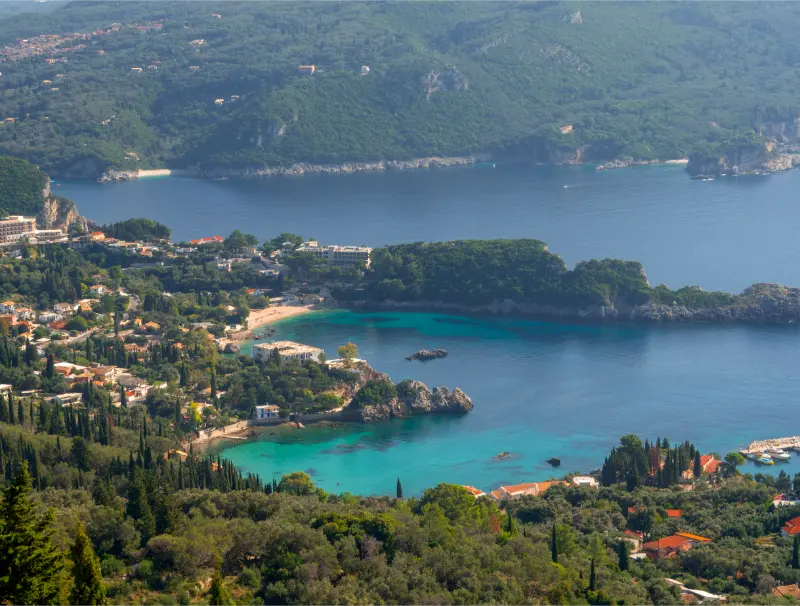
Drive west early for Paleokastritsa, choose one or two bays and take a short boat trip only if the sea is calm. Later, climb to Angelokastro when the heat is less intense. The Paleokastritsa guide and Angelokastro guide explain the details.
Do not add Porto Timoni to this day. Paleokastritsa plus Angelokastro already gives you beach, boat scenery and a historic climb.
Day 3: Kassiopi and the north-east coast
Use Kassiopi as the anchor: harbour, castle and a swim. Then work south along the north-east coast only as far as your energy allows—Avlaki, Kalami, Nissaki or Barbati are all possibilities.
This coast is ideal for a long lunch and repeated short swims. Avoid driving back and forth between coves just to compare them. Choose one place that feels right and stay.
Day 4: Pantokrator and Old Perithia
Drive or hike part of Mount Pantokrator in the cooler morning, then descend toward Old Perithia for lunch and village time. This is the day that prevents the trip from becoming seven consecutive beaches.
If mountain visibility is poor, swap this day with a beach day. Corfu’s weather can vary by elevation even when the coast is bright.
Day 5: Porto Timoni and Afionas
Start early for the descent to Porto Timoni. Wear proper shoes, carry water and leave enough energy for the climb back. Use Agios Georgios Pagon as your easy afternoon beach and return to Afionas for sunset if you are staying nearby.
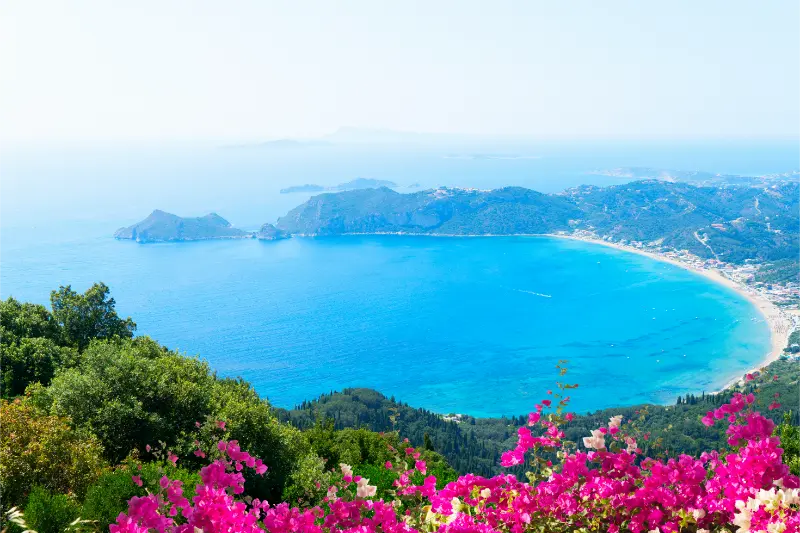
This is intentionally a short driving day. The physical effort is the hike, so you do not need to add Sidari and three other north-coast stops.
Day 6: central west coast or the south-west
If you want facilities and an easy sunset, choose Glyfada and Pelekas. If you want open dunes and longer sandy landscapes, drive to Issos/Halikounas instead. Pick one region based on your base and wind.
A road trip is not improved by touching every corner. Central west and south-west are different enough that either can fill a day.
Day 7: keep it flexible
Use the final full day for whatever the weather or your interests pushed aside. Options include Kanoni and Mon Repos, the Achilleion grounds if accessible, a Paxos/Antipaxos boat trip, or simply returning to your favourite beach.
Do not schedule a weather-sensitive boat trip as the only activity on the morning of your international flight. Ferries, traffic and wind deserve buffer time.
Where to base yourself for this itinerary
For seven days, one central base can work, but two bases reduce driving. A practical split is two or three nights in Corfu Town followed by four nights in the north or west. Kassiopi suits north-east exploring; Paleokastritsa suits the west; a central location gives the best compromise if you dislike moving hotels.
Check parking before booking. ‘Free parking nearby’ can mean a steep ten-minute walk, which is fine until you arrive with luggage at midnight.
Driving distances are deceptive
Corfu looks compact on a map, but travel times expand on mountain roads, through villages and in summer traffic. A 35-kilometre journey can feel much longer than the same distance on a mainland highway. Build lunch and parking time into the route instead of calculating only moving time.
If navigation says you are running late, remove a stop. Do not speed on unfamiliar roads or overtake aggressively to protect an itinerary that you created for yourself.
Budgeting fuel, parking and boat extras
A road trip budget should include more than the rental rate. Add fuel, paid parking where applicable, boat excursions, beach equipment and occasional taxis when nobody wants to drive at night. These small costs can exceed the difference between two rental-car quotes.
Book only the time-sensitive elements in advance. Beaches, villages and viewpoints do not need reservations; keeping them flexible lets you follow the weather.
One more practical planning note
When planning Corfu Road Trip, keep the day deliberately flexible. Corfu rewards travellers who respond to wind, heat and traffic rather than following a fixed checklist. Confirm opening or transport information on the morning itself, carry water, save important locations offline and avoid adding a distant attraction just because there is an empty hour on paper. The island is most enjoyable when each day has one clear geographical focus, enough time for a meal and enough margin to change the plan if a beach is rough, a road is congested or a cultural site has temporary access restrictions.

I also recommend building a deliberate pause into the middle of the day. In peak summer, a shaded lunch, swim or hotel break is not wasted time; it protects the part of the afternoon when you are more likely to enjoy a village, viewpoint or coastal walk. If you are driving, refill water before leaving a larger resort area and keep fuel comfortably above empty, because small mountain and coastal roads do not always have services exactly when you need them.
Finally, check the return route before sunset. Corfu roads can be slower after dark, and bus frequencies often thin out in the evening. If a place is especially beautiful late in the day, consider staying nearby for dinner rather than immediately crossing the island. That simple decision often turns a rushed sightseeing day into a much more memorable travel experience.
Timing, comfort and local conditions
Corfu changes character through the day, so timing deserves as much attention as the list of places. Early morning is best for exposed walks, castles and viewpoints; the middle of the day is better for swimming, lunch and shade; late afternoon works well for villages and west-facing scenery. This rhythm is particularly useful in July and August, but it also makes shoulder-season days feel less rushed because you can spend longer where the conditions are best.
If you are using a rental car, keep the route geographically compact and avoid relying on the fastest navigation estimate. Village traffic, scooters, narrow bends and summer parking can add time that does not appear on the map. If you are using buses, verify the current return service before leaving the main town and save the timetable offline in case mobile data becomes unreliable at a remote stop.
A good Corfu day also needs a backup. Strong wind can change a beach, cloud can hide a mountain view and restoration work can affect access to a monument. Choose an alternative in the same part of the island so a change of plan costs twenty minutes rather than two hours. This is one of the easiest ways to travel more comfortably and still see a lot.
Frequently asked questions
Is seven days enough for Corfu?
Yes. Seven days allows a good mix of town, beaches, north coast, mountains and one flexible day without rushing.
Do I need a car for the whole week?
No. Corfu Town is easier without one. Renting for four to six days is often enough.
Which side of Corfu has the best beaches?
The west is known for sand and dramatic scenery, while the north-east has clear pebble coves. Conditions should influence your choice.
Can I combine Corfu Town and Paleokastritsa in one day?
You can, but each deserves time. With a week available, separate them so neither becomes a rushed stop.
Where should I stay for a road trip?
A split between Corfu Town and a north or west-coast base reduces driving and gives more varied evenings.
Final thoughts
A good Corfu road trip is built around regions, not a list of viral sights. Keep days geographically coherent, move mountain and boat plans with the weather, and leave one flexible day at the end. You will spend less time behind the wheel and understand the island far better.