

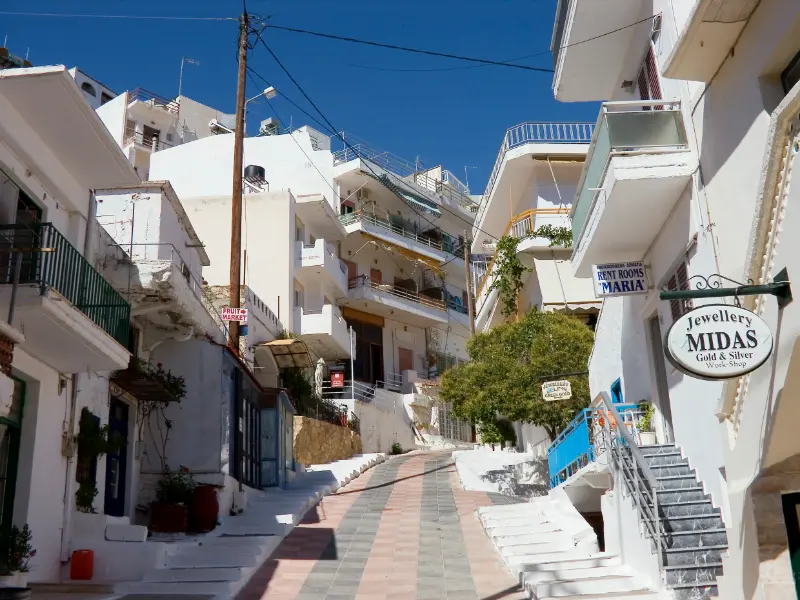
Agia Galini is a compact resort on the south coast of Rethymno that works best for travellers who want a walkable base, a harbour atmosphere and easy access to the Messara plain. The village is built on a slope above the Libyan Sea, so many lanes involve steps, but the reward is a mix of sea views, tavernas, small hotels and a harbour that still gives the town a sense of place rather than feeling like a purpose-built strip.
Its strategic advantage is not one single blockbuster sight. It is the ability to split a holiday between beach time and day trips. Matala, Phaistos, Agia Triada and inland villages are all more logical from here than from the north coast. That makes Agia Galini particularly good for a three- to five-night stay if you want to experience southern Crete without changing hotels every day.
Why this place is worth adding to your Crete itinerary
Choose Agia Galini if you prefer a smaller, walkable seaside town over a large resort and want southern beaches plus archaeology within easy reach. It is more convenient than very remote south-coast villages, yet quieter in character than the major northern cities.
At a glance
- Best for: travellers who want a slower, place-specific experience rather than only the classic north-coast highlights.
- Ideal stay: usually 2–4 nights, depending on hiking, beach time and day trips.
- Transport: a car gives the most flexibility, but some routes also work with buses and seasonal boats.
- Best months: May, June, September and early October for a balance of warm weather and easier sightseeing.
- Peak-summer rule: start exposed walks early and keep a wind or heat backup plan.
- Planning rule: recheck seasonal transport, archaeological hours and weather shortly before travel.
What to see and do
The harbour and waterfront
Start with the harbour because it explains the town. Cafes and tavernas sit close to the water, excursion boats use the port in season, and evenings are lively without needing a car. The waterfront is also the easiest area if mobility is a concern, since the upper village has steeper lanes and steps.
Do not rush the harbour and waterfront. The south and west of Crete reward early starts, shade breaks and time to adapt to weather. If conditions are poor, move the activity to another day rather than forcing a plan that looked good on a map.
Agia Galini Beach
The main beach lies east of the harbour and is the straightforward choice for a no-driving day. Sections are organised, and the river mouth and coastline make the setting more varied than a simple urban beach. In windy weather, check conditions before swimming because the south coast can change quickly.
Do not rush agia galini beach. The south and west of Crete reward early starts, shade breaks and time to adapt to weather. If conditions are poor, move the activity to another day rather than forcing a plan that looked good on a map.
Matala and the south Heraklion coast
Matala is close enough for an easy half-day or evening visit. Go for the beach, caves and sunset atmosphere, but do not make it the only reason to leave Agia Galini. The quieter beaches and villages between the two bases often become the more memorable part of the drive.
Do not rush matala and the south heraklion coast. The south and west of Crete reward early starts, shade breaks and time to adapt to weather. If conditions are poor, move the activity to another day rather than forcing a plan that looked good on a map.
Phaistos and Agia Triada
The Messara plain contains some of Crete’s most important archaeological landscapes. Phaistos is especially rewarding early in the day before the stone surfaces become hot. Pair it with Agia Triada or a village lunch instead of rushing immediately to another major site.

Do not rush phaistos and agia triada. The south and west of Crete reward early starts, shade breaks and time to adapt to weather. If conditions are poor, move the activity to another day rather than forcing a plan that looked good on a map.
Inland villages and food
The countryside north and east of Agia Galini is useful when the beach is windy or you want a change of pace. Small villages, olive groves and mountain roads add context to the resort. This is also where a meal can feel more local and less tied to waterfront tourism.
Do not rush inland villages and food. The south and west of Crete reward early starts, shade breaks and time to adapt to weather. If conditions are poor, move the activity to another day rather than forcing a plan that looked good on a map.
A realistic itinerary
- Day 1: explore the harbour, upper lanes and main beach; keep the evening for a waterfront dinner.
- Day 2: visit Phaistos early, add Agia Triada or a Messara village, and return for a swim.
- Day 3: spend the morning at Matala and Red Beach if conditions suit you, then return via coastal villages.
- With extra time, drive west toward Triopetra and Agios Pavlos or east toward Zaros and the interior.
This pace deliberately leaves empty space. Road distances in Crete can be deceptive, and a beach day often becomes more enjoyable when it is not preceded and followed by two major sights. If you have only two nights, keep the first two priorities and remove the rest rather than compressing everything.
Where to stay
The lower village near the harbour is easiest if you want a flat walk to dinner and transport. Higher properties can have excellent views and more quiet, but check the exact access because a beautiful terrace can come with many steps. For families or travellers with luggage, proximity to parking matters more than a panoramic photo.
When comparing rooms, check parking, steps, shade, air conditioning, late check-in and the real walking route to dinner. On steep or roadless parts of southern Crete, a property that looks 300 metres away on a map can involve a much more demanding walk than the distance suggests.
For current accommodation, compare options on Booking.com. I would use the map view and recent reviews rather than choosing only by headline price.
Getting there and getting around
Agia Galini is reached by road from Rethymno, Heraklion or the Messara plain. Seasonal buses can work for a simple resort stay, but a car makes archaeological sites and scattered beaches much easier. If you are relying on buses, build your itinerary around the current timetable rather than assuming late-evening connections exist.
If you rent a car, photograph the vehicle at pickup, confirm insurance and fuel policy, and avoid choosing the smallest possible transfer window on departure day. Mountain roads, goats, road works, beach traffic and ferry movements can all add time. If you do not drive, build the trip around confirmed services rather than assuming every village has frequent buses.
Best time to visit
May and June are excellent for walking, flowers and long daylight. September is one of the best all-round months because the sea is warm and the strongest summer crowds have usually eased. Early October can still be very good, but shorter days and changing weather require more flexibility. July and August offer the most reliable beach weather, yet exposed hikes can become unsafe in the middle of the day.
Wind matters as much as temperature on the Libyan Sea and open west-facing beaches. A forecast showing strong wind can completely change swimming conditions without making the day a failure. Use that time for villages, museums, food, sheltered coves or an early-evening walk.
What to eat
Look for Cretan vegetable dishes, local cheese, grilled meats from the interior and fresh fish when available. The best meal is not necessarily on the front row of the harbour. Walk a little uphill or ask what was cooked that day. South-coast restaurants often do particularly well with simple plates rather than elaborate menus.
A useful habit is to ask for the day’s cooked dishes before ordering. Cretan food is strongest when it follows season and place: greens in spring, tomatoes and vegetables in summer, local cheese, olive oil, pulses, goat or lamb inland, and fish where there is a working harbour. Save room for fruit, yoghurt, honey or a small sweet instead of turning every meal into a huge checklist.
Is it good for families?
Agia Galini can work well with children because it has a beach, restaurants and shops close together. The main practical issue is the slope of the village. A stroller is easier near the waterfront than in the upper lanes. For day trips, one archaeological site plus a beach is usually enough for a family day.
For family days, alternate one active morning with one simple swim rather than stacking several attractions. Bring more water than you expect to need, use water shoes where the shore is pebbly, and remember that strong wind can make a normally easy beach unsuitable for small children.
Costs and practical planning
Accommodation prices vary sharply by month and exact location. Remote south-coast rooms can be good value, but you may spend more on transfers, taxis or a rental car. Beach access itself is often free, while sunbeds, boat trips, archaeological sites and parking can add daily costs. Keep a cash reserve because very small businesses and remote areas may not be as card-friendly as the major cities.
Do not rely on a single online source for opening hours or transport. Recheck official or operator information a few days before travel, especially for ferries, archaeological sites, protected areas and hiking routes affected by fire risk or extreme weather.
How to connect this stop with nearby Crete
Continue planning with Matala guide; Phaistos Palace guide; Triopetra and Agios Pavlos guide; Rethymno travel guide. These guides are designed to work as one internal route rather than as isolated pages.
Common mistakes
- Choosing accommodation based only on sea view without checking steps and parking.
- Visiting Phaistos in the hottest part of the day in July or August.
- Treating Matala as the only worthwhile excursion from Agia Galini.
- Assuming excursion-boat schedules are identical every day of the season.
- Overpacking a three-day stay with long cross-island drives.
Frequently asked questions
How many nights should I stay?
Two nights is enough for a focused visit, but three or four gives you room for weather changes, a beach day and one meaningful excursion without rushing.
Do I need a rental car?
Not always, but a car is the easiest option for most south and west Crete itineraries. Roadless villages and ferry routes are the exception, where boats and walking become part of the plan.
Can I visit in July or August?
Yes, but start hikes and archaeological visits early, book popular accommodation ahead and keep the middle of the day for shade, lunch or swimming where conditions are safe.
Is this area suitable without hiking?
Yes. Every destination in this cluster can be enjoyed through beaches, villages, food and short walks. The longer E4 or gorge routes are optional, not mandatory.
What should I recheck before departure?
Current bus and ferry schedules, archaeological opening hours, wind and fire-risk conditions, road access to remote beaches and any protected-area restrictions.
Useful official source
For information that can change, use Incredible Crete – Agia Galini and recheck local transport, site access, weather and seasonal services shortly before travel.

Final advice
The strongest trips in southern and western Crete are built around geography and conditions, not around the number of sights completed. Choose a sensible base, start important outdoor activities early, leave room for wind and heat, and allow one meal or swim to last longer than planned. That slower rhythm is usually where this part of Crete becomes memorable.