
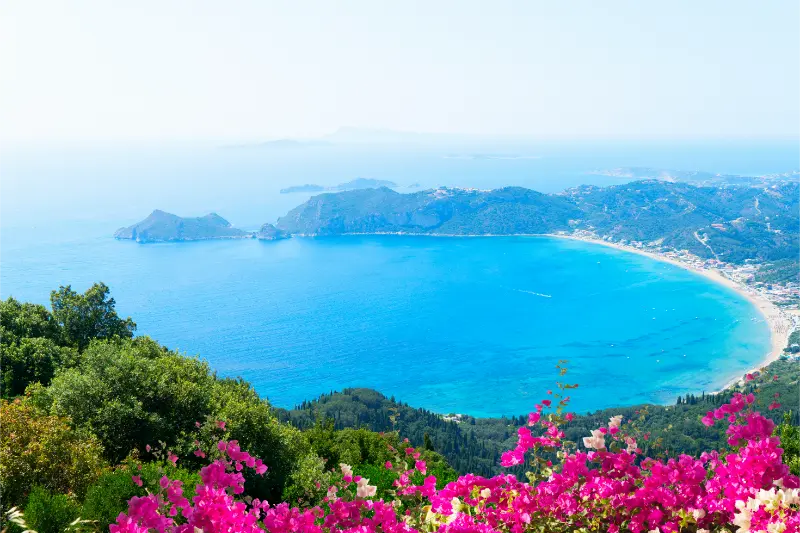
Corfu has too many good beaches for a single universal ranking. The west coast gives you sand, sunsets and dramatic cliffs; the north-east has clear pebble coves backed by green hills; the north adds unusual rock formations; and the south opens into long sandy stretches that feel completely different from Paleokastritsa or Kassiopi.
The useful question is not ‘Which beach is number one?’ but ‘Which beach fits today’s wind, the people in my group and the amount of driving I want?’ A family with toddlers needs different access from a strong swimmer looking for rocks and snorkelling, and a traveller without a car needs a shortlist connected to buses.
Use this comparison together with my detailed guides to Paleokastritsa, Sidari and Canal d’Amour, Porto Timoni and Kassiopi.
Corfu beaches by travel style
| You want | Start with |
|---|---|
| Easy sand and facilities | Glyfada, Agios Gordios, Issos |
| Clear coves and snorkelling | Paleokastritsa, Kassiopi coves, Barbati |
| Dramatic scenery | Porto Timoni, Rovinia, Paleokastritsa |
| Families | Glyfada, Dassia, Agios Gordios depending on sea conditions |
| North-coast rock formations | Canal d’Amour and Sidari |
1–3: Paleokastritsa, Rovinia and Liapades
Paleokastritsa is the strongest all-round scenic beach area because several bays sit under steep green hills and boat trips reach caves and smaller coves. It can be busy, so arrive early or accept that the attraction is popular for a reason. Rovinia has a more natural feel and Liapades gives you a village-backed alternative nearby.
Choose among them based on access and crowds rather than trying to visit all three in a single rushed hour. Paleokastritsa is better for organised boat options; Rovinia rewards travellers comfortable with a more independent approach.
4–6: Glyfada, Agios Gordios and Myrtiotissa
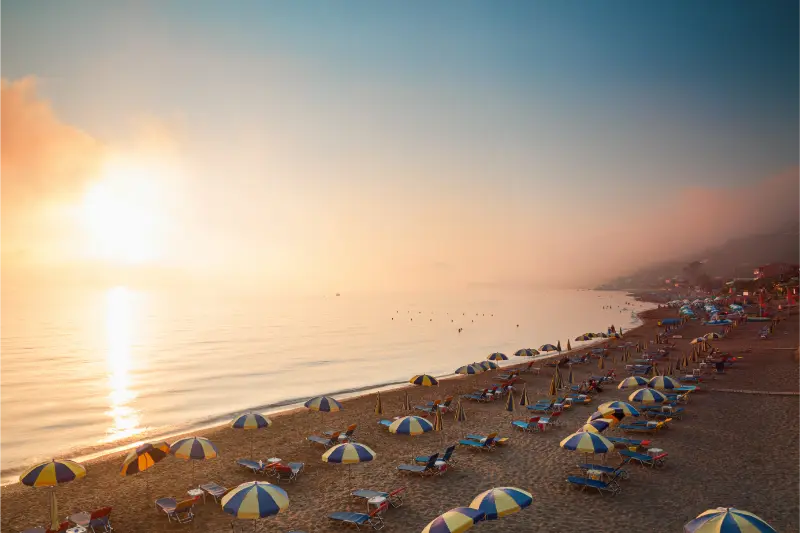
Glyfada is the easiest recommendation for travellers who want sand and facilities. Agios Gordios combines a long beach with a resort village and impressive cliffs. Myrtiotissa is smaller and more natural, with access considerations that make it less suitable for some families. Read the Glyfada and Pelekas guide for a complete central west-coast day.

West-coast beaches can pick up swell. Watch the water rather than assuming sand means calm conditions, especially with children.
7–9: Porto Timoni, Agios Georgios Pagon and Arillas
Porto Timoni is the most adventurous choice because you hike down from Afionas. Agios Georgios Pagon gives you a much broader bay and easier beach day below the same general landscape. Arillas is a calmer resort option further north-west and works well for travellers who want space and a village beach rhythm.

These beaches fit together geographically. If Porto Timoni is too hot or the trail feels wrong for your group, Agios Georgios Pagon is the obvious alternative rather than a compromise.
10–12: Kassiopi coves, Barbati and Nissaki
The north-east is about clear water and mountain-backed coast rather than broad golden sand. Around Kassiopi, small coves such as Bataria are attractive for swimming and snorkelling. Barbati is larger and organised, while Nissaki has compact coves and easy access to boat routes along the coast.
Pebbles can make water shoes useful. On the positive side, clear water and rocky edges often appeal to snorkellers. The coast also feels more sheltered than the exposed west on some wind patterns, though you should always judge conditions locally.
13–15: Canal d’Amour, Issos and Halikounas
Canal d’Amour near Sidari is about sculpted sandstone channels as much as conventional beach time; use the Sidari and Canal d’Amour guide for safety and crowd advice. Issos and Halikounas in the south-west offer longer, more open sandy landscapes beside protected wetland areas.
The south-west is an excellent counterpoint to Corfu’s small northern coves. Wind can be stronger and distances are larger, so make it the main focus of the day rather than an add-on after Kassiopi.
Best beaches for families
For many families I would shortlist Glyfada, Agios Gordios, Dassia and selected organised sections of the east coast, then choose based on daily sea conditions. Facilities, shade and an easy walk from the car or bus usually matter more than winning a beauty contest.
With babies or toddlers, check whether the accommodation itself has easy beach access. A spectacular beach reached by a steep path may be the wrong choice for that stage of family travel.
Best beaches without a car
Corfu’s bus networks make several beaches realistic without driving. City Bus serves corridors such as Dassia/Ipsos and Pelekas, while Green Buses cover destinations including Paleokastritsa, Sidari, Kassiopi and west-coast routes. See my Corfu without a car guide for route strategy instead of building the trip around taxis.
Always check the return schedule before settling onto the beach. A perfect sunset is less relaxing if the final bus left twenty minutes earlier.
How to choose the beach each morning
Check wind, swell, heat and driving time before looking at rankings. If the west is rough, consider the east or north-east. If parking pressure is your main concern, leave earlier or choose a larger organised beach. If the group is tired, stay near your base instead of turning the day into a two-hour transfer for a photo.
Corfu rewards flexibility because its coast faces several directions. Use that variety as an advantage rather than forcing a fixed seven-day list.
Beach access and mobility
Corfu’s beach beauty can hide difficult access. Porto Timoni requires a rough hike, some small coves have steep stairs, and parking may sit well above the water. Travellers with limited mobility should prioritise organised beaches where the road and facilities reach close to the shore.
Ask accommodation hosts for current access details because construction, erosion and seasonal setup can change from year to year. A beach that was easy in an old review may have a different path now.
Beach etiquette and environmental care
Take rubbish away from natural coves, avoid picking plants from dunes and do not anchor or step on sensitive seabed vegetation when boating. On busy organised beaches, follow local zones for watersports and swimmers. Small habits matter because Corfu’s coastline receives intense seasonal pressure.
If you visit quieter beaches, the absence of bins is not permission to leave waste. Pack a small bag specifically for rubbish and carry it back to the nearest serviced area.
One more practical planning note
When planning Best Beaches in Corfu, keep the day deliberately flexible. Corfu rewards travellers who respond to wind, heat and traffic rather than following a fixed checklist. Confirm opening or transport information on the morning itself, carry water, save important locations offline and avoid adding a distant attraction just because there is an empty hour on paper. The island is most enjoyable when each day has one clear geographical focus, enough time for a meal and enough margin to change the plan if a beach is rough, a road is congested or a cultural site has temporary access restrictions.
I also recommend building a deliberate pause into the middle of the day. In peak summer, a shaded lunch, swim or hotel break is not wasted time; it protects the part of the afternoon when you are more likely to enjoy a village, viewpoint or coastal walk. If you are driving, refill water before leaving a larger resort area and keep fuel comfortably above empty, because small mountain and coastal roads do not always have services exactly when you need them.
Finally, check the return route before sunset. Corfu roads can be slower after dark, and bus frequencies often thin out in the evening. If a place is especially beautiful late in the day, consider staying nearby for dinner rather than immediately crossing the island. That simple decision often turns a rushed sightseeing day into a much more memorable travel experience.
Timing, comfort and local conditions
Corfu changes character through the day, so timing deserves as much attention as the list of places. Early morning is best for exposed walks, castles and viewpoints; the middle of the day is better for swimming, lunch and shade; late afternoon works well for villages and west-facing scenery. This rhythm is particularly useful in July and August, but it also makes shoulder-season days feel less rushed because you can spend longer where the conditions are best.
If you are using a rental car, keep the route geographically compact and avoid relying on the fastest navigation estimate. Village traffic, scooters, narrow bends and summer parking can add time that does not appear on the map. If you are using buses, verify the current return service before leaving the main town and save the timetable offline in case mobile data becomes unreliable at a remote stop.
A good Corfu day also needs a backup. Strong wind can change a beach, cloud can hide a mountain view and restoration work can affect access to a monument. Choose an alternative in the same part of the island so a change of plan costs twenty minutes rather than two hours. This is one of the easiest ways to travel more comfortably and still see a lot.
Frequently asked questions
What is the most beautiful beach in Corfu?
Paleokastritsa and Porto Timoni are among the most dramatic, but the better choice depends on access, crowds and sea conditions.
Which Corfu beaches are sandy?
Glyfada, Agios Gordios, Issos and several south and west-coast beaches have substantial sand.
Where is best for snorkelling?
Rocky coves around Paleokastritsa, Kassiopi, Barbati and Nissaki can be good when the sea is calm.
Which beaches can I reach by bus?
Paleokastritsa, Sidari, Kassiopi, Dassia/Ipsos, Pelekas and other destinations are connected seasonally by City or Green Buses.
Do I need water shoes?
They are useful on north-east pebble beaches and rocky coves but less important on broad sandy west-coast beaches.
Final thoughts
The best way to enjoy Corfu’s beaches is to stop treating them as a fixed ranking. Match the coast to the day’s wind, your transport and the people travelling with you. One comfortable beach day in the right conditions beats three famous stops reached at the wrong time.