
You can enjoy Tinos without renting a car, but the experience is much better when you design the trip around the bus network instead of trying to reproduce a road-trip itinerary. Chora is the obvious base because buses, taxis, ferries and restaurants converge there. Seasonal routes also reach major village corridors and popular beaches, making places such as Pyrgos, Panormos, Kardiani, Isternia, Volax, Kolymbithra, Kionia and Porto possible on selected days.
The limitation is frequency. Tinos buses are not an urban metro and published schedules change through the season. Late-summer 2026 information still showed useful village services, but the exact pattern after your travel date must be checked locally. Build days around one return journey, leave margin before the last bus and keep a taxi number for the occasions when dinner or a delayed walk makes the timetable unrealistic.
At a glance
| Need | Best solution | Why |
|---|---|---|
| Ferry arrival/departure | Walk or taxi in Chora | Simple with luggage |
| Pyrgos/Panormos | Seasonal bus | Direct western corridor |
| Volax | Bus/tour/taxi | Fewer departures |
| Popular beaches | Seasonal bus | Good in summer |
| Remote sunset/dinner | Taxi | Avoid last-bus stress |
| Multi-village day | Organised tour | Efficient without driving |
Why Chora is the best no-car base
Chora gives you the highest concentration of transport, food and services within walking distance. You can visit Panagia Evangelistria, walk the waterfront, reach nearby beaches and start village buses without arranging a taxi every morning. Staying close to the bus terminal matters more than choosing the most romantic hillside room if your entire itinerary depends on public transport. Check the walking route with luggage before booking.
Western villages by bus
Published 2026 routes linked Chora with Tripotamos, Kampos, Kardiani, Isternia, Pyrgos and Panormos. This is excellent for a culture-focused day because one corridor serves several important villages. The problem is temptation: hopping off repeatedly can leave you stranded between services. Choose one major stop such as Pyrgos and one secondary stop unless you have confirmed a timetable that supports more.
Volax and central villages
Volax can be reached on seasonal services or organised island circuits, but it has fewer departures than the busiest beach routes. If your goal is a long hike, a taxi to the trailhead can sometimes be more efficient than waiting for the perfect bus. For a simple village visit, use the bus and accept the timetable as the structure of the day rather than fighting it.
Beach routes
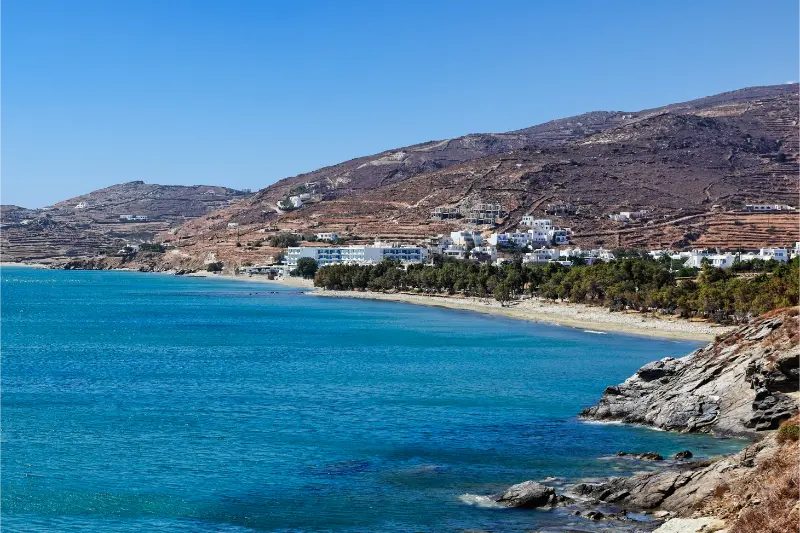
Agios Fokas, Kionia, Porto and Kolymbithra are among the beach areas commonly served in season. This makes a no-car beach holiday realistic, especially if you are flexible about which coast you use. What public transport cannot do well is chase wind conditions across the island at short notice. If calm water is essential, ask locally which bus-served beach is likely to work that day.
When a taxi is worth the money
Use taxis strategically, not for every journey. They are most valuable for early ferries, late dinners, accommodation outside bus corridors, one-way hikes and connections where missing the last bus would ruin the evening. Ask for an approximate fare before a long cross-island ride and reserve ahead on busy August nights rather than assuming a car will appear immediately.
Walking from Chora
Chora itself is walkable, and Agios Fokas can fit an active beach day on foot depending on where you stay. Kionia is also close enough for some travellers to combine bus and walking. Summer heat changes what counts as reasonable, so a route that looks short on a map may not be pleasant with luggage or a child at midday. Save walking energy for village lanes and trails.
Organised island tours
A coach or small-group tour can solve the exact problem public buses struggle with: connecting several villages in one day without worrying about returns. Choose tours based on stop length, not the number of names in the itinerary. Thirty minutes in Pyrgos is very different from having time for the marble museum and lunch. Tours are useful tools, but they should not turn Tinos into a windshield experience.

How many days without a car
Four to six nights is comfortable if you base in Chora and accept one main destination per day. A two-night visit is possible but becomes ferry-dependent and leaves little room for wind changes. A week gives you the flexibility to use buses for villages, take one guided island day, walk locally and keep a taxi budget for a sunset or remote dinner.
How this fits into a wider Tinos trip
Use this page together with Tinos travel guide, Tinos Chora Guide, Pyrgos and Panormos Tinos Guide, Volax Tinos Guide, Kardiani and Isternia Tinos Guide, Panagia Evangelistria Tinos Guide. Keeping related places and practical topics connected makes it easier to build days by geography instead of repeatedly crossing the island.

How to plan around wind and summer heat
Tinos is famously exposed to Aegean wind, and the same breeze that makes a terrace comfortable can make a north-facing beach rough or an exposed ridge unpleasant. Check the day’s conditions before committing to a remote beach, boat outing or long hike. In July and August, use early morning for villages, churches and walking, reserve the hottest hours for lunch or swimming, and return to sightseeing later in the afternoon. A flexible itinerary is a practical advantage, not a failure to plan.
Driving realistically on Tinos
Distances on the map look short, but roads between villages are winding and often narrow. Add time for oncoming traffic, photo stops and finding sensible parking outside historic lanes. Do not follow a navigation app blindly onto a rough shortcut simply because it saves three minutes. If you are uncomfortable with steep bends, base in Chora and use buses, taxis or organised excursions for selected days rather than turning every transfer into stress.
Food and daily rhythm
Tinos is a destination where lunch can be part of the sightseeing rather than a break from it. Build time for village squares, bakeries, local cheeses, capers, artichokes, sausages and seasonal dishes instead of planning every meal at the waterfront. Opening patterns outside peak summer can be irregular in small villages, so carry water and a snack even when you expect to find a taverna. In August, reserve famous restaurants but leave ordinary meals spontaneous.
Booking and time-sensitive information
Ferry times, bus schedules, museum hours and road access can change. Recheck anything that would cause a serious problem if wrong: the last bus, the final ferry of the day, a museum you are crossing the island to visit, or access to a remote beach after strong weather. Save confirmations offline and keep enough margin before departure. Tinos rewards slow planning; it punishes itineraries where one ten-minute delay breaks the rest of the day.
Tours and activities
A guided village day, food experience or private transfer can be useful when it reduces transport friction or adds local interpretation. Compare the actual time spent at each stop, pickup location, group size and cancellation policy rather than choosing the itinerary with the longest list of villages.
Common planning mistakes
- Booking far outside Chora without checking the nearest bus stop.
- Planning three villages around one infrequent route.
- Assuming summer timetables apply in May or October.
- Depending on the last bus after a long hike.
- Spending more on repeated taxis than a short rental would have cost.
Frequently asked questions
Can you visit Tinos without a car?
Yes, particularly from Chora, if you build days around seasonal buses and use occasional taxis.

What is the best base without a car?
Chora is the clear first choice because transport and services are concentrated there.
Can you reach Pyrgos by bus?
Yes in season, with the western route continuing toward Panormos.
Can you reach beaches by bus?
Several popular beaches receive seasonal service, but frequency changes through the year.
Should you rent a car for one day?
It can be a smart compromise if remote beaches and sunset villages are priorities, provided you are comfortable driving narrow island roads.
Final practical advice
Tinos is most rewarding when you leave space between the famous stops. One village, one meaningful cultural visit and one swim often make a better day than six pins on a map. Choose a base that suits your transport style, group nearby experiences, check wind and heat each morning, and verify time-sensitive information shortly before you travel. The island’s villages, food and walking routes are not filler between beaches; together they are the reason Tinos feels different from many other Cycladic destinations.
Photography without slowing everyone down
The best photographs on Tinos usually come from side light, village details and wide landscapes rather than stopping a car in an unsafe place. In villages, park first and walk back to the viewpoint. Ask before photographing craftspeople at work and never treat worshippers as part of a travel portrait. Early morning and late afternoon also reduce harsh contrast on white walls and marble while making walking more comfortable.
What to carry each day
A small day bag should include water, sun protection, a light layer for wind, offline maps and footwear that can handle stone steps. Add swim shoes if your group dislikes pebbles and a reusable bag for beach rubbish. On hiking days carry significantly more water and a power bank. On church days bring clothing that allows you to enter respectfully without having to return to the hotel.
Leave a Reply