
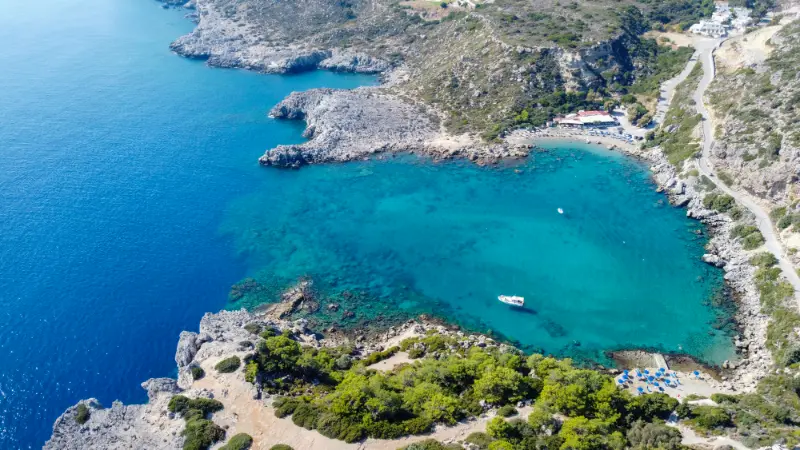
Choosing the best beaches in Rhodes is less about finding one universal winner and more about matching the coast to the day you want. The east side generally offers many of the island’s most popular swimming beaches and coves; the west is windier and feels more open; the south gives you long drives, dramatic landscapes and places such as Prasonisi where wind sports shape the experience. A good beach plan uses that geography instead of chasing a ranked list.
For the wider island context, start with my Rhodes travel guide. If you are still deciding how to split your time, the Rhodes road trip itinerary brings the main areas together into a realistic route.
15 Rhodes beaches worth knowing
Elli Beach
The easiest beach for travellers staying in Rhodes Town. It is urban, convenient and good when you want to swim without dedicating a day to transport.
Kallithea
A scenic option near the restored springs, with rocky coves and clear water. Best for travellers who like combining swimming with architecture.
Faliraki
A long, organised sandy resort beach with services, water activities and easy logistics. One of the simplest choices for families and car-free days.
Anthony Quinn Bay
Small, rocky and photogenic, with excellent appeal for snorkelling. Go early because the compact shoreline feels crowded quickly.
Ladiko
A nearby cove that pairs naturally with Anthony Quinn Bay. Use it as a second swim rather than driving to a distant part of the island.
Traganou
A broader east-coast beach known for its pebbly character and cliffs. It is useful when you want more space than the tiny coves.
Afandou
Long and open, with plenty of room to spread out. Good for travellers who care more about swimming space than postcard architecture.
Tsambika
One of the island’s classic sandy beaches, framed by hills. It is especially popular with families and works well with the monastery viewpoint if you separate the climb from the midday heat.
Stegna
A relaxed bay with tavernas and a small-resort feel. Better for a slow lunch-and-swim day than for nightlife.
Agathi
A sheltered-looking sandy bay near Haraki that is popular with families. Arrive early in high season because the easy access attracts day visitors.
Haraki
A low-key seafront beneath Feraklos Castle, useful for travellers who want a village atmosphere and an evening meal near the water.
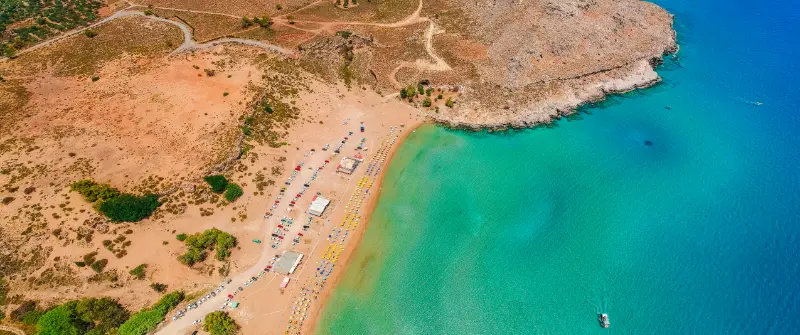
St Paul’s Bay
The coves below Lindos are scenic and close to the village, but space is limited. Combine them with an early or late visit to Lindos rather than arriving at the busiest hour.
Glystra
A south-east coast beach that can work as a quieter stop between the Lindos area and Kiotari, depending on current conditions and development.
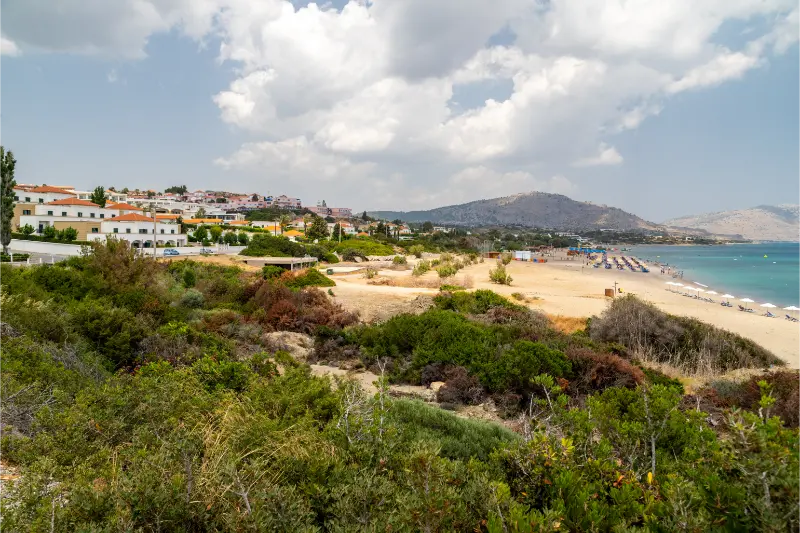
Kiotari
A long resort coast in the south-east, practical for travellers staying in this part of Rhodes and less useful as a special day trip from the north.
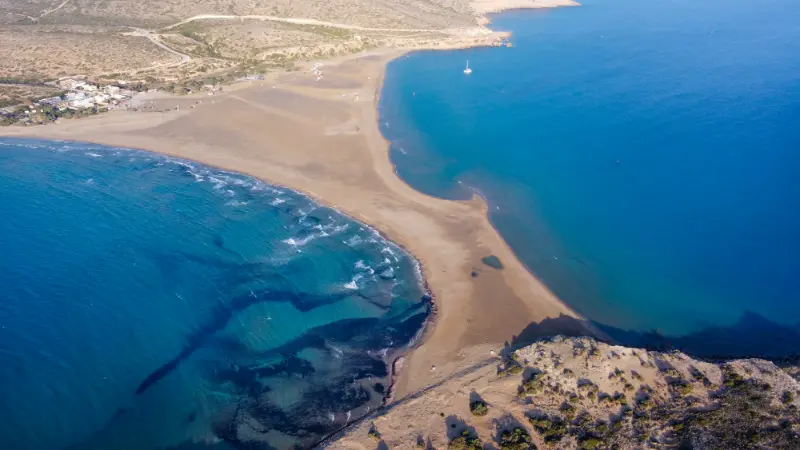
Prasonisi
A landscape and wind-sports destination at the southern tip rather than a standard calm swimming beach. Conditions can be powerful, so read the day’s wind and sea before entering the water.
How to choose the right coast
If the day is windy, do not assume every beach will feel the same. The west coast is exposed to prevailing winds and often attracts wind-sports users, while the east can be calmer. Local conditions still vary, so use the forecast as a starting point and assess the water when you arrive. Families should prioritise easy access and appropriate swimming conditions over social-media fame.
My beach strategy for a first trip
I would not spend seven days driving to seven “best” beaches. Choose one broad resort beach near your hotel, one scenic cove, one classic sandy beach such as Tsambika and one south-coast day if you have a car. That gives variety without turning the holiday into a parking project. If you are staying in Rhodes Town, Elli plus two day trips may be enough; if you are based in Stegna or Lindos, the east coast is already at your door.
Beach safety and etiquette
- Judge wind and waves on the day, not from old photographs.
- Keep distance from cliff edges and never sit directly below unstable rock faces.
- Do not block narrow access roads while searching for a photograph.
- Take rubbish with you and avoid leaving plastic near the sea.
- Use reef-safe habits where possible and never touch or remove marine life while snorkelling.
- Remember that sunbed prices and beach services can change during the season; ask before using paid facilities.
Useful Rhodes beach guides
For detailed planning, continue with Anthony Quinn Bay, Tsambika, Stegna and Prasonisi. These four places show how different a “Rhodes beach day” can be.
Frequently asked questions
Which side of Rhodes has the calmest beaches?
The east coast is often chosen for easier swimming, while the west is typically windier, but conditions change day by day.
What is the best beach for families?
Faliraki and Tsambika are practical choices because of space and services, but the best option depends on the day’s sea conditions and where you are staying.
What is the best beach for snorkelling?
Anthony Quinn Bay is popular because of its rocky setting. Always remain aware of boat traffic and your own swimming ability.
Which beach is best without a car?
Elli is easiest from Rhodes Town. Faliraki is also practical if you are staying there or using current public transport.
Is Prasonisi good for ordinary swimming?
It is famous for wind and water sports and should be approached according to conditions. It is not my automatic recommendation for a calm family swim.
Final thoughts
Rhodes has enough coastline that the “best beach” changes with your base, the wind and the kind of day you want. Use the island’s geography, choose a few contrasting beaches and leave room to return to the one you actually enjoyed most. That usually produces a better holiday than trying to complete a list.
Extra planning notes before you go
Rhodes is easiest to enjoy when you separate fixed facts from decisions that should be made on the day. Opening hours, bus schedules, sea conditions, event closures and parking pressure can all change. Recheck the official source for any attraction that would ruin your day if it were closed, and keep one nearby alternative in mind. This is especially important in the shoulder season, when a place can be open while transport or beach services operate on a reduced timetable.
If you are driving, save offline maps before leaving your accommodation but do not follow every shortcut blindly. Village lanes can narrow quickly, and the main signed road is often less stressful even if navigation software shows a slightly longer journey. In beach areas, park only where access remains clear for residents and emergency vehicles. A few extra minutes of walking is better than creating a problem at a crowded cove.
Finally, give yourself permission to drop a stop. The most memorable days on Rhodes often come from staying longer at one beach, village or archaeological site because conditions are good. A travel guide should help you make choices, not force you to complete every line. Build the day around one priority, one natural companion stop and one optional extra; that structure works in almost every part of the island.
Extra planning notes before you go
Rhodes is easiest to enjoy when you separate fixed facts from decisions that should be made on the day. Opening hours, bus schedules, sea conditions, event closures and parking pressure can all change. Recheck the official source for any attraction that would ruin your day if it were closed, and keep one nearby alternative in mind. This is especially important in the shoulder season, when a place can be open while transport or beach services operate on a reduced timetable.
If you are driving, save offline maps before leaving your accommodation but do not follow every shortcut blindly. Village lanes can narrow quickly, and the main signed road is often less stressful even if navigation software shows a slightly longer journey. In beach areas, park only where access remains clear for residents and emergency vehicles. A few extra minutes of walking is better than creating a problem at a crowded cove.
Finally, give yourself permission to drop a stop. The most memorable days on Rhodes often come from staying longer at one beach, village or archaeological site because conditions are good. A travel guide should help you make choices, not force you to complete every line. Build the day around one priority, one natural companion stop and one optional extra; that structure works in almost every part of the island.
Extra planning notes before you go
Rhodes is easiest to enjoy when you separate fixed facts from decisions that should be made on the day. Opening hours, bus schedules, sea conditions, event closures and parking pressure can all change. Recheck the official source for any attraction that would ruin your day if it were closed, and keep one nearby alternative in mind. This is especially important in the shoulder season, when a place can be open while transport or beach services operate on a reduced timetable.
If you are driving, save offline maps before leaving your accommodation but do not follow every shortcut blindly. Village lanes can narrow quickly, and the main signed road is often less stressful even if navigation software shows a slightly longer journey. In beach areas, park only where access remains clear for residents and emergency vehicles. A few extra minutes of walking is better than creating a problem at a crowded cove.
Finally, give yourself permission to drop a stop. The most memorable days on Rhodes often come from staying longer at one beach, village or archaeological site because conditions are good. A travel guide should help you make choices, not force you to complete every line. Build the day around one priority, one natural companion stop and one optional extra; that structure works in almost every part of the island.