
Santorini is famous for cliffs and sunsets, not for long Caribbean-style sand, and that is exactly why its beaches deserve a realistic guide. The coast is volcanic: expect black or dark sand, pebbles, dramatic rock formations and water that can become deep quickly in places. Some beaches are highly organised with restaurants and sunbeds; others are better for scenery than for an effortless family swim.
The right beach depends on what you want that day. Perissa and Perivolos are the easiest choices for facilities, Kamari is convenient and lively, Vlychada has the most unusual cliff backdrop, and the Akrotiri coast is about colour and geology. Wind direction matters, so I would not lock every beach day into the itinerary weeks in advance.
For the wider island picture, keep the Santorini travel guide open alongside this page. The Oia guide, Fira guide, Akrotiri guide, Imerovigli guide and Santorini wine guide cover the main places and experiences in more depth, so you can build a route without repeating the same stops.
Santorini beaches at a glance
| Beach | Best for | Main caution |
|---|---|---|
| Perissa | Facilities, families, long beach days | Dark sand becomes very hot. |
| Perivolos | Beach clubs, restaurants, longer relaxed stays | Can feel commercial in peak season. |
| Kamari | Easy resort base, promenade, airport-side convenience | Busy and developed. |
| Vlychada | Scenery, geology, quieter atmosphere | Keep away from eroding cliff bases. |
| Red Beach area | Dramatic volcanic colour | Access and safety conditions can change; follow local restrictions. |
| Monolithos | Families and a local feel | Wind and seasonal facilities vary. |
| Agios Georgios | Quieter extension of the Perissa/Perivolos coast | Fewer services in some stretches. |
Perissa: the easiest all-round beach
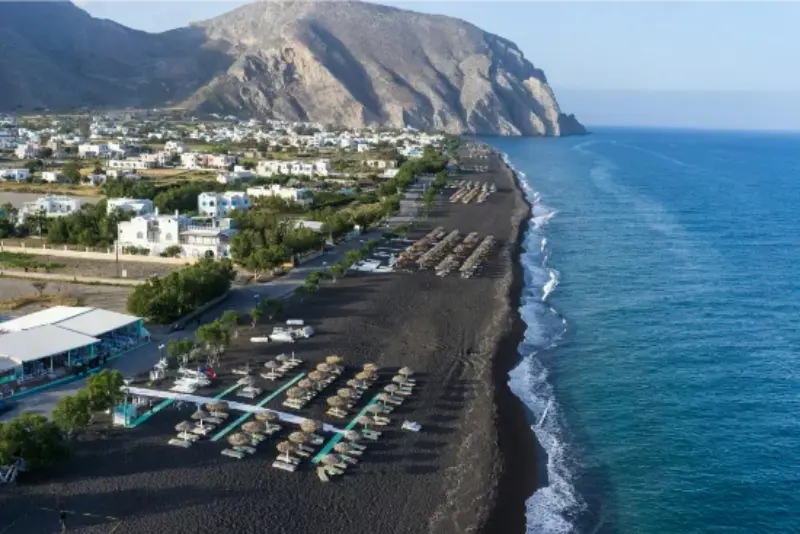
Perissa is the beach I would recommend to first-time visitors who want a straightforward swimming day. The dark shore runs below Mesa Vouno, with restaurants, cafés, sunbed areas and easy access to accommodation. You can spend several hours without needing a car once you arrive. The Kamari and Perissa guide covers where to stay and how to use the area as a base.
The sand and pebbles can become extremely hot under summer sun. Water shoes are useful for walking between your towel and the sea, particularly for children. Enter the water carefully because depth and seabed conditions vary along the beach.
Perivolos and Agios Georgios: more space and beach-club energy
South of Perissa, the coastline continues through Perivolos toward Agios Georgios. Perivolos has many organised venues, making it attractive for travellers who want lunch, drinks and loungers built into the day. Move farther along the coast and the atmosphere can become quieter. This is the area I would use for a full beach day rather than a quick photo stop.
Kamari: practical and lively
Kamari is another highly developed black-sand option with a long seafront lined by restaurants and hotels. It works especially well if you stay on the east side of the island and want everything on foot. The beach can be exposed to particular wind and sea conditions, so compare the day’s forecast with south-coast options rather than choosing automatically.
Vlychada: best for volcanic scenery
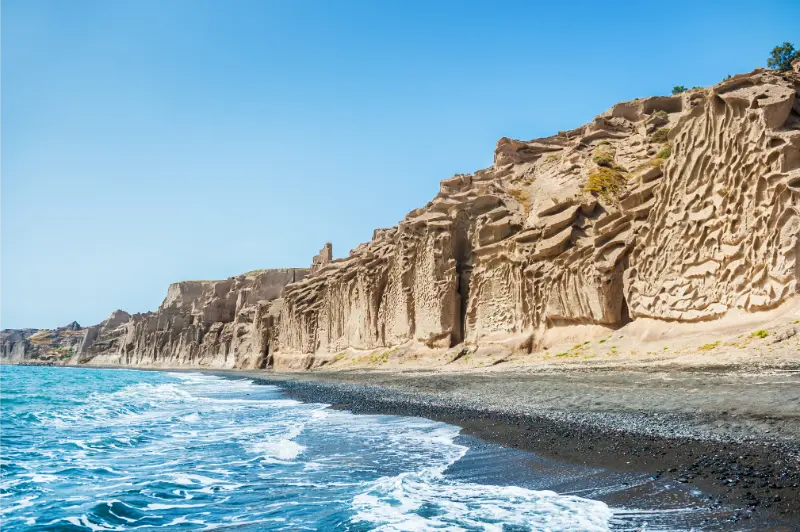
Vlychada feels completely different because sculpted pale cliffs rise behind the dark shore. Visit for the landscape and combine it with the Vlychada and Tomato Museum guide. The essential safety rule is simple: do not sit directly beneath eroding cliffs or climb them for photographs.
Red Beach: famous, dramatic and condition-dependent
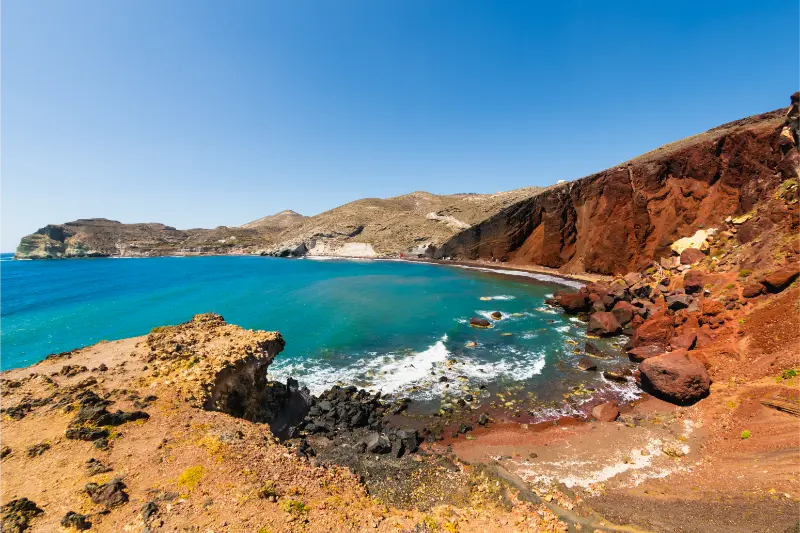
The red volcanic cliffs near Akrotiri create one of Santorini’s best-known coastal scenes. However, rockfall risk and local access measures have changed over time. I would treat the viewpoint and surrounding landscape as the attraction and follow current barriers, signs and official advice rather than assuming an old online route to the beach is safe or permitted.
If a boat excursion includes views of Red Beach from the water, that can be a sensible way to appreciate the geology without relying on unstable shore access. The Akrotiri guide explains how to combine the archaeological site with the south coast.
Monolithos: useful for families
Monolithos can be a practical family option because parts of the east coast are flatter and less cliff-dominated than the caldera villages. Facilities vary by season, so bring water and shade if you are unsure what will be open. Families should still assess sea conditions on the day; “family-friendly” never means waves and wind can be ignored.
What about White Beach?
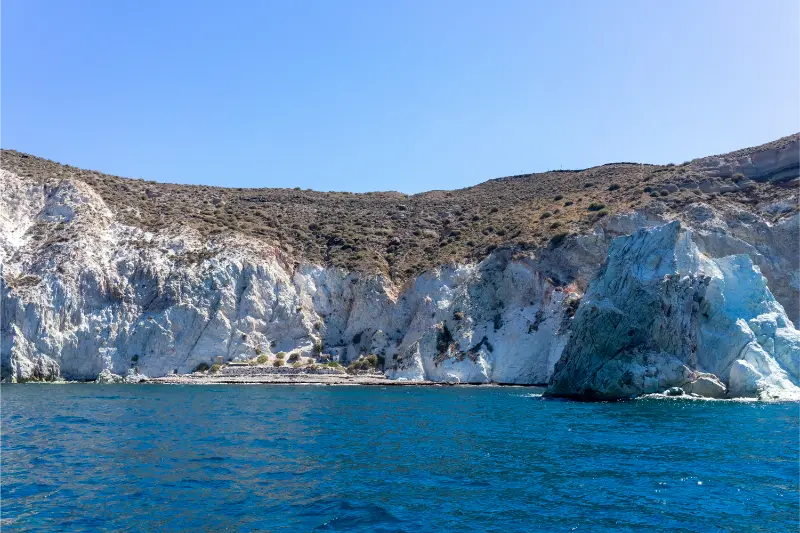
The name appears frequently in boat itineraries around the Akrotiri coast. Access is typically associated with the sea rather than a convenient road approach, and conditions can vary. If it is a priority, choose a boat trip that clearly states the swimming stops rather than assuming every caldera cruise follows the same route.
Which beaches are best without a car?
Perissa and Kamari are among the easiest because KTEL services connect them with Fira during the main season. Vlychada also appears in the official network, but frequency can be lower. Check KTEL Santorini for the current timetable. If you are staying in Oia, expect many beach journeys to involve Fira as a transfer hub.
Wind matters more than most visitors expect
Santorini’s compact size can create the illusion that every beach experiences the same conditions. In reality, headlands and orientation matter. A windy day on one coast may be much more comfortable elsewhere. Ask locally, check a marine forecast and keep at least one beach day flexible. Strong wind also affects boat excursions, so do not make a cruise your only possible activity for a particular afternoon.
Beach shoes, sun and practical comfort
- Bring water shoes if hot black sand or pebbles bother you.
- Use more sun protection than you think you need; volcanic beaches offer little natural shade.
- Do not depend on sunbed umbrellas during the strongest midday sun.
- Keep valuables simple; a waterproof pouch is useful if everyone wants to swim.
- Carry a light layer in windy shoulder-season conditions even when Fira feels warm.
Families: which beach is easiest?
For families I would usually choose Perissa, parts of Perivolos or Monolithos based on the day’s sea conditions. What matters most is not the beach name but a combination of manageable water entry, nearby food/toilets, shade and easy transport. The Santorini with kids guide builds those beach choices into a slower family itinerary.
Beach clubs and public space
Organised sections often rent loungers or tie them to minimum spending, while public access to the shore remains distinct from buying a beach-club package. Prices and policies change quickly. Ask before sitting down and do not assume a social-media post from last year reflects the current minimum spend.
Boat trips and coastal swimming
A boat trip is the best way to see sections of the volcanic coast that are awkward from land and to appreciate the caldera cliffs from sea level. Compare boat size, swimming stops, meal inclusions and transfers rather than choosing only by the word “sunset.”
How to choose a beach each morning
Look at wind direction, wave conditions, how far you want to travel and whether you need organised facilities. Then pick one beach and stay long enough to enjoy it. The common mistake is spending the hottest part of the day moving between several beaches merely to say you saw them.
Sunbed costs and beach budgets
Commercial beach venues set their own policies, and minimum spends can change by season, day and row. Ask the price before occupying a bed and compare the cost with simply buying lunch and using a towel on a public section. A relaxed beach day does not require a premium club package.
Swimming confidence matters
Some volcanic beaches deepen quickly and pebbly entries can be awkward for uncertain swimmers. Stay close to shore, supervise children actively and choose calmer organised sections when anyone in the group lacks confidence. Beautiful water is not automatically easy water.
One final practical planning note
Before finalising the day, recheck transport, weather and any seasonal opening information for your exact travel date. Santorini changes character dramatically between spring, peak summer and late autumn: buses run at different frequencies, restaurants and beach services may alter their hours, and strong wind can make a plan that looked perfect on paper uncomfortable in practice. Build a little spare time between major stops, carry water, and avoid treating short driving distances as proof that you can fit unlimited sightseeing into one day. The most enjoyable Santorini itineraries leave enough room to stop for a meal, change coast when conditions are better elsewhere, or simply stay longer in a place that turns out to be more interesting than expected.
Frequently asked questions
Does Santorini have sandy beaches?
Yes, but the sand is volcanic and usually dark rather than golden. Pebbles are also common.
What is the best beach in Santorini for families?
Perissa, parts of Perivolos and Monolithos are practical starting points, but always check the day’s wind and sea conditions.
Can I visit Red Beach safely?
Access conditions can change because of rockfall risk. Follow current signs and barriers; do not ignore restrictions because an older guide shows a path.
Which beach is best without a car?
Perissa and Kamari are among the easiest by public bus from Fira in the main season.
Are Santorini beaches worth visiting?
Yes, if you value volcanic landscapes and swimming rather than expecting the long pale-sand beaches of other Greek islands.
Final thoughts
Santorini’s beaches make more sense when you stop judging them against islands famous for sand. They are geological beaches: dark, dramatic and closely tied to the volcanic landscape. Use Perissa or Perivolos for convenience, Vlychada for scenery, and the Akrotiri coast for colour. Most importantly, let wind and safety conditions decide the final plan.