

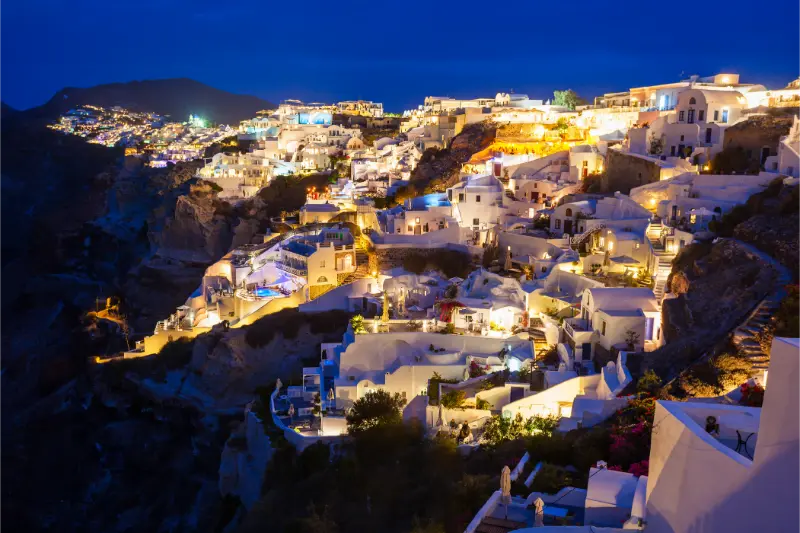
Oia Santorini Guide is the focus of this guide. Oia is the Santorini that appears on postcards: white cave houses, blue domes, windmills and terraces balanced on the caldera rim. It is also one of the busiest small villages in Greece, so the quality of a visit depends less on ticking off viewpoints and more on timing your walks, choosing the right base and understanding how the village changes between early morning, cruise-ship hours and sunset.
The best way to enjoy Oia is to treat it as a lived-in cliffside village rather than a single sunset stop. Stay long enough to walk it before breakfast, descend to Ammoudi when the lanes are busy, and return after sunset when day visitors begin to leave. That rhythm creates a much calmer experience than arriving at 17:00 with everyone else.
At a glance
| Best for | Couples, first-time Santorini visitors, photographers and travellers who enjoy walking |
|---|---|
| Ideal stay | 2 nights in Oia, or a half-day plus sunset if based elsewhere |
| Car needed? | No for the village itself; useful only for exploring the wider island |
| Main challenge | Crowds, steps, heat and expensive caldera-view accommodation |
Why this place deserves time in your Greece itinerary
A good visit is less about collecting landmarks and more about understanding how the destination works. Oia is the Santorini that appears on postcards: white cave houses, blue domes, windmills and terraces balanced on the caldera rim. It is also one of the busiest small villages in Greece, so the quality of a visit depends less on ticking off viewpoints and more on timing your walks, choosing the right base and understanding how the village changes between early morning, cruise-ship hours and sunset.
My planning approach here is simple: build the day around the strongest local experiences, leave breathing room for weather and crowds, and use nearby destinations only when they add something genuinely different. The best way to enjoy Oia is to treat it as a lived-in cliffside village rather than a single sunset stop. Stay long enough to walk it before breakfast, descend to Ammoudi when the lanes are busy, and return after sunset when day visitors begin to leave. That rhythm creates a much calmer experience than arriving at 17:00 with everyone else.
What to see and do
Caldera lanes and blue-domed viewpoints
Start with the upper pedestrian lanes while they are quiet. The famous blue-domed views are beautiful, but the real pleasure is the sequence of small churches, hidden terraces, stairways and changing angles across the caldera. Keep noise low around private homes and do not climb onto roofs or church property for photographs.
Photography is easiest early in the morning, when the light is softer and the lanes are less congested. In the middle of the day, use the side streets behind the caldera rim to move through the village; they are less scenic but much faster.
Oia Castle and sunset strategy
The ruins of the Venetian castle are the classic sunset gathering point. The view is broad and memorable, but the area becomes extremely crowded in high season and the narrow approaches can bottleneck. Arriving early helps, although waiting an hour or more is not always the best use of a short trip.
A smarter alternative is to choose a less famous section of the caldera rim, book a terrace for dinner, or watch the light change from a walking route before returning to the village after dark. Sunset in Oia is an atmosphere, not one compulsory square metre of pavement.
Ammoudi Bay
Ammoudi sits below Oia at the base of the cliffs. The descent is scenic and gives you a completely different perspective on the village. The harbour is known for waterfront tavernas and boat departures, and the rocks beyond the harbour are popular with confident swimmers when sea conditions are suitable.
Remember that the stairs back to Oia feel much harder in heat than they do on the way down. Carry water, wear proper shoes and avoid planning the climb at the hottest point of the afternoon. A taxi transfer can save energy if you are not comfortable with the ascent.
Foinikia and the quieter side of Oia
Foinikia, immediately east of Oia, is one of the easiest ways to experience Santorini architecture with fewer people. The village has cave houses, narrow lanes and a slower residential feel, while still being close enough to walk into Oia.
Staying here can also lower accommodation costs compared with the most famous caldera addresses. It is a particularly useful compromise for travellers who want Oia at sunrise and after dark without paying for a front-row sunset terrace.
Oia to Fira hike
The cliff path between Oia and Fira is one of Santorini’s signature walks. The full route is exposed, includes uneven surfaces and is best tackled in cooler hours. If you do not want the entire walk, even a shorter out-and-back section from Oia provides excellent views over the caldera.
For a full-day walking plan, read the Fira guide as well as the complete Santorini travel guide.
Where to stay
Caldera rim
Choose this if the view is the point of the trip and the budget allows it. Check the number of steps carefully; “central” does not mean easy access in a cliffside village.
Eastern and upper Oia
A little less dramatic but often easier for luggage, buses and taxis. It works well for short stays and travellers who plan to explore the whole island.
Foinikia
The best balance for many travellers: quieter, more local in feel and still walkable to Oia. It is also more practical for longer stays.
When choosing accommodation, look beyond the marketing label and check the exact map position, stairs, parking or transfer access, and walking time to the places you will use most. On Greek islands in particular, two hotels described as being in the same village can offer very different daily experiences because of gradients, pedestrian lanes or spread-out coastal development.
How to get there and get around
Buses connect Oia with Fira, where you can change for many other parts of Santorini. Taxis and private transfers are useful with luggage because vehicle access inside the pedestrian core is limited. If you rent a car, treat it as transport for the island rather than for Oia itself; parking near the village can be frustrating at peak times.
For short stays, it is usually better to choose one transport strategy rather than mixing a rental car, taxis and tours every day. If the destination is walkable, keep car days for the places that genuinely need one. If you do rent, photograph the vehicle at collection, understand fuel and insurance conditions, and never assume an attractive coastal track is suitable for a standard rental car.
A realistic itinerary
Day 1
Arrive before late afternoon if possible, settle in, walk the caldera lanes and choose a sunset location away from the most congested pinch points. Have dinner after the sunset rush rather than trying to leave immediately.
Day 2
Walk Oia early, photograph the village in soft light, descend to Ammoudi for lunch or a boat outing, and explore Foinikia later in the day. If you enjoy hiking, replace the afternoon with part of the Oia–Fira trail.
Day 3
If you have a third day, use it for Akrotiri, the volcanic beaches or a caldera cruise. The Akrotiri guide helps turn the archaeological site into a realistic half-day plan.
Best time to visit
May, early June, late September and October usually provide the best balance of warm weather and somewhat lighter pressure. July and August are beautiful but intense: plan outdoor walking in the morning and late afternoon, and assume the sunset area will be busy. Winter is much quieter, although some tourism businesses operate reduced schedules.
Weather is only one part of timing. Ferry frequency, boat excursions, seasonal restaurants and opening hours can also change outside the main summer period. In peak season the opposite problem appears: almost everything is operating, but parking, restaurant reservations and popular viewpoints require more patience. Build flexibility into the plan rather than trying to optimise every hour.
Food and evenings
Oia has everything from casual bakeries to high-end tasting menus. For a more relaxed meal, look beyond the most photographed caldera terraces and consider Ammoudi for seafood or the back lanes for simpler tavernas. Reservations matter at popular sunset restaurants; spontaneous dining is easier if you eat earlier or later than the main rush.
A useful rule for a better Greece trip is to separate the places you choose for a view from the places you choose for food. Sometimes they are the same restaurant, but not always. Walk one or two streets away from the most obvious waterfront or viewpoint, read the menu before sitting down, and leave room for a bakery breakfast, a simple taverna lunch and one longer dinner rather than making every meal an event.
Practical tips for different travellers
Couples
Couples can make the destination feel more relaxed by avoiding the most obvious sunset rush and booking one slower evening with no transport after dinner. A room with a view is worthwhile only if you will actually spend time there; otherwise put the budget into location, a boat trip or a special meal.
Families
Families should check gradients, shade, beach entry and transfer logistics before booking. A beautiful old-town room can become inconvenient with a stroller, while a resort outside the centre may require repeated taxis. Keep the hottest hours simple and build in a swim, playground or rest period rather than expecting children to follow an adult sightseeing pace.
Solo travellers
Solo travellers benefit from walkable bases and public transport, but should still plan the last connection of the day rather than assuming buses or boats run late. Joining a small-group excursion can be useful for remote sights, while self-guided mornings are ideal for photography and museums.
Road-trip travellers
If this stop is part of a larger road trip, resist the temptation to check out every morning. Two or three nights in one base often saves more time than it costs because packing, parking and check-in repeatedly can consume the best hours of the day.
Common mistakes to avoid
- Arriving only for the final hour before sunset and judging Oia entirely by the crowd.
- Booking a cave hotel without checking stairs, porter access and the exact route from the drop-off point.
- Trying to drive through or park directly beside the pedestrian core in peak evening hours.
- Climbing onto private roofs, churches or restricted terraces for photographs.
- Underestimating the climb back from Ammoudi in summer heat.
How to combine it with the rest of Greece
Oia works best as one piece of a broader Santorini itinerary. Pair it with Fira for museums and transport connections, Akrotiri for archaeology, and the Santorini guide for beaches, wineries and island-wide planning.

The most efficient itinerary usually moves geographically rather than bouncing back and forth. Check ferry days, driving times and airport locations before fixing hotel dates. On an island trip, one extra night in a well-connected hub is often more valuable than adding another island simply to increase the destination count.
FAQ
Is Oia worth staying overnight?
Yes if you value quiet early mornings and evenings. Day visitors see the village at its busiest; overnight guests get its best hours.
How long do you need in Oia?
A half-day covers the main lanes and sunset, but two nights make the experience far more relaxed.
Can you visit Oia without a car?
Yes. Buses, taxis and transfers are enough, and most of Oia is explored on foot.
Is Oia suitable with children?
It can be, but steps, unprotected edges, heat and crowds require closer supervision. A flatter base elsewhere may be easier with a stroller.
Where is the best sunset spot?
There is no single best place. The castle is famous, but quieter caldera viewpoints and terraces can be more enjoyable.
Final advice
Plan enough structure to protect the important parts of the trip, but leave room to change the order when weather, crowds or local advice suggest a better option. That flexibility is often what turns a busy Greece itinerary into a trip that actually feels like a holiday.