
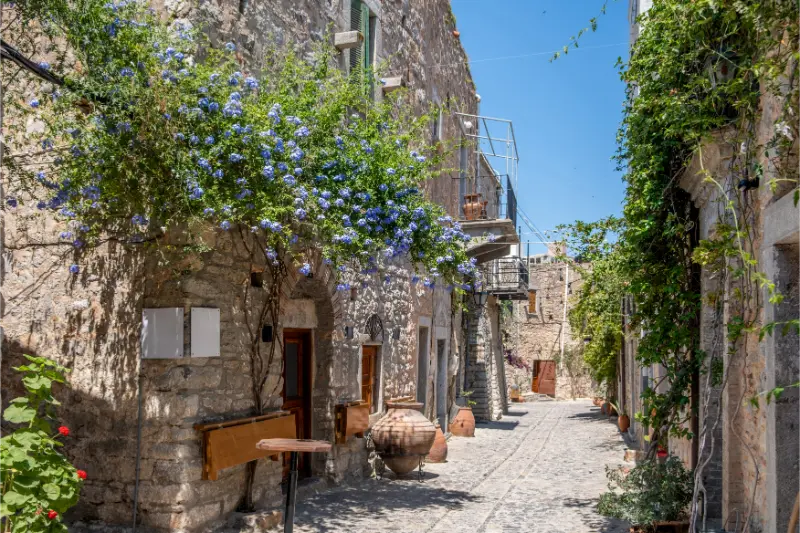
Chios is an island with a remarkably strong identity. In the south, medieval villages are tied to the cultivation of mastic; near the capital, Kampos is filled with old estates and citrus gardens; elsewhere the coastline alternates between pebbled bays and remote coves. The result feels culturally dense and very different from the white-and-blue Cyclades image.
I would recommend Chios to travellers who like road trips, architecture and food as much as beaches. A week lets you explore the mastic villages properly instead of compressing them into a rushed day tour.
Why visit Chios?
The mastic landscape is unique. Villages such as Pyrgi and Mesta preserve fortified forms and decorative traditions, while mastic cultivation continues to shape local products and identity.
Chios also offers Byzantine heritage, maritime history, citrus estates and a long north-south geography. It feels like an island you discover in layers rather than a destination organised around one famous beach.
Where to stay
Most first-time visitors benefit from a car and one or two bases depending on trip length.
Chios Town
The practical base for airport, port, museums and evening life. Best for the first or last nights.
Kampos
A distinctive area south of town with walled citrus estates and a quieter atmosphere, while remaining close to transport.
Mesta
A memorable southern base inside a medieval mastic village, especially good for couples and travellers who value evening atmosphere.
Northern Chios
The north is quieter and more mountainous, suitable for repeat visitors who want remote villages and fewer tourism services.
Best things to do
Walk through Pyrgi
Pyrgi is famous for the geometric black-and-white façade decoration known as xysta. Explore beyond the central square to appreciate the village structure.
Stay late in Mesta
The fortified lanes are atmospheric after day visitors leave. Evening is the best time to feel the village rather than simply photograph it.
Explore Kampos
Old mansions, high stone walls and citrus gardens create a landscape unlike other Greek islands. Respect private property and use organised visits where available.
Learn about mastic
Understand how mastic is cultivated and processed in southern Chios. The product appears in sweets, liqueurs, cosmetics and savoury cooking.
Visit Nea Moni
This important Byzantine monastery is a major cultural stop. Dress appropriately and check current visitor hours before making the drive.
Choose a beach day by wind
Chios has very different beaches around the island. Let wind direction and your route determine the day instead of driving long distances to one famous name.
Beaches and nature
The coastline is varied, from volcanic-looking pebbles to clear coves and broader beaches. Mavra Volia is especially distinctive for dark pebbles, while other bays are easier for long family beach days.
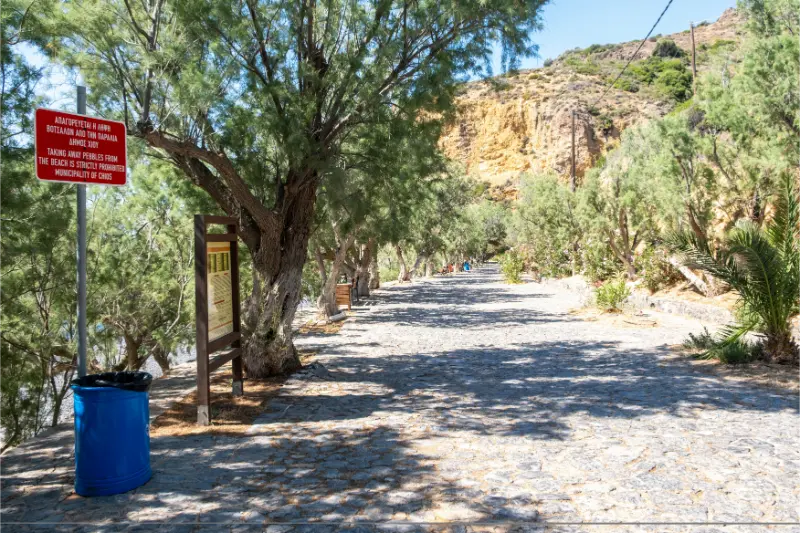
The interior contains dry southern mastic country, citrus landscapes and more rugged northern terrain. This environmental variety is one reason a road trip feels worthwhile.
Food and local character
Chios is exceptionally strong for food-minded travellers. Mastic is the signature ingredient, but local citrus, cheeses, pasta, seafood, spoon sweets, ouzo and souma also shape the table.
Do not limit mastic to souvenirs. Try it in different forms and learn how the trees are cultivated; the agricultural process gives the flavour more meaning.
How to get there
Chios has an airport close to Chios Town and ferry links to Piraeus and other Aegean destinations. Flights are efficient for a short trip, while ferries can fit a longer North Aegean itinerary.
As with other eastern Aegean islands, ferry travel can be lengthy. Overnight services may be practical but should be planned around cabin availability and arrival times.
Getting around
A rental car is strongly recommended for mastic villages, remote beaches and the north. The road network is extensive but includes winding mountain sections.
If you stay only in Chios Town, buses and organised trips can cover major highlights, but you lose much of the flexibility that makes the island rewarding.
How many days do you need?
Six to seven days is ideal for a first visit. Four days can cover Chios Town, Kampos and the southern villages, but not the whole island comfortably.
A practical 7-day Chios itinerary
Day 1 – Chios Town
Explore the waterfront, market area and museums, keeping the arrival day easy.
Day 2 – Kampos
Spend time in the citrus-estate landscape and combine it with a nearby beach.
Day 3 – Pyrgi and Mavra Volia
Focus on southern Chios, leaving enough time to walk Pyrgi slowly before swimming.
Day 4 – Mesta and Olympi
Explore fortified villages and stay for dinner in the south if possible.
Day 5 – Nea Moni and central Chios
Make heritage the priority and add only one or two nearby stops.
Day 6 – Northern road trip
Drive north for villages, viewpoints and a quieter coastline.
Day 7 – Flexible beach and food day
Repeat your favourite region, buy local products and keep departure logistics simple.
Best time to visit
June and September balance warm sea with comfortable sightseeing. July and August are hotter and busier but have the fullest seasonal services.
Spring is excellent for road trips, flowers and cultural sightseeing. Autumn can be attractive for food and village travel if ferry and hotel schedules work.
Is it a good choice for families?
Chios is good for families who enjoy a mix of beaches and cultural stops. Medieval villages feel like open-air mazes and can be engaging for older children.

Keep drive times realistic and select beaches with simple parking and facilities for younger children.
Budget and booking tips
Accommodation prices change sharply with season, location and room type. I prefer to compare a few bases before booking rather than choosing the first hotel that looks inexpensive. A cheaper room far from the places you actually want to see can cost more once transport, parking and lost time are included.
For ferries, flights, rental cars, boat trips and guided activities, treat schedules and prices as dynamic. Check the operator again shortly before travel, especially outside July and August. Weather can affect sea transport, while seasonal businesses may open later in spring or close earlier in autumn.
Mistakes to avoid
Do not try to see every mastic village in one day. Pyrgi and Mesta deserve unhurried time, and the pleasure comes from walking rather than ticking names off a list.
Do not assume all roads are quick because the island looks manageable on a map. Northern and interior drives can take longer than expected.
Who Chios suits best
Chios works best for travellers who are comfortable giving a destination enough time to reveal its character. If your priority is to collect as many islands or regions as possible in a single week, this may feel slower than expected. If instead you enjoy mixing beaches or landscapes with local food, village walks, cultural stops and unplanned pauses, the trip becomes much more rewarding. Couples can build quiet evenings around scenic towns, solo travellers gain flexibility to follow weather and transport conditions, and repeat visitors to Greece will appreciate seeing a side of the country that is less dominated by the most internationally famous stops.

It is also a strong choice for independent travellers who like making decisions day by day. A rental vehicle can open up more options, but it should not turn the holiday into a driving challenge. Pick one main objective for each day, then add nearby stops only if time and energy allow. That approach keeps the itinerary useful for different ages and budgets and reduces the temptation to race from viewpoint to viewpoint.
Planning the pace of your trip
My preferred way to plan this kind of Greece trip is to separate transfer days from sightseeing days. Arrival and departure always take longer than the timetable suggests once luggage, check-in, parking, meals and possible delays are included. Treating those hours as real travel time makes the itinerary far more realistic. On full days, start early for exposed archaeological sites, long drives or hikes, then reserve the hottest part of the afternoon for lunch, swimming or rest.
Keep at least one half-day flexible. Wind, heat, ferry changes or a beach you unexpectedly love can easily change priorities. A flexible block prevents one cancelled boat trip or poor-weather morning from becoming a problem. It also leaves space for the experiences that are difficult to schedule in advance: a village festival, a recommendation from a hotel owner, a quiet cove discovered on the road or simply the decision to stay longer over lunch.
How to combine Chios with the rest of Greece
Chios can pair with Lesvos or Samos when ferry schedules align, but a full week on Chios alone is never wasted.
If food traditions are a major priority, compare Chios with Sifnos; each expresses local cuisine in a very different way.
Frequently asked questions
What is Chios famous for?
Mastic, medieval villages, citrus estates, Byzantine heritage and a varied coastline.
How many days?
Six or seven days is ideal for a first road trip.
Do I need a car?
A car is strongly recommended for the villages and beaches beyond Chios Town.
Where should I stay?
Chios Town is easiest; adding Mesta or another regional base creates a more immersive trip.
Is Chios good for beach holidays?
Yes, but its cultural and culinary experiences are just as important as the beaches.
Practical final advice
Build your days around geography rather than a checklist. Group nearby beaches, villages and sights together, leave room for a long lunch or an unexpected swim, and avoid crossing the same area repeatedly. This matters even more on islands and mountain roads, where short distances can take longer than they appear on a map.
Carry water, sun protection and shoes suitable for uneven ground. Download an offline map before remote drives or hikes, and do not rely on mobile coverage in every cove or mountain village. If a route uses an unpaved road, confirm the conditions locally and check whether your rental agreement permits it.
Most importantly, allow the destination to feel different from the headline islands. The value of this trip is not in reproducing Santorini or Mykonos somewhere else, but in experiencing its own landscapes, food, architecture and daily rhythm. A slower itinerary usually produces a better trip than adding another island simply because it fits on the map.
Useful official information
For destination updates and inspiration, consult the Greek National Tourism Organisation: Visit Greece – Chios. Always recheck transport timetables and seasonal opening details close to your travel dates.