
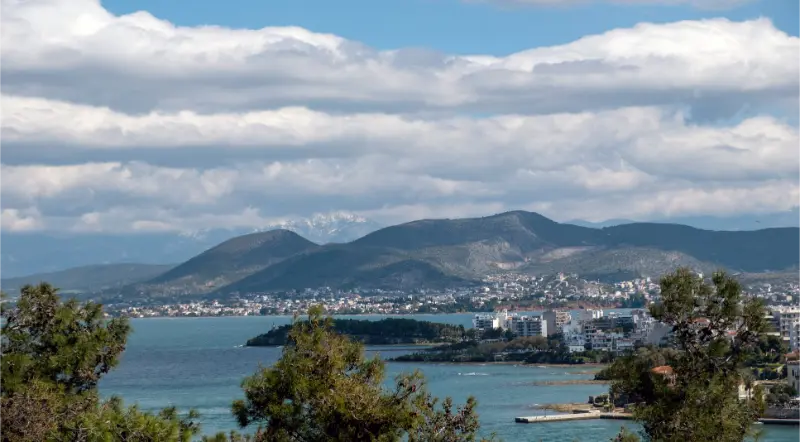
Chalkida is the easiest introduction to Evia because it sits exactly where the island nearly touches mainland Greece. Bridges make arrival simple, the waterfront feels lively year-round and the Evripos Strait gives the city a natural phenomenon that is genuinely worth pausing to watch.
Many travellers drive straight through Chalkida on the way north or south, but one night makes an Evia road trip more relaxed and adds an urban counterpoint to beaches and mountains. For the bigger picture, see the Evia travel guide.
Why this place deserves more than a quick stop
The city is both gateway and destination. The old sliding bridge, waterfront promenade, seafood culture and Karababa Castle create enough for a short break, while road connections make it practical before continuing elsewhere on Evia.
Visit Greece describes Chalkida as a favourite short escape from Athens and highlights the Evripos tidal phenomenon, where water direction changes approximately every six hours. The city’s geography makes that movement visible in a way few urban waterfronts can match.
At a glance
| Best for | Weekend breaks, road-trip gateways, waterfront dining and unusual natural phenomena |
| Ideal time | 1–2 days |
| Main base | Central waterfront near the old bridge |
| Transport | Walk in centre; car or bus for wider Evia |
| Pair it with | Eretria, Edipsos or southern Evia |
What to see and do
Chalkida is compact enough that a first visit can focus on the strait and historic viewpoints rather than driving between attractions.
- Watch the current at the Evripos old bridge.
- Walk both sides of the waterfront at different times of day.
- Visit Karababa Castle on Kanithos Hill for city views.
- Eat seafood or meze near the water.
- Use the city as an overnight transition before an Evia road trip.
The Evripos “crazy waters”
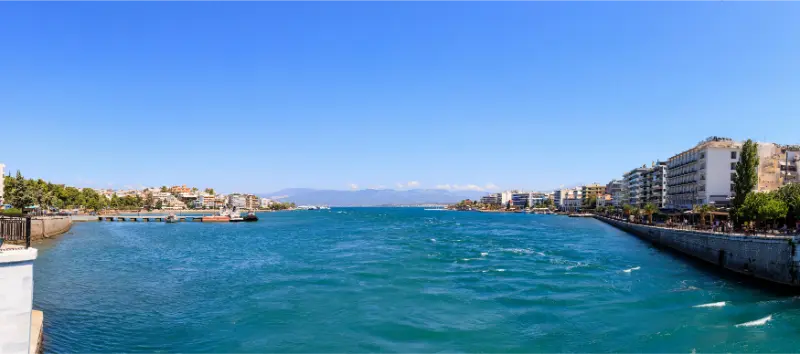
The strait is the city’s defining feature. Currents reverse direction in a complex tidal pattern, and the old bridge area is the easiest place to observe the water moving through the narrow channel. Do not worry about memorising an exact reversal time from a blog; the pattern is affected by cycles and local conditions.
Ask locally or observe the water more than once if the phenomenon is a priority. Even when the reversal itself is not dramatic, the speed and texture of the current make the strait feel very different from a typical harbour.
Karababa Castle and the city from above
Karababa Castle sits on Kanithos Hill opposite the central waterfront. The elevated position helps you understand Chalkida’s strategic control of the strait and gives one of the best city panoramas.
Combine the castle with the waterfront rather than treating it as a separate half-day excursion. Visit in comfortable light, then return to the old bridge for an evening meal and another look at the currents.
A practical route that works
A simple walking-and-viewpoint plan is enough for a satisfying first day.
- Start at the old bridge and watch the strait.
- Walk the waterfront and central streets.
- Cross toward Kanithos and visit the castle area.
- Return for late lunch or coffee by the water.
- See the bridge again after dark when the city atmosphere changes.
On day two, leave the centre and begin your Evia route rather than adding too many minor urban stops.
Getting there
Chalkida is connected to mainland Greece by road bridges and is roughly 79 km from Athens according to Visit Greece. That direct access is one reason Evia feels easier than ferry-dependent islands.
Rail and bus options can also serve Chalkida depending on schedules. If the city is the start of a larger Evia trip, a rental car becomes more useful after the central stay than during it.
Getting around
Central Chalkida is walkable. Leave the car parked when possible because the waterfront experience is much better on foot.
For wider Evia, driving becomes the practical choice: the island is long, and beach, mountain and spa destinations are spread far apart.
Where to stay
Choose the central waterfront for a first stay. You gain easy evening walks, restaurants and access to the bridge without needing to drive.
If you are only transiting, accommodation with secure parking on the edge of the centre can be more practical than squeezing into the busiest streets.
Food and local rhythm
The water is central to Chalkida’s food identity. Seafood, ouzo or tsipouro-style meze and long waterfront meals fit the city better than rushing through a motorway stop.
Do not assume the restaurant with the closest table to the old bridge is automatically the best. Walk a little, compare menus and choose the atmosphere you want.
Best time to visit
Chalkida works year-round better than a small resort island. Spring and autumn are ideal for walking, while summer evenings bring strong waterfront energy.
Winter can be an attractive option for food and city breaks, especially if your trip focuses on mainland Greece rather than beaches.
How long do you need?
One night is enough for the bridge, castle, waterfront and dinner. Two nights give a slower start to an Evia trip.

Do not base an entire week here if your goal is to explore the island; distances to north and south are significant.
A realistic mini-itinerary
- Day 1: old bridge, waterfront walk, Karababa Castle and evening meal by the strait.
- Day 2: breakfast, one final bridge stop, then drive toward your chosen Evia region.
- Optional: use Chalkida as a weekend base with an Eretria excursion.
Mistakes to avoid
- Driving through without stopping at the strait.
- Expecting the current reversal to happen on a simple fixed hourly timetable.
- Keeping the car for every central errand.
- Assuming north and south Evia are short drives from the city.
Chalkida is best understood as a gateway worth inhabiting for a night, not merely a road junction.
Responsible travel and practical etiquette
Walk the centre when practical and use established viewpoints rather than leaning into traffic lanes for bridge photographs. The old bridge area is active urban infrastructure, not a pedestrian-only attraction.
Support year-round restaurants and local shops if you visit outside summer; this is a real regional city, not a seasonal resort.
How to combine it with the rest of Greece
Continue north toward the Loutra Edipsou guide for thermal springs, or south toward Karystos and Dimosari Gorge for a more mountainous road trip.
The Evia road-trip guide explains why you should normally use more than one base on the island.
Useful official information
The official Visit Greece Chalkida page covers the Evripos phenomenon, old bridge, Karababa Castle and road distances.
FAQ
Is Chalkida on an island?
Yes. Chalkida is the capital and main gateway of Evia, which is connected to mainland Greece by bridges.
What is the Evripos phenomenon?
Strong tidal currents in the narrow strait change direction in a distinctive cycle, visible around the old bridge.
Can I visit from Athens in a day?
Yes, but one overnight gives you the evening waterfront and makes an onward Evia road trip easier.
Do I need a car?
Not for central Chalkida. A car is very useful for exploring the rest of Evia.
How long should I stay?
One or two days are enough for a first visit.
Final thoughts
Chalkida is not the kind of Greek destination that depends on one ancient ruin or famous beach. Its character comes from the moving water, bridges and everyday waterfront life.
Stop here before racing into Evia. One evening by the strait makes the rest of the island feel like a journey rather than a sequence of long drives.
Extra planning notes
Before locking in accommodation, compare the real transfer sequence for your dates rather than relying on a generic map. Greek island and regional travel is often simple once you are there, but seasonal timetables, wind, road conditions and the location of your hotel can change how a day feels. I prefer to leave one part of the itinerary intentionally flexible: a beach can move to another day, a hike can start earlier, and a boat trip can shift when the sea is calmer. This is especially useful in places where the landscape is the attraction, because forcing an activity in poor conditions rarely creates the experience you imagined.
A second practical rule is to plan around energy as much as distance. A short drive followed by stairs, heat or a long swim may be more tiring than a longer transfer on paper. Build in shade, water, unhurried meals and time to return to your base before dinner. That slower rhythm is not wasted time; it is often what separates a holiday that feels like a sequence of logistics from one that actually feels like Greece.
Practical pacing for a better trip
One final detail that improves this trip is to keep the day deliberately under-filled. Leave room for a delayed bus, a longer meal, a change in wind or a viewpoint that deserves more time than expected. In Greece, the most frustrating itineraries are often the ones that look perfectly efficient on paper. A realistic plan has enough slack to move an outdoor activity, return to the hotel for a break or stay longer in a village without creating a chain of missed reservations.
If you are travelling in the busiest summer weeks, start earlier than you think you need to and avoid making the hottest part of the afternoon your most demanding walking period. Carry water, use sun protection and check local advice for fire risk, trail access and sea conditions. These small choices are more useful than adding another attraction to the schedule, and they make the destination feel more relaxed and personal.