

Evia is Greece’s second-largest island, yet it often feels more like a mainland road-trip region because bridges connect it directly to Central Greece. That accessibility makes it easy to overlook, which is a mistake: the island stretches through beaches, mountains, thermal springs, archaeological sites and very different northern and southern landscapes.
I would choose Evia for travellers who want to rent a car and explore without depending on ferries every few days. It works particularly well from Athens, but its size means a proper itinerary needs realistic distances and at least a week.
Why visit Evia?
Evia’s advantage is diversity and flexibility. Chalkida makes a convenient gateway, Eretria adds archaeology, Edipsos is known for thermal waters, the north has forested scenery and Lichadonisia boat trips, while Karystos opens the mountainous south around Mount Ochi.
It is also easier to combine with mainland Greece than most islands. You can drive in, change regions during the trip and continue toward Pelion, Delphi or Athens without building everything around ferry departures.
Where to stay
For a seven-day trip, use at least two bases. Evia is far too large for daily out-and-back drives from one town.
Chalkida
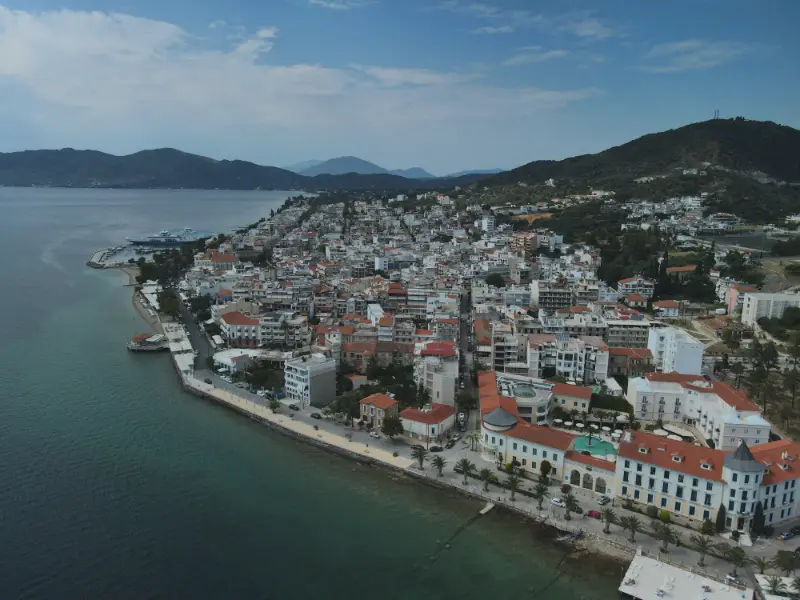
The main gateway and a good first night from Athens. Its waterfront and Evripos tidal phenomenon make it more than a transit stop.
Eretria
A relaxed seaside base with ancient remains and easy access to central-southern Evia.
Edipsos / north Evia
Best for thermal-spring culture and exploring the north, including boat trips toward Lichadonisia.
Karystos
The key southern base for beaches, Mount Ochi landscapes and Dimosari Gorge.
Best things to do
Watch the water at Chalkida
The Evripos Strait is known for unusual tidal currents that change direction. The old bridge area is the best place to experience the city’s defining feature.
Explore ancient Eretria
Combine the archaeological site and museum area with a relaxed waterfront afternoon.
Experience Edipsos
The spa town is famous for thermal waters. Check current facilities and health guidance before choosing public or hotel-based bathing options.
Take a Lichadonisia boat trip
Seasonal excursions reach small islets off north-western Evia. Weather, boat type and departure point should guide your choice.
Discover Karystos
The southern town is an excellent base for a very different Evia, with mountains, beaches and outdoor activities.

Hike near Mount Ochi
The Dimosari Gorge and Dragon House landscapes are highlights for experienced walkers. Use current local route advice and suitable footwear.
Beaches and nature
Evia’s coastline is enormous and includes both Aegean-facing beaches and calmer gulf-facing shores. Wind and road access vary greatly, so each region deserves its own beach strategy.
Wildfires have affected parts of Evia in recent years, especially in the north. Landscapes continue to recover, and responsible travel means respecting closures, fire-risk restrictions and local guidance.
Food and local character
The island is strong in seafood, meat, dairy products, figs, honey and mountain produce. Culinary character changes between coastal towns and inland villages.
Road trips are ideal for spontaneous taverna stops, but avoid driving long distances after heavy meals or alcohol, especially on winding mountain roads.
How to get there
Chalkida is connected to mainland Greece by bridges, so most road trippers simply drive from Athens. Additional ferry crossings can be useful for specific parts of the island, especially if approaching from different mainland coasts.
Because you are not dependent on a ferry to enter through Chalkida, Evia is a useful backup when strong winds disrupt island-hopping plans elsewhere.
Getting around
A car is the best way to experience Evia. The island is long, and public transport is not designed for a visitor trying to connect remote beaches, spa towns and mountain villages.
Avoid treating the entire island as a day trip from Athens. Chalkida can work as a day trip, but the wider island needs overnight stays.
How many days do you need?
Seven days is a realistic introduction. Ten to fourteen days is better if you want both far north and far south without spending every day in the car.
A realistic 7-day Evia road trip
Day 1 – Athens to Chalkida
Drive to Chalkida, walk the waterfront and watch the strait near the old bridge.
Day 2 – Eretria and central coast
Visit ancient Eretria and continue to a nearby beach or village.
Day 3 – Drive north
Move toward Limni or Edipsos, stopping along the way rather than trying to reach the far north quickly.
Day 4 – Edipsos and Lichadonisia area
Use the day for thermal-spa culture or a seasonal boat excursion, depending on weather.
Day 5 – Return toward central Evia
Break the long drive with a beach or village stop and change base.
Day 6 – Karystos region
Explore the south around Karystos, focusing on coastline and mountain scenery.
Day 7 – Final south-Evia day
Choose a hike, beach or archaeological stop before returning toward Athens.
Best time to visit
Late spring and early autumn are excellent for road trips and hiking. Summer is ideal for beaches but can be hot, and fire-risk restrictions may affect forest access.
Winter and spring make sense for spa towns and city breaks, while mountain areas can feel completely different from the summer island image.
Is it a good choice for families?
Evia is excellent for families with a car because you can choose easy beaches, apartments and flexible stops without ferry pressure.
The main challenge is distance. Keep children comfortable by changing base rather than attempting very long day drives.
Budget and booking tips
Accommodation prices change sharply with season, location and room type. I prefer to compare a few bases before booking rather than choosing the first hotel that looks inexpensive. A cheaper room far from the places you actually want to see can cost more once transport, parking and lost time are included.
For ferries, flights, rental cars, boat trips and guided activities, treat schedules and prices as dynamic. Check the operator again shortly before travel, especially outside July and August. Weather can affect sea transport, while seasonal businesses may open later in spring or close earlier in autumn.

Mistakes to avoid
The biggest mistake is underestimating the island’s length. North and south Evia should be treated almost like separate regions.
Do not rely only on famous beach photos. Road conditions, wind and seasonal access can make a less famous nearby beach the better choice on the day.
Who Evia suits best
Evia works best for travellers who are comfortable giving a destination enough time to reveal its character. If your priority is to collect as many islands or regions as possible in a single week, this may feel slower than expected. If instead you enjoy mixing beaches or landscapes with local food, village walks, cultural stops and unplanned pauses, the trip becomes much more rewarding. Couples can build quiet evenings around scenic towns, solo travellers gain flexibility to follow weather and transport conditions, and repeat visitors to Greece will appreciate seeing a side of the country that is less dominated by the most internationally famous stops.
It is also a strong choice for independent travellers who like making decisions day by day. A rental vehicle can open up more options, but it should not turn the holiday into a driving challenge. Pick one main objective for each day, then add nearby stops only if time and energy allow. That approach keeps the itinerary useful for different ages and budgets and reduces the temptation to race from viewpoint to viewpoint.
Planning the pace of your trip
My preferred way to plan this kind of Greece trip is to separate transfer days from sightseeing days. Arrival and departure always take longer than the timetable suggests once luggage, check-in, parking, meals and possible delays are included. Treating those hours as real travel time makes the itinerary far more realistic. On full days, start early for exposed archaeological sites, long drives or hikes, then reserve the hottest part of the afternoon for lunch, swimming or rest.
Keep at least one half-day flexible. Wind, heat, ferry changes or a beach you unexpectedly love can easily change priorities. A flexible block prevents one cancelled boat trip or poor-weather morning from becoming a problem. It also leaves space for the experiences that are difficult to schedule in advance: a village festival, a recommendation from a hotel owner, a quiet cove discovered on the road or simply the decision to stay longer over lunch.
How to combine Evia with the rest of Greece
Evia combines naturally with Pelion on a longer central-Greece road trip, though the exact route depends on which part of the island you finish in.
It also works before or after Athens, especially for travellers who prefer driving to ferry-heavy island hopping.
Frequently asked questions
Is Evia really an island?
Yes. It is an island, but bridges at Chalkida connect it directly to mainland Greece.
Can I visit Evia without a ferry?
Yes. You can drive across the bridges at Chalkida.
How many days do I need?
A week is a good introduction; longer is better for both north and south.
Do I need a car?
For a broad road trip, yes.
Is Evia close to Athens?
Chalkida is relatively close by road, but the island extends far beyond the gateway city.
Practical final advice
Build your days around geography rather than a checklist. Group nearby beaches, villages and sights together, leave room for a long lunch or an unexpected swim, and avoid crossing the same area repeatedly. This matters even more on islands and mountain roads, where short distances can take longer than they appear on a map.
Carry water, sun protection and shoes suitable for uneven ground. Download an offline map before remote drives or hikes, and do not rely on mobile coverage in every cove or mountain village. If a route uses an unpaved road, confirm the conditions locally and check whether your rental agreement permits it.
Most importantly, allow the destination to feel different from the headline islands. The value of this trip is not in reproducing Santorini or Mykonos somewhere else, but in experiencing its own landscapes, food, architecture and daily rhythm. A slower itinerary usually produces a better trip than adding another island simply because it fits on the map.
Useful official information
For destination updates and inspiration, consult the Greek National Tourism Organisation: Visit Greece – Evia. Always recheck transport timetables and seasonal opening details close to your travel dates.