

Hiking is one of the best reasons to choose Folegandros over a more resort-oriented Cycladic island. Old paths connect Chora, Ano Meria, chapels, farmsteads, beaches and the lighthouse, often crossing a landscape where dry-stone walls are as important as the views. The distances are modest, but the sun and exposure make route planning more important than the kilometre count suggests.
The official tourism information describes dozens of paths across the island. I would treat the network as a set of corridors rather than a single long-distance trail. That makes it easy to combine walking with the bus or a beach boat and avoid repeating every climb.
| Best easy walk | Chora to Panagia |
| Best village-landscape walk | Chora / Ano Meria corridor |
| Best hike + beach | Ano Meria to Livadaki |
| Best short coastal extension | Agali to Fira or Galyfos |
| Best landmark | Aspropounta Lighthouse |
| Main hazard | Heat, exposure, wind and underestimated return climbs |
Chora to Panagia
This is the simplest introduction. The paved zigzag climbs from Pounta to Panagia in around 15 minutes according to the official church page. It is not a wilderness hike, but it shows immediately how vertical the island can feel. Go early or late and use it to judge how you handle the heat before attempting longer routes.
Chora to Ano Meria
Walking between the two main settlements reveals agricultural Folegandros better than driving the road. Depending on the exact historic path you choose, expect stone walls, chapels, terraces and open views. Because paths intersect the modern road in places, an offline map is valuable. The local bus creates an easy bailout if you arrange the day around current times.
Ano Meria to Livadaki and the lighthouse
This is the classic active day. The official Livadaki page describes three paths from Ano Meria and roughly 45–60 minutes to the beach. From the bay, Aspropounta Lighthouse is a short extension. The challenge is the return: climb back, or coordinate a boat to Agali if services are operating.
Carry all food and water. Livadaki has no services, and the lighthouse section is exposed. The one-way hike plus boat return is excellent, but never assume the boat is guaranteed without same-day confirmation.
Agali to Fira and Galyfos
These are short coastal walks rather than full hikes, ideal for a recovery day. Fira lies a short walk from Agali and Galyfos in the other direction. They are useful examples of how Folegandros lets you add walking to a beach day without committing to a multi-hour route.
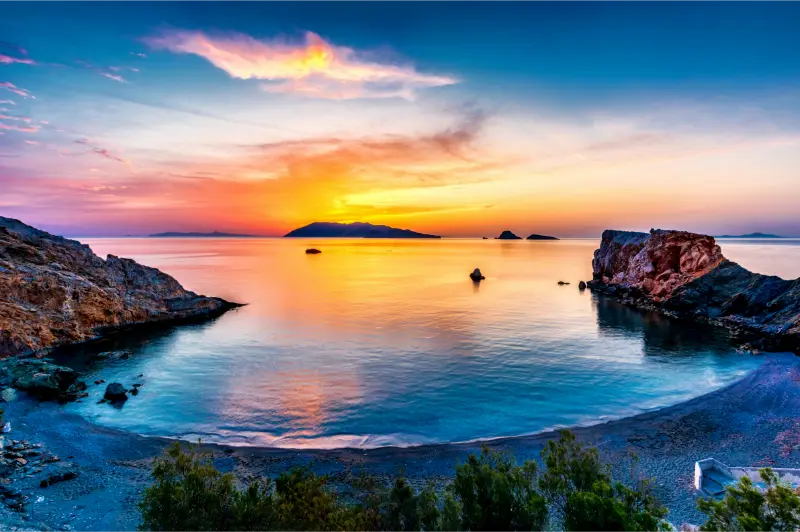
Katergo from Livadi
The official Katergo page describes around 30 minutes on foot from Livadi. The route is exposed and the beach has no water, so the total effort is greater than the walking time implies. Start early, use proper shoes and reserve energy for the return.
How to plan with buses and boats
The best Folegandros hikes do not always need to be out-and-back. A bus can position you in Ano Meria, or a beach boat can return you from Livadaki to Agali. This is efficient but introduces schedule risk. Build a backup plan that still works if the boat is cancelled or the bus interval is longer than expected.
Navigation and safety
Do not rely exclusively on phone signal. Download an offline map, photograph any route board at the start and carry a small power bank. Historic paths can fade at junctions where grazing tracks intersect. If you have not seen a marker or obvious path for several minutes, stop and reassess rather than continuing downhill because it “looks right”.
Summer heat is the main physical risk. Hike early, cover exposed skin, drink before you are thirsty and avoid ambitious midday climbs. In strong wind, cliff-edge paths and loose hats or gear become separate problems. If the day feels wrong, shorten the route; Folegandros will still be there tomorrow.
Best seasons for hiking
Spring and autumn are more comfortable than peak summer for long walks. Wildflowers, cooler temperatures and quieter paths improve the experience. In July and August, use early morning for longer routes and reserve afternoons for swimming, lunch or shaded village time.
How I would plan a day around Folegandros hiking
The easiest way to enjoy Folegandros hiking is to give it a clear role in the day rather than squeezing it between unrelated stops. Use one transport-assisted one-way walk and one shorter local route rather than stacking long exposed hikes on consecutive days. Folegandros is small on a map, but heat, wind, footpaths and waiting for a bus or boat can make short distances feel longer. Build the day around one coast or one walking corridor and keep a second option for changing conditions.
Buses between the main settlements and seasonal beach boats can turn out-and-back walks into one-way routes, but only when current schedules align. I would avoid making a tight sequence of reservations around transport that is seasonal or weather-dependent. A slower plan is not wasted time here: coffee in a square, a swim that lasts an hour longer than expected, or an early dinner after a hike is part of the reason to choose Folegandros over a larger resort island.
Who this experience suits best
Folegandros suits walkers who enjoy historic paths, open landscapes and combining hikes with beaches or villages. It is less suitable for travellers who need a long list of organised attractions every day. Folegandros works best when you are comfortable with simple routines, walking and choosing quality over quantity.
What to carry
- Water in a reusable bottle, with extra capacity for remote beaches or trails
- Sun protection: hat, sunglasses and high-SPF sunscreen
- Shoes with grip if the plan includes old paths or rocky approaches
- A light layer for windy evenings or exposed boat rides
- Offline maps or screenshots of the return route and current transport information
- Cash as a backup for small seasonal services or boat tickets
Common mistakes to avoid
The common mistake is judging a route only by distance. Exposure, lack of shade, loose surfaces and a steep return can make a 4 km day feel much harder than expected. Another common mistake is assuming that a place described as “close” is effortless to reach. On Folegandros, 2–4 km can involve strong sun, exposed paths, steep gradients or a bus that runs only at certain times. Match the day to your actual fitness and the weather, not to the map scale.
A final mistake is overplanning sunset. The island has beautiful evening light from many places, but racing from a beach to a famous viewpoint can turn a relaxed day into a stressful one. If the day is already working, stay where you are and enjoy the light there.
Continue planning your Folegandros trip
Use these guides together rather than as isolated checklists. Start with the main Folegandros Travel Guide and then open the specialist pages that match the way you want to travel: Chora Folegandros Guide; Karavostasis Folegandros Guide; Ano Meria Folegandros Guide; Agali Folegandros Guide; Katergo Beach Folegandros Guide; Livadaki Beach Folegandros Guide; Best Beaches in Folegandros; Folegandros Without a Car; Where to Stay in Folegandros.
Useful official sources before you go
For destination details I cross-check the official Folegandros visitor portal and Visit Greece. Beach boats, local buses, ferry schedules, museum hours and seasonal businesses can change, so verify time-sensitive details shortly before travel. The official island portal groups walking routes and individual destinations; use current local maps and ask about path condition if a route is important to your trip.
Frequently asked questions
Is Folegandros good for hiking?
Yes. Old paths link villages, chapels and remote beaches across a compact but exposed landscape.
What is an easy first walk?
The climb from Chora to Panagia is short and gives a good feel for the terrain.
What is the best hike to a beach?
Ano Meria to Livadaki is one of the most rewarding, especially if a boat return can be coordinated.
Do I need hiking boots?
Trail shoes or sturdy footwear with grip are enough for many routes; avoid smooth beach sandals on loose paths.
When is the best season?
Spring and autumn are most comfortable; in summer start longer walks early.
Best time to visit and how season changes the plan
May, June and September are the easiest months for balancing walking, swimming and village time. Paths are more comfortable outside the strongest heat, while most seasonal transport and restaurants are active. July and August bring the fullest island atmosphere and the widest choice of services, but shade is limited and accommodation should be booked earlier. In peak summer I would start any exposed walk before breakfast or immediately after it, then use the hottest hours for a long lunch or rest.
April and October can be excellent for quiet travel, but do not assume every beach boat, museum or seasonal taverna follows a summer timetable. The sea can also feel cooler and weather changes become more relevant. Winter is a different kind of trip: the island remains inhabited, yet tourism infrastructure and ferry frequency are reduced, so plan it as a local-life visit rather than a conventional beach holiday.
How to fit this into a first Folegandros itinerary
For a four-night first trip, I would use Chora as the main base and divide the island by direction. Give one day to the Agali side, one day to Ano Meria and a western-coast walk, and one day to Karavostasis/Katergo or another beach chosen by conditions. Keep arrival and departure days light. This structure avoids crossing the island repeatedly and leaves enough room to change plans if wind affects a beach boat.
With six nights, add a second slower beach day, a proper village lunch and one sunset that is not attached to a schedule. The extra time is particularly valuable for walkers because you can avoid doing a long hike in poor conditions simply because it is the only free day. Folegandros is small enough to understand quickly but rewarding enough that one unscheduled afternoon never feels wasted.
Leave a Reply