
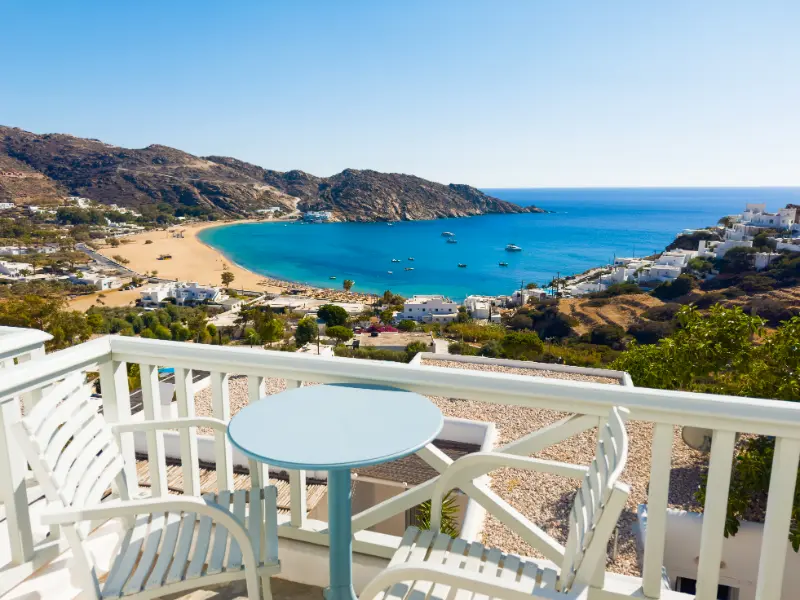
Walking is one of the best ways to discover the version of Ios that disappears behind nightlife marketing. Dry-stone walls, chapels, old agricultural routes and coastal paths connect landscapes that are easy to miss from a bus. Visit Greece currently describes a marked footpath network totalling about 13.5 kilometres, with routes from Mylopotas toward Klima, Chora toward Agia Theodoti, Chora through Skarkos, Agia Irini to Valmas and the climb from the Odysseas Elytis Theatre toward Profitis Ilias.
These are not high-Alpine expeditions, but summer heat, wind and rough ground can make a short route demanding. Use this guide alongside the Ios archaeology guide and the beach guide, because several walks make the most sense when combined with a cultural site or swim.
Quick trail chooser
| Easy coastal option | Agia Irini to Valmas |
| Culture + walking | Chora – Skarkos – Ellinika / Agia Triada |
| Views above Chora | Odysseas Elytis Theatre – Profitis Ilias |
| Longer cross-landscape feel | Chora toward Agia Theodoti |
| Beach-hike combination | Mylopotas toward Klima via Sapounochoma |
When to hike
May, June, September and early October are generally more comfortable than the hottest part of July and August. In midsummer, start early and plan to be off exposed slopes before the strongest heat. Evening walks can be excellent, but only if you know the route and have enough daylight to return safely.
Wind can make the air feel cooler while your body is still losing water. Carry more water than you think you need, use sunscreen and wear a hat. Do not rely on a beach bar being open at the end of a trail, especially outside peak season.
Agia Irini to Valmas
Visit Greece describes the coastal path from Agia Irini to Valmas as a gentle route ending at a beach. This is a strong first walk because it combines scenery with a clear reward. It is also easier to fit into an arrival or departure day if you are staying near the port.
Even on a gentle route, footwear matters. Loose stones and dry surfaces can be slippery. Carry swimwear and water, but also plan the return: a beach destination feels less relaxing if you reach it without knowing whether you are walking all the way back.
Chora to Skarkos and beyond
The route from Chora down toward Skarkos is the best walk for travellers interested in history. Visit Greece suggests continuing toward Ellinika and Agia Triada, passing a landscape of terraces and chapels. You can shorten the outing by making Skarkos the objective and returning, or extend it when temperatures and fitness allow.
Visit the Archaeological Museum in Chora before the walk if possible. The archaeology guide explains why the Early Cycladic settlement matters and how to avoid treating it as just another stone ruin.
Profitis Ilias above Chora
The climb toward Profitis Ilias begins around the Odysseas Elytis open-air theatre according to Visit Greece. It gains height above Chora and rewards you with broad sea and island views. This is the route to choose when you want elevation without driving to a remote trailhead.
Start early or go in late afternoon with enough daylight. Do not aim to reach a summit or chapel at the exact moment of sunset if that means descending unfamiliar terrain in darkness. A headlamp is small, light and worth carrying on evening walks.
Mylopotas toward Klima
This route leaves the famous beach environment and heads toward Klima via the sculpted rock landscape of Sapounochoma. It is a useful way to understand how quickly Ios changes once you step away from organised sand and bars. Because the trail is more exposed than a village walk, temperature and water become central planning factors.

Combine the walk with a swim only if you have preserved enough energy for the return. For a standard beach day, use the Mylopotas guide instead of turning every visit into a hike.
Chora toward Agia Theodoti
The older axis between Chora and Agia Theodoti passes through a dry agricultural landscape that feels far from Ios nightlife. This is the kind of walk where the journey matters more than a single viewpoint. Stone walls, chapels and terraces reveal how the island was used before tourism concentrated activity on the coast.
Treat it as a serious outing in hot weather. Check the exact route, current markings and return logistics before leaving. If you are uncertain about path conditions, ask locally or choose a shorter route rather than improvising across private land.
Navigation and safety
Download an offline map, but do not assume every digital line represents a maintained trail. Follow official markings where available. If a path becomes unclear, turn back rather than cutting across slopes. Close gates, respect livestock and avoid disturbing chapels or agricultural property.
Tell someone your route when walking alone. Carry a charged phone, identification, water and basic first-aid items. In summer, fire-risk restrictions can affect access to natural areas; obey municipal or civil-protection notices even if the trail was open the previous day.
What to wear
- Trail shoes or trainers with reliable grip
- Hat and sunglasses
- Lightweight breathable clothing
- A thin wind layer for exposed ridges
- Swimwear if the route ends at a beach
- At least one full water bottle; more for longer exposed walks
- Small headlamp for late-afternoon routes
Walking with children
Choose short routes with a clear objective: Valmas for a swim, Skarkos for archaeology or the windmills and theatre for views. Avoid exposed long walks in midday heat. Children who dislike “hiking” often enjoy a route much more when it leads to a beach or a story rather than a distance target.
The Ios with Kids guide focuses on easier family days and transport. A family holiday does not need to include the longest trail to benefit from the island’s walking landscape.
Frequently asked questions
How long is the marked hiking network?
Visit Greece currently describes a footpath network with a total length of about 13.5 km. Individual route conditions and markings should still be checked locally.
Can I hike in July and August?
Yes, but start very early, choose shorter routes and carry enough water. Midday exposed walking is a poor idea during hot spells.
Do I need hiking boots?
For most standard routes, sturdy trail shoes or trainers with good grip are more important than heavy boots. Avoid smooth sandals on loose or polished surfaces.
What is the easiest scenic walk?
Agia Irini to Valmas is a good coastal introduction, while the windmills and theatre area above Chora provides views with less commitment.
Continue planning
Pair walking with Chora, Skarkos and the archaeology sites, and the best beaches in Ios. The main Ios travel guide shows how to fit active days into a short stay.
Planning details that make a real difference
Ios looks compact on a map, but the island is hilly and summer heat changes how long simple journeys feel. Group each day geographically instead of bouncing from the port to the north, back to Chora and then to the south. One beach area plus one cultural or evening area is usually enough. This reduces transport time and leaves room for swims, meals and the unexpected delays that are normal on an island.

In July and August, protect the middle of the day. Use early morning for walking, archaeology or village exploration, then move to the beach, lunch or shade. September often keeps warm sea temperatures while making active days easier, but some seasonal services gradually reduce frequency. May and early June are attractive for walking and quieter travel, although the sea may feel cooler and not every beach business will operate at peak-summer hours.
Wind should remain a flexible part of the plan. The Meltemi can affect beaches, small boats and comfort even on a cloudless day. Ask locally which coast is behaving best rather than forcing a beach because it was written into the itinerary. This is also why cultural options in Chora are valuable: a windy morning can become a museum-and-village morning without feeling wasted.
For money, carry a payment card plus some cash. Do not rely on a single ATM on the day of departure, and keep enough cash for a taxi if a card terminal fails. If you are travelling in peak season, reserve accommodation and important ferry connections early, but leave ordinary beach days flexible.
How I would fit this into a first Ios trip
On a first four- or five-night visit, I would give one full day to Mylopotas, one to Manganari or another remote coast, one morning to Chora and archaeology, and one flexible block to hiking, a boat trip or the north. Evenings naturally return to Chora for sunset and food. This structure shows both the social and quiet sides of the island without turning the trip into a checklist.
Ferry times should shape the first and last day. If you arrive late, do not schedule a remote beach immediately; settle in, eat and walk through Chora. If you leave early, protect the final evening from transport stress by confirming the bus or taxi before dinner. The best island itinerary is not the one with the most stops, but the one that still feels enjoyable when wind, heat or ferry timing changes the order.
Leave a Reply