

Visit Kimolos without a car using Chorio as a base, seasonal buses, taxis, walking routes and boat taxis, with realistic advice on beaches, luggage and remote areas.
Kimolos rewards travellers who plan around its small scale rather than trying to treat it like a larger resort island. The practical details in this guide are designed for independent visitors: what is genuinely walkable, where transport saves time, how wind changes a beach day, and which places deserve unhurried time.
Quick planning notes
- Base yourself in Chorio for the broadest mix of food, buses, taxis and trail access.
- Check the current bus timetable after arrival because seasonal frequency can change.
- Use taxis strategically for one-way hikes or remote beach returns rather than every journey.
- Boat taxis can unlock secluded coastlines, but wind can suspend or change services.
Can you realistically enjoy Kimolos without a car?
Yes. Kimolos is one of the Cycladic islands where a car-free holiday can work well because distances are short, Chorio concentrates services and the municipality notes a bus linking the village, port and beaches. Walking paths extend the network further, while taxis and boats fill specific gaps. The key is accepting that you will not reach every remote cove on demand.
A car-free trip is easiest for travelers who enjoy walking, can adapt beach plans to the day’s transport and are comfortable spending several evenings in Chorio. If your priority is visiting multiple remote beaches each day with toddlers or heavy gear, a vehicle gives more freedom.
Why Chorio is the best base
Chorio places restaurants, groceries, the pharmacy, museums and many trailheads within walking distance. It is also the logical point for buses and taxis. Staying here means you can have a satisfying day even if wind cancels a boat or a bus time does not suit you: explore the castle, walk to a viewpoint, eat locally and reorganize the beach plan.
Psathi is the alternative for ferry convenience, but you will travel uphill to Chorio repeatedly. South-coast accommodation can be excellent for beach-focused stays, though evenings and transport become less flexible without your own wheels.
Using the seasonal bus
Local buses typically connect Chorio, Psathi and selected beaches during the visitor season. Routes and frequency can change from year to year and across the summer, so photograph the current timetable after you arrive and confirm the last return before committing to a beach day.
Build your plan around the bus you can actually catch rather than a generic online timetable. If the final service is early, use a taxi for the return or choose a walkable evening close to your base. Missing the last bus from a remote beach is more expensive than adjusting your swim by thirty minutes.
Taxis: use them where they add the most value
Kimolos has limited taxi capacity, so taxis are best treated as a strategic tool. They are particularly useful for luggage transfers, early ferry departures, reaching a trailhead before the heat and collecting you after a one-way walk. Book ahead for time-critical journeys.

For ordinary beach travel, a bus or shared taxi may be more economical. Ask your accommodation for current local numbers and realistic pickup times. Do not assume a ride-hailing app will provide instant service on a small island.
Walking between Chorio, Psathi, Rema and Goupa
The main settlement cluster is compact enough that a car is unnecessary once you settle in. Chorio to Psathi involves a change in elevation, but fit travelers can walk it without luggage. Rema and Goupa extend the coastal walk and make an excellent arrival-day circuit.
In summer, time the uphill return for morning or evening. Carry water even on short routes because exposed pavement and stone can feel hotter than the distance suggests. After dark, use a small light and stay alert where pedestrian space narrows.
Reaching beaches without a car
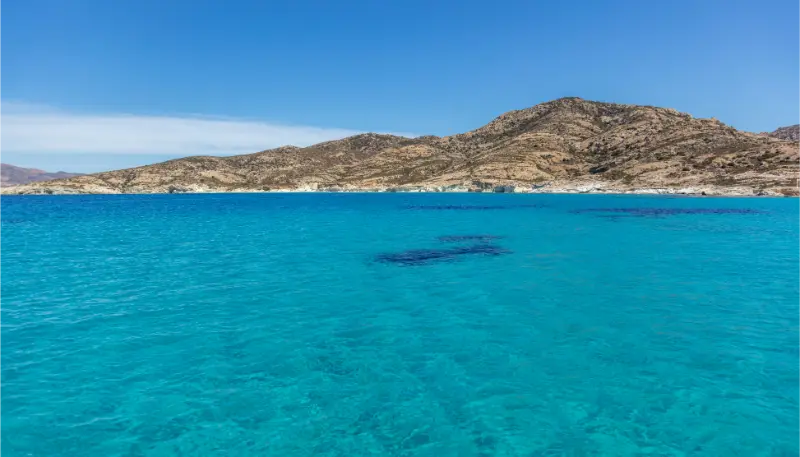
Rema and Goupa are the easiest swimming options on foot. Seasonal buses serve several of the more popular beaches, while taxis can cover areas not aligned with the schedule. For remote northern coves, boat access may be simpler than trying to force a land journey.
Choose one main beach per day rather than attempting a multi-stop circuit. Car-free travel is most relaxing when you let transport shape the rhythm instead of spending the day waiting for connections.
Boat taxis and coastal excursions
The municipality notes boat taxis and traditional boats as ways to reach secluded northern beaches and Polyaigos. These services are weather-dependent, which is an advantage for safety even if it complicates planning. Keep one flexible day in your itinerary for the sea excursion you care about most.
Confirm departure point, return time, payment method and whether the boat lands on a beach or requires swimming from the vessel. If you have an evening ferry, do not rely on a boat excursion returning with only a narrow connection.
A realistic four-day car-free itinerary
Day one: Psathi, Rema, Goupa and Chorio. Day two: bus or taxi to Bonatsa/Aliki/Kalamitsi. Day three: an early hike toward Skiadi or another official trail, then an easy afternoon. Day four: Prassa by bus/taxi if conditions are good, or a boat trip to Polyaigos if the sea is calm.
This structure covers village life, several beach types, hiking and the sea without requiring a vehicle. It also leaves room to repeat a favorite place, which is often more rewarding than chasing every pin on the map.
Where to book accommodation
Accommodation is limited compared with larger Cycladic islands, especially in July and August. Compare location carefully rather than choosing only by room style: a property in Chorio gives the easiest evenings, while coastal stays trade convenience for quicker beach access. Check current Kimolos accommodation on Booking.com.

Frequently asked questions
Do I need to rent a car in Kimolos?
No. A well-planned stay in Chorio works with buses, walking, taxis and boats. A vehicle is useful for maximum beach flexibility but not essential.
Can I walk from the ferry port to Chorio?
Yes if you are fit and traveling light, but the uphill transfer is less pleasant with luggage or midday heat. Use a bus, taxi or accommodation transfer on arrival.
How do I visit Prassa without a car?
Seasonal buses or taxis are the usual land options. Service changes, so confirm the current timetable locally rather than relying on an old schedule.
Useful official resources
For information that can change after publication, use the Municipality of Kimolos for local services and island information, the Visit Greece Kimolos page for destination background, and the municipality’s ferry timetable page before fixing transfers. Ferry and local transport times can change by season, weather and operator, so confirm the exact day rather than relying on an old screenshot.
Related Kimolos guides
- Psathi Kimolos Guide: Port, Rema, Goupa, Sirmata and Arrival Tips
- Best Beaches in Kimolos: Prassa, Bonatsa, Aliki, Kalamitsi and More
- Skiadi Kimolos Hiking Guide: Route, Geology, Difficulty and Safety
- Where to Stay in Kimolos: Chorio, Psathi, Aliki, Bonatsa or Prassa?
Managing groceries and beach gear
Buy water, fruit and picnic supplies in Chorio before heading to a beach with limited facilities. A lightweight backpack is more practical than carrying several bags between buses and walking paths. If you travel with snorkeling gear, use a compact mesh bag that can dry. Car-free travel becomes tiring mainly when you carry too much rather than because distances are large.
When a one-day vehicle rental makes sense
Even travelers committed to a car-free stay can consider renting for a single day if they want to link several remote beaches or photograph sunset in an area with no convenient return transport. Compare the cost with two or three taxi rides and check road restrictions. The rest of the stay can still be comfortably based on foot, bus and boat.
Final planning note
Kimolos is small enough that a change of plan rarely ruins the day. Keep the most weather-sensitive activity in the first half of your stay, check wind and local transport each morning, and avoid committing to a remote beach or exposed walk when conditions are marginal. Carry water, save important tickets and maps offline, and leave enough time to return to Chorio or Psathi before the final bus, boat or ferry. This simple flexibility is especially valuable for Kimolos without a car, because the island’s limited infrastructure is part of its charm but also means that alternatives are easier to use when you decide early rather than after a connection has already been missed.
Before finalizing the day, ask your accommodation or a local business whether anything practical has changed: bus timing, sea conditions, road access or an event in Chorio. Small islands often communicate useful changes locally before they appear on travel websites. Keeping one simple alternative in mind—an easier beach, a museum visit, a village meal or a shorter walk—usually protects the day without adding complicated planning.
For Kimolos without a car, the most useful habit is to decide the next day only after checking the wind forecast and the latest local transport information. Kimolos is compact, so changing from one coast to another or replacing a boat day with Chorio is usually easy. That flexibility gives you a better trip than forcing a pre-written schedule when the sea, heat or seasonal services suggest a different plan.