
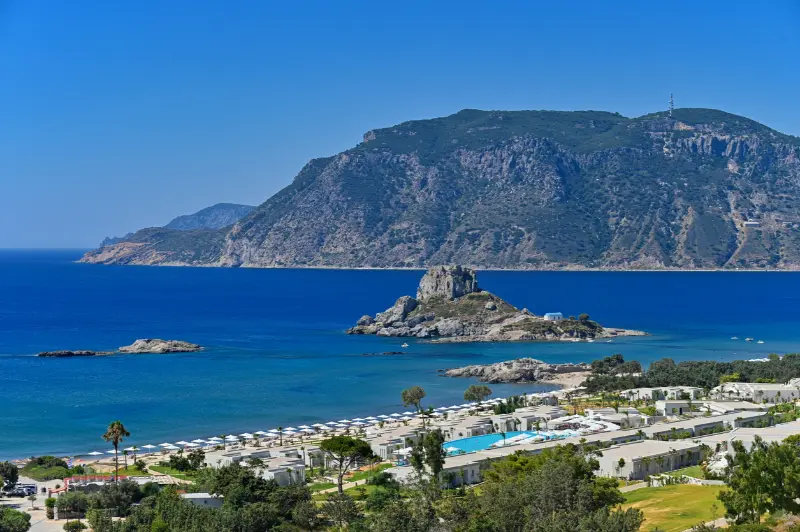
Kos is one of the easiest Greek islands to recommend to families because it combines shallow sandy beaches, a flat capital, bike culture, resort infrastructure and enough archaeology to make days interesting without requiring a full road trip every morning. The island also has several possible bases, so families can choose the level of activity that matches their children rather than forcing everyone into the same style of holiday.
The best family itinerary is rarely the one with the most attractions. Alternate a sightseeing morning with a beach afternoon, keep one flexible day for wind or tired children, and choose accommodation close to the things you will use every day. This reduces stress far more than collecting “must-see” locations.
Best family bases
Tigaki is the obvious first choice for young children because of the long sandy beach, shallow water and straightforward resort layout. Marmari offers similar shallow sand with more space but can be windier. Kos Town is excellent for older children who enjoy cycling, boats and evening walks. Kardamena is self-contained and practical for families who want a resort routine.
Kefalos works for families with a car who care about southwest beaches. Check slopes carefully when booking the old village; Kamari is easier if you want to walk to the sea.
Family beach days: choose by depth and wind
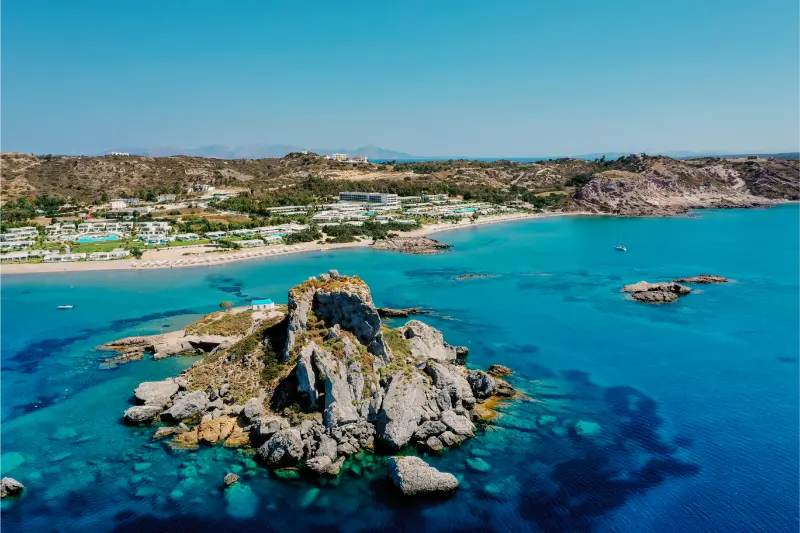
Tigaki, Marmari and Paradise Beach are good starting points for shallow water. Agios Stefanos adds archaeology and the view toward Kastri. Even on a family beach, supervise children actively: wind and waves change, water depth varies by section and inflatables can drift quickly.
Bring or buy water shoes if your children dislike stones, because not every beach is soft sand. Shade is also more important than chasing the prettiest water colour. A beach with an umbrella, toilet and easy lunch can be the better family choice than a remote cove reached by rough road.
Cycling with children
Kos’s flat areas make cycling a genuine family activity, particularly around the capital. Start with a short protected or low-traffic route and see how everyone handles heat and unfamiliar junctions. Do not choose the longest advertised route simply because your children cycle confidently at home.
Use correctly sized bicycles, helmets and lights. For child seats or trailers, ask a reputable rental company to fit the equipment and suggest a suitable route. The safest route is more important than the most scenic one.
Archaeology without exhausting the family
The Asklepieion is the most important archaeological excursion, but open terraces become hot. Visit early and turn the site into a short story about ancient medicine rather than a lecture. In Kos Town, ruins are integrated into everyday streets, which lets children encounter history in smaller doses.
Agios Stefanos is especially good for families because the basilica remains sit directly beside the beach. Teach children not to climb on fragile archaeology, then reward the cultural stop with swimming rather than scheduling another museum immediately.
Therma with children
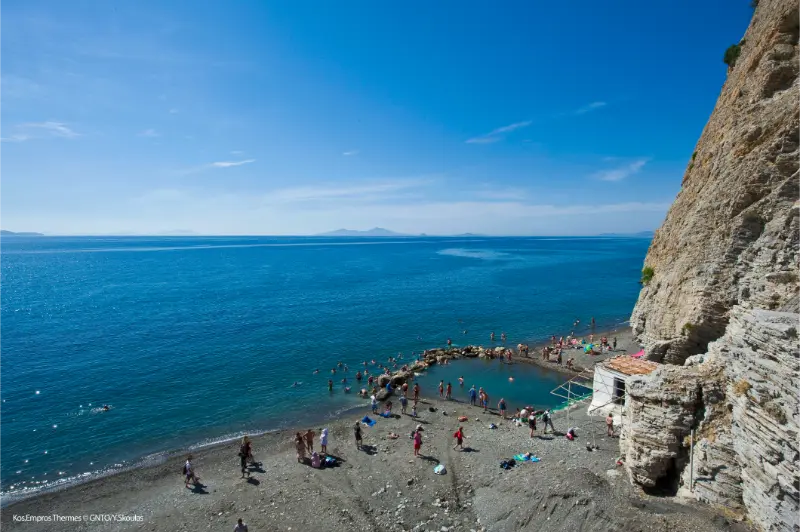
Therma is memorable but less straightforward than a sandy beach. The natural water can be very hot near the spring source, the shore is stony and the access includes a downhill/uphill walk. Older children may enjoy the contrast; toddlers may be happier with a shorter visit or a different beach altogether.
Keep hot-water exposure brief, supervise constantly and make sure everyone has drinking water for the climb back.
A heat-smart family day
| Time | Family rhythm |
|---|---|
| 08:00–10:30 | Archaeology, village walk or cycling |
| 10:30–13:00 | Beach or pool |
| 13:00–16:30 | Lunch, shade, nap or indoor rest |
| 16:30–19:30 | Second swim or short excursion |
| Evening | Dinner and promenade close to the hotel |
This rhythm is not a rigid rule, but it acknowledges that young children do not experience 35°C sightseeing as an educational privilege. Shift activity away from the harshest hours whenever possible.
Eating with children
Greek tavernas are generally easy for families because shared plates, grilled meat, fish, pasta, potatoes, salads and bread offer flexible choices. If allergies are involved, carry the relevant Greek wording and speak directly with staff instead of assuming ingredients from a menu description.
Keep snacks and water for bus waits and beach transfers. A tired child rarely benefits from delaying lunch because one more viewpoint is “on the way.”
Car seats, buses and taxis
If you rent a car, reserve an age-appropriate child seat rather than assuming one will be available on arrival. Inspect it at collection. For taxis, request a suitable seat in advance if required for your family. Buses reduce driving stress, but prams and beach gear make peak-hour travel less pleasant, so pack lightly.
How Kos with kids fits into a wider Kos trip
Use this guide together with the main Kos travel guide, Kos Town guide and Asklepieion guide. The newer in-depth pages on Tigaki and Marmari, Kefalos and Kamari, Kardamena, Zia and Mount Dikeos, Therma, cycling, the best beaches, Kos without a car, Kos with kids and where to stay in Kos make it easier to build a trip around one area instead of crossing the island repeatedly.
Kos works especially well for families who mix easy beach time with one activity or cultural stop each day. The most useful rule is to group places geographically. Kos is compact compared with many Greek islands, but a holiday still feels much better when a beach, village and archaeological stop naturally belong to the same side of the island.
Getting around and checking transport
Buses are useful for major resorts, while a short car rental can unlock Kefalos and inland villages. Cycling is a bonus around flatter areas, not an obligation.
Choose accommodation close to the beach or promenade you will use most; a slightly higher room rate can be worth it if it removes two taxi journeys every day. Public transport is useful, but seasonal frequency matters. The official KTEL Kos general routes page currently lists services for Kefalos, Kardamena, Marmari, Zia, Antimachia, Tigaki, Pyli and Mastichari. KTEL also announced timetable changes taking effect from 29 June 2026, so always open the live timetable again shortly before the day you travel rather than saving an old screenshot.
Booking excursions and activities
Boat trips, island excursions and guided experiences are highly seasonal on Kos. Before booking, compare the actual time spent at each stop, whether transfers are included, the size of the boat or group, shade, swimming opportunities and cancellation conditions. Do not choose an excursion simply because it has the longest list of stops.
Mistakes that make the day harder
- Planning every day around distant “must-see” sights.
- Choosing a remote villa without understanding the need for a car.
- Cycling with children on roads that are fast or unprotected.
- Visiting open archaeological sites at midday during severe heat.
- Assuming a beach described as family-friendly has identical conditions every day.
Frequently asked questions
Which part of Kos is best for families?
Tigaki is one of the easiest choices for young children. Kos Town suits active families and older children; Kardamena offers a self-contained resort; Kefalos works well with a car.
What are the best family beaches?
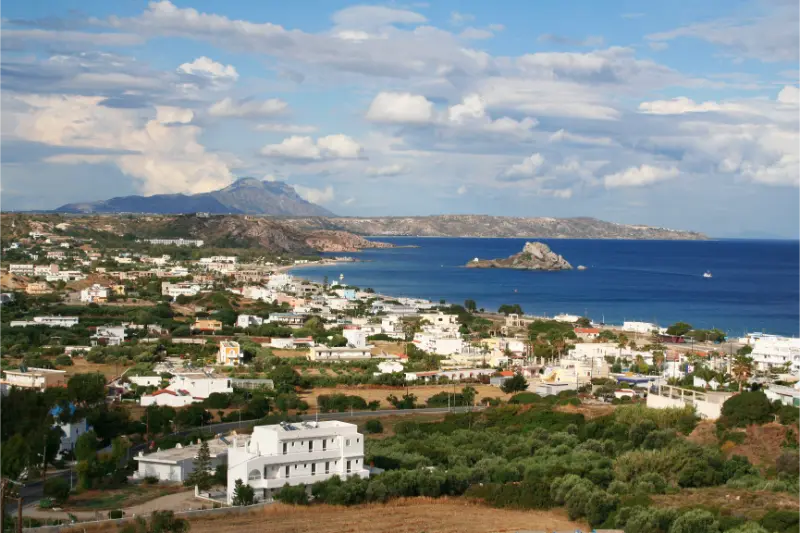
Tigaki, Marmari and Paradise are strong choices for sandy, shallow sections. Always judge wind and water conditions on the day.
Is Kos good with a stroller?
Kos Town and resort promenades can be relatively easy, but historic sites, Zia’s lanes and Therma’s access track are less stroller-friendly.
Can children cycle safely in Kos?
Yes on appropriate protected or low-traffic routes with correctly fitted equipment. Do not assume every road is a cycle lane.
How many days should a family stay?
A week is ideal for mixing beaches, Kos Town, one archaeological day and one or two wider excursions without rushing.
Final planning advice
Kos is at its best when you leave some space between the headline attractions. The island is easy enough to explore that there is little benefit in forcing four distant stops into one day. Pick one anchor experience, add one or two nearby places, and keep time for a swim, a long lunch or an evening walk. That slower structure usually produces a better holiday and makes delays, wind or summer heat much easier to handle.
How to plan around wind and summer heat
Wind and heat should be treated as planning variables, not annoyances that have ruined the schedule. Kos has enough coastline and enough non-beach alternatives that you can move a swimming day, shorten an exposed walk or swap a western drive for a museum and town afternoon. Check conditions each morning, especially before a boat trip, long cycle ride or remote-beach drive.
In July and August, schedule archaeological sites, village walks and cycling early. Keep the middle of the day for swimming, shade or a long lunch, then use late afternoon for another short outing. This is more comfortable and usually produces better photographs than forcing outdoor sightseeing under the harshest sun.
How much should you plan in advance?
Reserve the things with real capacity constraints—specific hotels, popular boat excursions and important airport transfers—then leave ordinary beach days flexible. A rigid seven-day schedule is vulnerable to one windy day; a flexible plan can move the boat trip and still protect the experiences that matter most.
Keep addresses, bus information and booking confirmations available offline. Mobile coverage is generally good in populated areas, but a dead battery or weak signal is a poor reason to miss the last bus. For driving days, download an offline map and verify that navigation is not sending a standard rental car onto an unnecessary rough track.