
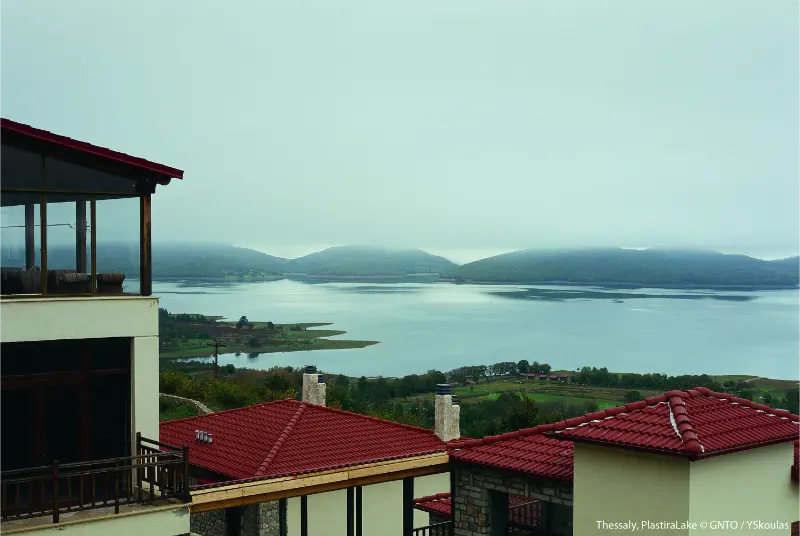
Lake Plastira offers a very different image of Greece: mountain roads, forested slopes, stone villages and a broad blue lake in the heart of Thessaly. It is ideal for travellers who want a quiet road-trip stop, outdoor activities and cool evenings far from the summer island crowds.
Why Lake Plastira is a different kind of Greek escape
Lake Plastira is an artificial lake surrounded by mountains, forests and villages in western Thessaly. The scenery feels alpine compared with the coastal image most international visitors associate with Greece, and that contrast is the main reason to come. This is a destination for drives, viewpoints, short hikes, local food and quiet guesthouses rather than a list of famous monuments.
The lake is large enough that choosing a base matters. Roads curve around slopes rather than following the shoreline in a perfect loop, so driving times can be longer than the map suggests. Plan one side of the lake at a time and avoid spending the whole day moving between viewpoints.
The dam and the southern viewpoints
The dam is one of the classic stops because it explains how the landscape was created and provides broad views across the water. It is also a useful orientation point if you are driving the southern side of the lake. Stop safely in designated areas and remember that mountain roads require attention even when traffic is light.
From the dam, continue toward nearby villages rather than immediately doubling back. The best Lake Plastira days are circular in spirit even when the roads are not a perfect ring: one scenic route, one village lunch and one outdoor activity is enough.
Neochori and the western shore
Neochori is one of the most popular bases because it sits above the lake with panoramic views and easy access to accommodation and tavernas. It works well for first-time visitors who want the classic balcony-over-the-water experience without feeling isolated.
The western shore also gives you access to viewpoints and walking routes. In summer, mornings are best for hiking; in winter, road conditions can change quickly with altitude. Ask locally before taking minor roads after snow or heavy rain.
Activities on and around the lake
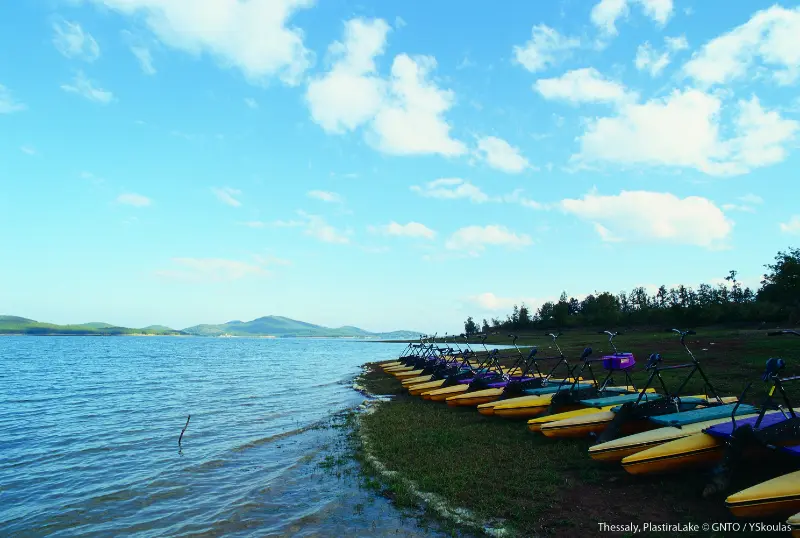
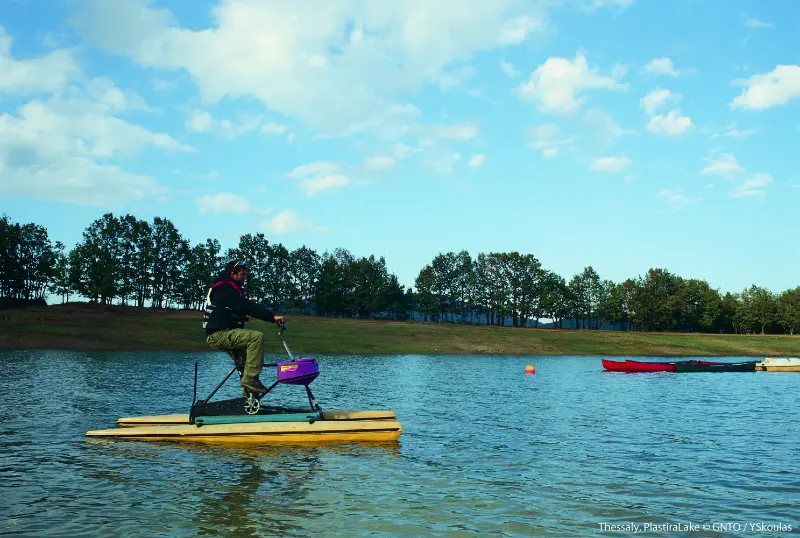
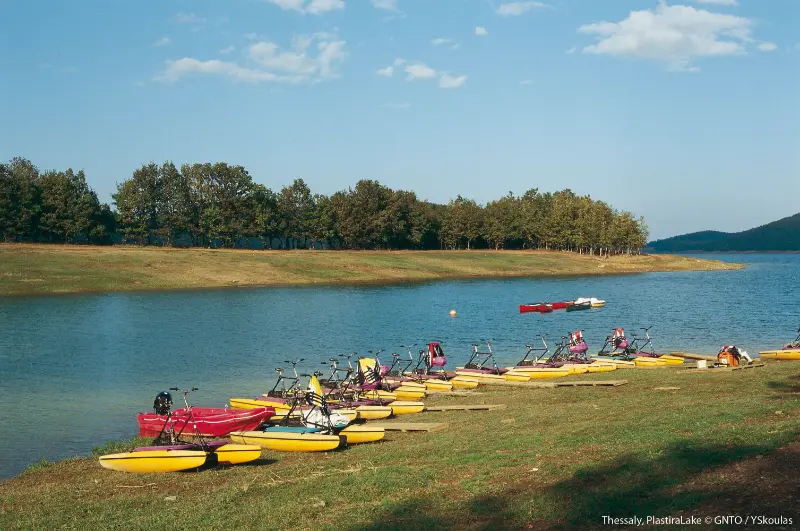
Depending on season and local operators, visitors may find canoeing, kayaking, cycling, horse riding and guided outdoor activities. The tourism authority describes the lake as suitable for water sports including rowing and canoeing. Availability is not guaranteed every day, so contact operators in advance if one activity is central to your trip.
Hiking is the simplest activity to plan independently, but choose a route that matches daylight and weather. Forest tracks can become muddy, and phone coverage may be inconsistent away from villages. Carry water and do not rely on a casual map screenshot for a long route.
Mountain villages and local food
The villages around Lake Plastira are a major part of the experience. Stone houses, squares and traditional tavernas make the trip feel more like a mountain retreat than a conventional sightseeing circuit. Order regionally: pies, cheeses, grilled meats, legumes, mushrooms and seasonal mountain products are more meaningful here than imported beach-resort menus.
A long lunch is often the best midday plan, especially in winter or after a morning walk. It also keeps the itinerary realistic: mountain roads, viewpoints and village stops take more time than their distances imply.
A 3-day Lake Plastira itinerary
- Day 1: arrive via Karditsa, settle into a lakeside or hillside village, visit the dam and stop at two viewpoints before dinner.
- Day 2: devote the morning to hiking, cycling or a water activity, then explore Neochori and nearby villages at a slower pace.
- Day 3: complete a different section of the lake and continue toward Trikala, Meteora or the Pindus mountains.
Three days is ideal for a first visit because it allows one weather-dependent outdoor day. If you are combining the region with city time, use the Trikala guide as the next step.
Where to stay
Choose accommodation based on how you want to spend evenings. A panoramic guesthouse outside a village can be wonderfully quiet, but you may need to drive to dinner. Staying within a village gives you easier access to tavernas and creates a more social evening routine.
In winter, confirm heating, road access and parking. In summer, a balcony view and shaded outdoor space can matter more. Do not assume every property described as ‘lakefront’ is literally beside the water; many of the best views come from higher slopes.
Best time to visit
Autumn is arguably the most photogenic season, with changing forest colour and cool walking weather. Spring is green and fresh, summer is good for outdoor activities at elevation, and winter offers a cosy mountain atmosphere that pairs naturally with fireplaces and local food.
Because the experience is weather-led, flexible planning matters. Rain can turn a hiking day into a village-and-food day without ruining the trip. In winter, snow may improve the scenery while complicating access, so check conditions before setting out.
How to get there
Most visitors reach Lake Plastira by car via Karditsa, and a vehicle is strongly recommended for moving between villages and viewpoints. Public transport does not provide the same freedom around the lake. Drive slowly on bends and avoid building the route around optimistic map times.
The lake combines naturally with Trikala and Meteora. If you are extending the trip farther east, Volos and Pelion create a varied Thessaly itinerary that moves from mountains and freshwater landscapes to the Aegean coast.
Who will enjoy Lake Plastira most
Couples, photographers, hikers and road-trip travellers tend to appreciate the lake immediately. Families can also enjoy it, especially with short walks and organised activities, but the trip works best when children are comfortable with driving between stops.
Travellers who need major museums, nightlife or dense sightseeing may prefer to use the lake as a two-night break rather than the centre of a long holiday. Its value is quiet, landscape and slow travel.
Frequently asked questions
How many days do you need at Lake Plastira?
Two nights are enough for a first visit; three days are ideal if you want an outdoor activity and multiple villages.
Do you need a car at Lake Plastira?
Yes for most itineraries. The villages and viewpoints are spread out and public transport is limited.
Is Lake Plastira natural?
No. It is one of Greece’s major artificial lakes, created by a dam on the Tavropos River system.
What can you do at Lake Plastira?
Popular activities include scenic drives, hiking, cycling, village visits and, depending on operators and season, canoeing or kayaking.
Is Lake Plastira worth visiting in winter?
Yes. Winter is atmospheric, but snow and ice can affect mountain roads, so check conditions and equipment requirements.
Extra practical planning note
For photography, the lake is most interesting when clouds, mist or low-angle light add depth to the surrounding slopes. Do not assume a perfectly clear midday sky will produce the best images. Sunrise is quiet, while late afternoon often gives warmer light across the water and villages above the shore.
Extra practical planning note
For photography, the lake is most interesting when clouds, mist or low-angle light add depth to the surrounding slopes. Do not assume a perfectly clear midday sky will produce the best images. Sunrise is quiet, while late afternoon often gives warmer light across the water and villages above the shore.
Extra practical planning note
For photography, the lake is most interesting when clouds, mist or low-angle light add depth to the surrounding slopes. Do not assume a perfectly clear midday sky will produce the best images. Sunrise is quiet, while late afternoon often gives warmer light across the water and villages above the shore.
Extra practical planning note
For photography, the lake is most interesting when clouds, mist or low-angle light add depth to the surrounding slopes. Do not assume a perfectly clear midday sky will produce the best images. Sunrise is quiet, while late afternoon often gives warmer light across the water and villages above the shore.
Extra practical planning note
For photography, the lake is most interesting when clouds, mist or low-angle light add depth to the surrounding slopes. Do not assume a perfectly clear midday sky will produce the best images. Sunrise is quiet, while late afternoon often gives warmer light across the water and villages above the shore.
Extra practical planning note
For photography, the lake is most interesting when clouds, mist or low-angle light add depth to the surrounding slopes. Do not assume a perfectly clear midday sky will produce the best images. Sunrise is quiet, while late afternoon often gives warmer light across the water and villages above the shore.
Extra practical planning note
For photography, the lake is most interesting when clouds, mist or low-angle light add depth to the surrounding slopes. Do not assume a perfectly clear midday sky will produce the best images. Sunrise is quiet, while late afternoon often gives warmer light across the water and villages above the shore.
Extra practical planning note
For photography, the lake is most interesting when clouds, mist or low-angle light add depth to the surrounding slopes. Do not assume a perfectly clear midday sky will produce the best images. Sunrise is quiet, while late afternoon often gives warmer light across the water and villages above the shore.
Final advice
Treat Lake Plastira as a landscape to inhabit rather than an attraction to complete. Pick a comfortable village base, plan one active experience and leave the rest of the time for viewpoints, local food and slow drives.
\nCombine Lake Plastira with a city evening using our Karditsa travel guide.
\n\n\nFor more detailed Thessaly planning, continue with Mouzaki and Smokovo.
\n\n\nFor more detailed Thessaly planning, continue with where to stay in Thessaly and Thessaly with kids.
\n\n\nFor more detailed Thessaly planning, continue with Lake Plastira villages.
\n