
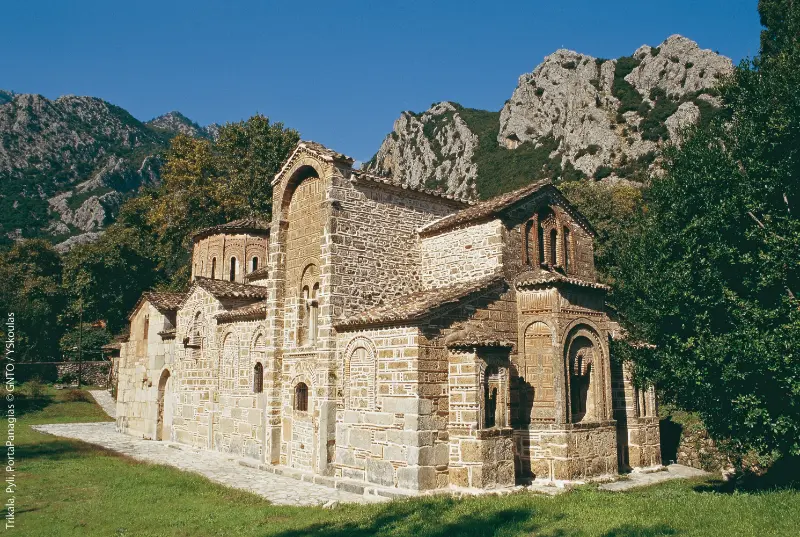
Trikala is one of the most pleasant small cities in mainland Greece and an excellent base for exploring Thessaly. A river runs through the centre, the old quarter climbs toward a Byzantine castle, and Meteora and the Pindus foothills are close enough for rewarding day trips.
Why Trikala works as more than a transit stop
Many travellers pass through Trikala on the way to Meteora, but the city is worth at least a day of its own. The Litheos River runs through the centre, bicycles are part of everyday life, and the compact layout makes it easy to combine cafés, markets, the old quarter and the Byzantine castle without a car.
Trikala also has a practical advantage: it is a useful base for several directions. Meteora lies to the northwest, mountain villages such as Elati and Pertouli are within reach, and Lake Plastira can be added to a wider Thessaly loop. That makes the city especially suitable for travellers who prefer one comfortable base over changing hotels every night.
Walk the Litheos River
Start with the Litheos because it gives you the easiest introduction to Trikala. Bridges, cycle paths and riverside cafés create a relaxed urban corridor, and the river helps you move between modern streets and older neighbourhoods. Early morning is quiet; late afternoon is livelier and better for people-watching.
Trikala is known in Greece for cycling and smart-city initiatives, but as a visitor the practical benefit is simple: the centre feels manageable. You can leave the car parked, walk most attractions and use the river as an orientation point.
Varousi and the Byzantine castle
Varousi is the historic district below and around the castle, with narrow lanes, churches and houses that show a different side of the city. The castle provides one of the best viewpoints, especially toward sunset. Check access hours if you want to enter rather than only walk around the surrounding streets.
Pair Varousi with the nearby old quarter known for traditional tavernas and evening activity. The area is compact enough to explore without planning every turn, which is part of the appeal after more structured sightseeing at archaeological or monastic sites.
Markets, cafés and local food
Trikala is a city where everyday life is part of the attraction. Markets, bakeries, coffee shops and tsipouro places give you a chance to eat like a regional traveller rather than a resort guest. Thessaly is a productive agricultural region, so look for pies, local cheeses, grilled meat, seasonal vegetables and simple dishes that change through the year.
If you are travelling in winter, Trikala’s festive events can make accommodation busier than expected. At other times, the city is usually easygoing and makes a pleasant contrast with the concentration of visitors at Meteora.
Meteora as a day trip from Trikala
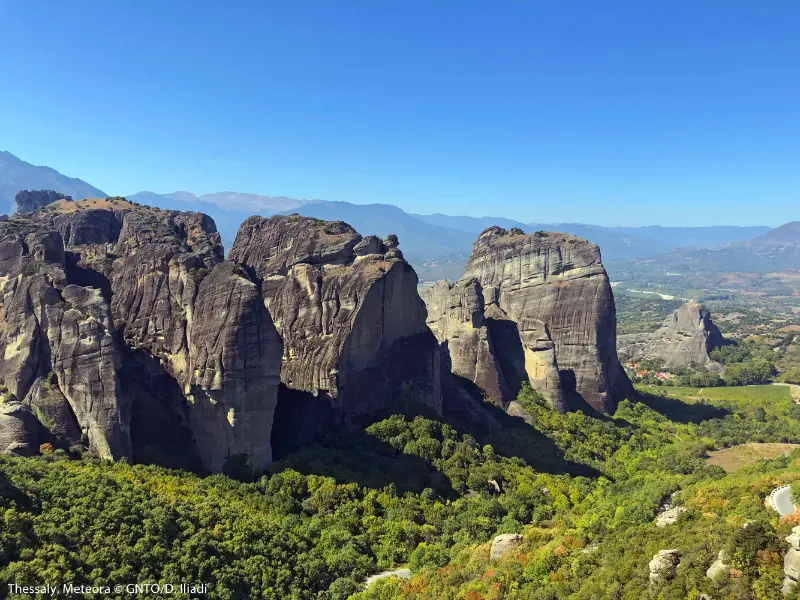
Meteora is close enough for an easy day trip, but do not underestimate how long the monasteries and viewpoints deserve. Leave early, check which monasteries are open on your chosen day and wear clothing that respects monastery requirements. The Meteora monasteries guide covers the practical details.
Staying in Trikala rather than Kalambaka changes the feel of the trip. You trade immediate views of the rocks for a larger city with more evening options. This is a good choice if Meteora is one part of a broader Thessaly road trip rather than the sole purpose of the visit.
Mountain villages: Elati, Pertouli and Pyli
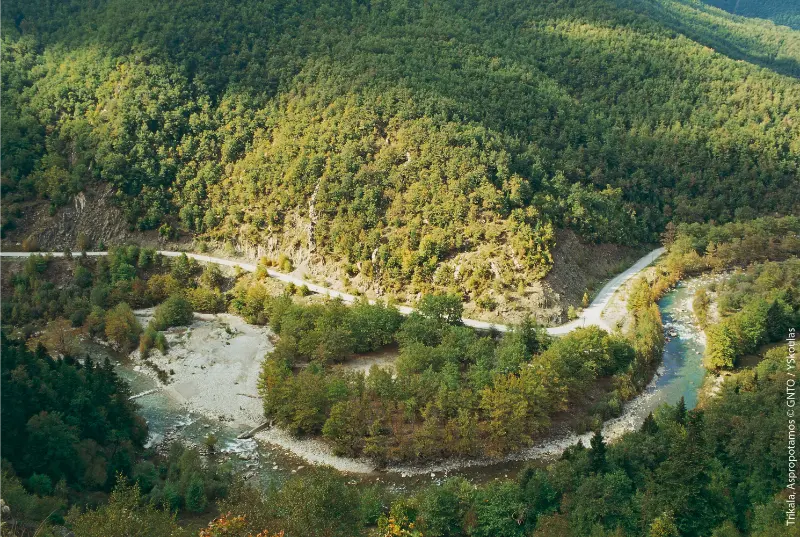
Southwest of Trikala, the road climbs toward Pindus villages such as Elati and Pertouli. The landscape changes quickly from city plain to fir-covered slopes, making this a strong half-day or full-day excursion. Pyli adds an impressive stone bridge and serves as a natural gateway into the mountains.
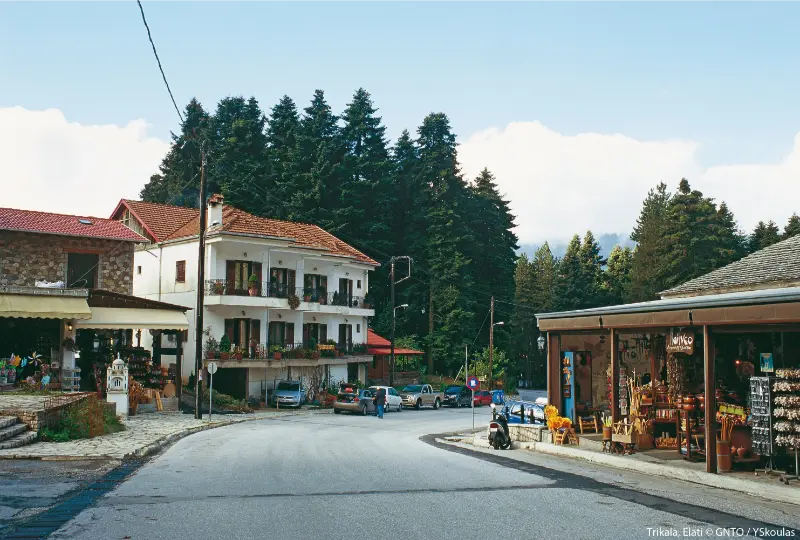
In winter, these roads can require caution and proper equipment. In summer, the mountain temperatures offer relief from the plain. Choose one or two villages and a short walk instead of racing through every name on the map.
A 3-day Trikala itinerary
- Day 1: explore the Litheos River, Varousi, the castle and the central food scene.
- Day 2: devote a full day to Meteora, using Kalambaka and Kastraki as access points.
- Day 3: choose the Pindus villages or Lake Plastira depending on weather and the direction of your onward journey.
This structure makes Trikala a base rather than a stopover. If you are continuing east, combine it with the Volos guide and Pelion guide.
Where to stay in Trikala
Stay within walking distance of the centre if you want to enjoy evenings without driving. Riverside accommodation is attractive, while streets just outside the busiest core may offer easier parking. Because Trikala is relatively compact, you do not need to obsess over a single perfect neighbourhood.
If you are using the city for day trips, secure parking and quick road access can matter more than a view. Ask the property about parking before arrival rather than assuming street spaces will be easy during events or weekends.
Best time to visit
Spring and autumn are ideal for combining city walking with Meteora and mountain excursions. Summer can be hot on the Thessaly plain, so use mornings and evenings for the city and climb into the mountains during the middle of the day. Winter brings a festive atmosphere and potential snow in higher areas.
Trikala is a genuine year-round city, which gives it an advantage over strongly seasonal resorts. Even so, some mountain attractions and road conditions change significantly with the weather.
Getting there and getting around
Intercity buses connect Trikala with major Greek cities and regional destinations. If you are travelling by car, the city is straightforward to include between Athens, Meteora and northern Greece. Once parked, most of the centre is best explored on foot.
For a car-free trip, Trikala can still work well if you use buses and organised tours for Meteora. If transport independence matters, compare the options in the Greece without a car guide.
Frequently asked questions
How many days do you need in Trikala?
One day covers the city; three days allow Meteora and a mountain or lake excursion without changing base.
Is Trikala a good base for Meteora?
Yes. It is farther from the rocks than Kalambaka, but it offers a larger city atmosphere and more evening options.
Can you visit Trikala without a car?
Yes. The centre is walkable and intercity buses are useful, though a car makes mountain excursions easier.
What is Trikala known for?
It is known for the Litheos River, cycling, Varousi old quarter, its castle and its location between Meteora and the Pindus mountains.
When is the best time to visit Trikala?
Spring and autumn are especially comfortable; winter is popular for festive events and nearby mountain trips.
Extra practical planning note
Trikala also works well for travellers who dislike changing accommodation frequently. From one base you can have a city day, a monastery day and a mountain day, which keeps luggage and check-in time under control. This is especially useful on a longer mainland road trip where too many one-night stops can become exhausting.
Extra practical planning note
Trikala also works well for travellers who dislike changing accommodation frequently. From one base you can have a city day, a monastery day and a mountain day, which keeps luggage and check-in time under control. This is especially useful on a longer mainland road trip where too many one-night stops can become exhausting.
Extra practical planning note
Trikala also works well for travellers who dislike changing accommodation frequently. From one base you can have a city day, a monastery day and a mountain day, which keeps luggage and check-in time under control. This is especially useful on a longer mainland road trip where too many one-night stops can become exhausting.
Extra practical planning note
Trikala also works well for travellers who dislike changing accommodation frequently. From one base you can have a city day, a monastery day and a mountain day, which keeps luggage and check-in time under control. This is especially useful on a longer mainland road trip where too many one-night stops can become exhausting.
Extra practical planning note
Trikala also works well for travellers who dislike changing accommodation frequently. From one base you can have a city day, a monastery day and a mountain day, which keeps luggage and check-in time under control. This is especially useful on a longer mainland road trip where too many one-night stops can become exhausting.
Extra practical planning note
Trikala also works well for travellers who dislike changing accommodation frequently. From one base you can have a city day, a monastery day and a mountain day, which keeps luggage and check-in time under control. This is especially useful on a longer mainland road trip where too many one-night stops can become exhausting.
Extra practical planning note
Trikala also works well for travellers who dislike changing accommodation frequently. From one base you can have a city day, a monastery day and a mountain day, which keeps luggage and check-in time under control. This is especially useful on a longer mainland road trip where too many one-night stops can become exhausting.
Final advice
Do not treat Trikala as the place where you sleep before Meteora. Give the city a full day, then use it as a practical base for one or two excursions. The combination creates a more balanced picture of Thessaly than visiting the monasteries alone.
\nFor more Thessaly beyond Trikala, add Karditsa, Elati and Pertouli and Larissa.
\n\n\nFor more detailed Thessaly planning, continue with Pyli and Porta Panagia.
\n\n\nFor more detailed Thessaly planning, continue with Paleokarya and Ropoto, Aspropotamos, Mesochora and the Achelous valley and Thessaly with kids.
\n