

Monastiraki and Psyrri sit side by side in the historic centre, but they feel different. Monastiraki is a transport hub and a crossroads of ancient monuments, shopping streets and market lanes; Psyrri becomes more intimate, with small squares, workshops, cafés, tavernas, bars and some of the city’s best-known street art. The official Greek tourism portal describes Monastiraki as part of old Athens and Psyrri as one of the city’s important nightlife areas, which is exactly why the two work so well in a single walking day.
This guide is designed for travellers who want to use the area well rather than simply photograph it. For wider planning, keep Athens Travel Guide, Plaka and Anafiotika Guide, Ancient Agora of Athens Guide open in another tab so you can see how this stop fits into the rest of the trip.
Why this place deserves its own guide
A destination becomes much easier to enjoy when you understand its scale, the best time of day and the trade-offs between convenience and atmosphere. The most common planning error in Greece is not choosing the wrong attraction; it is stacking too many good places into one day. The sections below focus on the practical decisions that make the experience calmer, more flexible and more rewarding.
What to see and do
Monastiraki Square and the rooftop view
Start in Monastiraki Square before the lanes get crowded. The square is useful for orientation because the Acropolis rises above the roofs while the metro station connects the area directly with other parts of Athens. Do not rush away immediately: the mix of the Tzistarakis Mosque, the church of Pantanassa, the railway, street vendors and the Acropolis skyline explains why this corner feels more layered than a conventional postcard square.
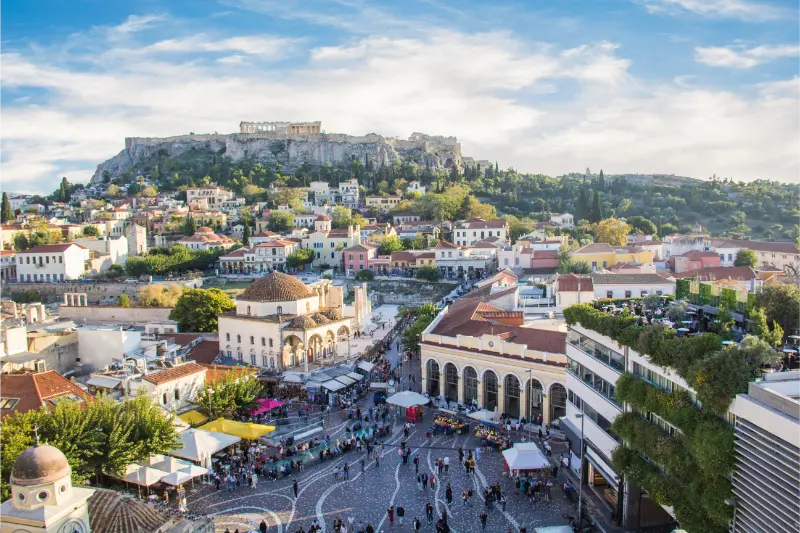
The flea-market lanes and Avissinias Square
The so-called flea market is not one single market hall. It is a web of lanes where souvenir shops, clothing, antiques, second-hand objects and small specialist stores mix together. Avissinias Square and the surrounding streets are the part to explore slowly if you enjoy old furniture, records, vintage objects and the feeling of browsing without a fixed shopping list. Sunday can feel especially busy, so weekday mornings are better if you want space to look rather than simply move with the crowd.
Ancient remains on the edge of the neighbourhood
Monastiraki is unusual because important archaeological sites sit directly against everyday city life. Hadrian’s Library, the Roman Agora and the Ancient Agora are all close enough to combine with a neighbourhood walk, but trying to tour all three in depth on the same afternoon can turn the day into a checklist. Choose one major site and leave the others for another day if you care about history. The strongest contrast comes from moving directly from ruins into market lanes and cafés.
Psyrri street art and small streets
Cross toward Psyrri and the atmosphere changes quickly. Look up as well as ahead: murals occupy entire façades, smaller pieces appear on shutters, and workshop streets still reveal traces of the neighbourhood’s older commercial life. Street art changes, so any fixed list of “must-see murals” dates quickly. A better strategy is to wander around Iroon Square, Sarri, Miaouli and the surrounding lanes and let the current city reveal itself.
Evening food and nightlife
Psyrri is at its best when lunch service gives way to the evening. Traditional tavernas, modern Greek restaurants, bars, dessert shops and live-music venues are packed into a small area. That variety is convenient but also means noise. If you stay here, check whether your room faces a busy pedestrian street. If you are only visiting, arrive before sunset, walk while there is still light, then choose dinner after you understand which streets feel lively rather than overwhelming.
Best time to visit
Spring and autumn are especially pleasant because a large part of the experience happens outdoors. In summer, use the morning for markets and archaeological sites, rest during the hottest hours, and return in the evening for Psyrri. Winter is more local in feel and works very well for food, cafés and museums. The neighbourhoods are active year-round, so season matters less here than it does on the islands.
Whatever the month, use the weather you actually have. Strong wind, heat, rough sea or a local event can matter more than the seasonal average. On exposed walks, beaches and archaeological terrain, an early start often improves both comfort and photography. Keep one flexible block in the day so a delay does not force you to rush the experience you came for.
How to get there and move around
Monastiraki metro station is one of the easiest access points in central Athens and is served by Lines 1 and 3. That also makes the area convenient for airport transfers on Line 3, although luggage plus crowded platforms can be tiring at busy times. Once you arrive, walking is the right way to explore. Distances to Plaka, the Ancient Agora, Ermou Street, Syntagma and the Central Market are short enough that a taxi usually adds more complication than convenience.

Do not judge transport only by kilometres. Island roads, central-city traffic, parking searches and walking access can turn a short map distance into a much longer transfer. When public transport is part of your plan, recheck the current timetable close to travel day. When driving, save the parking point in advance and avoid entering pedestrian lanes simply because navigation software suggests the shortest line.
Where to stay
Choose Monastiraki if you want maximum transport convenience and immediate access to sightseeing. Choose Psyrri if nightlife, restaurants and evening atmosphere matter more. Light sleepers should avoid rooms directly above busy bars or late-night pedestrian streets. For a calmer base within walking distance, compare Koukaki, Plaka edges or quieter streets toward Thissio rather than assuming the most central address is automatically the best one.
Before booking, zoom in on the exact property location rather than trusting the neighbourhood name. Check stairs, road access, bus stops, late-night noise and the walk back after dinner. A room that looks only 500 metres from a beach or landmark can feel very different when the route is steep, unlit or exposed to traffic. Location should support the way you actually plan to spend your days.
Food and evening atmosphere
The biggest mistake is choosing the first restaurant with the most aggressive menu display on a high-traffic corner. Walk a few streets, look for places with a focused menu and decide whether you want classic taverna cooking, modern Greek small plates, grilled meat, meze or simply coffee and dessert. Psyrri is also useful for late eating, while the nearby Central Market and Athinas Street add another layer for travellers interested in ingredients and everyday food culture.
Greek travel is better when meals are given enough time. Avoid planning dinner as a 45-minute gap between attractions. Sit down after the hottest part of the day, order at the pace of the place and keep room for an unplanned walk afterwards. In heavily visited areas, moving one or two streets away from the obvious viewpoint often changes both prices and atmosphere.
A realistic one-day plan
Begin around Monastiraki Square, then walk through the market lanes toward Avissinias Square. Spend the late morning at either the Ancient Agora or the Roman Agora rather than trying to rush both. After lunch, move toward Psyrri and explore the mural-covered streets while shops and workshops are still open. Continue toward Iroon Square, pause for coffee or dessert, and stay for dinner. If energy remains, end with a short walk toward Thissio for illuminated Acropolis views instead of adding another formal attraction.
Build the day around one priority and one secondary activity. If the priority takes longer, drop the secondary stop without regret. This is especially important on islands, where parking, buses, wind or heat can alter timing. A good itinerary should survive a 30-minute delay without collapsing into stress.
Families, mobility and accessibility
Families should plan around shade, toilets, meal timing and realistic walking stamina rather than adult sightseeing speed. For travellers with reduced mobility, accessibility varies sharply between modern promenades and historic lanes, rocky beaches or stair-heavy villages. Contact accommodation or the relevant site directly if step-free access is essential; generic labels such as “easy walk” are not precise enough for important mobility decisions.
Common mistakes to avoid
- Treating the flea market as a single building instead of a network of streets
- Booking a hotel without checking nighttime noise
- Trying to visit every nearby archaeological site in one afternoon
- Following an old street-art map too literally
- Eating only on the busiest corners without exploring side streets
Most of these mistakes come from the same habit: planning from a map without considering how the place behaves in real life. A few minutes spent checking terrain, weather, parking and current access rules can save hours of frustration. Keep screenshots of essential transport information, but do not rely on an old screenshot when conditions or seasonal schedules may have changed.
What to combine with it
This area combines naturally with Plaka, the Ancient Agora and a walk up toward Syntagma. If you are building your first Athens itinerary, connect this guide with Athens Travel Guide, Plaka and Anafiotika Guide and Ancient Agora of Athens Guide.
Try to combine places that sit naturally on the same route. Crossing an island twice in one day or zigzagging through central Athens wastes energy that could be spent walking, swimming or eating. If two attractions pull you in opposite directions, split them across separate days even if a map makes them look close.
FAQ
How much time should I allow?
A focused visit usually needs at least half a day once transport, walking, breaks and a meal are included. If this is one of your main priorities, protect most of a day instead of squeezing it between two distant attractions.
Do I need a rental car?
Not always. Central Athens neighbourhoods and well-connected island resorts can work very well without a car, while rural viewpoints and multi-stop island days are easier with one. Rent only for the days when it adds real flexibility.
Is it suitable for families?
Usually yes, but the right version of the day depends on age, heat and terrain. Beach facilities, shaded breaks and shorter walks matter more with young children than completing every viewpoint or monument.
Should I book in advance?
Book accommodation and high-demand experiences early in peak season. Ordinary walks and beaches generally do not need reservations, but organised loungers, popular restaurants, boat trips and guided visits can fill up.
Can I trust old prices and timetables?
No. Transport frequency, ticket systems, road access and seasonal services can change. Check official or local information shortly before the visit, especially if the entire day depends on one bus, boat or opening window.
Final advice
Use this guide as a framework rather than a timetable you must obey minute by minute. The best travel days in Greece usually have a clear structure but enough empty space for a longer swim, an unexpected church, a café you like or a sunset that convinces you not to move. Plan the logistics carefully, then give the place room to surprise you.
For the city after dark, see our Athens nightlife guide; for markets and retail streets, use our Athens shopping guide.