
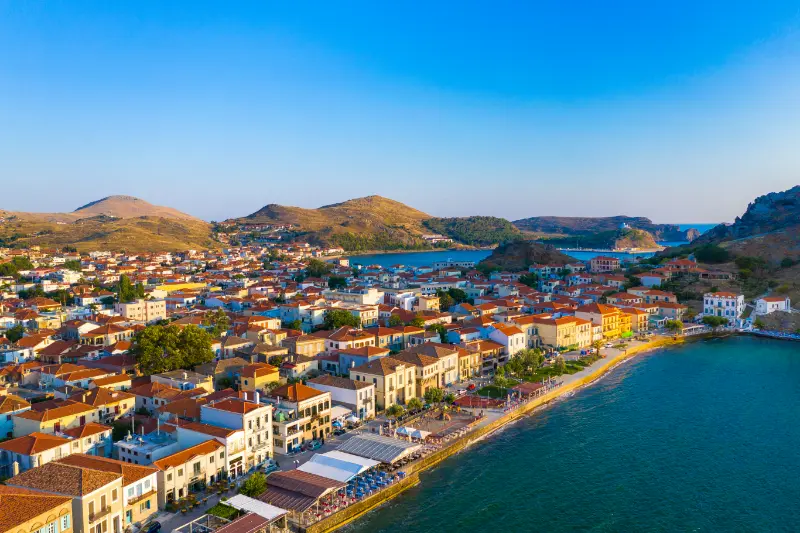
Lemnos is one of the Greek islands I would choose when the goal is space rather than spectacle. The landscape is broad and volcanic, with low hills, fertile plains, wetlands, sand dunes, long beaches and archaeological sites spread across an island that feels very different from the whitewashed Cyclades.
It belongs naturally in the same planning conversation as Lesvos, Chios and Samos, but its open terrain and strong agricultural identity give it a character of its own.
Why visit Lemnos?
Visit Greece describes Lemnos as a volcanic jewel of the northeastern Aegean. The island combines rocky volcanic formations with farmland, dunes, bays and beaches, making it ideal for travellers who like road trips and uncrowded landscapes.
It also has an unusually rich archaeological story. Sites connected with ancient Hephaistia, Kavirio and prehistoric Poliochni can turn a beach holiday into a much deeper cultural trip.
Where to stay
Myrina
The capital is the easiest first base, with the castle, waterfront, restaurants and the broadest choice of accommodation.
Moudros
A practical base for the east and southeast, with a large natural bay and easier access to several archaeological and natural sites.
Village stay
A rural guesthouse can work well for repeat visitors who value quiet evenings and local food more than walking to restaurants every night.
Best things to do
Climb to Myrina Castle
The castle dominates the capital and offers one of the best introductions to the island’s scale. Go outside the hottest part of the day and respect any access restrictions.
See the sand dunes
The inland dunes around Gomati are one of Lemnos’ most unusual landscapes. Treat them as a fragile natural area rather than an off-road driving attraction.
Explore ancient Hephaistia and Kavirio
These archaeological areas help explain Lemnos’ long strategic and religious importance in the northern Aegean.
Visit Poliochni
The prehistoric settlement is one of the island’s major cultural stops. Opening hours can change seasonally, so verify them before driving across the island.
Beach-hop without rushing
The island has many long beaches, and the best choice often depends on wind. Plati, Thanos, Keros and Gomati are among the names travellers frequently encounter.
Explore wetlands and rural landscapes
Lemnos is more than coastline. Seasonal wetlands, grazing land and agricultural plains make early-morning driving and birdwatching particularly rewarding.
Food and wine
Local food is a major reason to stay longer: cheeses, pasta, wheat products, honey, wine and seafood reflect the island’s farming culture. I would leave room for bakery stops and village meals rather than eating only on the Myrina waterfront.
How to get there
Lemnos has an airport and ferry connections. Visit Greece lists direct domestic air links from Athens and Thessaloniki, while sea routes vary by season. For international travellers, flying via a major Greek airport is often the simplest option.
Getting around
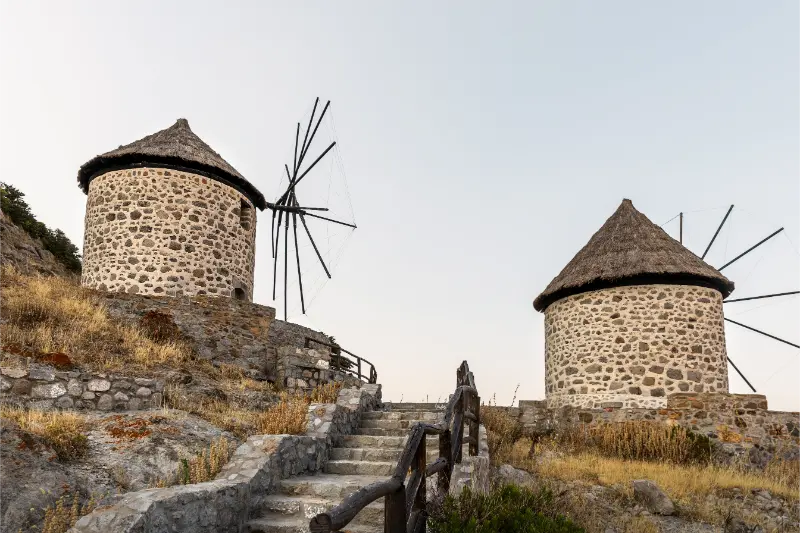
A rental car is strongly recommended. The island is not especially mountainous, but sights are widely dispersed and public transport does not give the same flexibility for beaches, dunes and archaeological sites.
A realistic 7-day itinerary
Day 1 – Myrina
Explore the town, waterfront and castle area.
Day 2 – Western beaches
Choose one or two beaches and keep the day deliberately simple.
Day 3 – North and sand dunes
Visit the dune landscape and nearby coast, respecting weather and road conditions.
Day 4 – Hephaistia and Kavirio
Use the day for archaeology and a quiet northern beach.
Day 5 – Moudros and the east
Explore the bay, villages and eastern landscapes.
Day 6 – Poliochni and south coast
Combine the prehistoric site with a nearby beach or food stop.
Day 7 – Flexible day
Follow the wind, revisit a favourite beach or spend more time in Myrina.
How I would plan the trip
I would build a trip to Lemnos around geography rather than a list of attractions. Choose one main area for each day, add only nearby stops, and keep at least one half-day flexible. On a Greek island, the distance on the map rarely tells the full story: narrow roads, parking, ferry schedules, heat and the temptation to stop at an unexpected beach can all stretch a simple transfer.
Transfer days deserve their own space in the itinerary. A morning ferry, a rental-car pickup or a mountain drive can consume more time than the timetable suggests once luggage, check-in and meals are included. Treating those hours as real travel time is one of the easiest ways to make the holiday feel relaxed rather than rushed.
Best time to visit
For a first trip to Lemnos, late spring and early autumn are usually the easiest seasons to balance warm weather with a calmer pace. July and August bring the most reliable beach conditions but also the highest demand, stronger midday heat and more pressure on parking and accommodation. In shoulder season, some seasonal services may run less frequently, so transport and opening times should be checked close to the trip.
If walking, archaeological sites or road trips are central to the plan, I would avoid putting the most exposed activities in the middle of the day. Start early, leave the hottest hours for lunch or swimming, and return to villages and viewpoints later in the afternoon.
Budget and booking strategy
Accommodation prices can change dramatically by month and by exact location. I compare the total cost of the stay rather than the room rate alone: a cheaper property can become less attractive if it requires daily taxis, long drives or paid parking. On small islands and in mountain regions, location is often worth more than an extra category of hotel.
Ferry timetables, domestic flights, rental-car prices and boat excursions are dynamic. I would book the fixed parts of the trip first, then leave weather-dependent activities flexible where possible. Always recheck schedules a few days before travel and again on the day when sea conditions are relevant.
Practical mistakes to avoid
The most common mistake in Lemnos is trying to see too much in too little time. A better trip usually comes from choosing fewer bases, driving the same roads less often and leaving space for a beach, village or meal that turns out to be better than expected.
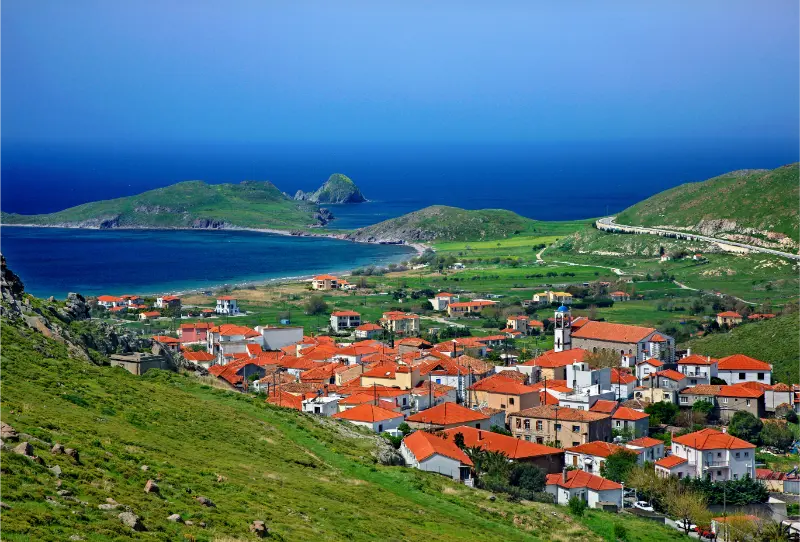
Do not assume every attractive cove has easy access, shade, facilities or reliable phone coverage. Carry water, sun protection and shoes suitable for uneven ground. Download an offline map before remote drives or hikes, and ask locally before taking a rental car onto rough roads that may not be covered by the rental agreement.
Who this destination suits
Lemnos works especially well for independent travellers who enjoy combining landscapes with local food and small-scale sightseeing. Couples can build days around beaches, sunset walks and slow dinners, while solo travellers gain flexibility to follow weather and transport conditions. Families can also enjoy the destination, but the most comfortable plan usually uses fewer bases and avoids very long transfer days.
Travellers with limited mobility should check accommodation access carefully. Historic villages can have steep lanes, steps and parking outside the centre, while some beaches require rough paths or stairways. A beautiful location on a map is not always the most practical base for every traveller.
How to combine it with the rest of Greece
For a broader North Aegean journey, compare Lemnos with Lesvos, Chios, Samos and Ikaria. These islands are not interchangeable, so ferry planning should follow the actual seasonal network rather than a theoretical map route.
Frequently asked questions
How many days do I need in Lemnos?
For a first visit, four to seven days usually gives enough time to understand the destination without turning every day into a transfer. A shorter stay can work if you focus on one area and accept that you will leave some places for another trip.
Do I need a car?
It depends on the destination and your base, but a car is often the easiest way to reach beaches, villages and archaeological sites away from the main town. If you prefer not to drive, choose accommodation around the strongest public-transport hub and build the itinerary around available buses, boats and organised excursions.
Is it suitable for a first trip to Greece?
Yes, provided you match the destination to your travel style. It is particularly rewarding for travellers who want to go beyond the most famous Greek islands while still having enough infrastructure for an independent holiday.
Should I book everything in advance?
Book the parts that can sell out or determine the structure of the trip, such as peak-season accommodation, flights and important ferry connections. Keep beach days and weather-sensitive excursions more flexible whenever cancellation terms allow.
What should I pack?
Bring sun protection, a reusable water bottle, comfortable walking shoes and a light layer for windy evenings or mountain areas. For beach-heavy itineraries, water shoes can be useful on pebbled or rocky shores.
Final advice
The best way to experience Lemnos is to resist the temptation to turn it into a checklist. Spend enough time in one area to notice the rhythm of the place, eat where the day naturally takes you, and leave room for local recommendations. That slower approach is what makes a second-tier destination in the guidebooks feel like a first-rate travel experience.
Useful official information
For destination information and current travel inspiration, consult the Greek National Tourism Organisation: Visit Greece. Transport timetables, seasonal opening hours and excursion schedules should always be checked again close to your travel dates.
Lemnos beyond the beaches
The island’s open landscapes make archaeology and geology unusually easy to combine. A morning at an ancient site can be followed by wetlands, dunes or a broad beach without crossing a high mountain range.
Because the terrain feels spacious, travellers sometimes underestimate driving time and wind exposure. Leave room for unscheduled stops and treat the eastern and western halves as separate day-trip zones.
More North Aegean guides
Continue with Myrina and Poliochni for more detailed planning in this part of Greece.
Explore more Lemnos guides
Best Beaches in Lemnos: Plati, Thanos, Agios Ioannis, Keros, Gomati and Fanaraki; Keros Beach and East Lemnos Guide: Windsurfing, Kitesurfing, Wetlands and Kalliopi; Lemnos Sand Dunes and Falakro Guide: Ammothines, Gomati and Volcanic Landscapes; Hephaistia, Kavirio and Philoctetes Cave Guide: Ancient Lemnos Road Trip; Moudros Lemnos Guide: Bay, WWI History, Fanaraki Beaches and Day Trips; Lemnos Villages Guide: Kontias, Portianou, Nea Koutali, Kaspakas and Rural Stops; Lemnos Food and Wine Guide: Kalathaki, Melichloro, Flomaria, Muscat and Local Taverns; Where to Stay in Lemnos: Myrina, Plati, Agios Ioannis, Moudros or Keros?; Lemnos with Kids: Family Beaches, Easy Sights, Wildlife and Practical Tips; Lemnos Without a Car: Buses, Taxis, Myrina Base, Beaches and What You Can Realistically See