
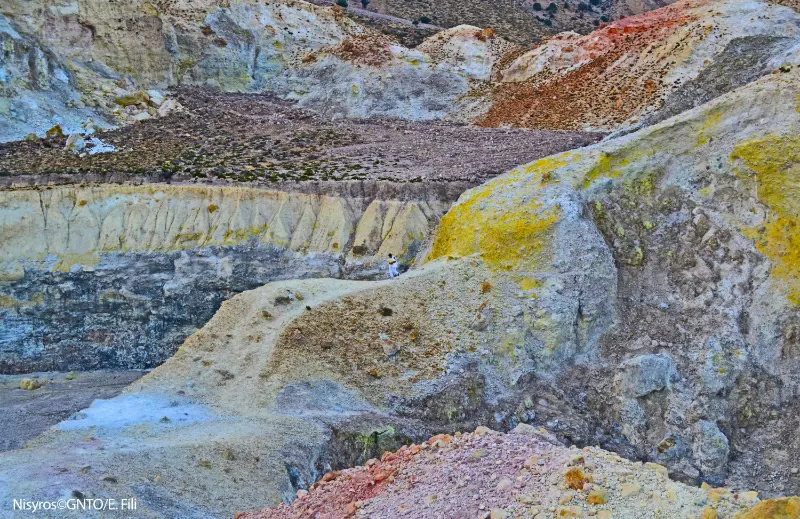
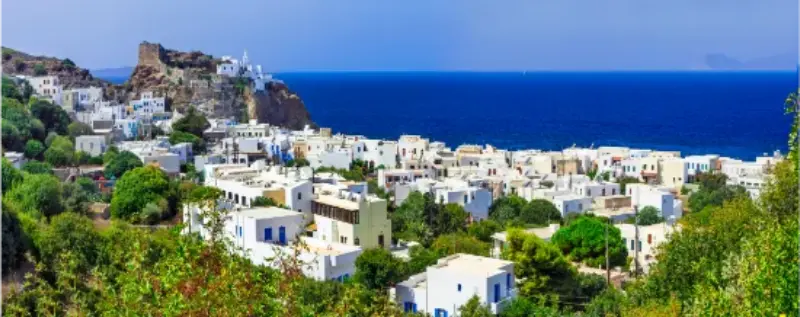
Nisyros is the Dodecanese island I would choose when geology matters as much as beaches. Its centre is occupied by a volcanic caldera, while the main settlement of Mandraki spreads below a dark volcanic landscape of stone terraces, white houses and the sea. It is small enough to understand in a few days, but distinctive enough that a rushed day trip from Kos misses much of what makes it memorable.
The official Greek tourism portal describes Nisyros as an island of exceptional geological interest with an active volcano, volcanic-stone villages and geothermal fields. That is the right starting point, but the best trip is not only about walking into the caldera. Mandraki at dusk, Nikia above the crater, Emporios on the rim and slow meals after the day visitors have left are equally important.
Why this destination is worth adding to your Greece itinerary
Nisyros Travel Guide works best when you give it a clear role in the wider trip. Rather than adding another stop simply because it appears on a ferry map, decide what you want here that a larger island cannot provide: quieter evenings, a particular landscape, a historical layer or a slower few days between more demanding destinations. That decision makes accommodation, transport and trip length much easier to choose.
For a wider route, connect this guide with Kos Travel Guide; Rhodes Travel Guide; Greece Ferry Guide. I prefer combinations that reduce backtracking, even when that means visiting fewer islands overall.
Best things to see and do
Walk through Mandraki before the excursion boats arrive
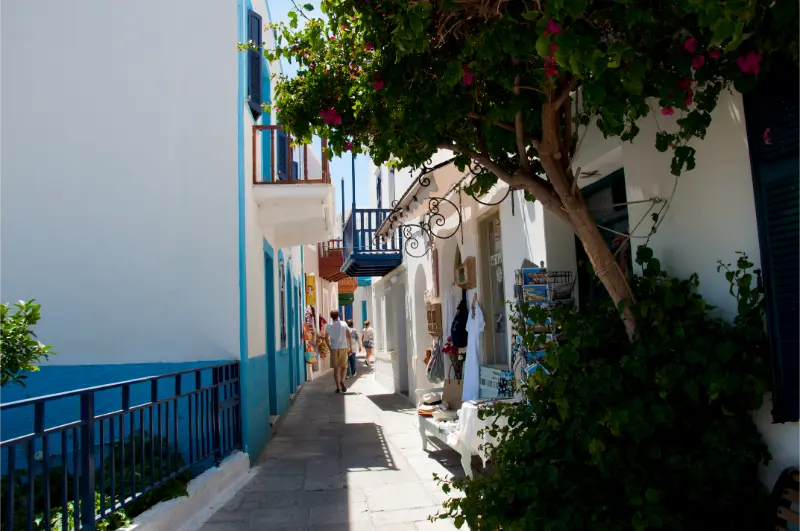
Mandraki is both the harbour and the capital, and it rewards an early walk. Whitewashed lanes climb away from the waterfront toward shaded squares, small churches and houses that use dark volcanic stone in walls and courtyards. The settlement feels more layered when you walk without a fixed route rather than treating it as a corridor between the ferry and a bus to the volcano.
Leave time for the waterfront again in the evening. A day trip reveals the architecture, but an overnight stay reveals the rhythm: deliveries stop, ferry crowds disappear and the harbour becomes a place for a slow dinner rather than a transport interchange.
Visit the volcanic caldera without treating it like a theme park
The Stefanos crater is the feature most visitors come to see. The pale floor, sulphur deposits and steaming vents create a landscape unlike the beach scenery associated with most Greek islands. Respect barriers and current access instructions; geothermal terrain changes and the safest route is the marked one.
Midday can be brutally hot inside the caldera because there is little shade. If transport allows, earlier or later visits are more comfortable. Closed shoes with grip are a better choice than beach sandals, especially on loose or mineral-rich surfaces.
Stop in Nikia for the caldera view
Nikia sits high above the volcanic landscape and provides the clearest visual explanation of the island. The village is compact, with a beautiful central square, narrow lanes and viewpoints over the crater. It is a good place to pause after visiting the caldera rather than immediately driving back to the coast.
The contrast between a quiet village square and the raw geology below is one of the reasons Nisyros feels so unusual. I would allow enough time for a coffee, a short walk and several viewpoints instead of scheduling Nikia as a ten-minute photo stop.
Explore Emporios and the quieter interior
Emporios is smaller and sleepier than Nikia, with old stone houses and wide views from the caldera rim. It helps reveal the agricultural and defensive logic of settlement away from the shore. The roads are narrow, so driving slowly is part of the experience rather than an inconvenience.
Pairing Emporios with Nikia makes a much better island circuit than racing between beaches. Nisyros works because its villages, geology and coast are close enough to combine but different enough to make each part of the day feel distinct.
Leave space for a simple swim
Nisyros is not primarily a resort island, but a swim is still worth building into the day. The coastline includes dark sand, pebbles and rocky entries that reflect the island’s volcanic character. Beach conditions and facilities vary, so take water and footwear and do not assume every cove has organised services.
A short swim late in the afternoon is often more satisfying than trying to turn Nisyros into a beach-hopping destination. The strongest itinerary uses the sea as a counterpoint to the interior rather than as the only reason to visit.
How to get there
The most common approach is by ferry, often via Kos or Rhodes. Visit Greece lists Rhodes–Nisyros at roughly an hour and a half on some services, while direct connections from Piraeus are much longer and schedules vary by season. Build the route around actual sailings rather than assuming a daily connection. If you arrive from Kos on an excursion boat, remember that the timetable may leave little freedom to explore the villages independently.
Ferry and flight schedules are seasonal, and even a route that runs frequently in July may be limited in spring or autumn. I therefore book the transport skeleton first—arrival and departure—then fit accommodation around it. Leave a meaningful buffer before an international flight, especially when a ferry or small-island flight is involved.
Getting around
A scooter or small car gives the most flexibility for Nikia, Emporios and beaches, but the roads are narrow and steep in places. Seasonal buses and organised volcano transfers can work well if you do not want to drive. For a short stay, I would choose one transport strategy in advance instead of losing the first morning comparing options at the port.
Whatever transport you choose, avoid judging island distances by kilometres alone. Narrow roads, heat, parking, ferry-day traffic and scenic stops make short journeys take longer than expected. A realistic itinerary leaves room for one delay without sacrificing the entire day.
Where to stay
Mandraki is the easiest base for a first visit because ferries, restaurants and evening walks are close. Staying elsewhere can be quieter, but it increases dependence on a vehicle. On a four-day trip, convenience usually matters more than chasing a theoretically perfect view.
For a first visit, I usually prefer the base that makes evenings and departure day easiest. A spectacular remote room can be excellent for a longer holiday, but on a three- or four-night stay the hidden cost is often extra driving, taxis or missed flexibility. Check recent accommodation reviews for noise, air-conditioning, stairs and parking rather than looking only at the sea view.
How many days do you need?
The itinerary in this guide is designed around 4 days or stages because that is enough time to understand the place without forcing every beach, village and museum into the same afternoon. Travellers who mainly want to swim can stay longer; island hoppers can shorten it, but I would rather remove one activity than compress every day.
- Day 1: arrive, settle in Mandraki, walk the harbour and old lanes, then stay for sunset and dinner.
- Day 2: visit the caldera, continue to Nikia, and return by Emporios if your transport plan allows.
- Day 3: choose a beach or coastal walk, add a museum or monastery in Mandraki, and keep the afternoon deliberately light.
- Day 4: revisit the place you liked most, have an unhurried breakfast, and leave a generous buffer before the ferry.
Best time to visit
Late May, June and September usually offer the best balance for travellers who want both outdoor time and working tourist services. July and August bring the widest range of connections but also the strongest heat and demand. April, early May and October can be excellent for walking and local atmosphere, though ferry frequency, beach services and restaurant opening patterns become more variable.
Wind matters as much as temperature in the Aegean. A clear forecast can still produce rough sea conditions or an uncomfortable exposed walk. I check the local marine forecast each morning before committing to boat trips or long coastal routes.
What to eat
Look for simple Dodecanese cooking, local cheeses, pulses, fresh fish when available and dishes that use capers or herbs. Nisyros is small enough that I prefer choosing a taverna for atmosphere and a short menu rather than searching for a famous “must-eat” address. Ask what is seasonal and let the meal slow the itinerary down.
For a better food experience, move at least one meal away from the most obvious harbour tables and ask what is genuinely local or seasonal. I also avoid scheduling dinner too tightly after a long excursion: island transport delays are common enough that a reservation with no flexibility can create unnecessary stress.
Who this trip suits best
This destination works especially well for independent travellers who are comfortable with a little uncertainty and do not need constant organised entertainment. Couples and solo travellers can enjoy the slower rhythm, while families should focus on accommodation convenience, beach access and shade. Travellers with mobility limitations should research steps, slopes and boat boarding carefully because picturesque island terrain is not always accessible.
Practical mistakes to avoid
- Do not build a same-day ferry connection with no margin for delays.
- Do not assume every beach has shade, toilets, food or card payment.
- Do not rent a vehicle before confirming where it can realistically be used and parked.
- Do not plan long exposed walks in the hottest part of a summer day.
- Do not treat residents, religious sites or working harbours as scenery for intrusive photography.
- Do not rely on an old blog post for current ferry times, tickets or archaeological-site hours.
A note on responsible travel
Small islands and historic places absorb visitor pressure quickly. Refill water where practical, refuse unnecessary single-use plastic, stay on marked paths, never remove stones or archaeological material, and keep a respectful distance from wildlife. If a beach, trail or monument has a temporary closure, treat it as a safety or conservation decision rather than an obstacle to work around.
Frequently asked questions
Is Nisyros worth more than a day trip?
Yes. A day trip shows the volcano and part of Mandraki, but two to four nights give you the villages, evening atmosphere and flexibility to deal with heat or ferry changes.

Can I visit Nisyros without a car?
Yes, especially if you stay in Mandraki and use seasonal buses or organised transfers. A vehicle is useful for a flexible village circuit but is not essential for every traveller.
Is the volcano dangerous to visit?
Visitors should stay on marked routes and follow local instructions. Geothermal terrain is active and conditions can change, so barriers and closures should never be ignored.
How many days do I need?
Three nights is a good minimum for a relaxed first visit; four days gives enough time to separate the volcano, villages and coast.
Can I combine Nisyros with Kos?
Yes. Kos is one of the most logical gateways, but ferry frequency varies, so build the combination around the current timetable rather than fixed assumptions.
Check current information before you travel
For official destination or site updates, check Visit Greece – Nisyros. I recommend confirming ferry times, opening hours, trail conditions and any temporary access restrictions again shortly before travel, especially outside the peak summer months.
Final thoughts
Nisyros Travel Guide is most rewarding when you resist the urge to optimise every hour. Choose a few experiences that explain the place, leave room for weather and local advice, and allow at least one part of the day to remain unplanned. That balance is what turns a technically efficient itinerary into a trip that actually feels like Greece rather than a sequence of transport bookings.
More Nisyros guides
Mandraki Nisyros Guide: Panagia Spiliani, Paleokastro, Museums and Where to Stay; Nisyros Volcano Guide: Stefanos Crater, Caldera, Geology, Safety and Visiting Tips; Nikia and Emporios Nisyros Guide: Caldera Views, Porta Square, Museum and Natural Sauna; Pali Nisyros Guide: Harbour, Beaches, Thermal Heritage, Food and Where to Stay; Best Beaches in Nisyros: Hohlaki, Pali, Lies, Pachia Ammos and Volcanic Swimming Spots; Nisyros Hiking Guide: Caldera Trails, Villages, Paleokastro, Beaches and Safety; Nisyros Day Trip from Kos: Kardamena Boats, Volcano, Villages and a Realistic Itinerary; Nisyros Without a Car: Buses, Taxis, Walking, Volcano Transport and the Best Base; Where to Stay in Nisyros: Mandraki, Pali, Nikia or Emporios? Best Areas Compared; Nisyros Food Guide: Pithia, Kapamas, Local Cheese, Capers, Sweets and What to Eat.
Related itinerary: Kos, Nisyros and Kalymnos in 10 Days: Dodecanese Island-Hopping Itinerary.