
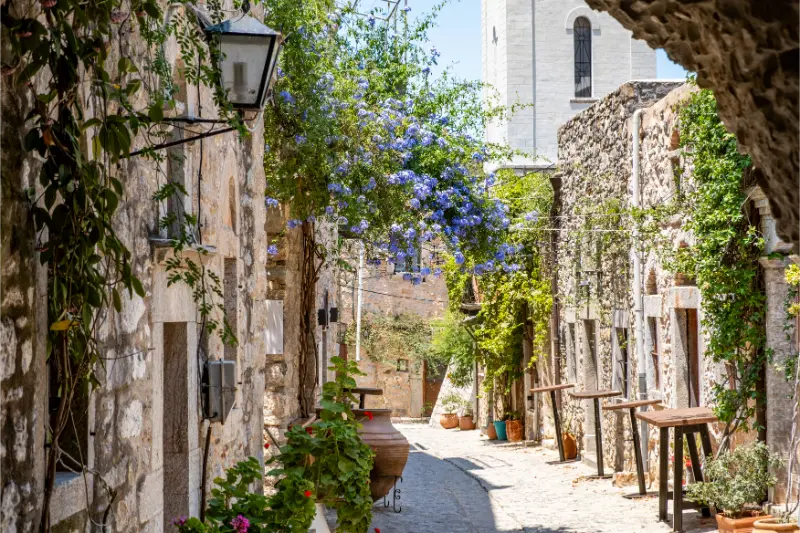
Mastiha is not simply a souvenir flavour from Chios. It is a cultivation system, a landscape and a social tradition concentrated in the south of the island. Understanding it changes the way you see Pyrgi, Mesta, Olympi and the fields between them.
The best introduction combines the Chios Mastic Museum with time in the villages rather than treating either as a standalone attraction. The museum explains the process; the settlements show how production shaped architecture, community life and trade.
Quick planning summary
| Question | Practical answer |
|---|---|
| Best for | food travellers, culture, families and local-product shopping |
| Ideal time | half a day for museum plus village; a full day for three villages |
| Best base | Pyrgi or Mesta, or Chios Town with a car |
| Pair it with | Pyrgi, Mesta, Olympi and a south-coast beach |
Why mastiha is unique to southern Chios
The lentisk tree grows elsewhere, but the distinctive aromatic resin known as Chios mastiha is traditionally produced in the Mastichochoria of southern Chios. Soil, microclimate and accumulated knowledge all matter. That is why the product belongs to a specific landscape rather than being an ingredient that can simply be detached from place.
The practical approach is to keep this stop connected to the surrounding region rather than crossing the island for one item on a checklist. Build the day around nearby villages, food and coastline, then leave enough space for an unplanned coffee, swim or viewpoint when conditions are good.
What the cultivation cycle involves
Production requires repeated, careful work: preparing and cleaning the ground, making small incisions in the bark, allowing resin “tears” to form and harden, then collecting and cleaning them. Timing varies with weather and local practice. When you drive through the south, remember that the neat fields are working agricultural land, not an open-air exhibit; never enter or touch trees without permission.
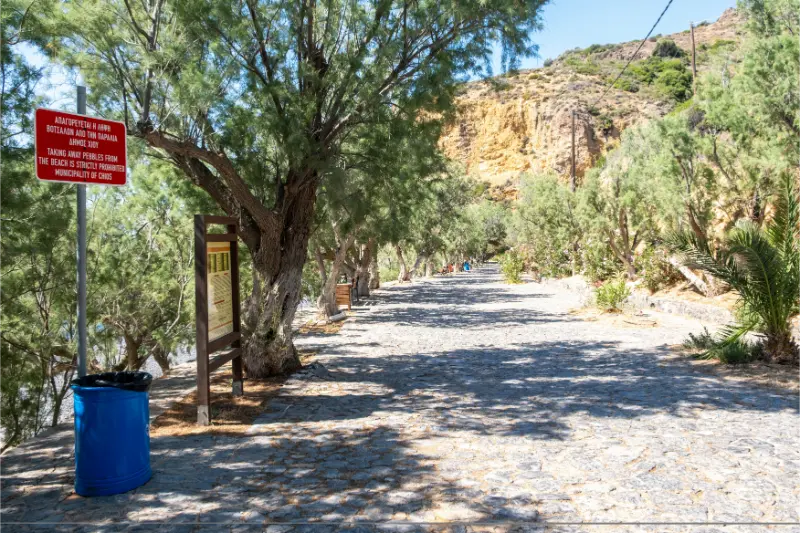
The practical approach is to keep this stop connected to the surrounding region rather than crossing the island for one item on a checklist. Build the day around nearby villages, food and coastline, then leave enough space for an unplanned coffee, swim or viewpoint when conditions are good.
Chios Mastic Museum
The Piraeus Bank Group Cultural Foundation museum near Pyrgi opened in 2016 and explains cultivation, processing and the social economy of mastiha. After maintenance in spring 2026, it reopened on 3 June. The current published schedule is 10:00–18:00 from 1 March to 15 October and 10:00–17:00 from 16 October to February, closed Tuesdays and selected holidays.
For cultural sites, confirm opening hours close to the visit because seasonal schedules, conservation work and religious observances can change access. Modest clothing is appropriate for active churches and monasteries, and sturdy shoes are more useful than sandals on stone steps and uneven ground.

Pyrgi, Mesta and Olympi as living context
Pyrgi shows the visual identity of the south through xysta façades; Mesta preserves the defensive character of a castle village; Olympi adds a quieter settlement pattern. Visit at least two. Their fortified form was connected not only with security but also with controlling and protecting a valuable agricultural product during earlier centuries.
The practical approach is to keep this stop connected to the surrounding region rather than crossing the island for one item on a checklist. Build the day around nearby villages, food and coastline, then leave enough space for an unplanned coffee, swim or viewpoint when conditions are good.
What to taste and buy
Mastiha appears in chewing gum, sweets, spoon desserts, liqueurs, bakery products, cosmetics and savoury recipes. Start with small quantities before buying gift boxes: the resinous flavour is distinctive. Look for clearly labelled Chios products and buy from reputable shops, cooperatives or museum outlets rather than assuming every “mastic” souvenir has the same origin or quality.
The practical approach is to keep this stop connected to the surrounding region rather than crossing the island for one item on a checklist. Build the day around nearby villages, food and coastline, then leave enough space for an unplanned coffee, swim or viewpoint when conditions are good.
Responsible cultural tourism
The best mastiha experience is respectful. Do not pick resin, enter private fields or stage photographs that interfere with harvest work. If you encounter a producer or demonstration, ask before photographing. Spend money locally, learn the difference between raw resin and processed products, and treat the villages as homes rather than theme parks.
The practical approach is to keep this stop connected to the surrounding region rather than crossing the island for one item on a checklist. Build the day around nearby villages, food and coastline, then leave enough space for an unplanned coffee, swim or viewpoint when conditions are good.
How much time should you allow?
A half-day is enough for the museum plus Pyrgi; a full day lets you understand mastiha through several villages and the landscape between them. Chios is larger and more varied than it looks on a simple island map, and the most enjoyable days usually combine one main cultural area with one beach or meal stop rather than several distant targets. Driving times, village walks and slow lunches add up quickly, so leave enough margin to enjoy what you came to see.
If you are building a week-long trip, keep at least one flexible half-day. Wind direction can change which beach feels best, a museum or monastery may have seasonal hours, and a village that looks like a thirty-minute stop can easily become the place where you want to stay for lunch. That flexibility is especially valuable on Chios because north, centre and south have very different characters.
Getting there and getting around
Driving is easiest because fields, villages and the museum are spread across south Chios; an organised mastiha tour is a strong alternative. Chios has an airport close to Chios Town and ferry connections with Piraeus and other Aegean destinations. For a short break, flying can save time; for a longer North Aegean route, ferries can make more sense. Always check the exact service for your dates because frequencies and vessel types change by season.
A rental car is the easiest way to connect the mastic villages, west-coast viewpoints and northern settlements. If you prefer not to drive, base yourself in Chios Town, use buses for the most useful corridors and book an organised excursion for the south or central villages. Do not assume that every small beach or mountain village has frequent public transport, especially outside July and August.
Best time to visit
Summer and early autumn connect most directly with the cultivation cycle, while spring offers cooler village walks and fewer crowds. May, June and September are particularly comfortable for combining sightseeing with swimming. July and August provide the widest choice of seasonal services but bring stronger heat and more demand. Spring is excellent for walking, flowers and village exploration; autumn can be rewarding for food and slower travel as long as you accept a little more weather uncertainty.
Whatever the month, plan archaeological sites, castles and exposed village walks for the cooler part of the day. The Aegean wind can make one coast much more comfortable than another, so ask locally before driving across the island purely for a beach. In high summer, carry water and do not rely on shade at remote coves.
Who this part of Chios suits best
This is one of the best Chios themes for food travellers, families, cultural visitors and anyone who likes understanding how a local product shapes a place. The island rewards travellers who enjoy mixing cultural detail with everyday village life. It is less about rushing from one headline sight to another and more about noticing architecture, food, working landscapes and the relationship between inland settlements and the sea.
Families can enjoy Chios too, especially with a sensible base and shorter drives, but the island is not uniformly stroller-friendly: medieval lanes, cobbles and steep viewpoints appear often. Couples and solo travellers usually appreciate the freedom to linger in villages, while photographers and food-minded visitors will find material well beyond the classic beach season.
Budget and booking strategy
Chios can be good value compared with the most internationally famous Greek islands, but the total cost still depends heavily on transport. A cheaper room far from your planned sights can be false economy if it creates long daily drives. Compare parking, breakfast, beach access and evening dining options as part of the accommodation price rather than looking at the room rate alone.
In peak summer, reserve well-located accommodation, rental cars and any must-do guided experience earlier. In shoulder season, you can often keep more flexibility, but confirm whether smaller museums, tavernas and beach services are operating on your travel dates. For cultural attractions, always check current hours rather than relying on an old blog post.
What to pack
- Shoes with grip for stone lanes, castle paths and uneven archaeological ground.
- A refillable water bottle, hat and high-SPF sunscreen for exposed summer days.
- A light layer that covers shoulders and knees for monasteries and churches.
- Water shoes if you prefer them on Chios’s pebble and volcanic beaches.
- Offline maps or downloaded route information for rural areas with weaker signal.
Common mistakes to avoid
- Treating Chios as a tiny island and planning north and south on the same rushed day.
- Assuming every museum, monastery or cave follows the same seasonal opening pattern.
- Choosing a famous beach without checking wind, shade and the needs of your group.
- Driving long distances for lunch when the village already in front of you has good local food.
- Leaving fuel, water or return transport decisions until late in the day in quieter areas.
More Chios guides
Chios Town Guide: Castle, Museums, Waterfront, Food and Where to Stay; Pyrgi, Mesta and Olympi Chios Guide: Mastic Villages, Xysta, Caves and Medieval Streets; Nea Moni, Anavatos and Avgonyma Chios Guide: UNESCO Monastery, Medieval Villages and Sunset; Kampos Chios Guide: Citrus Estates, Mansions, Cycling and Museum; Volissos and Amani Chios Guide: Castle, Villages, Beaches and North-West Road Trip; Mavra Volia and South Chios Beaches Guide: Emporios, Komi, Vroulidia and Swimming; Chios Mastiha Guide: Museum, Villages, Harvest, Products and What to Buy; Best Beaches in Chios: 15 Beaches for Black Pebbles, Families, Snorkelling and Quiet Coves; Chios Road Trip: A Realistic 7-Day Itinerary for Mastic Villages, Beaches and North Chios; Where to Stay in Chios: Chios Town, Karfas, Mesta, Volissos or South Coast?. Start with the Chios Travel Guide for the island overview.
Frequently asked questions
Do I need a car for this Chios trip?
A car is strongly recommended for most village, beach and north-island itineraries. Chios Town can be explored without one, and organised tours are a useful alternative for the Mastichochoria or central heritage routes.
How many days should I spend on Chios?
Five days gives you a useful introduction, but seven is much better for combining the south, centre and north without spending every day in the car. Beach-focused or hiking trips can easily justify longer.
Is Chios good in September?
Yes. September often combines warm sea temperatures with easier sightseeing than peak August. Seasonal services are still active in many places, but ferry, bus and attraction schedules should be checked for the exact dates.
What should I check before leaving the hotel?
Check wind, heat, current opening hours, fire-risk restrictions if you plan to hike, and return transport if you are not driving. Keep one nearby alternative so a closure or rough sea does not waste the day.
Can I combine Chios with another North Aegean island?
Yes when ferry schedules align, especially with Lesvos or Samos, but connections vary by season. Build the route from real timetables rather than assuming geographically nearby islands connect every day.
Check official information before you go
For current destination information use the official source for this Chios area or attraction and the official Chios tourism portal. Opening hours, transport and seasonal services can change, so verify the specific detail you need shortly before travel.
Final planning advice
Chios is most rewarding when you plan by region and leave room for local decisions. Use the major sights as anchors, not as a race. A village lunch, a sudden change of beach because the wind shifts, or an extra hour in a quiet square can become the part of the trip you remember most.
If this is your first visit, resist the urge to see the whole island in three days. Chios has enough depth for a week, and the contrast between mastiha country, central Byzantine heritage, the west coast and the north is exactly what makes the island worth exploring slowly.
Leave a Reply