

Northern Ithaca is much more than Kioni’s harbour. Drive inland and the island changes into a landscape of high villages, cypress-covered slopes, old churches, archaeological sites and wide views toward Kefalonia and the mainland. Stavros, Anogi and Exogi are the key places to understand this interior. They are not attractions in the conventional sense; they work best as a sequence of slow stops connected by mountain roads and short walks.
Stavros: the practical centre of the north
Stavros is the largest settlement in northern Ithaca and a useful place for coffee, supplies and orientation. The square is the natural starting point. From here, roads branch toward Frikes, Exogi, Polis Bay and the central spine of the island. Give yourself time to sit rather than treating the village as a junction.
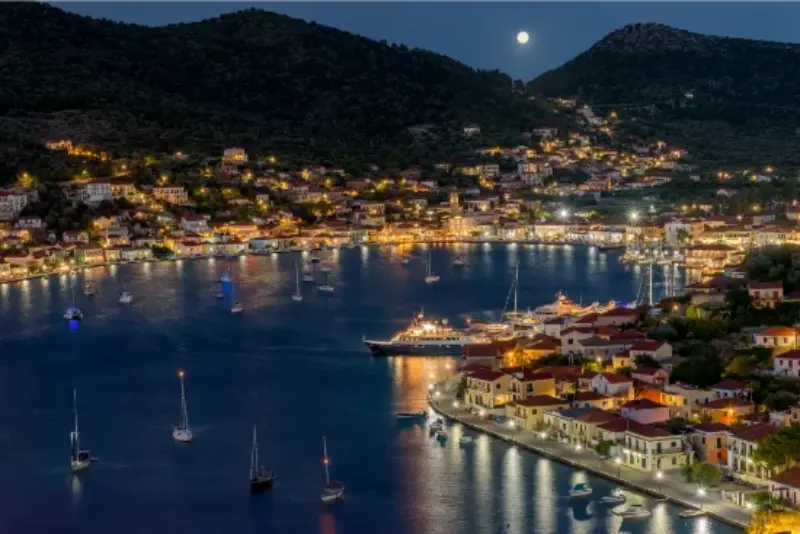
The area around Stavros is strongly associated with archaeological investigations and the island’s Homeric identity. Displays and local references to Odysseus are part of that story, but archaeology and literary tradition should not be collapsed into one claim. Ithaca’s identification with Homeric Ithaca is ancient and culturally powerful; the precise interpretation of individual sites remains a subject for scholarship.
Polis Bay and the archaeological landscape
Polis Bay lies below Stavros and combines a sheltered shore with archaeological associations. Finds from the wider area have contributed to discussions about cult, navigation and the long occupation of northern Ithaca. It is an excellent example of how a beach day and history can coexist without building a theme-park version of Homer.
If you swim here, keep the visit simple. Archaeological value does not mean every rock has a story that can be confidently identified. Read museum information, respect fenced or protected areas and enjoy the fact that the same bay can be both a living landscape and an ancient one.
Exogi: a mountain village at the edge of the island
Exogi sits high above the northern coast and feels far removed from the harbour villages despite the short map distance. The road climbs through green slopes to a settlement with dramatic views. It is a good place to experience Ithaca’s vertical geography and to understand why walking routes once mattered so much before modern roads connected the villages.
Near Exogi, sites often promoted in connection with the palace or school of Homer attract visitors interested in Odysseus. Approach them with curiosity but also with archaeological caution. Use official signage and current access information; avoid presenting an interpretation as settled fact simply because a tourism leaflet uses a confident label.
Anogi: stone, silence and the island’s interior
Anogi is one of Ithaca’s highest villages. Its stone houses, old church and unusual monolithic stones in the surrounding landscape create a strong contrast with the sea-level harbours. The village is small enough to walk slowly, listen for church bells and notice how the terrain opens in multiple directions.
The Church of the Dormition is an important cultural stop when open. Dress respectfully and check access rather than assuming a small village church functions like an all-day museum. The surrounding area also connects with walking routes, including paths that descend toward the coast.
Driving the northern interior
Roads are scenic but narrow and winding. Meet oncoming traffic patiently and use wider passing points rather than forcing both vehicles through. Goats can appear on or beside the road. At viewpoints, pull fully off the carriageway before taking photographs.
Do not schedule this as a race from Vathy to five villages and three beaches. A good northern day needs time for stops that are not “sights”: a coffee in Stavros, a conversation at a bakery, waiting for a flock to move, or simply sitting above Exogi. Those unscheduled minutes are part of the experience.
A realistic north-Ithaca route
- Leave Vathy after breakfast and drive north without stopping at every viewpoint.
- Explore Stavros and, if useful, the local archaeological context.
- Descend to Polis Bay for a short swim or continue directly toward Exogi.
- Visit Exogi while visibility is good and temperatures are manageable.
- Cross toward Anogi for the church, stone landscape and mountain atmosphere.
- Finish in Frikes or Kioni for a late lunch or early dinner rather than driving back immediately.
How much walking is involved?
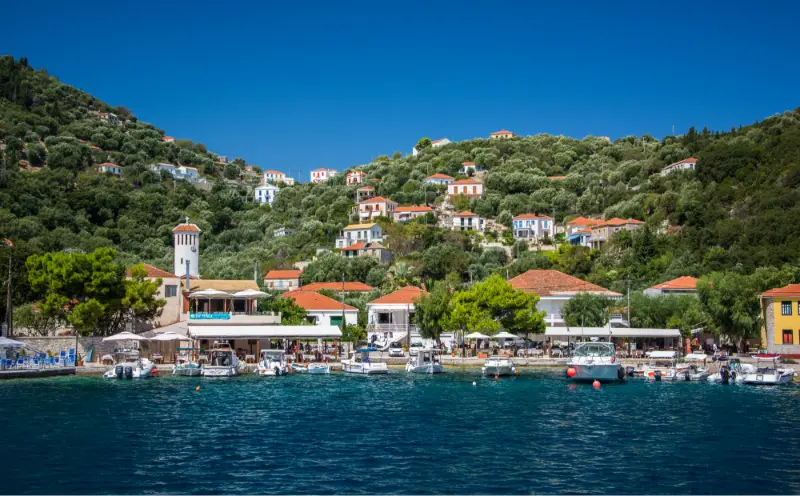
You can see the villages with short walks from parking areas, but the terrain is rarely flat. Exogi and Anogi reward walkers who are comfortable with slopes, uneven paving and heat. For a true hiking day, use the Ithaca hiking guide instead of trying to convert a road trip into an improvised long trek.
Best season and time of day
May, June, September and early October are especially pleasant for village exploration because temperatures are more forgiving. In July and August, start earlier or leave the interior for late afternoon. Winter and shoulder-season visits can be wonderfully quiet, but restaurant openings and transport options are reduced.
Visibility matters as much as temperature. If cloud covers the high ground, keep Exogi and Anogi flexible and spend more time by the coast. A clear mountain day is worth protecting.
Who should prioritise this route?
This is essential for travellers interested in walking, archaeology, photography, village life or the Homeric imagination of Ithaca. It is less important for a two-night beach break. Families with children can enjoy Stavros and selected viewpoints, but long winding drives may be tiring; choose two villages rather than trying to complete the entire loop.
Booking accommodation and activities
For accommodation, compare places to stay in Ithaca on Booking.com. Check the exact village rather than booking from the island name alone: Vathy, Kioni, Frikes and the northern villages create very different daily logistics.
For organised activities and excursions, use the widget below as a starting point. Availability on Ithaca is seasonal and inventory can be limited, so verify the meeting point, cancellation terms and whether transfers are included before paying.
Official resources to recheck before you go
For an official destination overview, use Visit Greece’s Ithaca page. It describes Vathy, the fishing villages, pebbled coves and the island’s walking character, and it is a useful starting point before checking local conditions.
For beaches, the official Visit Greece beaches of Ithaca page covers Filiatro, Dexa, Gidaki, Platia Ammos, Afales, Sarakiniko and Skinos. For local notices, municipal services and seasonal announcements, check the Municipality of Ithaca.
For walking routes, the Municipality has promoted the Ithaca Trails network, described as roughly 110 km across the island. Use current route information because vegetation, signage and heat conditions can change.
More Ithaca guides for planning the same trip
Continue with Vathy Ithaca Guide · Kioni and Frikes Ithaca Guide · North Ithaca Villages Guide · Best Beaches in Ithaca · Ithaca Hiking and Odysseus Sites Guide · Ithaca Boat Trips Guide · Ithaca Without a Car · Where to Stay in Ithaca · Ithaca with Kids · How to Get to Ithaca. Start with the Ithaca Travel Guide if you need the island overview before choosing detailed day plans.
Making the Homeric story useful rather than gimmicky
Before the drive, read a short summary of Odysseus’ return to Ithaca rather than carrying a long list of “exact” locations. Then notice how the island hides harbours behind headlands and how quickly mountain villages lose sight of the sea. The geography itself is the most convincing interpretive tool.
A museum label that says a site may correspond to a Homeric location is more valuable than a roadside claim of certainty. Preserve that distinction in your own travel notes and photographs.
Coffee, water and services in the interior
Carry water before leaving the coast. Village cafés and shops can have seasonal hours, and a route planned around a specific lunch stop may fail in shoulder season. A small picnic gives you freedom to stop at a viewpoint without racing to the next open kitchen.
Fuel the car before a full north-island day if the gauge is low. The island is small, but driving back to Vathy only for petrol wastes the very slow-travel rhythm that makes the route worthwhile.
Practical timing by season
In May and early June, walking and village exploration are easier in cooler temperatures, but the sea is cooler and some seasonal services run less frequently. July and August bring the fullest transport and restaurant choice, along with stronger heat, parking pressure and demand for taxis and boats. September is often the best compromise for warm water and calmer roads, while October requires more careful checking of ferry frequencies and business opening days.
Whatever the month, plan the following day with the actual wind and temperature forecast rather than using a fixed itinerary written weeks earlier. Ithaca is compact enough that changing from a north-coast beach to a Vathy day, or from hiking to a museum and long lunch, rarely ruins the trip. Flexibility is one of the island’s greatest advantages.

Common planning mistakes
The most common mistake is treating short distances as short journeys. Roads are narrow and winding, parking takes time and a spontaneous swim can easily add an hour. Do not schedule every meal, beach and village. Choose one main purpose for the day and let secondary stops remain optional.
Another mistake is relying on a single old timetable or map review. Ferries, local buses, excursion boats and seasonal businesses change. Confirm anything time-critical close to travel and keep departure day simple. Finally, avoid judging the island only by famous names: a quiet unnamed cove or ordinary village square can be more memorable than a hurried checklist stop.