

Kamares is the arrival point for almost every ferry visitor to Sifnos, but it is more than a place to drag a suitcase through. The island’s main port sits on a broad sandy bay with cafés, bakeries, accommodation, pottery workshops and one of the easiest beach routines on the island. For travellers without a car or families who want a flat, convenient base, Kamares deserves serious consideration.
This guide explains how the port, beach and two sides of the bay fit together, what Kamares is like after the ferries leave, how to connect with Apollonia and the rest of Sifnos, and when staying here makes more sense than choosing an inland village.
Kamares at a glance
| Best for | Ferry convenience, families, easy beach days |
| Distance from Apollonia | About 5 km |
| Beach | Long sandy bay |
| Services | Hotels, restaurants, bakeries, shops, pottery, tourist services |
| Good without a car? | Yes |
Understanding the bay
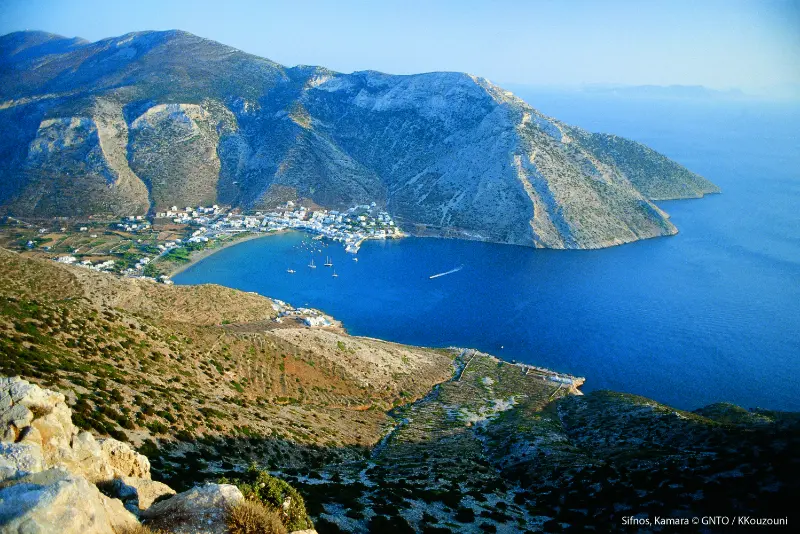
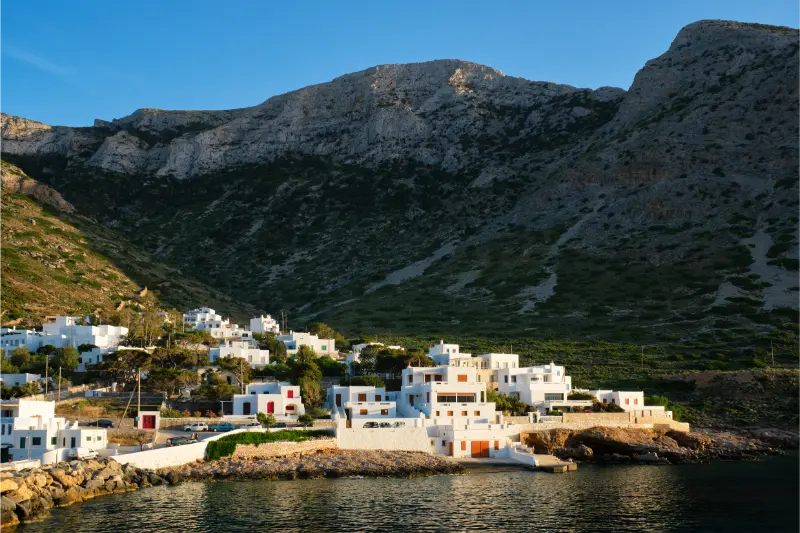
Kamares is the island’s main port and its largest coastal settlement. The ferry quay, shops and much of the commercial activity sit on one side; across the beach, the Agia Marina/Pera Panta area creates a quieter counterpart. The broad bay makes it easy to stay close to the water without feeling trapped inside a tiny resort strip.
Ferry movements add activity, but the beach is long enough that daily life does not feel identical to standing beside the ramp. When choosing accommodation, check the exact side of the bay and walking route to the port rather than assuming every “Kamares” room is equally convenient with luggage.
Kamares Beach
The municipality describes Kamares as a sandy beach bordered by native vegetation, reed beds, coastal lagoons and dunes, with sand lilies appearing in August. The shallow-looking shore and easy access make it popular with families, although wind and wave conditions can still change from day to day.
Do not choose a swimming spot solely by proximity to the ferry quay. Walk along the bay, observe where local bathers are entering and respect any marked port or boat areas. The beach’s main strength is convenience: you can swim, return to your room, eat and catch transport without a long transfer.
Who should stay in Kamares
Kamares is particularly strong for a short stay, late ferry arrival, early departure, families with a lot of luggage and travellers who do not want to rent a car. It also suits people who want a beach outside the door but still expect to explore the island by bus.
It is less ideal if your priority is the most atmospheric evening village. For that, Apollonia and Artemonas offer a richer inland atmosphere and wider nightlife. The choice is not about better or worse; it is about whether beach-and-port convenience beats central-village character for your trip.
Arriving by ferry
Keep the first hour simple. Ferries can unload quickly, taxis become busy and buses may be timed around arrivals. If you are staying in Kamares, walk only if your accommodation confirms the route is practical with luggage. If you are continuing elsewhere, identify the bus stop or taxi rank before stopping for a meal.
On departure day, being based in Kamares reduces stress. If you stay elsewhere, arrive with a buffer rather than planning a final beach swim right up to boarding time. Wind and ferry operations are part of island travel, and schedules can change.
Buses to the rest of Sifnos
Seasonal bus timetables connect Kamares with Apollonia and Artemonas, where you can change or continue toward other villages and beaches depending on the schedule. Service levels vary significantly between spring, peak summer and shoulder season. The municipality publishes updated timetables, so use the current notice rather than an old timetable saved from a previous year.
For a trip built mainly around buses, pair Kamares with the planning advice in Sifnos Without a Car.
Pottery and local culture
Sifnos has a living pottery tradition, and Kamares contains several workshops. The official tourism site lists fifteen pottery workshops across the island, with multiple names in Kamares. A visit is more meaningful if you ask about the functional vessels used in Sifnian cooking—especially the mastelo—rather than treating the shops as generic souvenir stores.
Pottery also helps explain the island’s food. The vessel, oven and recipe developed together, which is why a Sifnos food guide belongs naturally in the same trip as a workshop visit.
Hiking from Kamares
The port is also a trailhead. Routes lead toward old mining areas, churches and the NATURA-protected landscape, while another connection heads inland toward the central settlements. The exposed terrain can become demanding in summer heat, so morning starts and enough water matter more than the short distances may suggest.
Restaurants and evenings
Kamares has enough tavernas, cafés and bakeries to stay comfortably without travelling for every meal. The evening mood is relaxed and oriented around the waterfront rather than nightlife. If you want a bus into Apollonia for dinner, check the last return before ordering, not after dessert.
A simple two-day Kamares plan
- Arrival day: check in, swim close to the hotel and keep the evening local.
- Morning two: pottery workshop or a short hike before heat builds.
- Afternoon: beach and rest.
- Evening: bus or taxi to Apollonia for a different atmosphere, returning according to the current timetable.
Official information
The Municipality of Sifnos page for Kamares covers the port, beach, services and local trails. Use the municipality’s latest transport notice for current bus times.
Tours and activities
If you want a guided walk, food experience, boat trip or another organised activity, compare what is available for your exact dates. On a small Cycladic island the choice can change by season, so check the meeting point, duration, language, cancellation terms and whether transport is included before booking.
Frequently asked questions
Is Kamares a good place to stay?
Yes, especially for ferry convenience, families, beach access and travellers without a car.
Is the beach sandy?
Yes. Kamares has a long sandy bay with easy access from the settlement.
How far is Kamares from Apollonia?
About 5 km by road.
Can I explore Sifnos by bus from Kamares?
Yes, but routes and frequency are seasonal. Connections through Apollonia and Artemonas are important.
Is Kamares noisy because of the port?
Activity increases around ferry arrivals, but the bay is larger than the quay area and accommodation experiences vary by location.
Should I stay here for the whole trip?
It can work very well if convenience and beach access are priorities; travellers focused on village evenings may prefer the centre.
Final practical advice
Do not dismiss Kamares as “just the port”. It is one of the easiest bases on Sifnos and can remove several layers of transport stress. Choose it deliberately for the beach, luggage convenience and bus access, then use the rest of the island for history, food and hiking.
Planning details that are easy to overlook
Build each day around geography rather than a list of saved pins. Sifnos is compact, but repeated returns through the central road network can still waste time. Group central villages together, south-coast beaches together and Kastro with the eastern side. This leaves more time for meals and swimming, which are not empty gaps in a Sifnos itinerary but part of the experience.
In July and August, heat changes the order of the day. Walk early, swim through the hottest hours and return to villages in late afternoon. In May, June, September and October, longer daytime walks become more realistic, but ferry and bus frequency may be lower. Always verify the transport that operates on your exact dates before making a non-refundable plan around it.
Carry a refillable bottle, sun protection and shoes with grip even on days that are not labelled “hiking”. Stone lanes can be polished, coastal paths can be dusty and a five-minute viewpoint detour can become uncomfortable in smooth sandals. A light layer is useful for wind on evening terraces and ferry decks.
For churches and monasteries, dress respectfully and avoid entering during services simply to take photographs. For pottery workshops, ask before photographing artisans at work. For beaches, leave stones, plants and shells where they are and take rubbish back to a serviced settlement if there are no bins.
Finally, keep one flexible half-day in the itinerary. Wind, a changed bus timetable, a festival or a restaurant recommendation may give you a better plan than the one you made months earlier. Sifnos rewards travellers who organise the essentials but leave enough room for the island to change the schedule.
A realistic pace for the day
Avoid planning Sifnos as a sequence of ten-minute stops. Roads are short, but parking, bus waits, stone lanes, meals and beach access all add time. A realistic day normally has one main village or walk, one swim and one unhurried meal. This rhythm also makes it easier to adapt when wind changes the beach choice or when a small museum has different seasonal hours than expected.
If you are combining this area with another part of the island, choose the nearest logical neighbour rather than crossing Sifnos repeatedly. Keep Kastro with the eastern side, Faros and Chrysopigi with the south-east, Platis Gialos with the south and Kamares with ferry-day logistics. This simple approach reduces unnecessary transfers and creates more time for the experiences that make the island distinctive.

Leave a Reply