
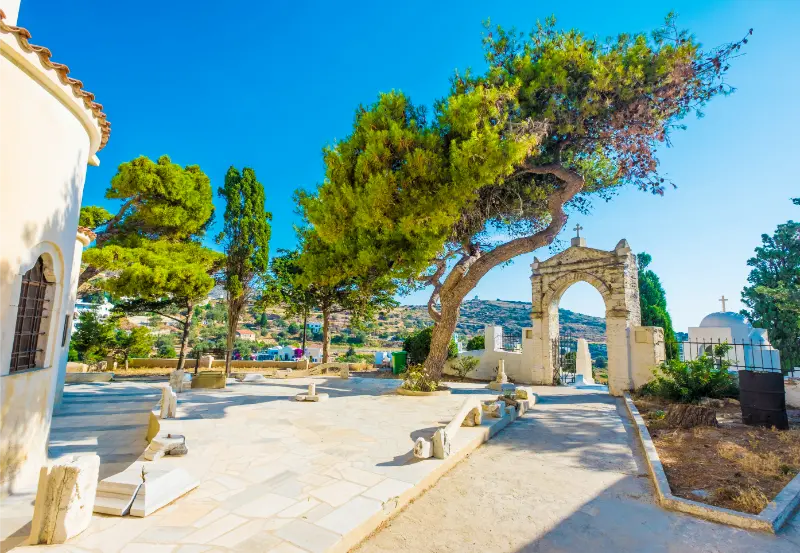
Paros is compact enough that a road trip does not need to mean changing hotels every night. The better approach is to choose one base—or at most two—and use five days to explore different parts of the island without repeating the same coastal drive. A car is most valuable for early starts, inland villages, the marble quarries and flexible beach choices when the wind changes.
This five-day route assumes you want more than Naoussa and a beach. It balances historic Parikia, the central villages, north-coast scenery, east-coast beaches and the quieter south. If you travel without a car, you can still follow much of the structure by using KTEL buses and dropping the stops that depend on remote access.
For the wider island picture, keep the Paros Travel Guide open alongside this article. Paros is compact enough for day trips, but roads, wind and summer traffic make geographic grouping more important than the map suggests. The island works best when you choose one main area for the day and add one or two nearby stops rather than constantly crossing between Naoussa, Parikia and the south coast.
Before you rent a car
- Choose a small vehicle that is easy to park in villages.
- Read insurance exclusions for unpaved roads and underbody damage.
- Photograph the vehicle at collection.
- Do not follow navigation apps into tiny pedestrian lanes.
- Refuel before a long day rather than waiting for the last convenient station.
- Never drink and drive after a long taverna dinner.
Day 1: Parikia and arrival
Keep the first day deliberately light. Walk the Parikia old town, visit Ekatontapyliani and the Archaeological Museum if arrival time allows, then stay for the waterfront evening. Do not collect the rental car until you actually need it if your first night is in town.
Day 2: Lefkes, marble and east-coast villages
Start inland with Lefkes, then continue to the ancient marble quarries if current access is suitable. Use the afternoon for Marpissa and Piso Livadi. This day gives you architecture, history and a swim without crossing the island repeatedly.
Day 3: Naoussa, Kolymbithres and Paros Park
Begin early in Naoussa, then move to Kolymbithres before peak beach traffic. In late afternoon, walk part of Paros Park and swim at Monastiri. Reverse the beach and hike if heat or wind suggests a better order.

Day 4: Golden Beach and the south-east
Use the wind forecast to decide whether Golden Beach is a swimming day, a windsurfing day or a reason to pivot inland. Continue through Drios or nearby coastal stops without trying to sample every beach. A long lunch is part of the route, not lost time.
Day 5: Alyki and south Paros
Finish with a slower day around Alyki. Swim, eat seafood and keep the schedule light if you have a flight the next morning. If you still want one final excursion, use a nearby south-coast beach rather than driving back to north Paros for one last photo.
Where to base yourself
Parikia is the most practical base for ferries and buses. Naoussa suits nightlife and north-coast evenings. Piso Livadi works for a quieter east-coast holiday, while Alyki is excellent for a calm final stay and airport convenience. One base is simplest; two bases make sense only if you want genuinely different morning and evening rhythms.
Driving times: why the map can mislead
Distances are short, but summer traffic, parking searches and village roads make journeys slower than expected. The problem is rarely raw kilometres; it is the time lost entering a busy town, finding legal parking and walking the final section. Group stops by region and allow thirty minutes of unplanned margin around the day.
Paros without a car
Paros has a useful public-bus network linking Parikia with Naoussa, Lefkes and many east- and south-coast settlements. Frequencies change during the season, so use the official Paros KTEL timetable shortly before travelling rather than relying on a timetable copied into an old blog post. A rental car gives more flexibility for sunrise starts, remote coves and multi-stop village days, but parking becomes harder in the busiest weeks. A car-free version of this itinerary works best from Parikia or Naoussa. Use buses for Lefkes, east-coast villages and major beaches, and add a taxi or organised excursion for the few places that do not align with the timetable.
Wind and heat: the two variables that should change the itinerary
On a hot still morning, do archaeology and village walks early, then swim later. On a very windy day, move inland and save exposed beaches or boats for another day. A road trip gives you flexibility only if you are willing to use it; following a rigid day-by-day plan defeats the point of having a vehicle.
Best time for a Paros road trip
June and September are particularly good for combining swimming, walking and village exploration. July and August bring the strongest demand, hotter midday temperatures and busier parking, while the meltemi can make exposed beaches feel very different from one day to the next. May and October suit slower sightseeing and hiking, although some beach services and late-evening transport are reduced. June and September are ideal for this style of trip because roads and parking are more manageable than peak August while beach weather is still central. Spring is excellent for walking and villages; late autumn has a more local feel but fewer seasonal services.
Common mistakes
- Staying in Naoussa and driving through its busiest streets several times every day.
- Trying to visit Parikia, Lefkes, Golden Beach and Paros Park in one loop.
- Parking inside village centres where streets narrow unexpectedly.
- Ignoring wind and forcing the scheduled beach.
- Keeping a rental car on days when you only plan to walk around Parikia.
- Building departure day around a distant north-coast stop before a flight or ferry.
Frequently asked questions
How many days do you need for a Paros road trip?
Five days is an excellent first circuit; three days works if you drop either the north-coast hiking day or the slower south-coast day.
Do you need a car in Paros?
No, but it helps with flexible village and beach combinations. Many popular places are reachable by bus in season.
Is driving difficult?
Main roads are manageable for confident drivers, but village lanes and summer parking require patience.
Where should I stay for a road trip?
Parikia for practicality, Naoussa for evenings, or split the trip with a quieter east/south base if you dislike repeated driving.
Can I include Antiparos?
Yes, but give it a separate day rather than squeezing it into the five-day Paros loop. Use the existing Antiparos guide to plan that extension.
For details that can change—transport frequency, museum hours, road access and seasonal services—check official information shortly before the visit. Useful starting points are Visit Greece’s official Paros page and the Paros KTEL timetable. The current KTEL timetable is also useful even when you have a car because it shows which corridors are well served and can help you decide when renting is unnecessary.
More Paros guides for the same trip
Continue planning with Parikia, Ekatontapyliani, Paros Park, Golden Beach and the main Paros travel guide. Use these pages to build a cluster by geography rather than treating every attraction as a separate cross-island excursion.
Practical planning notes
In peak season, make the day easier by choosing parking, lunch and your backup beach before leaving the hotel. Save offline maps, carry water in the car and keep both walking shoes and swimwear available. Paros is small enough that plans can change without ruining the day, but only if you avoid bookings that force you to cross the island at fixed times. Leave at least one flexible afternoon during a five-night stay for wind, fatigue or a place you discover after arrival.
A note on pace
The most satisfying Paros days usually contain one major objective, one nearby secondary stop and a long meal or swim. When a day has five villages, three beaches and two sunset viewpoints, most of the time is spent parking and navigating. Treat slower pacing as an efficiency tool: it reduces backtracking, keeps children and less active travellers comfortable and gives you time to notice local details that do not appear in search results.
Accessibility and comfort
Accessibility varies widely between seafront promenades, old village lanes, archaeological ground and rocky coastal paths. Travellers with limited mobility should ask accommodation and attractions about step-free access rather than assuming a short distance is easy. Heat is another form of accessibility: even fit visitors may find midday walking unpleasant in July and August. Moving cultural visits to the morning and keeping a shaded lunch break can transform the day.
Final thoughts
A good Paros road trip is not about circling the island as fast as possible. It is about using the car to reduce friction: reach a village early, change beach when the wind changes, stop for a view and return to your base without depending on the last bus. Five geographically focused days are enough to see a much deeper version of Paros while still leaving time to swim and sit down for lunch.