
Paros has become one of the most popular Cyclades islands because it combines attractive towns, good beaches, nightlife, traditional villages and easy access to tiny Antiparos. It can feel stylish without being entirely defined by luxury, and it works for couples, groups of friends and families who choose the right base.
The island is more compact than Naxos, which makes short stays easier. The risk is that visitors spend the whole trip moving between fashionable spots and never slow down. Five days is enough to see the main areas while still having real beach time.
Parikia or Naoussa?
Parikia is the main port and one of the most practical places to stay. You can walk from the ferry to many hotels, use bus connections easily and explore an old town with whitewashed lanes, churches and waterfront restaurants. It is especially convenient if your ferry arrives late or leaves early.
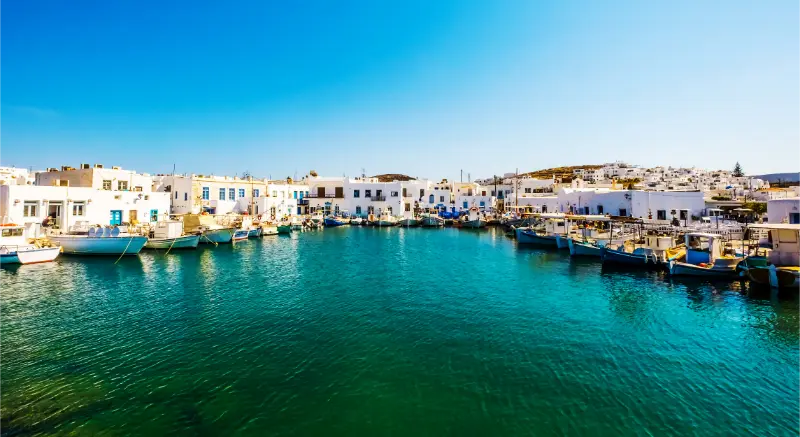
Naoussa, on the north coast, is the island’s most photographed harbour town and has a strong evening scene with restaurants, bars and boutiques. It is beautiful but can become very busy in summer. Stay there if evening atmosphere is a priority; visit from elsewhere if you prefer quieter nights or better value.
How many days do you need?
Three days covers the two main towns and one beach day, but the schedule feels compressed. Five days allows a village day, Antiparos and flexibility for wind. A week is excellent if you want repeated beach days and slower evenings.
If Paros is part of island hopping, limit the number of islands. Moving every two nights means repeated packing, port transfers and weather risk. My Greece itinerary guide shows why fewer bases usually create a better trip.
Explore Parikia properly
Many travellers treat Parikia as a port and immediately leave, which is a mistake. The old town lanes, Panagia Ekatontapiliani church complex and waterfront create a worthwhile half day or evening. Walk inland from the ferry and the atmosphere changes quickly.
Sunset along the waterfront is easy and does not require a famous viewpoint. Have dinner away from the first line of port restaurants if you want a quieter meal, then return to the seafront for the evening atmosphere.
Naoussa beyond the photos
Naoussa’s small harbour, fishing boats and white lanes are undeniably attractive. Go early in the morning if you want quiet photographs, then return after dark when the town becomes social and lively. The two visits feel completely different.
In peak season, dinner reservations can be useful for specific popular restaurants, but do not over-plan every evening. One of the pleasures of the Cyclades is walking until a terrace or small lane feels right.
Lefkes and the interior
Lefkes is one of Paros’s most appealing inland villages, with traditional architecture and hillside views. It is a good escape from the coast and can be combined with a short walk or village route. Visit in the morning or late afternoon when summer temperatures are easier.
The old Byzantine path between villages is popular with walkers. If you hike, check the route, wear real shoes and carry water. A historic path is still an outdoor trail, not a shaded city promenade.
Paros beaches
Paros has a wide range of beaches, from organised areas with services to quieter coves. Kolymbithres is famous for smooth granite formations and small sandy sections. Golden Beach is known for water sports and wind conditions, while other bays around the island offer calmer swimming depending on the day.
The Meltemi wind can be strong in summer. Ask locally which coast is more sheltered and treat beach choice as a daily decision. This approach works better than driving across the island because one saved beach is windy.
A day in Antiparos
Antiparos is reached by a short local ferry connection from the Paros side and makes an easy day trip. The main town is pleasant for walking and eating, while beaches and the island interior reward travellers with transport. The famous cave has many steps, so current access, weather and physical ability should be considered before visiting.
Do not assume the last ferry runs as late as your dinner plans. Check the same-day timetable, especially outside high season. If you love Antiparos’s calmer feel, consider an overnight stay instead of turning it into a rushed checklist.
Getting around Paros
Public buses link the major towns and popular beaches, making Paros manageable without a car. Service frequency is best in the main season. A rental car gives freedom for villages, less-connected beaches and evening dining away from your base.
Parking around Naoussa can be difficult at busy times. Use designated areas and walk into the centre rather than circling narrow streets. Renting a car only for one or two days often gives the best balance.
A five-day Paros itinerary
Day 1: Parikia
Arrive, explore the old town and church, then enjoy sunset by the waterfront. Keep the first day simple, especially after a ferry journey.
Day 2: Naoussa and north coast
Visit Naoussa in the morning, continue to a nearby beach, rest in the afternoon and return to Naoussa for dinner if you enjoy a lively atmosphere.
Day 3: Lefkes and villages
Explore the interior, walk part of an old path if temperatures allow and have lunch in a village. Finish at a beach or viewpoint rather than adding another town.
Day 4: Antiparos
Take the local ferry, explore the town and choose one additional activity such as a beach or the cave. Confirm the return schedule before you wander too far.
Day 5: flexible beach day
Choose the coast according to wind and repeat your favourite area. A flexible final day protects the itinerary from earlier weather changes.
Paros with children
Families can use Parikia or a beach-oriented area as a simple base and take buses or a car for short excursions. Children often enjoy the Antiparos ferry because the journey itself feels like an activity. Choose beaches with facilities and easy water entry.

Naoussa in the late evening can be very crowded in high season. Families who want calm nights may prefer to visit for an early dinner and sleep elsewhere.
Paros for couples and friends
Paros is excellent for couples who want attractive evenings without Santorini’s caldera focus. It also suits groups of friends because beaches, restaurants and nightlife are easy to combine. The island can be expensive in fashionable areas, so book accommodation early if value matters.
For a more expansive island with mountain villages and long beaches, compare my Naxos travel guide. For volcanic landscapes and unusual coves, see the Milos guide.
When to visit
June and September are excellent for beach weather and active sightseeing. July and August bring the strongest demand and the liveliest atmosphere. May and October can be pleasant, but ferry frequency, beach services and evening life may be reduced.
Wind is part of the Cyclades experience, particularly in summer. Build one inland day into the itinerary so a windy forecast becomes an opportunity rather than a problem.
Common mistakes to avoid
- Treating Parikia only as a ferry terminal.
- Booking Naoussa accommodation without considering summer noise and prices.
- Renting a vehicle for the entire trip when buses cover most planned days.
- Ignoring the wind forecast when choosing beaches.
- Doing Antiparos without checking the return ferry time.
- Combining Paros with too many other islands in one week.
Frequently asked questions
Is Paros better than Mykonos?
They suit different trips. Mykonos has a stronger international nightlife and luxury identity, while Paros offers a broader mix of villages, beaches and social evenings. Read my Mykonos guide if nightlife is central to your decision.
Do I need a car?
No. Paros is one of the easier Cyclades islands to enjoy with buses and taxis. A car is valuable for one or two exploration days but not mandatory.
Can I combine Paros and Naxos?
Yes. It is one of the most logical pairs for island hopping because the islands are close and commonly linked in season. Always confirm the actual sailing date before booking non-refundable hotels.
A few extra planning tips for Paros
If you are travelling in July or August, book accommodation earlier than you would for a less popular island and pay attention to the exact location, not only the hotel rating. A property outside Naoussa can look close on a map but still require a taxi or a dark roadside walk after dinner. If you plan to rely on buses, confirm the nearest stop and the seasonal timetable before arrival.
Paros is also a good island for mixing active and slow days. A morning walk in Lefkes, a long swim after lunch and an unplanned evening in Parikia can be more satisfying than crossing the island three times to complete a list. Keep one day with no fixed reservations so you can respond to wind, heat and the places you discover after arrival.

Why Paros works so well for a first Cyclades trip
Paros is easy to understand without becoming boring. You have a practical port town, a glamorous harbour, inland villages, varied beaches and Antiparos next door. The best version of the trip is not the one with the most reservations; it is the one where you leave enough space for a windy-day change, a long lunch and an evening that lasts longer than expected.
Leave a Reply